Best Boat Length for Iowa Lakes
Choosing the perfect boat length for fishing Iowa's beautiful, diverse lakes can feel like a real head-scratcher. You're trying to balance portability, stability, and what kind of fishing you actually want to do, all while staring at a dizzying array of options. This guide is here to walk you through all the considerations, helping you confidently pick a boat length that's just right for your Hawkeye State angling adventures.
Understanding Iowa's Diverse Lake Landscape
Iowa's fishing scene isn't a one-size-fits-all kind of place, and neither are its lakes. From the sprawling depths of the Iowa Great Lakes to countless smaller reservoirs and public ponds, the "best" boat length is heavily influenced by where you plan to spend most of your time. What works wonderfully on a calm, protected pond might leave you feeling a bit vulnerable on a windy day out on a large, open body of water.
The Iowa Great Lakes and Larger Reservoirs
When you think of Iowa's big water, places like West Okoboji, East Okoboji, Spirit Lake, Rathbun Lake, Saylorville Reservoir, and Coralville Reservoir immediately come to mind. These are substantial bodies of water, often prone to strong winds that can whip up significant waves. If you're planning to consistently fish these larger lakes, especially when the weather is less than perfect, you'll generally want a longer boat.
A longer boat, typically in the 18 to 22-foot range, offers superior stability and a smoother ride in choppy conditions. This added length means more hull in the water, which helps cut through waves rather than bouncing over them. It also provides more deck space, which can be invaluable for carrying multiple anglers, extra tackle, or even setting up for trolling. Many serious anglers targeting walleye or muskie on these larger lakes often opt for boats in this size class. However, remember that with greater length comes greater weight and a larger draft, which can sometimes limit access to shallower areas or make launching and retrieving a bit more challenging on less-developed ramps. If you're considering a boat for these types of waters, you'll also want to review Iowa Boat Registration Requirements to ensure your vessel is properly documented.
Smaller Public Lakes and Ponds
On the other end of the spectrum, Iowa is dotted with hundreds of smaller public lakes and ponds, like Clear Lake, Lake Macbride, or countless county conservation board ponds. These waters are often more protected from wind, feature shallower depths, and typically don't experience the same level of boat traffic as the larger lakes. For these environments, a shorter boat can be a huge advantage.
Boats in the 14 to 17-foot range are incredibly popular for these smaller waters. They're lighter, more maneuverable, and easier to launch and retrieve, often from simpler ramps or even shoreline access points. A smaller boat also requires less horsepower to get moving, which can save you money on fuel and boat purchase costs. These sizes are perfect for chasing panfish, bass, or even smaller walleye populations. Kayaks and canoes, which generally fall into an even shorter length category, are also fantastic for these waters, offering stealth and access to extremely shallow or weedy areas where larger boats simply can't go. Many anglers find their first taste of Iowa fishing with smaller craft, often purchased through retailers like Bass Pro Shops, which offer a wide range of compact options. You might also be surprised how many great spots you can access even with something as simple as a sturdy inflatable boat, readily available on platforms like Amazon.
Matching Boat Length to Your Fishing Style
Beyond the physical characteristics of the lake, your preferred fishing style plays a massive role in determining the ideal boat length. Are you a solo angler who likes to cast from shore or a small craft, or do you always bring a crew and a lot of gear for a serious day on the water? The answer will steer you toward a specific range.
The Solo Angler or Duo: Mobility and Simplicity
If your typical fishing trip involves just yourself or one buddy, and you value ease of transport, quick launches, and access to out-of-the-way spots, then a shorter boat length is likely your sweet spot. Think 14 to 17 feet for powered boats, or even smaller for non-motorized options.
A compact Jon boat, a smaller aluminum V-hull, or a sturdy fishing kayak (typically 10-14 feet) allows for incredible flexibility. You can often launch these boats without needing a dedicated ramp, pulling them right up to a shoreline or using a small, unimproved access point. This opens up countless smaller lakes and river backwaters that larger boats simply can't reach. They're also easier to trailer, store in a garage, and require less maintenance. When you're focusing on specific tactics like casting for bass along weed lines or jigging for crappie in brush piles, a highly maneuverable smaller boat can give you a significant advantage. Even if you're not planning on buying a full boat, checking out the Kayak Fishing Gear Guide for Iowa Rivers can give you an idea of how much you can do with a smaller, more portable vessel.
The Family Fisherman or Gear-Heavy Enthusiast: Space and Comfort
For those who enjoy bringing family, friends, or a considerable amount of fishing gear, a longer boat length becomes almost a necessity. If you're planning to spend full days on the water, especially with kids, comfort, safety, and space for everyone (and everything) become paramount.
Boats in the 18 to 22-foot range, such as fiberglass bass boats, multi-species boats, or larger pontoon boats, offer ample deck space. This means room for coolers, multiple rod holders, livewells, tackle boxes, and even extra seating for passengers who might not be actively fishing all the time. The added length also translates to a higher freeboard (the distance from the water to the boat's gunwale), which is a crucial safety feature when fishing with children or in choppier waters. For a family outing, having enough room to move around, safely store gear, and potentially even have a small changing area (on pontoon boats) can make all the difference between a good trip and a great one. Don't forget to familiarize yourself with Boat Safety Equipment for Iowa Waters requirements, especially when carrying multiple passengers.
Practical Considerations Beyond Length
While lake type and fishing style are huge factors, there are several practical considerations that often get overlooked when dreaming about the perfect boat. These logistical realities can significantly impact your satisfaction with a particular boat length.
Storage and Transport: Where Will Your Boat Live?
This is a big one. A fantastic 20-foot multi-species boat is only fantastic if you have somewhere to keep it and a vehicle capable of towing it. The longer the boat, the heavier it typically is, and the more storage space it demands.
Think about your garage. Will a 20-foot boat on its trailer actually fit? Do you have access to outdoor storage, and if so, what are the costs? What about your tow vehicle? Most full-size trucks and larger SUVs can handle a boat in the 18-22 foot range, but a smaller SUV or even a minivan might struggle with anything much over 17-18 feet, especially on Iowa's rolling hills. Don't forget about the trailer length itself, which adds several feet to the overall footprint. Smaller boats, say under 16 feet, are much easier to manage. They can often be stored in a standard garage bay, towed by a wider variety of vehicles, and are generally less intimidating to maneuver on busy roads or tight boat ramps. If you're unsure about towing capacity, always check your vehicle's owner's manual. For those considering smaller vessels, a quick check of Do Kayaks Need to Be Registered in Iowa? is also a good idea, as some smaller crafts have different rules.
Launch and Retrieval: Ramps and Parking
Longer boats, especially those with deeper V-hulls, generally require deeper ramps for launching and retrieving. While many of Iowa's larger lakes have excellent multi-lane ramps, some smaller lakes might have more rudimentary or shallower options. Trying to launch a long boat on a short, shallow ramp can quickly turn into a frustrating (and potentially damaging) experience.
Parking at boat ramps is another factor. On busy summer weekends, finding a long enough parking spot for a truck and a 20-foot boat trailer can be a real challenge. Smaller boats are generally easier to back in and pull out, and their shorter trailer footprint makes finding a parking space less of a headache. Consider your patience level and skill at trailering when evaluating boat length. If you're new to boating or prefer minimal fuss, a shorter length will often lead to a more enjoyable experience. Companies like Bass Pro Shops offer boat-buying workshops that often cover these practical aspects, which can be incredibly helpful for first-time buyers.
Budget and Maintenance: The Long-Term Costs
It's no secret that longer boats generally cost more, both upfront and over their lifespan. A longer boat means a larger engine (or multiple engines), more fuel consumption, higher insurance premiums, and often more expensive parts and maintenance.
Consider the initial purchase price, but also factor in the ongoing costs. A 16-foot aluminum Jon boat will have significantly lower operational costs than a 20-foot fiberglass bass boat. Think about the size of the tackle you'll carry, too, as this can add up! For a comprehensive look at what you'll need, check out our Iowa Fishing Gear Guide. Sometimes, starting with a more budget-friendly, shorter boat allows you to get out on the water sooner and build up your experience before investing in a larger vessel. You can find many useful boat accessories, from safety equipment to basic electronics, on sites like Amazon, which can help outfit any size boat without breaking the bank.
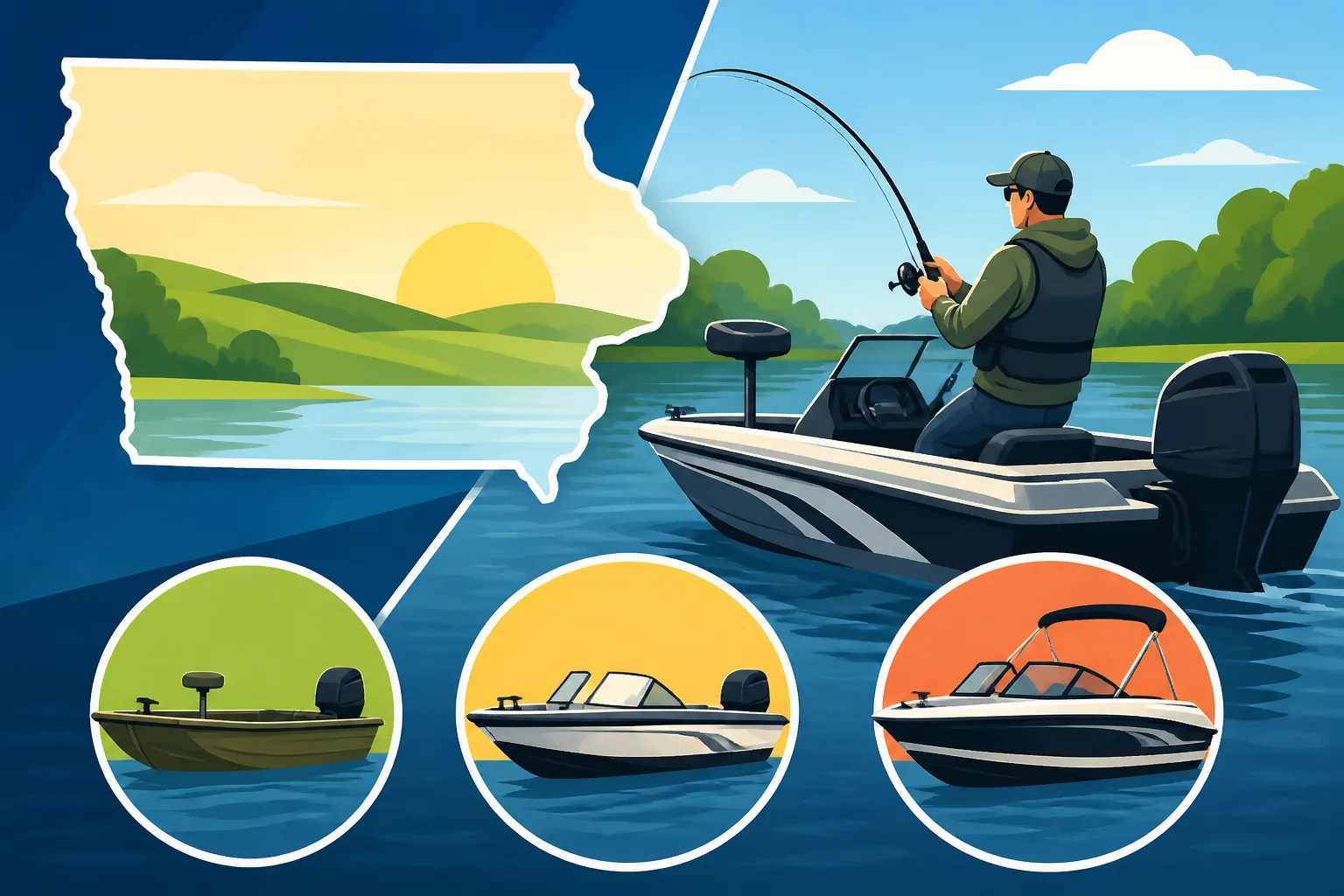
Popular Boat Length Ranges for Iowa Anglers
To give you a clearer picture, let's break down some common boat length ranges and what they typically offer for Iowa fishing. Remember, these are general guidelines, and exceptions always exist!
| Boat Length Range | Ideal for (Iowa Lakes) | Pros | Cons | Common Fish Targets |
|---|---|---|---|---|
| 8-13 feet | Ponds, small lakes, river backwaters | Very portable, easy storage, stealthy | Limited capacity, vulnerable to waves | Panfish, Bass |
| 14-17 feet | Small-medium lakes, protected larger bays | Versatile, easy to trailer/launch, good for 1-2 anglers | Can be rough in chop, limited space for gear | Bass, Crappie, Walleye, Catfish |
| 18-22 feet | Large lakes, main channels, open water | Stable, smooth ride, ample space, handles chop well | Heavier, harder to launch/store, higher cost | Walleye, Muskie, Northern Pike, Bass |
| 23+ feet | Very large open waters (rarely for typical Iowa lake fishing, unless large pontoon) | Maximum comfort, space, stability | Very large, difficult access on many ramps, high cost | Multi-species (often leisurely focus) |
8-13 Foot Boats: The Ultra-Portable Options
This category includes most kayaks, canoes, and small inflatable boats. These are perfect if your primary goal is to access small, remote ponds or quiet river backwaters. They are also fantastic for anglers who love the intimacy of being close to the water and enjoy the physical activity.
These craft are incredibly easy to transport – often fitting in the back of a truck or on a car roof rack – and require minimal storage. They are also generally the most budget-friendly option. However, their size means limited storage for gear, and they are not suitable for rough water conditions. If you're into stealthy approaches for bass in lily pads or sneaking up on panfish beds, a boat in this range is a stellar choice. You'll find many excellent resources and even smaller accessories for these boats on Amazon.
14-17 Foot Boats: The Iowa Workhorses
This is arguably the most popular and versatile boat length range for Iowa anglers. It includes many aluminum Jon boats, V-hull fishing boats, and smaller bass boats. These boats strike a fantastic balance between portability and capability.
A 16-foot aluminum boat, for example, is light enough to be towed by a mid-size SUV, fits in many garages, and can be launched at most public ramps across the state. It offers enough space for two or three anglers and their gear, and with a decent outboard motor, it can handle both smaller lakes and the calmer days on larger reservoirs. You can effectively target a wide range of species, from bass and crappie to walleye and catfish. This length is a great all-around choice for many Iowans who want to fish a variety of waters without committing to a massive vessel. Don't forget to look into Best Boats for Iowa Fishing for more specific examples within this popular range.
18-22 Foot Boats: The Big Water Contenders
For those who prioritize fishing the vast expanses of the Iowa Great Lakes, Rathbun, or Saylorville, and demand comfort and safety in rougher conditions, boats in the 18-22 foot range are often the preferred choice. These are typically fiberglass multi-species boats, larger bass boats, or even pontoon boats rigged for fishing.
These longer boats excel at providing a stable platform for multiple anglers, offering a smoother ride through chop, and having ample storage for all your gear, electronics, and even multiple livewells. If you're serious about trolling for walleye, chasing big muskie, or simply want the most comfortable experience for a full day with the family, the extra length pays dividends. However, be prepared for increased costs, more challenging trailering, and the need for deeper access at boat ramps. This is where you really start to see the advanced fish finders and electronics that are crucial for breaking down big water, so checking out our guide on Fish Finders and Electronics for Iowa Anglers would be a wise next step.
Ultimately, the "best" boat length for Iowa lakes isn't a fixed number; it's the length that best suits your fishing habits, the waters you frequent most, and your practical considerations. Take your time, weigh your options, and you'll find the perfect vessel to help you enjoy Iowa's fantastic fishing opportunities.
Disclaimer
This article is for general informational purposes only and does not constitute professional advice. Laws, prices and regulations vary by location and change over time. Consult a qualified professional for guidance on your specific situation.