Best Fish Finder for Iowa River Fishing
If you've ever tried to fish Iowa's beautiful, but often challenging, rivers, you know the frustration of casting into what looks like a perfect spot only to come up empty. River currents, hidden submerged structure, and constantly changing bottom contours can make finding fish feel like searching for a needle in a haystack. This guide is here to help you cut through the guesswork and equip you with the knowledge to choose the best fish finder specifically designed to conquer the unique demands of Iowa river fishing.
Why River Fishing in Iowa Demands a Specific Fish Finder
River fishing is a whole different ballgame compared to hitting a calm lake. The dynamic environment of Iowa's rivers, from the mighty Mississippi to smaller tributaries like the Des Moines or Iowa River, presents unique challenges that a standard, basic fish finder simply isn't equipped to handle. Understanding these distinctions is the first step to choosing the right gear.
Understanding River Dynamics vs. Lake Fishing
Imagine standing on the bank of a peaceful lake; the water is relatively still, and the bottom contour changes slowly. Now picture the swift, often turbulent current of the Mississippi River, or the snaking channels and sudden drop-offs of the Iowa River after a good rain. These are vastly different worlds. In a lake, fish often relate to more static features like weed lines or distinct humps. Rivers, however, are constantly in flux. Currents scour out new holes, deposit silt, move log jams, and reshape sandbars.
Fish in these environments behave differently too. They'll often tuck tight behind current breaks, using eddies and subtle structure to conserve energy. This means they might not be directly under your boat for long, and they could be hiding in very specific, hard-to-find spots. A fish finder optimized for these conditions needs to process information quickly and accurately, distinguishing fish from debris rushing by or from complex underwater structure. Relying on a unit designed for static lake environments means you're likely missing a huge portion of the picture, leading to unproductive hours on the water.
The Elusive Nature of River Fish
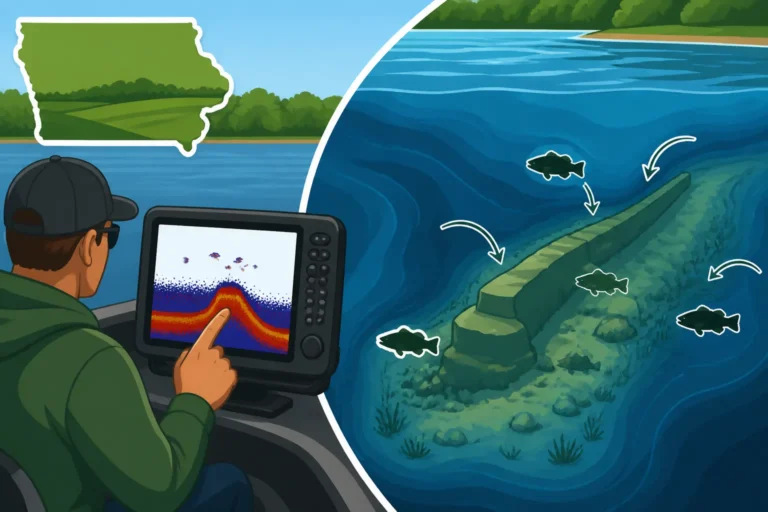
Targeting species like Walleye Fishing in Iowa or Channel Catfish Fishing in Iowa in a river requires precision. Walleye are notorious for hugging the bottom, often tucked behind wing dams, rock piles, or submerged timber, using these features as ambush points out of the main current. Without detailed sonar, these subtle hideouts are nearly impossible to detect. You might see a flat bottom on a basic 2D sonar, completely missing the small ledge or rock cluster that's holding a school of fish.
Catfish, especially big flatheads, love deep holes, log jams, and undercut banks. These are often in murky water where visibility is zero, and traditional sonar struggles to penetrate the dense cover effectively. If your fish finder can't show you the nuances of these complex structures, you're essentially blind to where the biggest fish are holding. The river's constant flow means fish are constantly on the move, even if just subtly adjusting their position within a piece of cover. A good river fish finder helps you pinpoint these fleeting locations, allowing you to present your bait precisely where the fish are.
Essential Features for River Fish Finders
When you're navigating and fishing Iowa's rivers, certain fish finder technologies become not just helpful, but absolutely critical. These features provide the level of detail and situational awareness needed to consistently locate fish and productive structure in dynamic water.
High-Frequency Sonar for Detail
Think of sonar like an underwater camera. A higher frequency sound wave is like having a higher resolution lens on that camera – it gives you a much clearer, more detailed picture. For river fishing, where you're often trying to discern a single fish from a submerged log or a subtle break in the bottom, high-frequency sonar is invaluable. Frequencies in the 200 kHz range or, even better, CHIRP (Compressed High-Intensity Radar Pulse) sonar, are what you should be looking for.
CHIRP sonar sends a range of frequencies, rather than a single one, which allows the unit to process more information and provide superior target separation. This means you can actually distinguish between two fish swimming close together, or between a fish and a piece of structure it's relating to. In a river environment where debris, varying bottom compositions, and currents can create a lot of "clutter" on a screen, this clarity is a game-changer. It helps you confidently identify actual fish and key structure, rather than just guessing what you're seeing.
Side Imaging and Down Imaging
These are arguably the most transformative technologies for river anglers. Traditional 2D sonar only shows you what's directly underneath your boat in a cone shape. While useful, it has limitations, especially in a river where fish might be off to the side, tucked under an overhang, or hidden within a complex wing dam.
-
Down Imaging (or DownVu/ClearVu): This technology provides a photo-like image of what's directly below your boat. It uses a very thin, high-frequency beam to create incredibly detailed, almost photographic representations of submerged structure like trees, rock piles, and distinct ledges. This is crucial for identifying how fish are relating to structure vertically – are they on top of a log, or tucked deep within its branches? It eliminates much of the guesswork associated with interpreting traditional 2D arches.
-
Side Imaging (or SideVu/Mega Side Imaging): This is where river anglers truly gain an advantage. Side imaging sends beams out to the left and right of your boat, scanning vast areas of the river bottom up to hundreds of feet on either side. Imagine slowly drifting or motoring down a stretch of the Mississippi River Pool 10 Fishing and being able to see submerged wing dams, current seams, log jams, and even individual fish holding around them, all before you even pass over them. This allows you to identify entire stretches of productive water and approach potential hotspots stealthily. You can spot the precise position of a Wing Dam Fishing on the Mississippi River and see fish relating to it, allowing you to cast right to them. Brands like Humminbird, with their Mega Side Imaging, offer incredible clarity for these views, making it easier to pick out smaller details that hold bigger fish.
GPS and Mapping Capabilities
Navigating and fishing a river without robust GPS and mapping is like driving in an unfamiliar city without a map – you might get around, but you'll certainly miss out on the best spots and risk getting lost. For river fishing, GPS and mapping are non-negotiable.
-
Waypoint Marking: As you discover productive spots – whether it's a deep hole, a submerged log, a rock pile, or a current break where you caught fish – you need to be able to mark it precisely. A good GPS allows you to drop a waypoint with accuracy, so you can return to that exact spot again and again. Rivers change, but key structures often remain, and being able to relocate them easily is invaluable.
-
Pre-loaded or Custom Mapping: Many fish finders come with pre-loaded maps or allow you to download detailed charts. For river systems, these maps can show channel markers, depth contours (though these can change in rivers), and navigation hazards. Even better are units that allow you to create your own custom maps, like Humminbird's AutoChart Live or Garmin's Quickdraw Contours. As you idle over a section of river, the unit builds a highly detailed map of the bottom, including subtle contours that commercial maps might miss. This is particularly useful in rivers where bottom features are constantly shifting, giving you an up-to-the-minute understanding of the terrain.
-
Speed and Direction: Knowing your boat's speed and direction relative to the current is vital for proper boat control and lure presentation. Integrated GPS provides this information instantly, helping you maintain a consistent drift, troll effectively, or position yourself perfectly for Drift Fishing the Mississippi River. Without it, you're constantly fighting the current without truly understanding its dynamics.
Top Fish Finder Technologies for Iowa Rivers
The world of fish finders has evolved dramatically, offering anglers incredible insights into the underwater world. For Iowa river fishing, certain technologies stand out for their ability to deliver clarity and detailed information where it matters most.
Traditional 2D Sonar
Even with all the advancements, the tried-and-true 2D sonar remains the foundation of every fish finder. This is the classic "fish arch" view that most anglers are familiar with, showing you depth, bottom contour, and targets directly beneath your boat using a conical beam. For basic depth readings and identifying large schools of baitfish or bigger fish directly below, 2D sonar is perfectly adequate.
However, its limitations become apparent in the complex environments of Iowa's rivers. Because the beam spreads out, targets at deeper depths can appear distorted or merge with the bottom, making it hard to distinguish a fish from a piece of structure. In a river with a lot of debris or a cluttered bottom, it can be challenging to interpret. While still useful for a quick scan of what's directly below, relying solely on 2D sonar for river fishing means you're missing a significant amount of valuable information off to the sides and with less detail than modern imaging provides. It's often best used in conjunction with other technologies rather than as a standalone solution for serious river anglers.
CHIRP Sonar Advantage
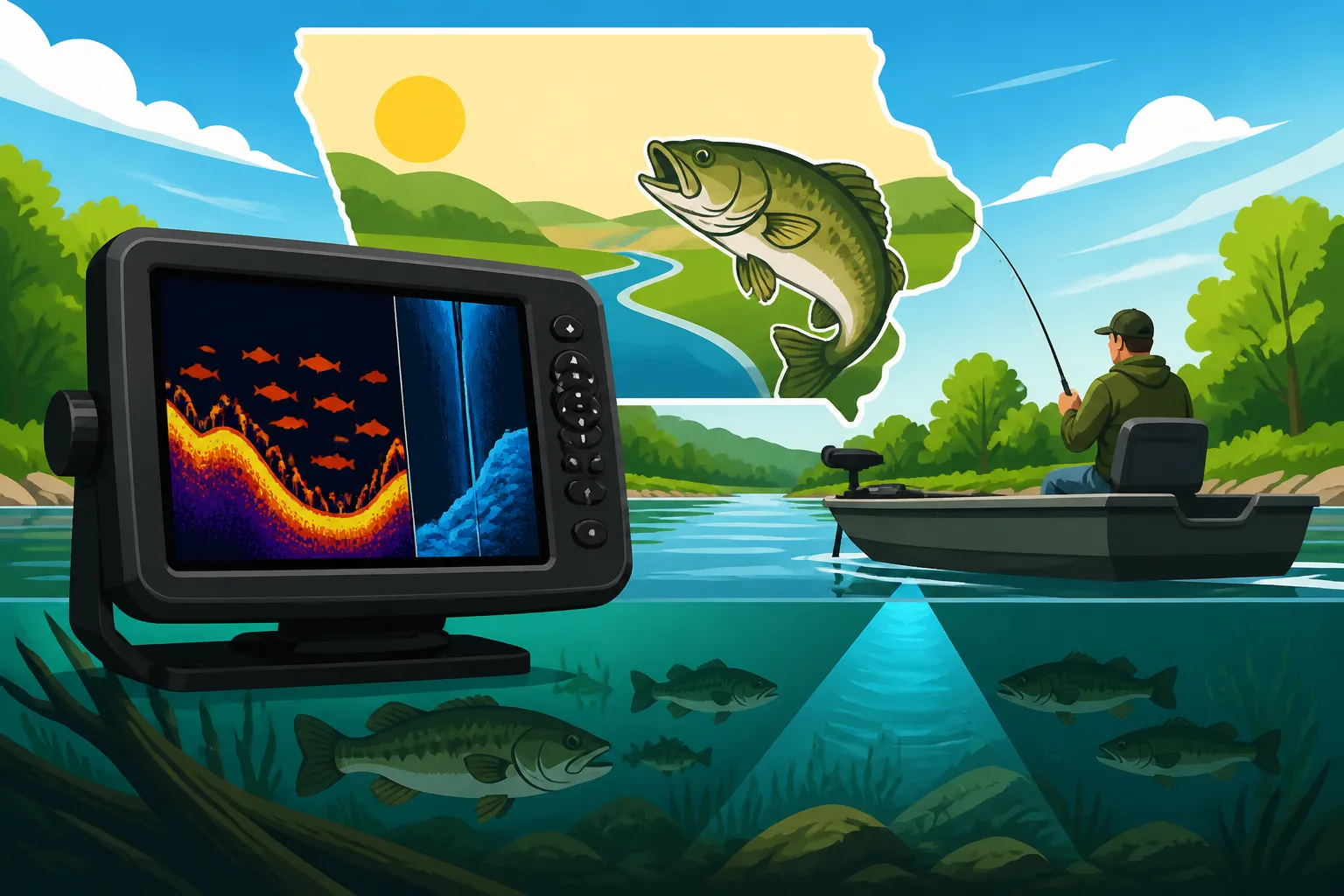
If 2D sonar is a black and white photograph, CHIRP sonar is a high-definition color image. CHIRP, which stands for Compressed High-Intensity Radar Pulse, is a significant upgrade over traditional single-frequency sonar. Instead of sending out a single "ping" at one frequency, CHIRP sends a long pulse across a range of frequencies. The receiver then processes all these different frequencies, resulting in a much clearer, more detailed, and less noisy image.
For river fishing, the CHIRP advantage is substantial:
- Superior Target Separation: This is perhaps the biggest benefit. CHIRP can differentiate between individual fish, even when they're tightly schooled or very close to structure. You can tell if that arch near the bottom is one big fish or several smaller ones, or if it's a fish sitting right on top of a rock rather than being part of the rock itself. This is critical when How to Jig for Winter Walleye Near Dubuque, where walleye often hug tight to vertical structure.
- Enhanced Clarity at Depth: Rivers can have varying depths, and CHIRP maintains clarity and detail whether you're in shallow backwaters or deeper main channels.
- Reduced Noise: The advanced processing of CHIRP technology helps filter out much of the underwater noise and interference that can clutter a traditional sonar screen, providing a cleaner, more readable image.
Most modern fish finders, even entry-level units, now incorporate some form of CHIRP, making it a standard and highly effective tool for river anglers seeking better clarity and fish detection.
Mega Imaging and Live Sonar
For the dedicated river angler who wants the absolute cutting edge, technologies like Humminbird's MEGA Imaging and Garmin's LiveScope (or Lowrance's ActiveTarget) are truly revolutionary. These are advanced versions of Down Imaging and Side Imaging, pushed to extreme levels of detail and, in the case of live sonar, real-time feedback.
-
MEGA Imaging (Humminbird): This technology operates at frequencies in the megahertz range (e.g., 1.2 MHz), providing nearly photographic clarity for Down Imaging and Side Imaging. When you're using MEGA Side Imaging on a river, you can literally identify individual branches on a submerged tree, see subtle current eddies behind structure, and easily distinguish fish from the background. This level of detail is invaluable for dissecting complex river structure like wing dams, rock gardens, and laydowns, allowing for incredibly precise lure placement. You can effectively "sight fish" for structure even in murky water.
-
Live Sonar (Garmin LiveScope, Lowrance ActiveTarget, Humminbird Mega Live): This is the pinnacle of fish-finding technology. Live sonar transits in real-time, showing you fish moving, your lure falling, and fish reacting to your lure as it happens. Imagine dropping a jig over a submerged log and watching a walleye swim out from cover, inspect your bait, and then strike – all in real-time on your screen. This technology can be aimed forward, down, or in scout mode (wide view) to scan the area around your boat. For river fishing, this is a game-changer for understanding fish behavior in current, pinpointing their exact location within structure, and fine-tuning your presentation. While these units come with a higher price tag, they offer an unparalleled interactive fishing experience that can dramatically increase your success rate, especially when targeting elusive Muskie Fishing Techniques for Iowa Waters or deep-holding catfish.
Choosing the Right Display and Transducer
Even the most advanced fish finder technology won't do you much good if you can't see or interpret the data properly, or if the sensor isn't working optimally. The display and transducer are the unsung heroes of your fish-finding setup.
Screen Size and Resolution
This might seem like a luxury, but in the challenging environment of river fishing, a good screen is a necessity. Trying to decipher intricate sonar images on a small, low-resolution screen while dealing with glare and boat movement is incredibly difficult and frustrating.
- Screen Size: Larger screens (7 inches and up) allow you to view multiple sonar technologies simultaneously in a split-screen format. You can have 2D sonar, Down Imaging, Side Imaging, and a GPS map all visible at once, giving you a comprehensive understanding of your surroundings. This is especially useful in rivers where you need to monitor structure, fish, and navigation hazards all at the same time. On a smaller screen, you're constantly toggling between views, which can cause you to miss crucial information.
- Resolution: High resolution is just as important as size. A higher pixel count means clearer, sharper images. When you're trying to distinguish between a tangled mess of branches and a fish holding within them, or identify a subtle rock pile from a blurry blob, good resolution makes all the difference. Look for screens with at least 800×480 pixels for smaller units, and 1024×768 or higher for larger screens. A bright, anti-glare display is also essential for visibility on sunny Iowa days.
Transducer Placement and Type
The transducer is the heart of your fish finder, sending and receiving the sonar signals. Its proper placement is absolutely critical, especially on a river boat where turbulence and engine interference can wreak havoc on your readings.
- Transom Mount: This is the most common and generally easiest installation. The transducer mounts on the transom (back) of your boat. For river fishing, ensure it's mounted in a spot that stays submerged and relatively free of turbulent water from your motor, even when you're on plane. A poorly placed transom mount will "lose bottom" at speed or give noisy, inaccurate readings. Many anglers also add a transducer 'saver' or 'shield' to protect it from submerged logs and rocks common in rivers.
- Trolling Motor Mount: For anglers who do a lot of precise maneuvering with an electric trolling motor, mounting the transducer directly to the trolling motor is an excellent option. This keeps the transducer in clean water, provides consistent readings, and directs the sonar beam wherever the trolling motor is pointed, which is great for pinpointing fish around structure. This is particularly advantageous for technologies like Live Sonar that benefit from being steerable.
- Thru-Hull Mount: This involves drilling a hole in the bottom of your boat and mounting the transducer flush. While more involved, it provides the cleanest, most consistent readings, as the transducer is always in undisturbed water. It's often preferred for larger boats or those seeking maximum performance and protection.
- Shoot-Thru-Hull: For fiberglass boats, a shoot-thru transducer can be epoxied inside the hull, shooting sonar signals through the fiberglass. This offers protection from impacts but can result in some signal loss. It's not ideal for very deep or highly detailed imaging, but it's a good option for certain applications.
Regardless of type, secure and level mounting is key. A transducer that's angled incorrectly or prone to movement will give you skewed or inconsistent readings, making it impossible to accurately interpret the underwater world.
Portability and Power Needs
Consider your typical fishing setup when evaluating portability and power.
- Portable Units: If you primarily fish from different boats, frequently use small johnboats, canoes, or Kayak Fishing Techniques in Iowa, a portable fish finder might be your best bet. These units often come with clamp-on transducers and can run off small, rechargeable batteries. They're quick to set up and move, perfect for scouting different river access points or for anglers who don't have a permanently mounted unit. Brands like Garmin and Humminbird offer excellent portable options.
- Permanent Mounts: For dedicated fishing boats, a permanently mounted unit offers the best performance and integration. These require routing wiring for power and transducer cables. Ensure your boat's electrical system can handle the power draw, especially for larger units with multiple technologies. A dedicated marine battery is often recommended for fish finders, separate from your starting battery, to prevent draining it. When considering power, think about how long your typical fishing trip lasts and ensure your battery setup can comfortably support your electronics for that duration.
| Feature Category | Key Feature | Why It Matters for Iowa River Fishing |
|---|---|---|
| Sonar Technology | CHIRP Sonar | Provides superior target separation and clarity, essential for distinguishing fish from complex river structure (e.g., Walleye Fishing in Iowa near logs). |
| Down Imaging | Offers photo-like detail of what's directly below, helping identify fish within dense cover like log jams or rock piles. | |
| Side Imaging | Scans wide areas to the left and right of the boat, revealing hidden wing dams, current breaks, and fish holding off the main channel (e.g., Mississippi River Pool 9 Fishing). | |
| Live Sonar (Optional) | Shows real-time movement of fish and lures, allowing for precise presentations and observation of fish reactions in dynamic river currents. | |
| Navigation & Mapping | GPS and Mapping | Crucial for marking productive waypoints, navigating river channels, avoiding hazards, and returning to specific spots, especially useful on large rivers like the Mississippi. |
| Custom Mapping (AutoChart) | Allows creation of up-to-date, highly detailed contour maps of river bottoms, adapting to constantly shifting riverbeds. | |
| Display & Usability | Screen Size | Larger screens (7"+) enable split-screen viewing of multiple sonar types and maps simultaneously, which is critical for comprehensive situational awareness in complex river environments. |
| High Resolution | Provides sharper, clearer images, making it easier to interpret sonar returns and differentiate fish from structure, even in muddy river water. | |
| Portability (for some) | Useful for anglers who fish from multiple boats, kayaks, or frequently move between different river access points. | |
| Durability | Rugged Construction | Essential for enduring the bumps, splashes, and vibrations inherent in river travel, especially in smaller boats or rougher water. |
Setup, Use, and Interpretation for River Success
Having a top-notch fish finder is only half the battle; knowing how to properly set it up, use its features, and interpret the information it presents is what truly leads to more fish in the net. River fishing throws unique challenges at your electronics, and a little know-how goes a long way.
Mounting and Wiring Considerations
Even the best unit will underperform if not installed correctly. For river boats, especially those that navigate shallow areas or run at higher speeds, a few extra precautions are wise.
- Secure Mounting: Vibration and bumps are common on rivers. Ensure your display unit is mounted securely to a stable surface, ideally with gimbal brackets that allow for adjustment but won't shake loose. For the transducer, consider heavy-duty mounting hardware or even a transducer 'guard' if you frequently fish areas with submerged timber or rocks. Running aground or hitting a log can easily damage an exposed transducer.
- Clean Power: Electrical interference can severely degrade sonar performance, causing a cluttered, noisy screen. Run dedicated power wires directly from your battery to your fish finder, avoiding splicing into other circuits if possible. Use appropriately gauged wires and ensure all connections are tight and corrosion-free. A separate battery for your electronics, distinct from your engine's starting battery, is an excellent idea to ensure consistent power and prevent accidental draining.
- Cable Management: Keep transducer cables tidy and away from engine wiring or other electrical sources to minimize interference. Avoid sharp bends or kinks in the cable, as this can damage internal wires and affect signal quality.
Taking the time to ensure a clean, stable installation will save you endless frustration and provide the clearest possible view of the river bottom.
Adjusting Settings for River Conditions
Rivers are incredibly dynamic, and what works one day might not work the next. Smart anglers constantly adjust their fish finder settings to match current conditions.
- Sensitivity/Gain: This setting controls how strongly the sonar unit "listens" for echoes. In clearer, deeper water, you might be able to run higher sensitivity for more detail. However, in murky or turbulent river water, or areas with a lot of debris, too high a sensitivity will result in a cluttered screen full of noise. Reduce it until the screen is clean, but you can still pick up fish and structure clearly. It's a balancing act you'll learn with experience.
- Range/Depth: Manually adjust your depth range to slightly deeper than the water you're currently in. If you're fishing in 15 feet of water, setting the range to 20 or 25 feet gives you a good view of the bottom and just above it without wasting screen space on unnecessary depth.
- Frequency: Most modern units automatically select the best frequency, but sometimes manual adjustment helps. For detailed shallow water views or differentiating tight targets, higher frequencies (like 200kHz or MEGA Imaging) are best. For deeper penetration, lower frequencies (e.g., 50kHz or 83kHz) might be more effective, though with less detail.
- Color Palette: Experiment with different color palettes on your screen. Some anglers find certain color schemes make it easier to differentiate fish from structure or see subtle bottom changes, especially in varying light conditions.
Regularly tweaking these settings as you move between different river sections – from main channels to backwaters, or from deep holes to shallow flats – will optimize your unit's performance.
Reading the Screen for River Fish
Interpreting what your fish finder is showing you is an art developed with practice. It's not just about seeing fish; it's about understanding the river.
- Identifying Fish Arches (2D Sonar): On 2D sonar, fish typically appear as arches. A long, strong arch often indicates a larger fish or a fish that stayed in the sonar cone for a longer time. Half arches or partial marks near the bottom could be fish hugging structure. Learning to distinguish these from debris or bottom irregularities is key.
- Locating Structure with Down and Side Imaging: This is where the magic happens for river anglers. Look for distinct changes in bottom contour, like humps, drop-offs, or submerged creek channels. With Down Imaging, identify hard-to-soft bottom transitions, which often hold fish. Side Imaging is perfect for spotting submerged trees, brush piles, rock formations, and especially the precise angles and current breaks created by Wing Dam Fishing on the Mississippi River. Fish will often appear as bright dots or streaks around these structures.
- Understanding Current Breaks: River fish are masters of conserving energy. They will always be found where they can ambush prey with minimal effort, typically behind something that breaks the current. Your fish finder, especially with Side Imaging, helps you visualize these current seams and eddies, showing you where fish might be tucking in. Look for irregularities in the bottom or visible structure that creates a "shadow" in the current.
- Marking Waypoints and Revisiting: When you find a promising piece of structure, or especially when you catch a fish, immediately drop a GPS waypoint. Don't rely on memory; rivers are vast. Returning to these marked spots throughout the day or on future trips will build your confidence and knowledge of the river. You can also mark hazards like shallow sandbars or submerged rocks. Iowa Fishing Techniques Guide often emphasizes knowing your spots, and a fish finder with good GPS is how you do it.
Budgeting for Your River Fish Finder
Investing in a fish finder for Iowa river fishing is a significant decision, and there's a wide range of options to fit various budgets. Understanding what you get at each price point will help you make an informed choice that balances features with your financial comfort zone.
Entry-Level vs. Mid-Range vs. High-End
The cost of fish finders can vary dramatically, often reflecting the complexity and number of features included.
-
Entry-Level (Typically a few hundred dollars): These units usually offer basic 2D sonar and sometimes rudimentary Down Imaging. They'll give you depth, temperature, and a basic view of what's directly beneath your boat. GPS is often included, but mapping might be very basic or require additional purchases. An entry-level unit is a good starting point for a casual angler who fishes smaller, less complex rivers or wants a clear advantage over fishing blind. It can certainly help you find general structure and some fish. You can find solid entry-level options on platforms like Amazon or in stores like Bass Pro Shops.
-
Mid-Range (Roughly $500 – $1,500): This is often the sweet spot for many serious river anglers. Mid-range units typically include excellent CHIRP 2D sonar, robust Down Imaging, and often good quality Side Imaging. They usually have larger, higher-resolution screens (7-9 inches) and come with more detailed pre-loaded mapping or the ability to create your own custom maps. These units provide a comprehensive view of the river, allowing you to locate specific structure, distinguish fish from cover with greater clarity, and navigate effectively. For targeting How to Catch Walleye in Iowa or Channel Catfish Daily Limit in Iowa in a river environment, a mid-range unit offers a fantastic balance of performance and value.
-
High-End (Over $1,500, sometimes several thousand): This category includes the most advanced units, boasting incredibly large, high-definition screens (10 inches and up), hyper-detailed MEGA Imaging, and cutting-edge Live Sonar capabilities. These units offer unparalleled clarity, real-time feedback, and often integrate seamlessly with other boat systems like trolling motors and engine data. They are designed for competitive anglers or those who demand the absolute best technology for dissecting complex river systems and actively "hunting" for fish. If you're serious about river fishing and want every possible advantage, a high-end unit is a significant investment that delivers top-tier performance.
Where to Shop and Compare
Once you have an idea of the features you need, it's time to start shopping. There are several excellent avenues to explore:
- Dedicated Outdoor Retailers: Stores like Bass Pro Shops are fantastic resources. They typically have a wide selection of fish finders on display, allowing you to compare screen sizes, features, and user interfaces in person. The staff are often knowledgeable anglers who can offer advice and answer specific questions about units for river fishing. They also often have promotions or package deals.
- Online Retailers: Websites like Amazon offer an enormous selection, competitive pricing, and the convenience of home delivery. You can easily compare specifications, read countless user reviews (which often contain invaluable real-world insights about performance in various conditions), and access detailed product descriptions. Just be sure to verify the seller and return policies.
- Specialty Marine Electronics Stores: If you have one nearby, a dedicated marine electronics shop can provide expert installation services and very specialized advice, especially if you're considering a more complex system for a larger boat.
When comparing, don't just look at the price. Consider the warranty, customer support, and the availability of accessories or software updates. Reading reviews from other anglers who specifically use their units for river fishing can highlight real-world strengths and weaknesses that might not be obvious from the product description alone. A well-researched purchase ensures you get a fish finder that will serve you well on Iowa's diverse rivers.
Disclaimer
This article is for general informational purposes only and does not constitute professional advice. Laws, prices and regulations vary by location and change over time. Consult a qualified professional for guidance on your specific situation.