Smallest Legal Size for Walleye in Iowa
It can be incredibly frustrating to head out for a day of walleye fishing, feeling that familiar tug on the line, only to reel in a beauty and then stare at it, wondering, "Is this fish even legal to keep?" The regulations around walleye size limits in Iowa can feel like a moving target, especially with different rules for different lakes or rivers. This guide is here to clear up all that confusion, helping you confidently know the smallest legal size for walleye across Iowa's diverse waters, so you can focus on the thrill of the catch and abide by the law.
Understanding Iowa's General Walleye Length Limits
For many Iowa anglers, the walleye is a prize catch—delicious, challenging, and a true symbol of our state's fantastic fishing opportunities. But to keep those delicious fillets, you need to understand the rules. It's not just about what you catch; it's about what you can keep.
The Statewide Standard: What You Need to Know
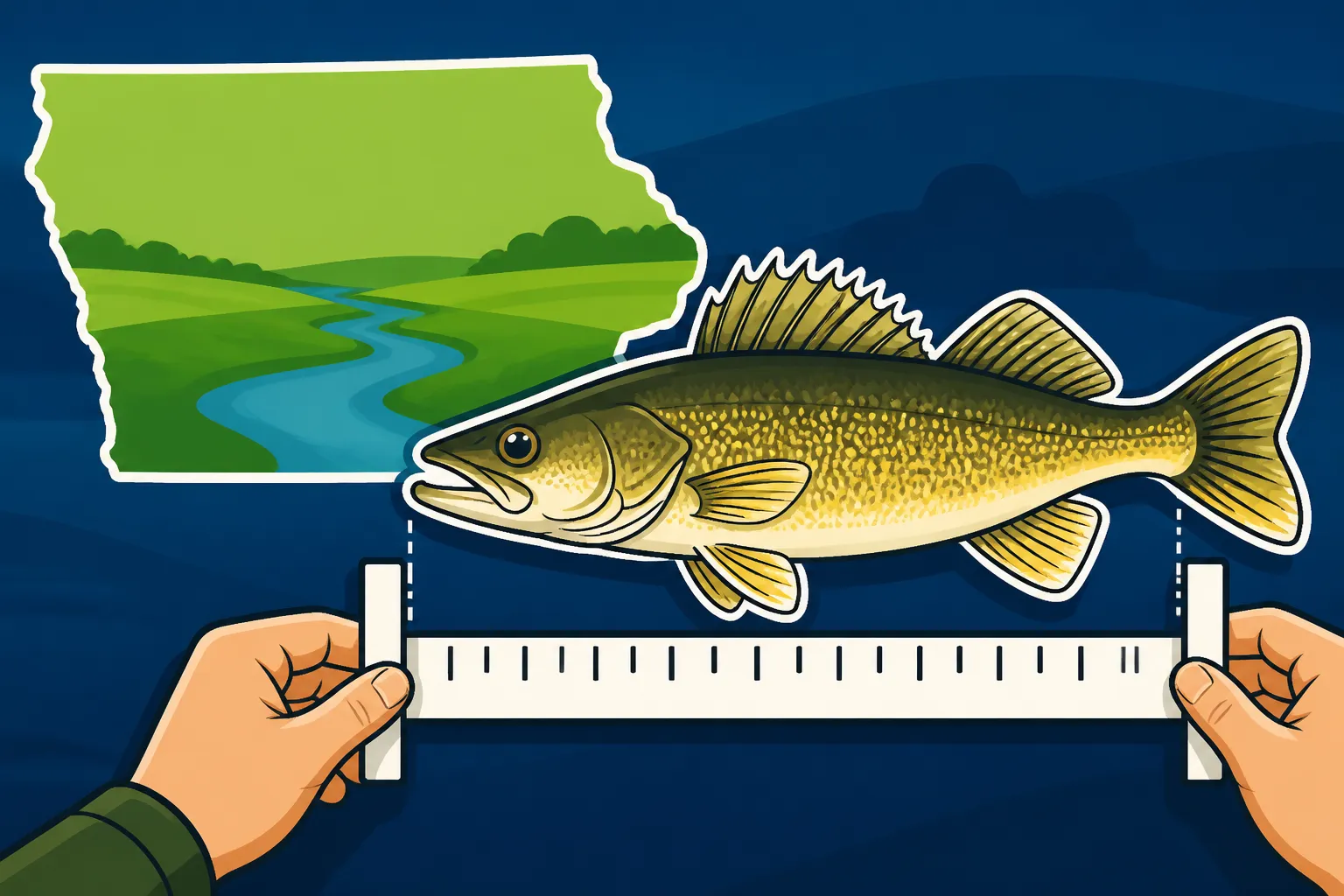
Across the majority of Iowa's public waters, there's a pretty straightforward minimum length limit for walleye. Most often, you're looking at a 15-inch minimum length requirement. This means if your walleye measures even a hair under 15 inches from the tip of its nose to the tip of its tail (pinched), it needs to go back into the water. This statewide standard is put in place for a really important reason: conservation. It allows younger walleye to grow to maturity, spawn at least once, and contribute to the overall health and population numbers of the species. Without these limits, anglers could quickly deplete the younger, more numerous fish, impacting future generations of walleye and the quality of fishing for everyone.
Think about it this way: you spend hours out on the lake, casting your favorite crankbait, and finally, you feel that distinctive tap-tap-thump of a walleye hitting. You fight it in, admire its golden flanks, and then comes the moment of truth. You pull out your measuring board. If it's 14.5 inches, as tempting as it is, that fish is a future trophy. Gently release it, and celebrate the catch anyway! There's always another one, hopefully a bit longer, waiting to bite. This rule helps ensure those "another ones" are there. You can learn more about general regulations in our Iowa Fishing Regulations Explained guide.
How to Measure Your Catch Accurately
Knowing the limit is one thing; measuring accurately under sometimes less-than-ideal conditions is another. There's a right way to measure a fish, and slight miscalculations can lead to either an unnecessary release or, worse, keeping an illegal fish. When measuring a walleye, you need to lay the fish flat on a measuring board or tape, with its mouth closed and touching the bump at the end of the board. Then, gently squeeze or "pinch" the tail fin together to get the maximum length, reading the measurement at the very tip of the tail. Don't measure along the curve of the fish's body; it needs to be a straight line measurement.
Having the right tools makes all the difference. A sturdy, clearly marked measuring board (often called a "bump board") is a must-have for any serious walleye angler. These are widely available, and you can find a good selection of reliable options on Amazon, often designed specifically for common game fish like walleye. Trying to measure a squirming fish with a flimsy tape measure while rocking in a boat is a recipe for error. If you catch a fish that looks right at the 15-inch mark, measure it carefully. If there's any doubt, it's always best practice to err on the side of caution and release it. That small act helps preserve the fishery for everyone.
Catch and Release for Undersized Walleye
The feeling of catching a walleye, only to find it's just shy of the legal limit, can be a bit of a letdown. However, how you handle that undersized fish is crucial for its survival. Proper catch and release techniques significantly increase the chances that the fish will live to grow larger and contribute to future spawns. First and foremost, try to minimize the time the fish is out of the water. Have your measuring device ready before you even net the fish. Use wet hands when handling the fish to protect its protective slime coat, which acts as its first line of defense against disease.
If the fish is hooked deeply, especially in the gills, it might be tough to remove the hook quickly. This is where tools like long-nose pliers or specialized de-hookers come in handy. You can find excellent quality pliers and de-hookers on Amazon that make quick work of hook removal, allowing you to get the fish back into the water swiftly. Avoid squeezing the fish, especially around its belly or gills. A quick, gentle release, pointing its head into the water current, gives it the best chance to swim away strong. Every successfully released walleye is an investment in future fishing trips!
Special Regulations: When Limits Change by Location
While the 15-inch statewide minimum is a good baseline, Iowa's diverse waterways mean that some specific lakes and rivers have their own unique walleye regulations. These aren't arbitrary; they're carefully crafted by the Iowa Department of Natural Resources (DNR) to manage fish populations in particular environments.
Specific Lakes and Rivers with Unique Walleye Limits
It's absolutely vital to check the local regulations for the specific body of water you plan to fish, because there are several key areas that deviate from the standard 15-inch minimum. For example, some lakes might have a more restrictive minimum length, or even a protected slot limit (which we'll discuss next). The Iowa Great Lakes region, including popular spots like West Okoboji, East Okoboji, and Spirit Lake, often have special rules designed to manage their renowned walleye fisheries. These rules might be geared towards protecting a certain age class of fish or promoting the growth of larger, trophy-sized walleye.
Imagine you're planning a fantastic weekend trip to Fishing the Iowa Great Lakes, known for its incredible walleye opportunities. You've packed your gear, bought your bait, and you're ready to hit the water. But before you launch your boat, you absolutely must consult the latest Iowa DNR fishing regulations booklet or their website for that specific lake. Missing these localized rules could mean an unexpected fine or, worse, unintentionally harming the very fishery you've come to enjoy. These special limits are often dynamic, changing based on population surveys and management goals, so always double-check!
Border Waters: Navigating the Mississippi and Missouri River Rules
Fishing Iowa's border rivers, namely the mighty Mississippi and the Missouri River, adds another layer of complexity to walleye size limits. These aren't just Iowa waters; they're shared resources with neighboring states like Illinois, Wisconsin, Nebraska, and South Dakota. Because of this, reciprocal agreements and specific border water regulations often come into play, meaning the rules might differ from inland Iowa lakes.
On the Mississippi River, for instance, there can be different regulations depending on which pool you're fishing or even which state's side of the river you're on, although generally, reciprocal agreements allow you to fish with an Iowa license from either side. However, the size and bag limits for walleye can vary significantly between states. It's crucial to understand the Reciprocal Fishing Rules on the Mississippi River Border to ensure you're compliant. Always carry a current regulation booklet for both Iowa and the bordering state, or consult the DNR websites before your trip. A walleye that's legal on the Iowa side might be undersized on the Illinois side, and vice versa. It's a tricky situation that many anglers find themselves in, so being prepared is key to avoiding issues.
Protected Slot Limits: What They Are and Why They Matter
Beyond simple minimum length limits, some Iowa waters implement "protected slot limits." This is a sophisticated management tool designed to achieve specific population goals. A protected slot limit means that fish between a certain range of sizes must be immediately released. For example, a regulation might state "no walleye between 17 and 22 inches may be kept." You could keep walleye under 17 inches (if the minimum is lower) and over 22 inches, but nothing in the "slot."
The purpose of a slot limit is usually to protect a specific size class of fish—often prime spawning adults—to ensure they can reproduce and grow larger, thus improving the genetic quality and overall health of the fishery. It's a way to let those "middle-aged" fish reach their full potential. For example, a lake with a slot limit might allow you to keep smaller "eater" walleye and larger "trophy" walleye, while protecting the productive breeding stock in between. Understanding these slot limits is paramount. A 19-inch walleye might feel like a perfect keeper, but if it falls within a protected slot, it absolutely needs to go back. Always consult the Walleye Season and Size Limits to be sure.
Here's a quick comparison of typical walleye length rules in Iowa:
| Water Type | Typical Minimum Length | Special Conditions/Notes |
|---|---|---|
| Most Inland Lakes & Rivers | 15 inches | General statewide rule. |
| Iowa Great Lakes (e.g., Okoboji, Spirit Lake) | Varies | Often have special slot limits or different minimums; always check current regulations. |
| Mississippi River Border Waters | Varies | Reciprocal rules with bordering states may apply; check Iowa and bordering state rules. |
| Specific Reservoirs (e.g., Rathbun Lake) | Varies | May have specific slot limits or higher minimums for management. |
Why Size Limits Are So Important for Walleye Populations
Sometimes, regulations can feel like just another hurdle to enjoying your time on the water. But when it comes to walleye size limits, these rules are foundational to the sustainability of Iowa's beloved fisheries. They aren't just bureaucratic red tape; they are science-backed decisions that protect our natural resources.
Conservation Efforts and Sustainable Fishing
The Iowa Department of Natural Resources (DNR) works tirelessly to manage and protect our state's fish populations. Size limits are one of their most effective tools in promoting sustainable fishing practices. By setting a minimum length, they ensure that a significant portion of the walleye population has the opportunity to reach sexual maturity and spawn at least once, if not multiple times. This is critical for natural reproduction, replenishing fish numbers year after year. Without these limits, intense fishing pressure could quickly decimate the younger, more vulnerable fish, leading to a decline in overall population health and fewer large fish for everyone.
Think about the long game. We want our kids and grandkids to experience the same thrill of catching walleye that we do today, or even better. These regulations are an investment in the future of Iowa Fishing. They allow the ecosystem to thrive, maintaining a healthy balance that benefits not only walleye but the entire aquatic environment. When we adhere to these rules, we're not just avoiding a ticket; we're actively participating in the conservation of a precious natural resource.
Penalties for Violating Walleye Size Regulations
Let's be realistic: nobody wants to get a ticket while they're out enjoying nature. But violating walleye size regulations can come with serious consequences. Conservation officers are out there, and they take their job of protecting Iowa's fisheries very seriously. Keeping an undersized walleye, or one within a protected slot limit, can result in fines and, in some cases, even confiscation of your catch and gear. The exact penalty can vary depending on the severity of the violation, the number of fish involved, and whether it's a repeat offense.
It's a stark reminder that ignorance of the law is generally not considered a valid excuse. As anglers, we have a responsibility to know and follow the rules. These aren't minor infractions; they're violations that undermine the collective effort to manage our fisheries. Beyond the legal and financial penalties, there's also the ethical consideration. No one wants to be "that angler" who disregards the rules designed to protect the very fish we cherish. For more information on penalties, you can read our article on Penalties for Exceeding the Daily Bag Limit.
Staying Up-to-Date with Current Regulations
Given that regulations can change, sometimes annually or even seasonally, staying informed is critical. What was legal last year might not be this year, or what applies to one lake might not apply to another. The best way to stay current is to regularly consult the official sources. The Iowa DNR website is an excellent resource, often updated with the very latest information. They also publish a comprehensive fishing regulations booklet each year, which you can pick up at most bait shops, sporting goods stores, or DNR offices.
Additionally, the GoOutdoors Iowa app is a fantastic digital tool that allows you to purchase licenses, check regulations, and even report your harvest directly from your phone. This makes checking rules while you're actually out on the water incredibly convenient. I always recommend anglers to bookmark the Iowa DNR fishing page or keep a current copy of the regulations booklet in their tackle box or boat. A quick check can save you a lot of headaches and ensure your fishing trip is both enjoyable and legal. Remember to check out How to Check Current Iowa Fishing Regulations Online for more details on staying informed.
Disclaimer
This article is for general informational purposes only and does not constitute professional advice. Laws, prices and regulations vary by location and change over time. Consult a qualified professional for guidance on your specific situation.