How to Identify a White Bass
Oh, the thrilling rush of a school of fish busting on the surface! When those lines start zinging, it’s easy to get caught up in the excitement. But sometimes, especially when you're pulling in one fish after another, you might pause and wonder, "Wait, is this a white bass, or something else?" Iowa waters are home to several look-alike species that can fool even seasoned anglers, and knowing the difference isn't just about curiosity—it's about staying compliant with regulations. This guide is going to walk you through all the tell-tale signs, helping you confidently identify that white bass every single time.
Why Accurate White Bass Identification is Key for Iowa Anglers
It might seem like a small detail, but being able to correctly identify your catch is a crucial skill for any responsible angler in Iowa. With several similar-looking species swimming in our lakes and rivers, a little knowledge goes a long way.
Avoiding Confusion with Similar Species
Imagine you're out on Saylorville Reservoir, and the bite is hot. You're reeling in fish that look similar, but you have a nagging feeling. Is it a white bass, or could it be a yellow bass? Maybe even a wiper, which is a hybrid striped bass? Each of these species, while sharing some family resemblances, has distinct characteristics and, more importantly, distinct regulations. Misidentifying your catch can lead to inadvertent violations, which can really put a damper on your fishing trip. It’s not just about avoiding a fine; it’s about respecting the conservation efforts that keep our Iowa waters healthy and thriving for future generations of anglers. Knowing the subtle differences helps you make informed decisions right there on the water.
Understanding Bag and Size Limits
This is where identification becomes paramount. The Iowa Department of Natural Resources (DNR) sets specific Iowa Fishing Daily Bag Limits Guide and size limits for various fish species to manage their populations effectively. For example, white bass often have generous daily limits, especially during their famous spring runs where you might encounter massive schools. However, a wiper, which can grow significantly larger and is often stocked for trophy potential, might have much stricter limits or even a minimum length requirement. Yellow bass, while often abundant, might also have different rules. You absolutely don't want to accidentally keep an undersized wiper when you thought it was a white bass, or exceed the limit for one species while believing it was another. Always check the current Iowa Fishing Regulations Explained before you head out, and a quick check of your catch against known identification markers ensures you're playing by the rules. This knowledge empowers you to enjoy your fishing guilt-free and responsibly.
The Definitive Guide to Identifying a White Bass
White bass (Morone chrysops) are truly iconic fish in Iowa, known for their aggressive strikes and delicious meat. But how do you know for sure that you've got one on the line? Let's break down their key physical traits.
Body Shape and Coloration
When you hold a white bass, the first thing you'll likely notice is its distinctive profile. They have a moderately deep, somewhat compressed body, meaning they are relatively tall for their length but flattened from side to side. Think of a classic panfish shape, but elongated. Their coloration is generally silvery on the sides and belly, gradually fading to a darker, sometimes greenish or grayish-blue, on their back.
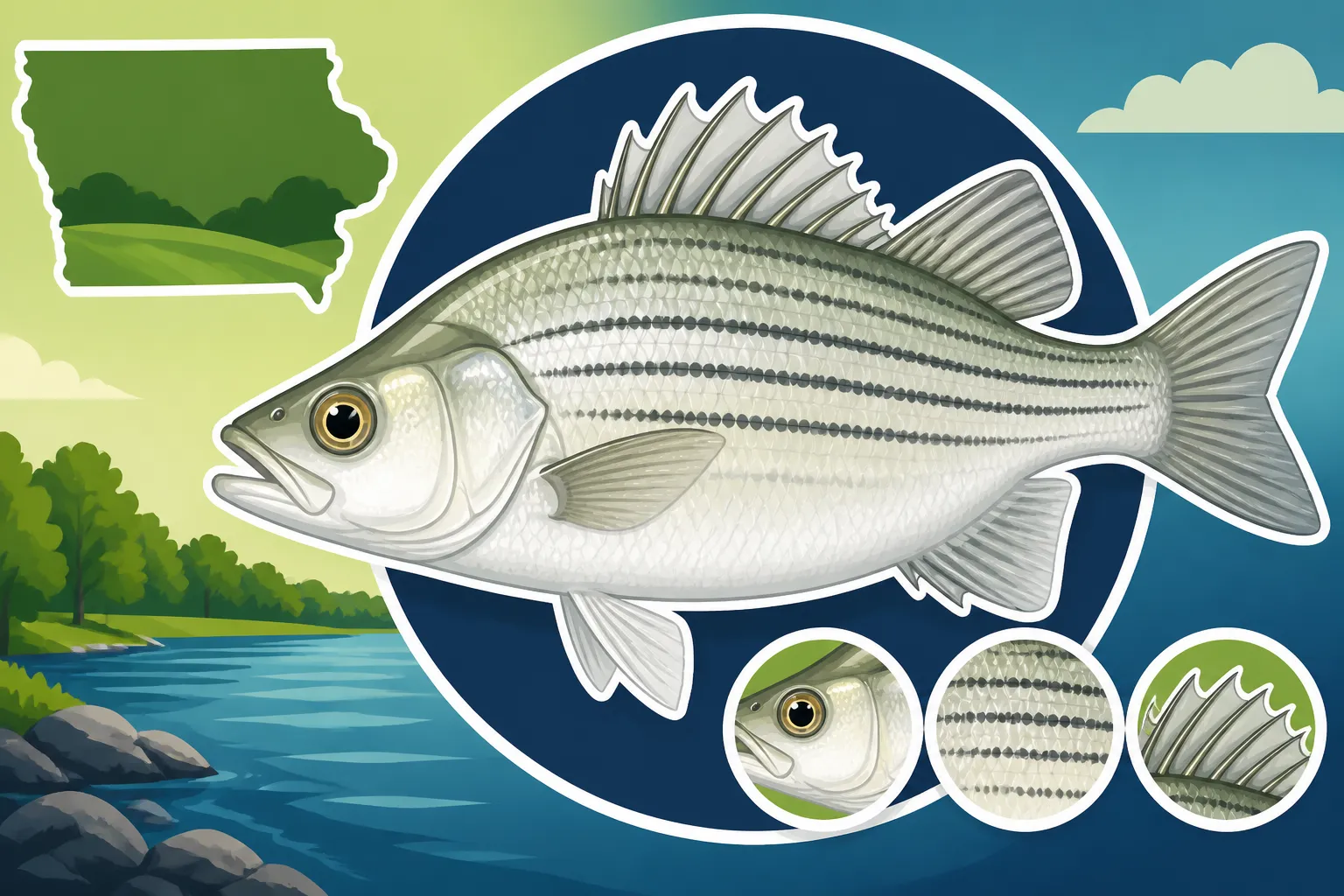
The most striking feature, and often the first thing people look for, are the horizontal stripes. A white bass typically sports between five and seven of these dark, horizontal lines running along its sides. Here's the critical detail: at least one, and usually several, of these stripes will extend unbroken all the way from behind the gill plate to the base of the tail. This unbroken stripe is a major clue! Keep in mind that the intensity of these stripes can vary. When a fish is stressed, just caught, or even depending on water clarity and light conditions, these stripes might appear faint or incredibly bold. Don't rely solely on how dark the stripes are; focus on their continuity.
Fin Characteristics
The fins are another excellent place to look for definitive identification markers, especially when differentiating white bass from their close relatives. White bass possess two distinct dorsal fins on their back. The front dorsal fin is spiny, meaning it's composed of sharp, rigid rays. The rear dorsal fin, located just behind it, is soft-rayed, made up of flexible rays. The key here is that these two dorsal fins are clearly separated. There's a noticeable gap between them, not just a slight notch or connection. This separation is a very reliable indicator for white bass.
Now, let's look at the anal fin, which is located on the underside of the fish, behind the vent. The anal fin of a white bass will always have three spines at its front. This is common to many fish, but for white bass, pay close attention to the length of the first and second anal fin spines. They will be roughly equal in length. This might seem like a small detail, but it's another piece of the puzzle that helps set them apart from some of their cousins.
Mouth and Tongue Features
The mouth of a white bass offers more clues. Take a moment to gently examine the mouth. You'll notice their lower jaw often protrudes slightly beyond the upper jaw, giving them a bit of an "underbite." This isn't always the most definitive trait, as it can be subtle, but it's part of their overall facial structure.
The absolute "smoking gun" for identifying a white bass often lies right on its tongue. If you can carefully open the fish's mouth and look at its tongue, a white bass will have a single, distinct patch of teeth right in the center. This patch might feel like a small, rough area. This characteristic is incredibly reliable and is one of the quickest ways to confirm you have a white bass, especially when you're uncertain due to faded stripes or other variable features. Being able to check for this feature is a skill that will serve you well on the water, and it's much easier than you might think to spot with a quick peek.
Eye and Gill Plate Details
While perhaps less definitive than the fins or tongue teeth, the eyes and gill plates can still offer supporting evidence. White bass have relatively prominent eyes, often appearing somewhat large in proportion to their head. The gill plate, the bony flap covering their gills, is generally smooth with no significant spines or serrations that you might find on other species. There aren't typically any unique spots or markings directly on the gill plate itself that are specific to white bass. These are more general features, but they contribute to the overall picture and help confirm your assessment once you've checked the more critical markers like fins and tongue teeth.
Distinguishing White Bass from Their Look-Alikes in Iowa
It’s one thing to know what a white bass looks like in isolation, but quite another when you’re looking at a cooler full of fish that all seem to have stripes! Iowa is home to a few other species that can easily be mistaken for white bass. Let's clear up that confusion.
White Bass vs. Yellow Bass
This is perhaps the most common identification challenge for Iowa anglers. Yellow bass (Morone mississippiensis) are plentiful in many of the same waters as white bass, and they share that general silvery, striped appearance. However, there are some very clear differences once you know what to look for.
The most noticeable difference is usually in the stripes themselves. While white bass have at least one continuous stripe extending to the tail, the stripes on a yellow bass are typically broken or offset below the lateral line. Imagine drawing a line horizontally through the middle of the fish's side; the stripes on a yellow bass will often zig-zag or appear as dashed lines, not a clean, continuous run.
Their body shape also differs. Yellow bass tend to be deeper-bodied and a bit more rounded or "chunkier" than the more elongated white bass. Their overall coloration can also have a distinct yellowish tint, particularly on the belly and lower fins, which gives them their name.
And remember that tongue patch? This is another key differentiator. Yellow bass typically have no teeth patches on their tongue, or at most, very faint, almost imperceptible ones. If you feel a distinct, single patch of teeth, it’s a white bass. If the tongue is smooth, you're likely holding a yellow bass. Learning to spot these subtle but important differences is vital. For more on this, check out Difference Between White Bass and Yellow Bass.
Here's a quick comparison table:
| Feature | White Bass | Yellow Bass | Wiper (Hybrid Striped Bass) |
|---|---|---|---|
| Body Shape | Moderately deep, compressed, elongated | Deeper, more rounded/chunky | Robust, muscular, deeper body than white bass, streamlined |
| Stripes | 5-7 distinct, at least one unbroken to tail | 5-7 distinct, usually broken/offset below lateral line | Often broken, irregular, or mottled; can be dark and distinct |
| Dorsal Fins | Clearly separated | Clearly separated | Slightly connected or very close |
| Tongue Teeth | Single patch of teeth on tongue | No or very faint teeth on tongue | Two distinct patches of teeth on tongue |
| Anal Fin Spines | First two spines roughly equal in length | First two spines not equal, second spine shorter | First two spines roughly equal in length |
| Overall Size | Smaller (1-3 lbs common) | Smallest (under 1 lb common) | Largest (often 5-15+ lbs), stocked for size |
White Bass vs. Wiper (Hybrid Striped Bass)
Wipers, also known as hybrid striped bass, are a cross between a white bass and a striped bass. They are stocked in some Iowa waters, like Rathbun and Saylorville, to provide a hard-fighting, larger game fish. Wipers can grow significantly bigger than white bass, often reaching impressive sizes, making them a highly sought-after catch. Because they are a hybrid, they tend to have a mix of features from both parent species, but with some key distinctions from a pure white bass.
Firstly, wipers generally have a more robust and muscular build compared to a white bass. They are thicker and heavier for their length. Their stripes are typically more irregular and often broken or mottled, sometimes appearing as a series of dashes rather than clean lines. While a white bass will have at least one unbroken stripe, a wiper's stripes are almost always interrupted and less defined, much like a true ocean striped bass.
The dorsal fins are another critical area. Remember how white bass have clearly separated dorsal fins? Wipers will have dorsal fins that are slightly connected at the base or are so close together that they almost appear to touch. This is a subtle but very important difference. If you can slide your finger easily between the two dorsal fins, it's likely a white bass or yellow bass. If they're nearly fused or very close, suspect a wiper.
Finally, the tongue teeth provide another definitive answer. While a white bass has a single patch of teeth on its tongue, a wiper will have two distinct patches of teeth. This is a clear indicator of the hybrid nature, inheriting traits from both parents. Because wipers are often managed differently due to their growth potential and stocking efforts, knowing this difference is extremely important for adherence to specific regulations.
Other Potential Confusions (and why they're less likely)
Sometimes, especially for newer anglers, other silvery fish might cause momentary confusion. For instance, a larger crappie might seem similar in profile, but crappie have deeply compressed, almost disk-shaped bodies, very different fin structures, and lack any horizontal stripes whatsoever. Sunfish or bluegill are even more distinct, being much rounder and usually having vibrant colors that don't resemble the silvery white bass. While these might cross your mind for a fleeting second, once you've familiarized yourself with the specific features of white bass, you'll quickly rule out these other species. The real challenge almost always comes down to distinguishing between white bass, yellow bass, and wipers.
Where White Bass Thrive and How Behavior Aids Identification
Understanding where white bass live and how they behave can give you additional clues for identification, even before you get them to the boat. Knowing their habits helps you anticipate what you might hook!
Preferred Habitats in Iowa
White bass are generally found in the open waters of larger lakes, reservoirs, and rivers throughout Iowa. They absolutely love big, expansive bodies of water where they can form large schools and pursue baitfish. You'll find strong populations in major reservoirs like Fishing Rathbun Lake in Iowa, Fishing Saylorville Reservoir in Iowa, and Fishing Coralville Reservoir in Iowa. They also thrive in the larger river systems, particularly the Fishing the Mississippi River in Iowa, where they can be incredibly abundant in certain pools and backwaters.
They prefer areas with clean water and good oxygen levels, often congregating around points, humps, and submerged structures where baitfish are plentiful. Unlike some other species that might cling to heavy cover, white bass are more pelagic, meaning they roam the open water column, constantly searching for food. This schooling behavior is a huge part of their charm and makes them a blast to catch once you find them. If you’re fishing in these kinds of environments and pulling in a lot of silvery, striped fish, the odds are good you're on a school of white bass.
Schooling Behavior and Feeding Patterns
One of the most exciting aspects of white bass fishing, and a strong behavioral identifier, is their aggressive schooling and feeding patterns. White bass are notorious for forming massive schools, sometimes numbering in the hundreds or even thousands. When they find a school of baitfish, they will often herd them to the surface, creating what anglers call "feeding frenzies" or "boils." You'll see the water churning, baitfish leaping out, and often birds diving into the commotion. This is a dead giveaway that white bass (or sometimes wipers) are actively feeding.
When you encounter these surface boils, you can often cast almost anything into the fray – a small spoon, a jig, or a topwater lure – and get an instant hook-up. This active, schooling behavior is highly characteristic of white bass and less common for solitary species or fish that prefer denser cover. So, if you're experiencing a hot bite with multiple hook-ups from schooling fish, and they fit the general description, it's a very strong indicator that you've found a school of white bass. This kind of action is what makes white bass so popular with anglers across Iowa.
Seasonal Movements
White bass also exhibit predictable seasonal movements that can further aid in your identification and fishing success. In the spring, as water temperatures begin to rise, white bass undertake significant spawning runs. They migrate from their deeper lake and river haunts into shallower tributary streams and rivers, seeking flowing water to spawn. This is a prime time to target them, and if you're catching striped fish in these specific spring riverine environments, it's highly likely they are white bass preparing to spawn or already engaged in the process.
After spawning, they'll move back into the main lake or river bodies for the summer, dispersing somewhat but still maintaining their schooling tendencies. In the fall, as temperatures drop, they often consolidate into larger schools once again, following baitfish into deeper pockets before winter sets in. Understanding these Iowa Fishing Seasons Explained and typical behaviors means that if you're catching a fish that fits the white bass description during a spring run in a river, your identification confidence can be even higher. For more specific timing, you might want to look into When White Bass Run in Iowa Rivers.
Essential Tools for Accurate Identification
Even with all this knowledge, sometimes you need a little help, especially when you're just starting out or encounter a particularly tricky specimen. Having the right resources on hand can make all the difference.
Reference Guides and Apps
The best tool you can have, aside from your own keen observation skills, is a reliable reference guide. The Iowa DNR publishes an annual fishing regulations booklet that often includes illustrations or descriptions of common fish species. This is an invaluable resource that every Iowa angler should have, whether in print or easily accessible on a smartphone. Many reputable fishing apps also offer detailed fish identification sections, often with clear photos and lists of distinguishing features.
Before you head out, it's a great idea to download one of these apps or make sure you have the digital version of the DNR regulations booklet saved to your device. You can even find excellent fish identification charts and posters online (a quick search on Amazon might yield some great options) that you can print out or keep on your phone. These visual aids can be incredibly helpful for a quick comparison when you're holding a fish in your hand and need to make a fast, accurate identification. Remember, it's about being prepared!
The Importance of a Good Camera (and a Released Fish!)
In today's world, almost everyone has a decent camera right in their pocket: their smartphone! If you're ever truly unsure about a fish's identity, especially if it's a species with strict regulations or a rare catch, snap a clear photo. Get shots from different angles – a side profile showing the stripes, a close-up of the dorsal fins, and if safe to do so, a quick peek at the tongue. This way, you can release the fish quickly and unharmed, then consult your reference materials or even ask an experienced angler later without stressing about keeping an illegal fish.
Catch-and-release is a fantastic practice, particularly when identification is uncertain. You get the thrill of the catch, the documentation, and you ensure the fish has the best chance of survival. Plus, if you're targeting a species for which you're legally allowed to keep a certain number, having a small, accurate scale or a measuring tape (easily found on Amazon) can also help you quickly assess if your potential keeper meets size limits without unnecessary handling. Remember, the goal is confident, responsible fishing.
Disclaimer
This article is for general informational purposes only and does not constitute professional advice. Laws, prices and regulations vary by location and change over time. Consult a qualified professional for guidance on your specific situation.