What Season Crappie Spawn
Crappie spawning can feel like a mystery sometimes, can't it? One day they're nowhere to be found, and the next, they're practically jumping into your boat. For those of us chasing these delicious panfish in Iowa, figuring out what season crappie spawn is the golden ticket to a successful spring and early summer on the water. This guide will peel back the layers of crappie spawning behavior, helping you pinpoint the best times and places to find them across our beautiful Hawkeye State.
Understanding the Crappie Spawn in Iowa: It's All About Timing and Temperature
It’s easy to get frustrated when you head out to your favorite crappie spot, full of hope, only to find the fish just aren't there. You hear whispers of the "spawn" and know it's a prime time, but the details can be elusive. The truth is, crappie spawning isn't just a random occurrence; it's driven by some pretty specific biological triggers. The primary one, the absolute undeniable signal for crappie to start thinking about making little crappies, is water temperature. They're looking for that sweet spot where the water is warm enough for their eggs to develop and hatch successfully, and knowing this temperature range is your first step to success.
The Science Behind the Spawn: Water Temperature and Biology
The single most critical factor dictating when crappie decide to spawn is the water temperature. It's not just a preference; it's a biological imperative. If the water isn't within a certain range, their bodies simply won't initiate the full spawning process, no matter how much daylight there is. This is why you can have an early spring one year and a late one the next, and the crappie seem to follow suit.
Specifically, crappie typically begin their spawning activities when water temperatures consistently reach between 58 and 68 degrees Fahrenheit. Below 58 degrees, the eggs won't develop properly, and above 68 degrees, there's a higher risk of mortality for the eggs and fry. They instinctively wait for these ideal conditions to give their offspring the best chance of survival. Think of it as their internal thermostat guiding their most important annual event.
It's crucial to understand that it's not just about a single warm day. A quick spike in temperature might bring some crappie shallower, making you think the spawn is on, but if a cold front pushes temperatures back down, they'll often retreat. They need sustained warmth for several days, sometimes even a week or more, to fully commit to spawning. This commitment means the males will start fanning out beds, and the females will move in to lay their eggs.
Beyond the external temperature, there are also internal hormonal changes happening within the fish. As the days lengthen and the water warms, these physiological shifts prepare their bodies for reproduction. It's a complex dance between environment and biology, all orchestrated to maximize the survival of the next generation of crappie. Understanding these underlying mechanisms helps you appreciate why simply looking at a calendar isn't enough when planning your spring crappie trips.
The Iowa Crappie Calendar: General Timeline
While Mother Nature certainly doesn't consult a calendar, we can observe some general patterns year after year across Iowa's lakes and rivers. For most of the Hawkeye State, the crappie spawn typically kicks off in the spring, but the exact "when" can definitely shift depending on how mild or harsh our winter was and how quickly spring truly warms up our waters. You have to be adaptable, as every year is a little different.
Generally, you can expect the early stages of the crappie spawn to begin in late April and extend into early May. During this time, the shallower bays, protected coves, and north-facing shorelines (which get more direct sunlight) start to warm up first. The crappie aren't actively spawning yet, but they're moving into these areas, staging in slightly deeper water nearby, scouting for prime real estate for their nests. This is often a great time to target them on the edges of these shallow areas before they get fully locked onto beds.
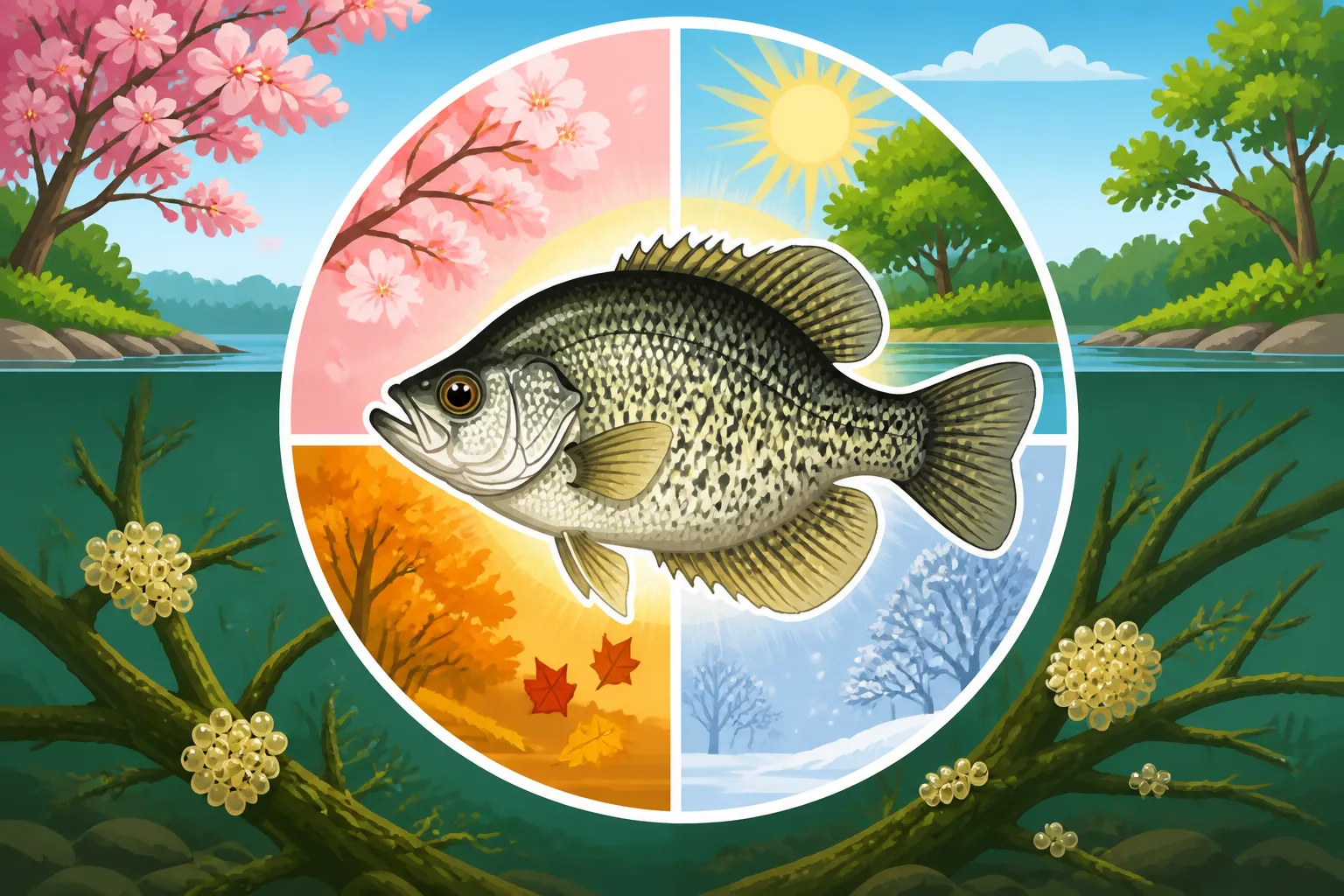
The peak of the crappie spawn in Iowa typically occurs from mid-May through early June. This is the prime window when the water temperatures are consistently in that sweet spot of 58-68°F. During this period, you’ll often see visible signs of activity: male crappie fanning out their dinner-plate sized nests on the bottom, and females moving onto these beds to deposit their eggs. This is when aggressive males are guarding nests, making them susceptible to a well-placed jig or minnow. It's the moment anglers dream about, when crappie fishing can be truly exceptional.
As we move past mid-June and into July, the crappie will transition into their post-spawn phase. Once the eggs are laid and hatched, the adults disperse, recovering from the strenuous spawning process. They'll often move to deeper, cooler waters, frequently suspending over structure like submerged brush piles or timber, or along channel edges. While you can still catch them, they won't be as concentrated in the shallow spawning areas, requiring different tactics to locate them. This is when a good fish finder really shines, helping you locate those suspended schools.
Spotting Spawning Crappie: Where to Look in Iowa Waters
Knowing when crappie are likely to be spawning is half the battle, but the other half is figuring out where to find them. They aren't just going to be everywhere in the lake; they're looking for very specific conditions to lay their eggs and protect their young. This means concentrating your efforts on areas that offer exactly what crappie need for a successful spawn. It's all about understanding their preferred real estate.
Ideal Spawning Habitat: Shallow, Protected, and Structured
Crappie are pretty particular about their nurseries, much like humans are when choosing a place to raise a family. They want shallow, calm water that offers ample protection from predators like bass, pike, and even hungry birds. Moreover, they need plenty of structure for their sticky eggs to adhere to, which also provides immediate cover for the tiny fry once they hatch. Without this vital habitat, their spawning efforts would largely be in vain.
Think about areas that are naturally sheltered from wind and waves. This could be protected bays, quiet coves, or backwaters off the main lake channel. Within these calm zones, crappie seek out submerged brush piles, fallen trees, old dock pilings, lily pad fields, or even stands of cattails along the shoreline. These features act as both egg anchors and crucial hiding spots. If you're exploring new waters, scanning for these types of cover is a fantastic starting point. Finding a good fishing map or even an aerial view on a mapping app can help identify such features before you even launch your boat.
The depth crappie choose for spawning is typically quite shallow, ranging from 1 to 5 feet, though it can sometimes be a bit deeper in clearer water lakes or slightly shallower in murkier ones. Look for areas where the sun can easily penetrate the water, warming the bottom. Darker bottoms, like muddy or rocky patches, will absorb more heat and warm up faster than sandy or light-colored areas, making them prime targets. These spots are often the first to reach that magic 58-degree mark.
When you're out on the water, you might find some excellent examples of these prime habitats. Think about the brush piles and submerged timber in Rathbun Lake Crappie Hotspots, which are well-known for holding significant crappie populations, especially during the spawn. Similarly, the sheltered coves and shallow, vegetated flats in Clear Lake Panfish and Crappie Spots offer ideal conditions for crappie to move in and set up shop. Learning the specific characteristics of your local waters will greatly improve your chances of locating these spawning havens year after year.
Visual Cues and Reading the Water
Sometimes, if you know what you're looking for and have the right conditions, you can literally see the signs of spawning crappie. It takes a keen eye, a bit of patience, and often, the right pair of optics, but actually spotting a crappie bed or a fish guarding it is incredibly rewarding and gives you undeniable confidence that you're in the right spot. This isn't just guesswork; it's about observing the subtle clues Mother Nature provides.
One of the most exciting visual cues is spotting "crappie beds." These are small, dinner-plate to frisbee-sized depressions on the bottom, usually in very shallow water, that male crappie meticulously fan out to prepare for egg-laying. They sweep away debris and sediment, leaving a clean, lighter-colored spot that stands out against the darker bottom. You'll often find these beds clustered together in prime areas, indicating a strong concentration of spawning fish. They might be nestled among submerged branches or along a clean bank, making them a clear sign of active spawning.
Beyond the beds themselves, if the water is clear enough, you might actually spot the crappie themselves. Male crappie, in particular, will become very territorial and guard their nests, often hovering directly over or very close to them. They might appear darker in color during the spawn, and you can sometimes see them actively fanning their fins to keep the bed clean. Females will also move in and out of these areas. This is where a good pair of polarized sunglasses becomes absolutely essential. I always recommend anglers invest in a quality pair, and you can find some fantastic options on Amazon that cut through the glare, allowing you to see into the water much more effectively than with the naked eye.
Another subtle but helpful indicator can be the presence of baitfish activity or insect hatches in the immediate area. While not directly linked to crappie spawning, these signs suggest a healthy ecosystem and a food source for crappie that are either pre-spawn staging or recovering post-spawn nearby. When you see minnows darting or insects buzzing around shallow cover, it’s always worth investigating further, as it often means larger fish are not far behind. Pay attention to everything the water is telling you.
Navigating the Spawn: Fishing Strategies and Gear
Knowing the when and where is fantastic, but you also need to know the how. Crappie during the spawn can be aggressive and territorial, but they can also be incredibly finicky, especially if they're pressured or if a cold front has just moved through. This means your approach, from the baits you choose to how you present them, needs to be well thought out. A little finesse often goes a long way when these fish are focused on reproduction.
Baits and Lures for Spawning Crappie
When crappie are on the beds, their primary focus isn't necessarily to feed aggressively, but rather to defend their territory or consume an easy meal that wanders too close. This is why smaller, less intrusive baits and lures tend to be the most effective. You want something that looks like an easy snack or an irritating intruder, rather than a chase. This is where the simple, classic approaches really shine.
One of the most consistently effective choices for spawning crappie is a small jig, typically in the 1/32 to 1/16 ounce range. The lighter weight allows for a slower fall, mimicking a dying baitfish or an insect gently fluttering down, which is often irresistible to crappie guarding nests. Popular colors include chartreuse, white, pink, or combinations like black and chartreuse. You can tip these jigs with tiny soft plastic bodies – often referred to as "plastics" – that come in various shapes like tubes, minnow imitations, or grub tails. For more specific ideas, check out Crappie Jig Fishing Techniques.
Of course, you can't talk about crappie fishing without mentioning minnows. Live minnows are a classic crappie bait for a reason: they work. A small live minnow hooked lightly through the lip or back and presented naturally is often the best choice, especially when fish are shy. Use a small, light wire hook (size 4 or 6 often works well) to avoid hindering the minnow's natural movement. For keeping minnows lively, many anglers will invest in a good minnow bucket and an aerator, both of which you can easily find on Amazon, ensuring your bait stays fresh throughout your trip.
While less common directly on the beds, small crankbaits or spinnerbaits can be effective for crappie that are staging in slightly deeper water before the spawn, or for post-spawn fish that are cruising the edges of spawning areas. These lures create more flash and vibration, which can draw a reaction strike from fish that aren't actively protecting a nest but are still opportunistic feeders. It’s always a good idea to have a variety in your tackle box, which is covered more in Best Tackle for Iowa Fishing.
Presentation and Patience: Key to Success
Even with the right bait, your presentation can make or break your crappie fishing success during the spawn. These fish can be sensitive to commotion, and slamming a heavy lure onto their bed is often a surefire way to spook them. A delicate touch and a healthy dose of patience are often the keys to filling your livewell. Remember, the goal is to entice a strike, not scare them away.
Subtle approaches are almost always best. Make gentle casts, aiming to have your bait enter the water as softly as possible. Think about how a leaf or a bug might fall onto the surface. Once your lure is in the water, work it slowly and deliberately around any visible structure or suspected beds. A slow, steady retrieve with occasional pauses is often more effective than an aggressive jigging motion. You might need to make multiple casts from different angles to find what triggers a bite without alarming the fish. It's a delicate dance, but when it pays off, it’s incredibly rewarding.
The bobber setup is often ideal for fishing spawning crappie, especially if they’re in shallow water over distinct beds. A slip bobber allows you to adjust your depth easily, presenting your bait right in the strike zone, just above or directly on a crappie bed. A small fixed bobber, easily found on Amazon alongside other essential fishing gear, also works wonderfully for very shallow presentations. The bobber keeps your bait suspended, allowing the current or a slight twitch of your rod tip to impart subtle action, which is often all it takes to get a territorial male crappie to strike.
Finally, patience is paramount. If you don't get a bite immediately after a few casts in a prime spot, don't give up right away. Try adjusting your bait's depth, switching colors, or waiting a few minutes before trying again. Crappie can be shy or temporarily distracted. Sometimes, just giving them a moment to resettle after your initial cast is enough. Persistence, combined with the right approach, will greatly increase your chances of a successful outing. This applies to all aspects of Iowa Fishing Techniques Guide during the spawning season.
The Impact of Environmental Factors on the Spawn
It would be a lot easier if the crappie spawn happened like clockwork every year, starting on the same date and lasting for the same duration. Unfortunately, Mother Nature often throws curveballs, and her whims can significantly influence the timing, duration, and overall success of the crappie spawn in Iowa. Understanding these environmental factors helps you adjust your expectations and strategies, preventing those frustrating days when the fish just aren't cooperating.
Weather Whims and Water Levels
Iowa weather is famously unpredictable. We can swing from chilly, rainy days to glorious, warm sunshine in a matter of hours, and these fluctuations have a direct and immediate impact on crappie spawning behavior. It’s almost like the fish are holding their breath, waiting for consistent conditions before committing.
A sudden cold front, for instance, can be a major disruption. If crappie have just started moving into shallow spawning areas and the air temperature drops significantly, bringing down water temperatures with it, they will often retreat. They’ll pull back to slightly deeper, more stable water, essentially putting the spawn on hold until conditions stabilize and warm up again. This can be incredibly frustrating for anglers who had planned their trip around the "peak" spawn, only to find the fish have gone quiet.
Heavy rains and subsequent flooding can also wreak havoc on spawning efforts. Rising water levels can inundate shorelines, making it difficult for crappie to find stable spawning sites, or pushing them into newly flooded areas where they might be harder to locate. Moreover, heavy rainfall often leads to muddy, turbid water. This reduced visibility can make it challenging for crappie to effectively guard their nests, and it certainly makes it harder for anglers to spot fish or discern bottom structure. These conditions can delay the spawn or force crappie to abandon traditional spots for clearer, more stable areas.
Conversely, a prolonged cool spring, where temperatures just never quite warm up consistently, can significantly delay the entire spawning season. Instead of peak activity in mid-May, you might find crappie are still just starting their push into the shallows well into June. This means anglers need to be flexible and constantly monitor local conditions and water temperatures, rather than relying solely on historical dates. This flexibility is key to understanding Iowa Fishing Seasons Explained.
Lake Specifics: Size, Depth, and Clarity
Just like people, every lake and river in Iowa has its own unique personality, and these inherent characteristics play a crucial role in how and when crappie spawn within them. What works for one body of water might not apply perfectly to another, even if they're only a few miles apart.
Smaller, shallower lakes and ponds tend to warm up much faster in the spring. Their lower volume of water absorbs heat more quickly from the sun and ambient air temperatures. This often leads to an earlier and more concentrated crappie spawn compared to larger, deeper reservoirs. If you're eager to hit the crappie spawn early in the season, targeting these smaller impoundments is often a good strategy.
On the other hand, larger reservoirs, such as Saylorville Reservoir or Coralville Reservoir, contain vast amounts of water that take much longer to warm uniformly. In these bigger bodies of water, the crappie spawn might be more drawn out and staggered. Different coves or sections of the lake will warm at different rates, meaning you might find fish actively spawning in one area while they're still staging in another, deeper part of the lake. This can extend your crappie fishing opportunities over a longer period, but requires more exploration to find the active fish.
Water clarity also plays a significant role. Clearer water allows sunlight to penetrate deeper, potentially warming more areas, but it can also make fish more wary and easier to spook. In contrast, murkier or stained water might limit visibility, but can also offer a sense of security for crappie, making them less shy. Understanding the specific water characteristics of the body of water you're fishing, whether it's the gin-clear waters of the Iowa Great Lakes or a more turbid river backwater, is crucial for adapting your approach. You can find general information on different types of fishing in Iowa Crappie Fishing in Iowa.
| Factor | Impact on Crappie Spawn | Fishing Tip |
|---|---|---|
| Water Temperature | 58-68°F (optimal), triggers spawning | Monitor surface temps; fish shallow, warming areas |
| Daylight Hours | Longer days signal spring | Focus on sun-exposed banks and coves |
| Cold Fronts | Delays/pauses spawn, pushes fish deeper | Fish deeper structure or wait for stable weather |
| Heavy Rain/Muddy Water | Disrupts spawn, reduces visibility | Seek clearer water; use scented baits/vibrating lures |
| Lake Size/Depth | Smaller/shallower warms faster, earlier spawn | Target smaller lakes early; larger lakes later or staggered spawn |
| Structure (Brush/Weeds) | Essential for egg attachment and fry protection | Target areas with submerged wood, docks, lily pads |
Remember, while this guide focuses on the crappie spawn, there's always more to learn about fishing in Iowa. Make sure you're up to date on all regulations by checking out the Iowa Fishing License Guide and if you're curious about other seasons, don't forget to learn about Ice Fishing in Iowa when the waters freeze over. For more hands-on advice, dive into How to Catch Crappie in Iowa or explore Best Lures for Panfish to refine your tackle box.
Disclaimer
This article is for general informational purposes only and does not constitute professional advice. Laws, prices and regulations vary by location and change over time. Consult a qualified professional for guidance on your specific situation.