Largemouth Bass Habitat in Iowa Ponds
It can be incredibly frustrating to hit a seemingly perfect Iowa pond, spend hours casting, and come up empty-handed while knowing there are big largemouth bass lurking just below the surface. Many anglers find themselves guessing where these elusive fish might be, leading to wasted time and a lot of head-scratching. This comprehensive guide is here to take the guesswork out of the equation, diving deep into the preferred habitat of largemouth bass in Iowa ponds so you can understand exactly where to find them and why they choose those spots.
Understanding the Basics: Why Largemouth Love Ponds
Iowa's landscape is dotted with countless ponds, from small farm ponds to larger community impoundments. For largemouth bass, these smaller, often self-contained bodies of water offer a distinct advantage over vast rivers and expansive natural lakes. It's not just a matter of convenience; ponds provide a unique set of conditions that allow bass to thrive, grow, and become the hard-fighting fish we all love to pursue.
The Pond Advantage: Shelter and Sustenance
Think of a pond as a cozy, well-stocked pantry and a secure fortress all rolled into one for a largemouth bass. Compared to a massive reservoir or a swift-flowing river, ponds are typically shallower, which means they warm up faster in the spring and stay warmer longer into the fall. This consistent temperature can accelerate the metabolism of bass, encouraging them to feed more frequently and grow quicker. Furthermore, the lack of strong currents found in many rivers means bass expend less energy fighting the flow, saving their strength for hunting and ambush.
Ponds also tend to be teeming with forage. While bigger lakes might have diverse ecosystems, many Iowa ponds are often packed with easy prey like bluegill, minnows, crayfish, frogs, and even small panfish. This abundance of food means a bass doesn't have to travel far or work hard for a meal. Combine this readily available food source with numerous places to hide and ambush, and you have an ideal environment for a top-tier predator like the largemouth bass. The relatively contained nature of a pond also means less competition from other large predatory species, allowing the largemouth to truly dominate the food chain.
General Largemouth Characteristics in Pond Environments
Largemouth bass are, at their core, ambush predators. They possess an innate instinct to hide and wait for their prey to swim by before exploding into action. This behavior is amplified in pond environments where clear water and varied structure allow them to perfectly execute their hunting strategy. They're built for short, powerful bursts of speed, and they prefer to position themselves in areas where they can dart out, grab a meal, and quickly retreat back to cover. This means they are almost always associated with some kind of physical object or a change in depth that provides them with an advantage.
Their diet in Iowa ponds is largely opportunistic but revolves around what's available. Younger bass will feed on insects, worms, and tiny minnows. As they grow, their palate expands to include larger bluegill, crappie, shiners, and even the occasional frog or snake. Understanding this helps you predict where they might be: if you see schooling baitfish nervously twitching near a weed line, there's a good chance a bass is nearby, ready to strike. Pond bass can be quite territorial, especially around prime feeding or spawning areas, so once you find one, there's a good chance others will be in similar nearby spots.
Key Habitat Features: Where Bass Hold Up
When you're looking for largemouth bass in an Iowa pond, you're essentially looking for comfort, food, and security. These three elements are almost always tied to specific physical features within the pond – what we anglers often call "structure" and "cover." Ignoring these key elements is like trying to find a needle in a haystack; paying attention to them is like having a metal detector.
Structure – The Foundation of Bass Habitat
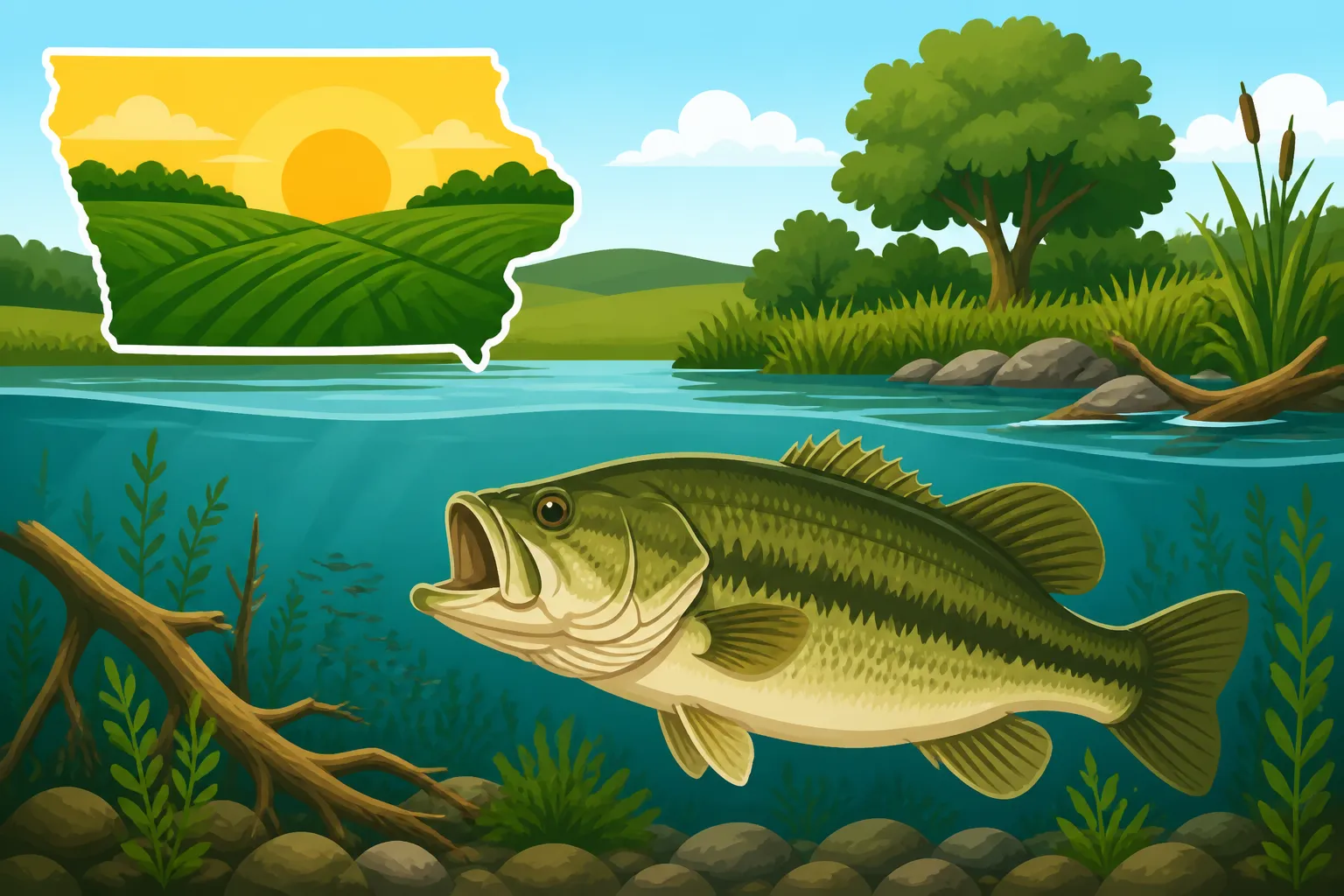
Structure refers to any change in the bottom contour or a stationary object that disrupts the uniformity of the pond floor. These can be natural or man-made, and they are absolutely crucial for bass. One of the most common and productive forms of structure is woody debris. This includes fallen trees, submerged logs, stump fields, or intentionally placed brush piles. A large oak tree that fell into the pond years ago, with its branches now decaying underwater, creates a complex network of shade, ambush points, and protection. Bass love to nestle deep within these branches, especially on bright, sunny days, waiting for a bluegill to wander too close. Many pond owners will even create their own brush piles by sinking old Christmas trees or bundles of branches, providing instant habitat.
Rock piles or scattered boulders also serve as excellent structure. Rocks absorb and retain heat, providing warmer water zones in cooler months, and offer plenty of nooks and crannies for crayfish, a favorite bass meal, to hide. If your pond was built over an old farmstead, you might even find remnants of old foundations or culverts underwater, which are absolute goldmines for bass. These hard, angular objects offer strong current breaks (if any) and a different feel than a soft, silty bottom, attracting baitfish and, consequently, bass. When fishing these areas, patience is key, as bass will often hug the structure tightly. If you're looking for guidance on what kind of gear works best around these snags, check out Best Tackle for Iowa Fishing.
Cover – The Green Shield
While structure refers to the fixed physical elements, cover typically refers to living or floating vegetation that provides concealment. Aquatic vegetation is perhaps the single most important type of cover in Iowa ponds for largemouth bass. This can manifest in many forms:
- Lily pads: These iconic plants provide dense overhead shade, keeping the water beneath them cooler and darker. Bass will often sit right under the pads, launching upward to ambush prey that swims by or lands on the leaves.
- Cattails and Reeds: Found along the pond edges, these emergent plants offer vertical cover, especially useful in shallower areas for bass to hide and spawn.
- Submerged grasses: Plants like milfoil, hydrilla, coontail, and pondweed grow from the bottom up. They create underwater "forests" that are incredibly rich in oxygen, baitfish, and insect life. Bass will patrol the edges of these weed beds, or even push deep into the thicker stuff, especially during hotter months. The density of these beds also acts as a natural filter, keeping the water clear and attracting more light for baitfish.
The type and density of vegetation will influence where bass position themselves. A sparse patch of grass might hold a single cruising bass, while a dense mat of lily pads might harbor several. Knowing the different types of vegetation is important because some are easier to fish through than others. These dense vegetated areas are particularly important during the spawning season when bass build their nests. For more specific insights into targeting bass in different scenarios, consider reading Bass Fishing Tips for Iowa Farm Ponds.
Depth Changes and Contours
Beyond the visible structure and cover, the invisible contours of the pond bottom play an equally vital role in bass habitat. Drop-offs, humps, and ledges are magnets for bass because they offer immediate access to different depths and temperatures. A bass might spend the morning in 5 feet of water on a flat, then simply slide down a nearby drop-off to 15 feet as the sun climbs higher, seeking cooler, more comfortable water without having to move far.
Old creek channels are particularly potent features in many man-made ponds. When a dam is built across a valley, the original creek bed remains underwater as a defined channel. Bass will use these channels as highways to navigate the pond, especially during seasonal migrations between shallow feeding areas and deeper wintering holes. They offer deeper water and often hold baitfish seeking the same. Understanding the general layout of the pond, including its contours, is crucial. If you can get your hands on an old topographical map of the area before the pond was built, you'll have an incredible advantage in locating these submerged features. Even without one, a good fish finder (we'll talk about those next!) can reveal these hidden treasures.
| Habitat Feature | Description | Why Bass Love It | Best Seasons |
|---|---|---|---|
| Fallen Trees/Brush Piles | Submerged wood, natural or man-made. | Ambush points, shade, protection, holds baitfish. | Year-round, especially good in summer and fall. |
| Aquatic Vegetation | Lily pads, cattails, submerged grasses. | Cover, shade, oxygen, holds baitfish, spawning areas. | Spring (spawning), Summer (shade), Fall (ambush). |
| Rock Piles/Riprap | Accumulations of rocks, often near dams or shorelines. | Holds heat, provides cover for crayfish/baitfish. | Spring (warming), Fall (retains heat), Winter (holds fish). |
| Drop-offs/Ledges | Sudden changes in bottom depth. | Access to varying depths/temperatures, migration routes. | Year-round, key transition areas. |
| Old Creek Channels | Submerged remnants of pre-pond stream beds. | Deeper water, travel lanes, holds fish in winter. | Year-round, excellent migration and wintering spots. |
| Dam Faces | Sloping face of the pond dam, often riprapped. | Hard structure, good for deep-water access, holds bait. | Year-round, especially windy days. |
| Aerators | Floating devices that oxygenate the water. | Attracts baitfish due to increased oxygen, provides cover. | Summer (warm, low oxygen), Winter (open water). |
Seasonal Changes and Pond Habitat
Largemouth bass aren't static creatures; their preferences for habitat shift dramatically with the seasons. What's a prime spot in April might be barren in August. Understanding these seasonal movements is perhaps the most critical skill an Iowa pond angler can develop. It's all about water temperature, metabolism, spawning urges, and the availability of food.
Spring: Pre-Spawn and Spawning Havens
As the ice melts and water temperatures begin to climb in early spring, the largemouth bass awaken from their winter lethargy. This is the pre-spawn period, a time when bass are intensely focused on feeding to build up energy reserves for the upcoming spawn. They will start to move out of their deepest wintering holes and stage in transition areas near points, submerged humps, or the edges of flats that are close to deeper water. They're looking for areas that warm up quickly, like north-facing banks that get more direct sunlight. These spots also offer easy access to the shallows where baitfish are becoming active. If you're interested in the specifics of these early-season movements, reading up on Pre-Spawn Bass Patterns in Iowa can be incredibly helpful.
As the water temperatures reach the upper 50s to low 60s Fahrenheit, the bass move into the spawning phase. They'll seek out shallow, protected flats, often with a hard bottom (like gravel or sand) and some nearby cover like submerged logs, cattail clumps, or lily pad roots. Male bass will fan out circular nests, diligently guarding them and later the fry. During this time, bass are incredibly vulnerable, and they can be found right in plain sight. They are less focused on feeding and more on reproduction, though they will strike at anything perceived as a threat to their nest. Look for slight depressions in the bottom, often in 1-4 feet of water, especially in the sunniest, most sheltered coves of the pond.
Summer: Seeking Shade and Deeper Comfort
When the Iowa summer sun beats down and pond temperatures soar, largemouth bass become more concerned with comfort and oxygen levels. They'll often retreat from the scorching shallow flats and seek out cooler, more oxygenated water. This means they'll gravitate towards deeper areas, but almost always in conjunction with structure or cover. Think about deep weed lines, where a thick mat of submerged grass ends abruptly in deeper water. Bass will patrol these edges, darting out to ambush prey that swims over the open water.
Submerged timber in deeper water becomes incredibly important. A fallen tree that reaches from the bank into 10-15 feet of water can hold bass at multiple depths. Shaded banks, particularly those with overhanging trees or thick brush, will also hold bass during the brightest parts of the day. And don't forget aerators if your pond has them. These devices churn and oxygenate the water, creating an oasis for baitfish and, consequently, bass, when oxygen levels might be depleted elsewhere in the pond due to heat. Fishing topwater early and late in the day, then switching to deeper presentations during midday, is a classic summer strategy. If you're curious about techniques to employ during these warmer months, check out Topwater Bass Fishing Tips.
Fall and Winter: The Migration to Deeper Water
As autumn arrives and water temperatures begin to drop, largemouth bass sense the impending winter. This triggers a frantic fall feeding frenzy. They know they need to pack on calories to survive the lean winter months. During this time, bass can be found almost anywhere in the pond, aggressively chasing baitfish. They'll often feed heavily along weed lines that are starting to die back, around submerged timber, and along channel edges. They become less particular about cover and more focused on finding schools of bait.
As winter truly sets in and water temperatures plummet, bass will migrate to their deepest wintering holes. These are typically the deepest sections of the pond, often associated with significant structure like old creek channels, large brush piles, or rock formations. They become much less active, their metabolism slowing dramatically. While they still feed, it's often a much more subtle bite, requiring slower presentations. They will often school up in these deeper pockets, so finding one bass can mean finding many. For a detailed look into how bass behave as the seasons turn cold, Iowa Bass Season Late-Fall Patterns offers excellent insights. During the coldest parts of winter, especially under ice, they will remain in these deep, stable environments, conserving energy. If you're an adventurous angler, understanding ice fishing for other species might even indirectly help you locate these deep structures, so you could check out Ice Fishing in Iowa.
Reading the Water: Identifying Prime Bass Locations
Finding largemouth bass in Iowa ponds isn't always about blindly casting to every piece of cover. It's about becoming a detective, looking for clues, and understanding the pond's personality. By learning to "read the water," you can dramatically increase your success rate and spend more time catching fish instead of just casting.
Visual Clues: What to Look For
Your eyes are your most important tool when scouting a pond. Start by looking for surface disturbances. Are there ripples or splashes that aren't caused by wind? This could be a bass chasing baitfish on the surface. Tiny minnows jumping out of the water are a dead giveaway that a predator is nearby. Also, observe any visible baitfish activity. Schools of minnows nervously darting or shimmering near the surface often indicate a bass lurking below.
Scan for obvious lily pad fields, cattails, or areas of thick submerged vegetation that break the surface. These are immediate targets. Also, look for visible structure like fallen trees, logs, or stumps along the shoreline or extending into the water. Even if only a small part is visible, you can bet there's more below the surface. Overhanging trees or docks provide shade, which is a prime location for bass on sunny days. A good pair of polarized sunglasses, easily found on Amazon, will cut through the glare and allow you to see deeper into the water, spotting submerged weeds, logs, or even bass themselves. Pay attention to how the light hits the water; shaded areas are often more productive.
Using Electronics (If Available)
While ponds often don't have the vastness of large lakes, a basic fish finder can still be an invaluable tool, even for shore anglers with portable units. They're not just for big boats! A fish finder can reveal hidden depth changes, humps, and ledges that are invisible from the surface. It can also help you identify submerged structure like brush piles, rock formations, or old creek channels. Understanding these bottom contours allows you to cast to precise locations where bass might be holding.
Modern fish finders can also show you bait balls – dense schools of smaller fish that bass feed on. If you see a cluster of baitfish on your screen, there's a good chance a predator is close by. For those who are typically river anglers but dabble in ponds, learning to interpret your electronics in a different setting is key. While Best Fish Finder for Iowa River Fishing focuses on rivers, many of the principles for identifying structure and fish apply directly to ponds, just on a smaller scale. A portable unit can even be mounted on a kayak or small jon boat for pond exploration.
Understanding Pond Layout and Features
Every pond has a story, often tied to its origin. Most Iowa ponds, especially farm ponds, were created by damming a small valley or creek. This means there's usually a dam face (often riprapped with rock), and the old creek channel running through the middle of the pond. These are always prime areas. Look for inflow and outflow points, such as culverts, spillways, or areas where small creeks feed into the pond. These areas can bring in nutrients and cooler, oxygenated water, attracting both baitfish and bass.
If it's a farm pond, consider livestock access points. While often muddy and less appealing for fishing, the compaction from animal hooves can sometimes create slight depressions or hard-bottomed areas that bass might use. Old farm implements or discarded items might also be at the bottom, creating unexpected structure. The overall shape of the pond can give clues too; a long, narrow pond might retain more of its original creek channel features, while a wider, rounder pond might have more subtle contours. Being observant about these features, even mundane ones, can lead you to productive bass habitat.
Enhancing Pond Habitat for Better Bass Fishing
For pond owners or those who frequently fish a particular pond with permission, there are proactive steps you can take to enhance the habitat for largemouth bass. These efforts not only improve fishing but also contribute to a healthier overall pond ecosystem. Creating better habitat translates directly into more and bigger bass.
Artificial Structure and Cover
One of the most direct ways to improve bass habitat is by adding artificial structure and cover. This replicates the benefits of natural submerged trees or weed beds but allows for more control and longevity. Ideas include:
- Brush piles: Old Christmas trees, bundles of trimmed branches, or even pallet structures can be sunk to create excellent vertical and horizontal cover. Just be sure they're securely weighted to prevent floating away.
- Rock piles: Creating defined rock piles in specific depth zones can attract crayfish and provide hard structure.
- Artificial fish habitats: There are many commercially available products designed specifically for creating fish habitat. These are typically made of durable, fish-safe plastics and come in various shapes and sizes, mimicking brush piles or dense vegetation. You can often find a good selection of these on Amazon for pond enhancement projects.
When deploying artificial habitat, think strategically. Place them near existing depth changes, along old creek channels, or in areas that lack natural cover. Multiple smaller brush piles are often more effective than one giant one, as they create more distinct holding areas for individual bass. Be sure to check with local authorities or pond owners about any regulations or permissions needed before adding anything to a public or private pond.
Managing Aquatic Vegetation
While aquatic vegetation is vital, too much of a good thing can be detrimental. A pond completely choked with weeds can reduce oxygen levels (especially at night or on cloudy days) and make fishing nearly impossible. The key is balance.
- Encourage beneficial plants: Some native submerged grasses and emergent plants provide excellent cover and food sources without becoming overly invasive. Research local plant species that are good for fish habitat.
- Control nuisance vegetation: Invasive or overly dense plant growth like duckweed or certain types of algae can cover the surface, block sunlight, and deplete oxygen. This might require mechanical removal, biological controls (like grass carp, if allowed and appropriate), or chemical treatments (always consult with an aquatic biologist or expert for safe and effective application).
The goal is to have a patchwork of vegetation, with open lanes and edges that bass can patrol and ambush from. A varied weed line, featuring different types of plants at different depths, is far more productive than a monoculture of dense, uniform growth.
Stocking and Forage Management
For pond owners, proper stocking and forage management are fundamental to growing a healthy largemouth bass population. Simply putting bass in a pond isn't enough; they need a robust food chain to thrive.
- Bass-Bluegill Ratios: A common strategy is to stock bass in a balanced ratio with a prolific forage fish like bluegill. Bluegill reproduce rapidly, providing a continuous food source for bass.
- Adding other forage: Occasionally, adding other baitfish like fathead minnows or golden shiners can diversify the bass's diet and provide quick growth opportunities. However, be cautious about introducing non-native or invasive species.
- Harvesting: Don't be afraid to harvest smaller bass or overpopulated panfish. This reduces competition and allows the remaining fish to grow larger. A pond with too many small bass will result in stunted growth for the entire population because there isn't enough food to go around. Conversely, selectively harvesting larger bass can sometimes lead to an overpopulation of smaller bass, so it’s a delicate balance.
Consulting with a fisheries biologist or your local Iowa Department of Natural Resources (DNR) office can provide specific recommendations for your pond's size, depth, and current fish population. They can help you develop a tailored plan to maximize the potential of your pond for trophy largemouth bass. Remember, a healthy pond ecosystem is a dynamic one, constantly changing, and managing it effectively is an ongoing process.
Disclaimer
This article is for general informational purposes only and does not constitute professional advice. Laws, prices and regulations vary by location and change over time. Consult a qualified professional for guidance on your specific situation.