How to Fish Deep Structure With Electronics
One of the most frustrating things as an angler in Iowa is knowing there are big fish lurking in deeper waters, but feeling completely blind to their location. You might know about that legendary ledge or submerged timber pile, but without the right tools and know-how, it's just a spot on a map, not a honey hole. This guide is all about equipping you with the knowledge to harness your boat's electronics, transforming those mysterious deep structures into productive fishing grounds.
Understanding Deep Structure in Iowa Waters
When we talk about deep structure in Iowa, we're not just talking about deep water. We're talking about specific topographical features on the bottom that interrupt the otherwise flat or gradually sloped terrain, creating an advantage for fish. These are the places where fish congregate, find shelter, ambush prey, or simply escape extreme temperatures.
What Qualifies as Deep Structure?
Deep structure can take many forms, and knowing what to look for is the first step in finding those hidden gems. Think about ledges, which are sudden drops or shelves in the lake or river bottom, providing a distinct change in depth that predatory fish love to patrol. Humps are elevated areas on the bottom, essentially underwater hills that can hold schools of baitfish, attracting bigger gamefish. Points, both main lake and secondary, extend out into deeper water, acting like highways for fish moving between shallow and deep feeding grounds.
Beyond these natural formations, submerged timber, like old trees or brush piles, offers invaluable cover and ambush points, especially for bass and crappie. Rock piles, whether natural or man-made, provide structure and habitat for a variety of species. Even old creek channels, carved out from pre-lake days, offer distinct depth changes that fish use for travel and feeding. Recognizing these features on your electronic display is key to unlocking their fishing potential.
Why Fish Hold to Deep Structure
Fish aren't just randomly distributed throughout a lake or river; they're incredibly strategic. Deep structure offers several crucial advantages that make it irresistible to them. First and foremost, it provides cover. This could be protection from predators, a place to hide from the sun, or a spot to conceal themselves while waiting to ambush unsuspecting baitfish. Imagine a large walleye tucked into a submerged brush pile, waiting for a passing school of shad.
Secondly, deep structure often creates favorable environmental conditions. Ledges and humps can cause current breaks in rivers, offering a resting place for fish like channel catfish and walleye. In lakes, deep water provides thermal refuge during the hot summer months, keeping fish comfortable when shallow waters become too warm. Conversely, these deeper areas can also retain heat longer into the fall, providing a more stable environment as surface temperatures drop. Baitfish, driven by these same needs, will often relate to deep structure, and where the bait is, the predators will surely follow.
Common Deep Structure in Iowa Lakes and Rivers
Iowa is blessed with a diverse range of fisheries, each with its own unique deep structure. In large reservoirs like Rathbun Lake in Iowa or Coralville Reservoir in Iowa, you'll find vast expanses of old creek channels, submerged timber, and deep ledges that were once shorelines or riverbeds. These lakes are prime candidates for using sophisticated electronics to find subtle changes in depth that might indicate a hidden walleye or crappie school.
On the mighty Mississippi River in Iowa, the deep structure is often defined by navigation channels, wing dams, rock riprap, and scour holes created by current. These areas can be incredibly dynamic, with fish constantly moving in response to water levels and current flow. Smaller lakes and even some deeper farm ponds might have less dramatic deep structure, but even a subtle breakline or a single submerged tree can be a significant fish magnet. Knowing the general topography of your chosen waterway, often available through detailed contour maps, helps narrow down your search before you even launch the boat.
Deciphering Your Electronics: Sonar, Imaging, and GPS
Your fish finder isn't just a gadget; it's your underwater vision, and understanding how to properly use and interpret its various functions is paramount to fishing deep structure effectively. Modern units, many of which you can find on sites like Amazon, offer a suite of tools that, when combined, paint a comprehensive picture of the underwater world.
Types of Fish Finders and Their Functions
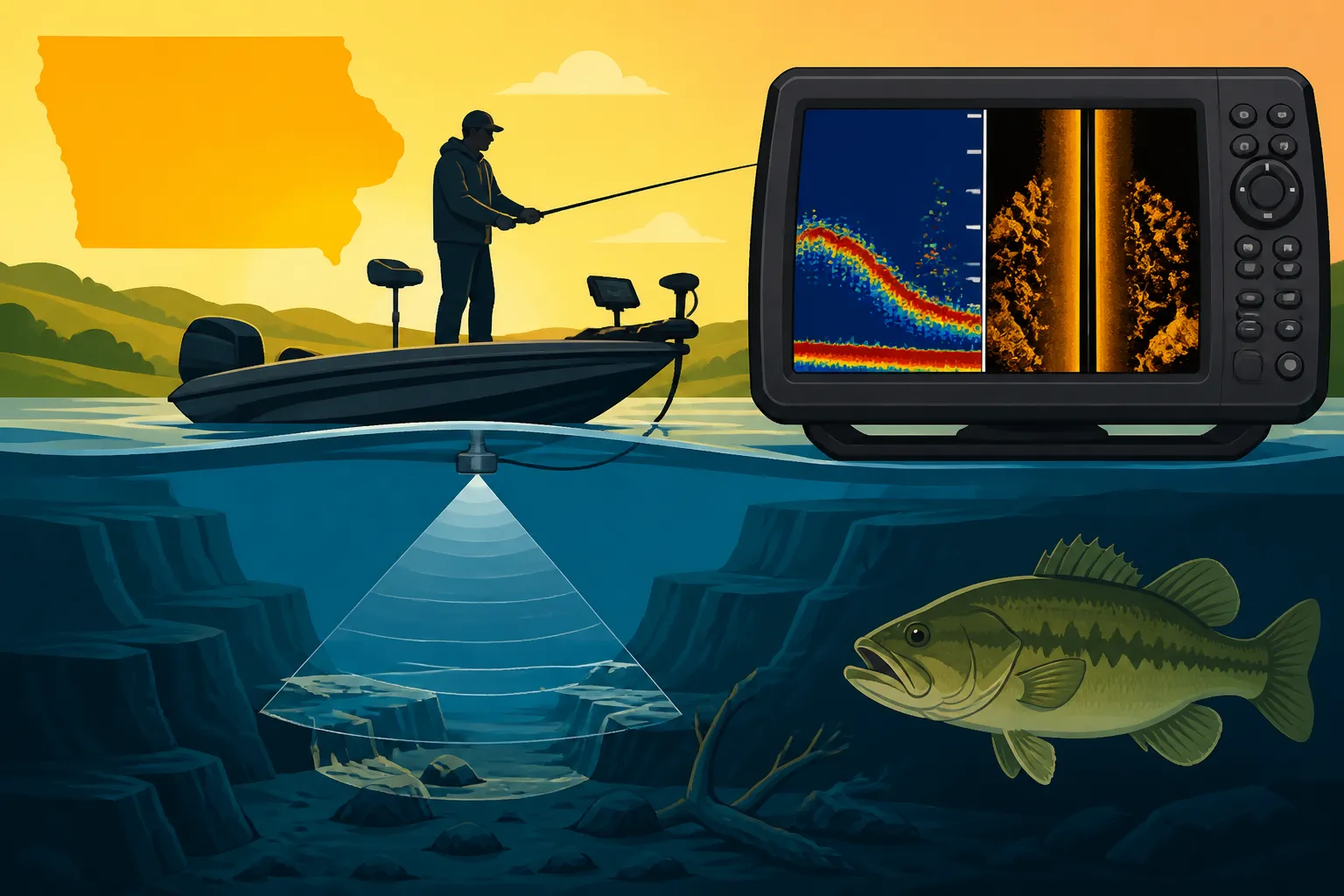
At its core, a fish finder uses sonar, which stands for SOund NAvigation and Ranging. This traditional 2D sonar sends out sound waves and measures the time it takes for them to bounce off objects (fish, bottom, structure) and return. The longer the delay, the deeper the object. This gives you the classic "fish arch" and a representation of the bottom. It's excellent for seeing what's directly beneath your boat and identifying suspended fish.
Moving beyond 2D, we have Down Imaging (often called DownScan or DownVü). This technology uses higher frequency sound waves, sent in a very narrow beam, to create photographic-like images of what's directly below. You'll see incredibly detailed images of submerged trees, rock piles, and even individual fish lying tight to the bottom. It excels at showing the true shape and composition of deep structure.
Then there's Side Imaging (or SideScan, SideVü), which is truly a game-changer for covering water. It sends beams out to the sides of your boat, scanning vast areas and showing you structure and fish off to the left and right. This allows you to identify deep ledges, brush piles, or schooling fish without driving directly over them, making it an invaluable tool for stealthily locating fish on expansive deep structure. Imagine scanning a large flat in Clear Lake in Iowa for subtle humps or rock beds without spooking potential catches.
Key Settings and Interpretations
Getting the most out of your electronics means tweaking the settings for current conditions and understanding what you're seeing. Sensitivity is crucial; too low, and you'll miss faint returns from fish or subtle structure; too high, and you'll get too much clutter. Adjust it to the point where you see a clear bottom line and distinct arches or images without excessive noise. The range (or depth setting) should be adjusted so you're focusing on the water column you're interested in, especially when targeting specific deep structure.
Zoom functions are incredibly useful for scrutinizing a small area of the water column, allowing you to magnify fish arches or detailed structure. Transducer frequency also plays a role: lower frequencies (e.g., 50 kHz) penetrate deeper and cover a wider cone, while higher frequencies (e.g., 200 kHz or Mega Imaging frequencies) offer more detail and a narrower cone. Learning to differentiate a true fish arch from debris, baitfish schools, or structure is an ongoing process, but generally, a solid, distinct arch is a good sign, especially if it's near structure.
GPS and Mapping Integration
Modern fish finders are almost always integrated with GPS and robust mapping systems. This is vital for deep structure fishing. High-definition contour maps (available as separate chips or built into premium units) show you the precise changes in depth, revealing subtle humps, channels, and drop-offs that are invisible from the surface. You can use these maps to anticipate where deep structure might be located before you even get there.
The ability to create waypoints is another essential feature. Once you locate a promising piece of deep structure or mark a school of fish on your sonar, immediately save a waypoint. This allows you to return to that exact spot with precision, whether to make another pass or to anchor and fish. Managing your waypoints effectively means you can build a library of productive deep spots over time, turning casual fishing trips into highly targeted missions.
Mastering the Hunt: Locating Fish on Deep Structure
Finding fish on deep structure isn't always about stumbling upon them; it's often a methodical process of searching, interpreting, and patterning. Your electronics are the key tools in this underwater detective work.
Grid Searching and Patterning
When approaching a large area with potential deep structure, don't just randomly drive around. Employ a systematic grid search pattern. Start by driving parallel lines over the suspected area, using your Side Imaging to scan wide swaths of the bottom. Think of it like mowing a lawn, ensuring you cover every inch. If you find something promising, like a submerged creek channel or a patch of timber, mark it with a waypoint.
Then, switch to a cross-pattern, driving perpendicular to your initial passes, focusing on those marked waypoints. This gives you different angles on the structure and helps confirm what you're seeing. As you find fish, pay close attention to the specific type of structure they're relating to – are they on the top of a hump, along a specific depth contour of a ledge, or inside a brush pile? This "patterning" helps you predict where else fish might be holding in similar areas of the lake. For more general guidance on how fish relate to their environment, check out our Iowa Fishing Techniques Guide.
Interpreting Baitfish and Predator Signals
Often, the first sign of gamefish on deep structure isn't the fish themselves, but the presence of their food source. Large schools of baitfish, like shad or minnows, will appear as dense clouds or balls on your 2D sonar, often suspended near or above deep structure. When you see these bait balls, look closely for larger, distinct arches lurking on the edges or directly beneath them – these are your predatory fish.
On Down Imaging or Side Imaging, baitfish might appear as smaller specks or masses. Predators, on the other hand, often stand out as larger, distinct targets, sometimes appearing as bright, elongated blobs or clear fish shapes depending on the resolution. It's not uncommon to see a single large fish directly beneath a bait ball, signaling that it's actively feeding. Understanding these signals is crucial for deciding whether a marked piece of structure is simply interesting, or actively holding fish. You can learn more about specific species like walleye and their behavior in our How to Catch Walleye in Iowa guide.
Using Waypoints to Mark Key Spots
Every time your electronics show you something significant – whether it's a dense bait ball, a cluster of fish, or an exceptionally promising piece of deep structure – you must mark it with a waypoint. This simple act is the difference between finding fish once and being able to return to them consistently. Think of your waypoints as an ever-growing treasure map of productive fishing spots.
Don't be afraid to drop many waypoints. You can always delete them later. Label them clearly, perhaps with the date, the type of structure, or the species you observed. This helps you review your notes later. When you come back to a waypoint, approach it slowly and re-scan the area with your transducers. Sometimes, fish move a short distance from the exact spot you marked, and a quick scan can help you relocate them efficiently. Using your mapping features to review these waypoints can also reveal patterns you might not have noticed while fishing, like several productive spots clustering around a particular depth or type of bottom. Many anglers use apps or desktop software to manage their waypoints, and many good options are available on Amazon that connect directly to popular fish finder brands.
Presenting Your Bait: Techniques for Deep Structure Success
Once you've used your electronics to pinpoint fish on deep structure, the next challenge is getting your bait to them effectively. Deep water fishing requires specific approaches to ensure your lure is presented naturally and enticingly at the correct depth.
Vertical Jigging and Dropping
For fish holding tight to deep structure, or when you've identified a concentrated school directly below your boat, vertical jigging is often the most effective presentation. This technique involves dropping a jig, spoon, or weighted bait straight down to the fish's depth. Your fish finder allows you to watch your lure descend and then work it precisely where the fish are holding.
Popular choices for vertical jigging include blade baits, heavy spoons, and lead head jigs tipped with plastics or live bait like minnows. The retrieve varies: sometimes a sharp lift and fall works best, other times a subtle quiver or dead-sticking it just above the fish is key. The beauty of this technique is the direct feedback your electronics provide. You can literally see your lure, see the fish's reaction, and adjust your presentation in real time. This is especially effective for species like walleye and crappie relating to deep humps or channel edges in lakes like West Okoboji Lake Fishing Guide.
Trolling Deep Diving Baits
When fish are more spread out over a large piece of deep structure, or actively cruising along a contour, trolling can be incredibly productive. This involves pulling deep-diving crankbaits or other weighted lures behind your boat at a controlled speed. The goal is to get your lure down to the depth where fish are holding and keep it there for extended periods.
For many Iowa lakes, anglers will use crankbaits designed to dive to specific depths, or incorporate planer boards and lead core line to get lures even deeper and wider from the boat. Pay close attention to your speed and the action of your lure; sometimes a slight speed change or zig-zag motion can trigger a strike. Your electronics will help you stay on the correct depth contours and alert you to schools of fish or changes in the bottom that your trolled bait should be approaching. For more specific techniques, explore our Walleye Fishing Techniques for Iowa Lakes guide.
Live Bait Rigs for Deep Water
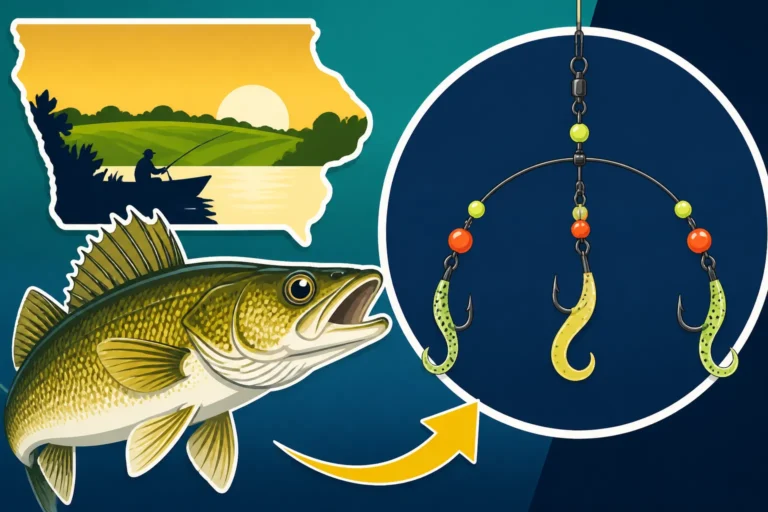
Sometimes, especially for finicky fish or certain species like catfish, nothing beats live bait. Several rigs are perfect for presenting live bait effectively on deep structure. A basic slip bobber rig, weighted to get your bait down quickly, allows you to suspend a minnow or worm at a precise depth just above or within the structure. The slip bobber allows for easy casting and retrieve, while the stopper sets the depth.
For bottom-dwelling species, a bottom bouncer rig, often used in conjunction with a snell and a crawler or minnow, is excellent. The heavy lead weight bounces along the bottom, keeping your bait in the strike zone while minimizing snags. Three-way rigs are another versatile option, allowing you to present a live bait at a specific depth off the bottom or suspend it near structure. No matter the rig, ensuring your bait reaches the fish and stays there, even in current, is paramount. You might also find some excellent live bait options and holders on Amazon to keep your minnows lively for these deep-water presentations.
| Fish Finder Technology | How it Works | Best Use for Deep Structure Fishing |
|---|---|---|
| 2D Sonar | Sends sound waves down, measures return time and strength. | Identifying fish arches, general depth, bottom hardness. |
| Down Imaging | High-frequency, narrow beam for photographic detail directly below. | Pinpointing specific submerged timber, rock piles, identifying fish tight to structure. |
| Side Imaging | Sends beams to the sides, scanning wide areas. | Locating distant humps, ledges, creek channels, and fish schools without driving over them. |
| GPS & Mapping | Satellite positioning combined with detailed contour maps. | Navigating, marking waypoints, staying on depth contours, understanding overall lake topography. |
Disclaimer
This article is for general informational purposes only and does not constitute professional advice. Laws, prices and regulations vary by location and change over time. Consult a qualified professional for guidance on your specific situation.