How to Fish for Northern Pike in Winter
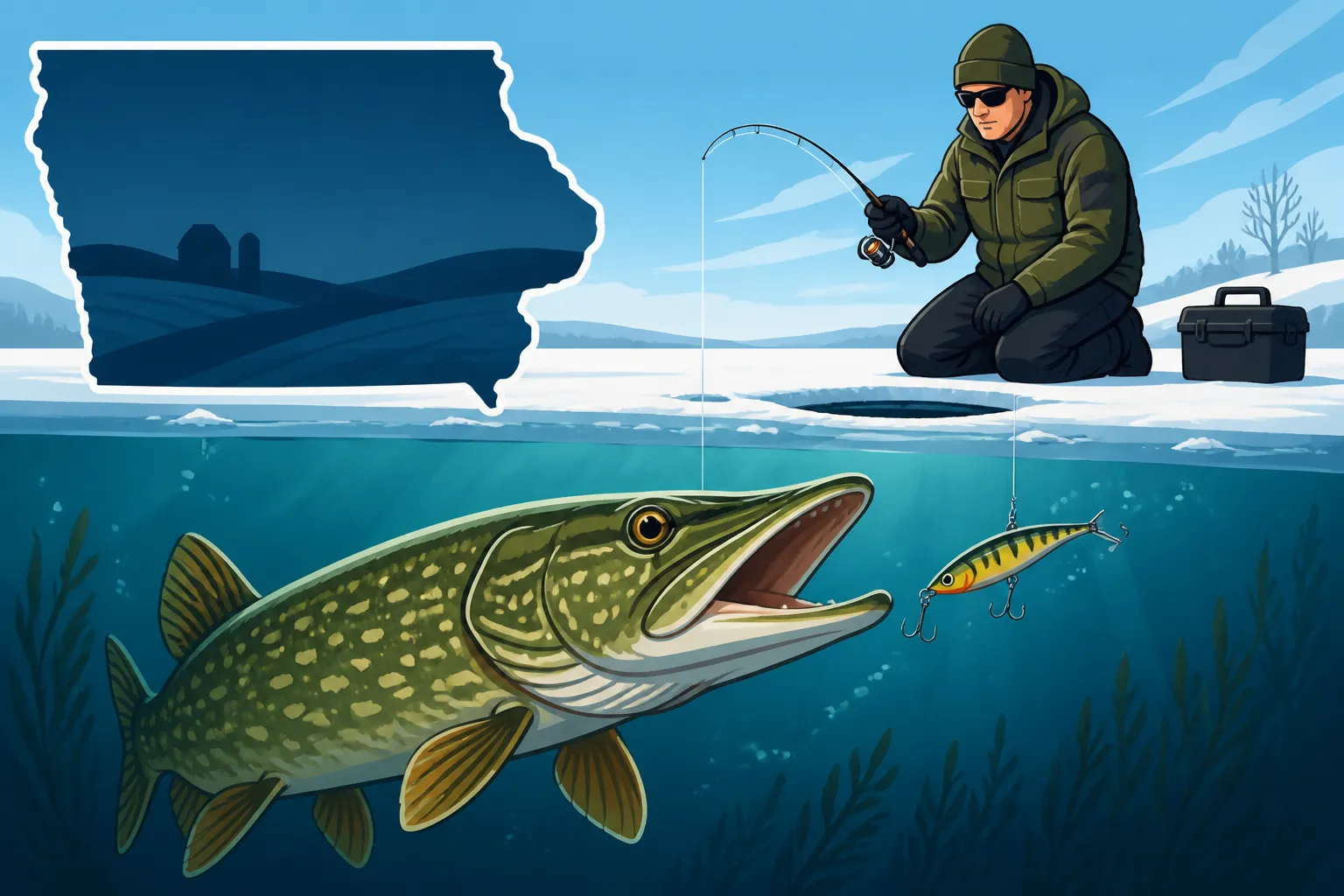
The crisp, often brutal Iowa winter might make some anglers pack away their rods, but for those of us who love the thrill of a fight, it signals prime time for targeting northern pike through the ice. It can be incredibly frustrating to sit out on a frozen lake, shivering, with no bites, wondering if the pike have simply vanished. This guide is here to unravel the mysteries of winter pike behavior and equip you with the knowledge and strategies to successfully catch these toothy predators, even when the temperatures plummet.
Understanding Northern Pike Behavior in Winter
Northern pike are fascinating creatures, and unlike some other species that become incredibly sluggish in winter, they remain remarkably active. This makes them a fantastic target for ice anglers willing to brave the cold. Understanding their habits is the first step to putting more pike on the ice.
Why Pike Remain Active Under the Ice
Pike are apex predators in many Iowa waterways, and their metabolism, while slowing somewhat, doesn't grind to a halt like, say, some panfish. They're built for bursts of speed and ambush hunting, and that instinct doesn't disappear when a sheet of ice forms overhead. In fact, the cold water can even improve their oxygen absorption, making them quite comfortable in the frigid depths. Their streamlined bodies allow them to cruise effectively, and their keen eyesight, especially in low light conditions often found under ice and during shorter winter days, gives them an advantage. What really keeps them going is the need to feed. Other fish, like smaller panfish and suckers, are still active, though perhaps less frenetic than in summer, providing a consistent food source for hungry pike. If you've ever thought about when Northern Pike Fishing in Iowa is best, winter is definitely a contender for active fishing.
Key Winter Habitats for Northern Pike
Just like in open water, pike are highly structure-oriented fish. In winter, this usually means they'll be found near drop-offs, weed lines (especially green weeds that still produce oxygen), submerged timber, and points. These areas offer both ambush points and proximity to schools of baitfish, which are often holding to similar structures. Shallow bays adjacent to deeper water can also be hotspots, especially if they have residual vegetation or if a warm spell draws baitfish in. The edges of channels and where old creek beds snake through a lake bottom are also prime territories. Think about where a pike would hide to surprise its prey – those are the spots you want to focus on. For a deeper dive into their preferred haunts, check out our guide on Northern Pike Habitat in Iowa Lakes.
Essential Gear for Winter Pike Fishing in Iowa
You wouldn't head into a blizzard wearing shorts and a t-shirt, and you shouldn't head out onto the ice for pike without the right gear. Battling a powerful pike through an 8-inch hole in freezing temperatures demands specialized equipment that can handle the cold and the fight.
Rods, Reels, and Line for Cold-Weather Pike
For northern pike, you're going to want a robust setup. Unlike the ultralight gear some use for panfish, pike demand medium-heavy to heavy ice rods, typically ranging from 36 to 48 inches in length. A longer rod provides more leverage and helps absorb the shocks of a pike's headshakes, keeping the line tight and preventing break-offs. Pairing this with a sturdy spinning reel (size 2500-4000) or a baitcasting reel designed for ice fishing, capable of handling cold temperatures without freezing up, is crucial. Look for models with large handles that are easy to grip with gloved hands.
Line choice is critical. Many anglers opt for braided line (20-30 lb test) for its sensitivity and strength, but it's essential to use a fluorocarbon leader (30-50 lb test) of at least 12-18 inches. Pike have incredibly sharp teeth, and they will chew through monofilament or even braided line in a heartbeat. The fluorocarbon leader is nearly invisible underwater and provides the necessary abrasion resistance. You can find robust options for all these components, including quality fluorocarbon leaders, on Amazon. This setup is quite similar to what you'd use if you were looking for the Best Rod for Catfish Fishing, prioritizing strength and durability.
The Best Baits and Lures for Ice Pike
Pike are opportunistic eaters, and in winter, they often prefer a substantial meal. Live bait is frequently the most effective choice. Large shiners, suckers, or even substantial fatheads are excellent. Hook them through the back or just below the dorsal fin to keep them lively on a quick-strike rig. A quick-strike rig uses two treble hooks, one near the head and one near the tail, ensuring a solid hookup when a pike grabs the bait, minimizing deep hooking.
Artificial lures can also be very productive, especially if you're actively jigging. Large spoons, lipless crankbaits, and even soft plastic swimbaits retrieved with an erratic motion can trigger aggressive strikes. Colors that stand out, like chartreuse, orange, or firetiger, are often good choices in darker winter waters. Sometimes, a more natural color like silver or perch patterns can be effective on clear days. Experimentation is key! Don't be afraid to try different baits and retrieve speeds until you find what the pike are responding to.
Table: Common Winter Pike Baits & Lures
| Type of Bait/Lure | Description & Best Use | Pros | Cons |
|---|---|---|---|
| Live Minnows/Suckers | Large baitfish (4-8 inches) suspended under a tip-up. | Highly effective, natural presentation. | Requires bait tank, can be expensive. |
| Large Spoons | Metal lures, often brightly colored, jigged aggressively. | Excellent for attracting attention, good flash. | Can get snagged easily on bottom structure. |
| Lipless Crankbaits | Hard plastic lures that vibrate and rattle. | Good for covering water and active fish. | Can be heavy, may require faster retrieve. |
| Soft Plastic Swimbaits | Realistic plastic fish imitations, jigged or slow retrieved. | Natural look and action, versatile. | Can be torn by pike teeth, may require frequent replacement. |
| Tip-ups | Passive setup with a flag that signals a bite. | Allows coverage of multiple holes, less effort. | Less interactive, requires waiting. |
Safety and Comfort Gear for Iowa's Winter
Iowa winters are no joke. Prioritizing safety and comfort isn't just about enjoying your trip; it's about survival. First and foremost, you need to understand Ice Fishing Safety on Iowa Lakes. Always check ice thickness before venturing out, and continue to check it as you move. A minimum of 4 inches of clear, solid ice is generally recommended for walking, but for heavy gear like shelters and ATVs, you'll need significantly more.
Dress in layers! Start with a moisture-wicking base layer, add insulating layers like fleece, and finish with a waterproof and windproof outer shell. Thermal boots are non-negotiable, and quality gloves or mittens that allow dexterity for handling gear while still keeping your hands warm are invaluable. Hand warmers, a portable heater for your shelter, and hot beverages are highly recommended. A good ice fishing suit, often insulated and buoyant, can make a huge difference in staying warm and safe. Many excellent options for Best Cold Weather Clothing for Ice Fishing can be found online.
A portable ice fishing shelter, whether a pop-up or a flip-over style, provides essential protection from the wind and cold. An ice auger is also critical for cutting holes; consider a power auger for speed and ease, especially if you plan to drill many holes. Learn about the Best Ice Fishing Auger Types to pick the right one for you. Don't forget basic safety items like ice picks (worn around your neck), a rope, and a fully charged cell phone.
Proven Techniques for Ice Fishing Northern Pike
Now that you're geared up and understand a bit about pike behavior, let's talk about how to actually get those flags to fly and those rods bending.
Setting Up Your Ice Fishing Spread
When targeting pike, it's often best to cover a wider area than you might for panfish. Pike are ambush predators, so they're not necessarily schooling up in tight groups. Many anglers use a combination of active jigging rods and passive tip-ups.
If you're using tip-ups, drill several holes in a strategic line or pattern, focusing on those prime winter habitats we discussed earlier – weed edges, drop-offs, points. Spread them out to cover more ground, perhaps 20-50 feet apart, depending on regulations for how many lines you can legally fish. Typically, you'll set your live bait at various depths, perhaps one just above the weed line, another suspended mid-column, and one closer to the bottom, to see what the pike are keying into that day. Ensure your tip-ups are securely planted and highly visible. When that flag goes up, don't just run over and yank! Give the pike a moment to really take the bait before setting the hook with a smooth, firm pull.
For your active jigging rod, choose a hole near one of your tip-ups or in a spot you suspect holds fish. This allows you to stay warm in your shelter while still actively fishing. The beauty of this approach is that while your tip-ups are waiting for a cruising pike, you're actively trying to call them in or entice a strike with your jigging motion.
Aggressive Jigging vs. Deadsticking
Both aggressive jigging and deadsticking have their place in winter pike fishing.
Aggressive Jigging: This technique involves actively moving your lure up and down, creating flash and vibration to attract attention. Large spoons, lipless crankbaits, or even heavy jigs with soft plastics are excellent for this. The idea is to mimic a fleeing or injured baitfish, triggering a pike's predatory instinct. You might raise the lure a foot or two, let it flutter down, then pause for a few seconds. Vary your retrieve speed and intensity until you find what works. This can be particularly effective when you're trying to locate active fish or when the bite is slow, and you need to coax a strike.
Deadsticking: This is essentially using a rod and reel like a tip-up, but with more control. You'll set your bait (often live bait or a large dead minnow) at a specific depth and leave the rod in a holder, watching the rod tip for any movement. Some anglers will occasionally give the rod a gentle twitch to impart a little action to the bait. The advantage of deadsticking is that it's more subtle than aggressive jigging and can be incredibly effective when pike are less active or spooked by too much movement. It's often used in conjunction with tip-ups, providing another "set it and forget it" option while you focus on another hole.
The key to both is patience and observation. Watch your electronics (if you have them) for fish approaching, and pay close attention to which depths and presentations are getting results.
Locating Pike on the Ice
Finding pike under a sheet of ice can feel like finding a needle in a haystack, but modern electronics and some old-fashioned intuition can help tremendously. A good fish finder (flasher or LCD unit) is an invaluable tool. It will show you the depth, the bottom composition, and most importantly, any fish swimming below your hole. Look for humps, submerged islands, sharp drop-offs into deeper water, and areas where you see baitfish congregated. Pike won't be far from their food source.
Don't be afraid to move! If you're not getting any action after 30-60 minutes, pack up and move to another promising spot. Drill new holes, try different depths, and explore new structure. This is where a good power auger really shines. You can be mobile and search out active fish efficiently. For those deeper insights into finding fish, consider learning How to Read a Fish Finder for Walleye – many of the principles apply to pike as well. Often, the best winter fishing spots in Iowa are those with varied structure.
Where to Find Winter Pike in Iowa (and Local Insights)
Iowa has some fantastic opportunities for winter pike, offering anglers a chance to tangle with these aggressive fish. Knowing which bodies of water are known for pike and how to approach them under the ice can significantly boost your success.
Top Iowa Lakes for Winter Pike Fishing
While pike can be found in many Iowa lakes and rivers, some destinations consistently produce better results. The Iowa Great Lakes region, including Spirit Lake, West Okoboji, and East Okoboji, are perennial favorites. These large, deep lakes offer diverse habitats that pike thrive in, especially during winter. Look for them around the extensive weed beds, points, and structural elements of these lakes.
Smaller lakes and reservoirs throughout the state, particularly those with good populations of yellow perch, suckers, or other panfish, can also be excellent. Places like Big Creek Lake, Clear Lake, and the Mississippi River backwaters can hold impressive pike. Always check current Iowa Fishing Season Dates and Limits for specific regulations on pike and any other species you might encounter. Your local bait shop is also an incredible resource for up-to-date ice conditions and where the bite has been hot. They'll often tell you which lakes have had a good Northern Pike Season and Limit in recent years.
Reading the Ice and Structure for Pike
Beyond just knowing the lake, being able to "read the ice" and the underwater structure is a skill that separates successful anglers from those who just hope for the best. On the ice, pay attention to clues:
- Old Ice Holes: While old holes don't guarantee fish are still there, they indicate that someone else found it promising enough to drill. Just be cautious of refrozen old holes, as they can be weaker.
- Snow Cover: Areas with less snow might mean thinner ice, but it also means more light penetration, which can attract baitfish and subsequently pike. Conversely, thick snow can insulate the ice, making it safer, but it also creates darker conditions.
- Shoreline Features: Look for points, inlets, and visible weed beds along the shoreline. These features often extend under the ice and indicate prime structure.
Underwater, your electronics are your eyes. Focus on transitions: where a shallow flat drops into deeper water, where a hard bottom meets soft silt, or where a submerged brush pile breaks up the monotony of the lakebed. Pike love these "edges" where they can dart out and ambush unsuspecting prey. Don't be afraid to experiment with different depths; sometimes pike will be cruising just under the ice, and other times they'll be belly-to-the-bottom in deep water.
Remember that how long northern pike grow can be quite impressive in Iowa, with many anglers reporting fish well over 30 inches. With the right techniques and a bit of perseverance, you could be the one telling stories of a trophy pike caught through the ice.
Disclaimer
Fishing conditions, regulations, and ice safety can change rapidly. Always check the latest Iowa Department of Natural Resources (DNR) regulations and local ice conditions before venturing out. Ice fishing carries inherent risks; prioritize safety above all else. This guide is for informational purposes only and does not guarantee fishing success.