How Deep to Fish for Walleye in Spring
Spring in Iowa can be a truly fantastic time to chase walleye, but it also presents a unique challenge: these elusive fish are constantly on the move, transitioning from their deep wintering holes to shallow spawning grounds and back again. Figuring out just how deep to fish for them can feel like solving a constantly shifting puzzle. This comprehensive guide will help you understand the dynamic depths walleye prefer throughout the Iowa spring, from the immediate ice-out period all the way through their post-spawn recovery, giving you the insights needed to put more fish in your boat or on the bank.
The Dynamic Depths of Early Spring Walleye
When the ice finally relents and gives way to open water across Iowa's lakes and rivers, walleye begin a fascinating, depth-driven journey. Their behavior is intrinsically linked to the warming water, their biological drive to spawn, and the availability of food. Anglers who grasp these fundamental movements will have a significant advantage in locating these prized game fish.
From Ice-Out to Pre-Spawn Staging
Immediately after ice-out, especially in larger lakes like the Iowa Great Lakes or the deeper reservoirs, walleye are often still found in or near their wintering grounds. This means they might be holding in the deeper basins of 30-50 feet or more, conserving energy while waiting for water temperatures to climb. This early period, typically from late March to mid-April depending on the year, can be challenging as the fish are lethargic and less inclined to chase. However, as the sun begins to warm the shallower northern bays and rockier points, a subtle shift begins.
These initial warm-ups trigger the first stages of their pre-spawn migration. Walleye will start to move out of the deepest parts of the lake or river and begin staging in intermediate depths. Think of them as gathering points – areas that offer both deeper water for security and cooler temperatures, but are also conveniently close to where they intend to spawn. This is a critical transition period, and understanding these movements is key to successful Spring Fishing in Iowa If you're out on the water, pay close attention to water temperature readings; even a one or two-degree difference can concentrate fish.
Identifying Key Pre-Spawn Depths and Structures
During the pre-spawn staging phase, walleye often position themselves along depth contours adjacent to spawning grounds. These locations are typically main lake points, submerged humps, or the edges of river channels. The exact depth can vary wildly based on the specific body of water, but a general range might be anywhere from 15 to 30 feet. In larger rivers like the Mississippi, walleye will stage in deeper holes and current breaks, often along the main channel or in the mouths of tributaries, before moving onto shallower gravel bars to spawn.
Consider a classic Iowa lake scenario: A deep main lake basin transitioning into a gradual shelf. Walleye might be holding right on that breakline where the depth drops from 15 feet to 25 feet, or even deeper if the sun is bright and the water is clear. They’re looking for structure that provides cover and also access to passing baitfish. On overcast days or during dawn and dusk, these walleye might push shallower onto the flats for a quick meal, only to retreat to deeper water as the light intensifies. This is where patience and systematic searching of different depth ranges really pays off. For a deeper dive into understanding their movements, check out our guide on Iowa Walleye Season Opening Strategies.
Navigating the Walleye Spawn: Where the Big Ones Hide
The walleye spawn is a highly anticipated event for Iowa anglers. While the actual act of spawning often happens in very shallow water, successfully catching walleye during this period means understanding where they are before and after they lay their eggs. This phase typically runs from late April into mid-May, but again, it’s all dictated by water temperature.
Spawning Locales and Preferred Depths
Walleye are broadcast spawners, meaning they don't build nests. Instead, they seek out areas with specific characteristics to deposit their eggs. In Iowa, this almost always means hard-bottom areas: rocky reefs, gravel beds, riprap along shorelines or causeways, and areas with current in rivers. They need these hard surfaces for their eggs to adhere to, and current or wave action helps oxygenate the eggs and keep them free of silt.
The actual spawning depths are surprisingly shallow, often ranging from just 2 to 10 feet of water. This is where the male walleye arrive first, cleaning the rocks and waiting for the females. Once the females move in, they’ll release their eggs over these shallow rocky areas, usually under the cover of darkness. While you might spot fish in these very shallow areas, they are typically less interested in feeding during the peak spawning activity. The focus for anglers should shift to the immediate vicinity—the slightly deeper holding areas where fish stage before moving onto the spawning beds or where they recover afterward.
Strategies for Fishing During the Spawn
Fishing directly on the spawning beds during peak activity can be challenging and often unproductive, as the fish's primary focus is reproduction. Instead, concentrate your efforts on the slightly deeper staging areas just outside these shallow spawning grounds. This could be a rocky point that gradually slopes into 10-20 feet of water, a subtle breakline near a dam in a river, or the deeper edges of a prominent reef. These depths offer walleye a sanctuary where they can rest, process the spawn, and occasionally feed.
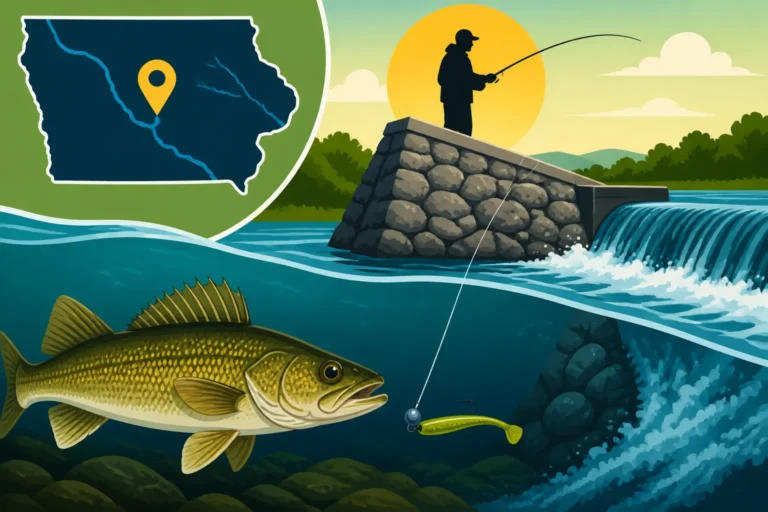
For instance, on the Mississippi River, walleye will use current seams and eddies in depths of 10-18 feet just upstream or downstream of known spawning shoals. In lakes like Clear Lake, they might be found on the deeper edges of the rock reefs or even along riprap causeways in 8-15 feet of water. Pay attention to the conditions; if it's an unusually warm spring and the water is getting into the high 50s quickly, the spawn might be earlier and the post-spawn transition will begin sooner. Always keep an eye on the official Walleye Season and Size Limits.
Post-Spawn Recovery: Where Walleye Re-Energize and Feed
Once the rigors of spawning are over, both male and female walleye are depleted and hungry. This post-spawn phase, typically from late May through June in Iowa, sees them transition from spawning grounds to more active feeding patterns. Their depth preference during this time is all about recovering energy and finding an easy meal.
The Post-Spawn Slump and Movement Patterns
Immediately after spawning, walleye enter a recovery period. The females, especially, are exhausted from expending so much energy producing and laying eggs. They will move off the shallow spawning beds to nearby deeper water, often seeking out areas with slightly cooler temperatures and some form of cover. This "post-spawn slump" can mean they are less aggressive, but they are still catchable if you present your baits effectively and at the correct depth.
Their movement from shallow to deeper areas isn't usually a direct plunge to the bottom of the lake. Instead, it's a gradual retreat to depths that offer security and proximity to forage. They might initially move to the first available drop-off from the spawning bed, or find a deeper weed line that's just starting to grow in. As they regain their strength, their predatory instincts kick back in, and they'll start actively hunting baitfish, which are also becoming more active in the warming waters. This is an excellent time to implement strategies covered in our How to Catch Walleye in Iowa guide.
Targeting Hungry Walleye in Transitional Depths
During the post-spawn period, you'll generally find walleye in depths ranging from 10 to 25 feet. However, this is highly variable and depends on factors like sunlight, water clarity, and the location of baitfish. On bright, sunny days, walleye will often retreat to the deeper end of this range or seek out dense cover, like emerging weed beds or submerged timber. On cloudy days, or during the low-light periods of dawn and dusk, they might push up into shallower water to feed actively.
Look for walleye congregating around main lake points, prominent humps, the edges of developing weed lines, or along creek channel edges in reservoirs. They'll often be relating directly to structure that holds baitfish. For example, if you're fishing Rathbun Lake, look for them along the old creek channels or points where schools of shad are holding. Using a good fish finder is invaluable for identifying these transitional depths and finding the schools of bait that walleye will be keying in on. Many anglers find reliable and effective fish finders on platforms like Amazon, offering a wide range of features to suit different budgets. Experiment with different presentations at these depths; jigs, crankbaits, and live bait rigs are all effective for triggering these hungry fish.
Environmental Factors Dictating Walleye Depth
Walleye are incredibly sensitive to their environment, and a handful of key factors continuously influence their preferred depth. Ignoring these variables is like fishing with a blindfold on; understanding them allows you to anticipate their movements and adjust your tactics accordingly.
Water Temperature, Clarity, and Current
These three elements are arguably the most significant drivers of walleye depth in the spring.
- Water Temperature: This is the golden ticket. Walleye are cold-blooded and will always seek out water temperatures that are most comfortable for them, which also align with their metabolic needs and spawning cycles. In early spring, cooler water (low 40s to low 50s Fahrenheit) will keep them deeper, but as the water warms, they'll move shallower. The optimal temperature range for spawning is usually between 45-50°F. If your thermometer reads significantly outside this range in a known spawning area, the fish are either staging deeper or have already spawned and moved on. Many anglers rely on portable water thermometers, easily found on Amazon, to get accurate readings throughout their fishing day.
- Water Clarity: Clear water generally pushes walleye deeper, especially during the day. Their sensitive eyes give them an advantage in low light, so in clear conditions, they'll avoid bright sunlight by descending. Conversely, in murky or stained water, light penetrates less deeply, allowing walleye to feel more comfortable in shallower depths. After a heavy spring rain, for instance, a river might become quite turbid, and walleye could be found in depths as shallow as 5-10 feet, rather than their usual 15-20 feet.
- Current: In rivers and river-run reservoirs, current is a constant influence. Walleye will use current breaks, eddies, and seams to conserve energy while still having easy access to food that drifts by. Deeper holes, the backside of wing dams, and the slack water behind bridge pilings are all classic current-break spots. Their depth in these areas will be dictated by the strength of the current and the available structure. For tactics on these waters, our guide on Walleye Fishing Techniques for Iowa Rivers is a great resource.
Light, Weather, and Forage Availability
Beyond the physical properties of the water itself, external factors play a huge role in determining where walleye choose to hold.
- Light Conditions: Walleye have large eyes that are highly adapted for low light conditions. This means they are often more active and will move shallower during overcast days, at dawn and dusk, or during nighttime. On bright, sunny days, they tend to retreat to deeper water, dense cover, or shaded areas where they can ambush prey without being exposed. This is why a sudden clear day after a cloudy stretch can seem to make the walleye disappear—they've likely just dropped deeper. Understanding How Weather Affects Bass Fishing can also provide insights into how fish react to changing conditions, applicable to walleye too.
- Weather Patterns: Stable weather tends to promote more consistent walleye behavior. However, spring in Iowa is famous for its unpredictable swings. A sudden cold front can significantly impact walleye, often pushing them deeper and making them less aggressive. Conversely, a prolonged period of warming, stable weather can bring them shallower and make them more active. Pay attention to changes in barometric pressure as well; sharp drops often precede less active feeding.
- Forage Availability: This is arguably the ultimate determinant of walleye location, and by extension, their depth. Walleye are predators, and they will always be where their food is. If baitfish like shad, shiners, or alewives are holding in 15 feet of water along a breakline, you can bet the walleye won't be far behind. If baitfish are schooling in open water at 20 feet, that’s where you’ll need to target. Using marine electronics, like a quality fish finder, is paramount for locating baitfish schools and the structure they relate to. Learning How to Read a Fish Finder for Walleye can drastically improve your success rate.
Here’s a quick reference table to help visualize typical spring walleye depths in Iowa:
| Spring Phase | Typical Water Temp (°F) | General Depth Range (Feet) | Preferred Conditions | Key Structure Examples |
|---|---|---|---|---|
| Early Pre-Spawn | 40-48 | 20-40+ | Cold, often clear | Deep basins, main lake channels, deep points, current breaks |
| Pre-Spawn Staging | 45-52 | 15-30 | Warming, often cloudy | Transitional depths near spawn, humps, channel edges, rocky points |
| Peak Spawn | 48-55 | 8-20 (near beds) | Warming, some current/wave action | Deep edges of rocky reefs, riprap, gravel bars, current seams |
| Post-Spawn | 52-60 | 10-25 | Steady warming, variable light | Main lake points, weed line edges, submerged humps, creek channels |
Remember, these are general guidelines. The best anglers are always adapting, using their electronics to find bait and structure, and experimenting with different depths until they locate the fish.
Conclusion
Understanding how deep to fish for walleye in Iowa during the spring is not about memorizing a single number, but rather appreciating the dynamic interplay of water temperature, light, current, and the all-important spawn cycle. From the deep retreats of ice-out to the shallower staging grounds, the actual spawning beds, and finally, the transitional depths of post-spawn recovery, walleye are constantly on the move. By paying close attention to these environmental cues, you can refine your approach, systematically search promising areas, and ultimately increase your chances of connecting with these fantastic fish. Stay patient, be observant, and remember that adaptability is your best weapon against the spring walleye puzzle.
Disclaimer
Fishing conditions and regulations in Iowa can change. Always consult the latest Iowa Department of Natural Resources (DNR) fishing regulations booklet or website before heading out on the water to ensure you are compliant with all current rules and limits. This guide is for informational purposes only and does not constitute legal advice.