Jigging Techniques for River Walleye
If you've ever tried to chase walleye in Iowa's rivers, you know it can be a real challenge. The constant current, ever-changing depths, and the fish's finicky nature can leave even experienced anglers scratching their heads, wondering where those elusive golden ghosts are hiding. This guide is all about equipping you with the knowledge and proven techniques to master jigging for river walleye, turning those frustrating days into memorable catches.
Understanding River Walleye Behavior and Their Love for Jigs
River walleye are fascinating creatures. Unlike their lake-dwelling cousins who might cruise vast open waters, river walleye are highly attuned to current and structure. They're opportunistic predators, always looking for an easy meal, and a properly presented jig can mimic injured baitfish or crawfish perfectly, making it irresistible. The key is understanding why they behave the way they do in a river environment, which directly informs how you should approach them with a jig.
Why River Walleye Hold to Current Breaks
One of the biggest differences between lake and river walleye is their relationship with current. Rivers are highways of food, but fighting the current constantly takes a lot of energy. So, walleye will expend as little energy as possible while maximizing feeding opportunities. They don't just swim randomly; they actively seek out current breaks and ambush points. Think of it like a human trying to walk against a strong wind – you'd naturally duck behind a building or a large tree to rest, right? Walleye do the same thing.
These current breaks can be anything from submerged rocks, log jams, wing dams, bridge pilings, deep holes, or even subtle changes in the river bottom contour. They offer a sanctuary from the main current, allowing the walleye to conserve energy while letting food flow directly to them. A properly presented jig, drifting or bounced just right, looks like an easy meal caught in the current seam. Understanding these holding patterns is your first step to success. For a broader perspective on their habits, you might want to read our guide on how to catch walleye in Iowa.
How Walleye Feed in River Systems
Walleye in rivers are often active feeders, especially during low-light conditions or when there's a good current pushing baitfish around. They typically feed by ambushing prey that drifts past their chosen current break. This means they often face upstream, waiting for unsuspecting minnows, shad, or crawfish to tumble by. Your jig needs to imitate this natural presentation – coming to them, not swimming against the current.
The type of forage available can also influence their feeding behavior and what jig presentation works best. In many Iowa rivers, shad, minnows, and crawfish are primary food sources. A jig can be dressed with soft plastics that mimic these baitfish or tipped with live bait like a minnow or a nightcrawler for added scent and appeal. Their vision is also highly adapted to low light, making jigs with glow properties or contrasting colors particularly effective, especially in stained river water. For more details on where these fish reside, check out our piece on where walleye live in Iowa rivers.
Essential Jigging Gear for River Walleye
Having the right equipment can make all the difference when you're battling the current and trying to feel those subtle walleye bites. It's not just about having a rod and reel; it's about having a setup that allows for sensitivity, control, and the power to handle strong river fish. Don't underestimate the role of your gear in successful river jigging.
Rod and Reel Selection for Sensitivity and Power
For river walleye jigging, you need a rod that offers a delicate balance of sensitivity and backbone. A medium-light to medium-power spinning rod, typically 6'6" to 7'6" in length, is often ideal. The fast or extra-fast action tip is crucial for feeling those light bites, which can sometimes just feel like a slight "tick" or added weight on your line. The sensitivity helps you distinguish between a fish bite and the jig bumping against the bottom.
The rod's backbone is equally important for setting the hook firmly and fighting a strong walleye in current. Pair this with a lightweight, smooth-operating spinning reel in the 2000-3000 size range. A good drag system is non-negotiable, as river walleye can make powerful runs. While a baitcasting setup can also work, especially for heavier jigs and deeper water, spinning gear generally offers better control for lighter presentations and is more forgiving for casting accuracy, which is vital when targeting specific current seams. If you're pondering specific setups, our guide on the best rod length for Iowa river walleye fishing offers some great insights.
Line Choices: Braided, Fluorocarbon, and Monofilament
Your fishing line is the direct link between you and the fish, and each type has its advantages for river jigging:
- Braided Line: This is often the top choice for many river walleye anglers due to its incredible sensitivity and zero stretch. You'll feel every bump, tick, and bite, even in deep water or strong current. Its thin diameter for its strength also helps cut through the current, reducing bow in the line and allowing your jig to get down faster. A 10-20 lb test braided line is common, often paired with a fluorocarbon leader for stealth.
- Fluorocarbon Line: While it has some stretch, fluorocarbon is virtually invisible underwater and offers excellent abrasion resistance, which is a huge plus around rocky river bottoms and snags. It's often used as a leader material, connecting to braided main lines. You can also spool a reel entirely with 6-10 lb fluorocarbon for a more direct connection, though you'll sacrifice some sensitivity compared to braid.
- Monofilament Line: The most forgiving line type with good knot strength and shock absorption. However, its stretch can make it less sensitive for detecting subtle jig bites, especially in current. It's generally not the first choice for dedicated river jigging but can work in calmer areas or for beginners due to its ease of use.
For most river jigging scenarios, a braided main line with a fluorocarbon leader provides the best of both worlds – sensitivity and stealth. When considering your options, a dive into braided line vs monofilament for walleye can further help your decision-making. You'll find a wide range of quality lines available on Amazon, allowing you to compare brands and find the perfect match for your setup.
The Right Jigs and Soft Plastics
This is where the magic happens! Jigs for river walleye come in countless shapes, sizes, and colors. The weight of your jig is paramount and depends heavily on the depth and current speed. You need a jig heavy enough to reach the bottom and maintain contact, but not so heavy that it drags unnaturally or snags too easily.
Here's a general guide for jig weights:
| Current Speed | Typical Depth (feet) | Suggested Jig Weight (ounces) | Notes |
|---|---|---|---|
| Slow Current | 5-15 | 1/8 – 1/4 | Light current, calmer pools, slack water |
| Moderate Current | 10-25 | 1/4 – 3/8 | Typical river current, deeper runs |
| Strong Current | 15-35+ | 3/8 – 1/2+ | Main channel, strong eddies, deeper wing dams |
| Very Strong Current | 20-40+ | 1/2 – 1 ounce+ | Extreme current, large deep holes, heavy structure; may need trolling |
Common Jig Types:
- Ball Head Jigs: Versatile, good for most situations.
- Erie Jigs (Stand-up Jigs): Designed to stand upright on the bottom, presenting your bait vertically. Excellent for soft plastic presentations.
- Mushroom Head Jigs: Good for finesse presentations, especially with small plastics.
- Inner Tube Jigs: Hollow body allows for scent insertion.
Soft Plastics: These are often paired with jigs to add profile, action, and color. Popular choices include:
- Paddle Tail Swimmers: Mimic baitfish, create vibration.
- Grubs/Curl Tails: Excellent tail action with minimal movement.
- Minnow-shaped Plastics: Realistic baitfish imitation.
- Action Shads/Flukes: Erratic darting action.
Colors can vary widely depending on water clarity and light conditions. Natural colors (green pumpkin, brown, white, pearl) work well in clear water, while brighter colors (chartreuse, orange, pink) are often effective in stained or muddy water. Don't be afraid to experiment! You can often find great bulk packs of various jig heads and soft plastics on Amazon, letting you stock up for different river conditions.
Mastering Jigging Techniques for River Walleye
Jigging isn't just about dropping a lure and hoping for the best. It's an art form that involves understanding how the current interacts with your jig and how to present it naturally to a walleye. There are several effective techniques, each suited for different river conditions and walleye moods.
The Snap-Jigging or Rip-Jigging Technique
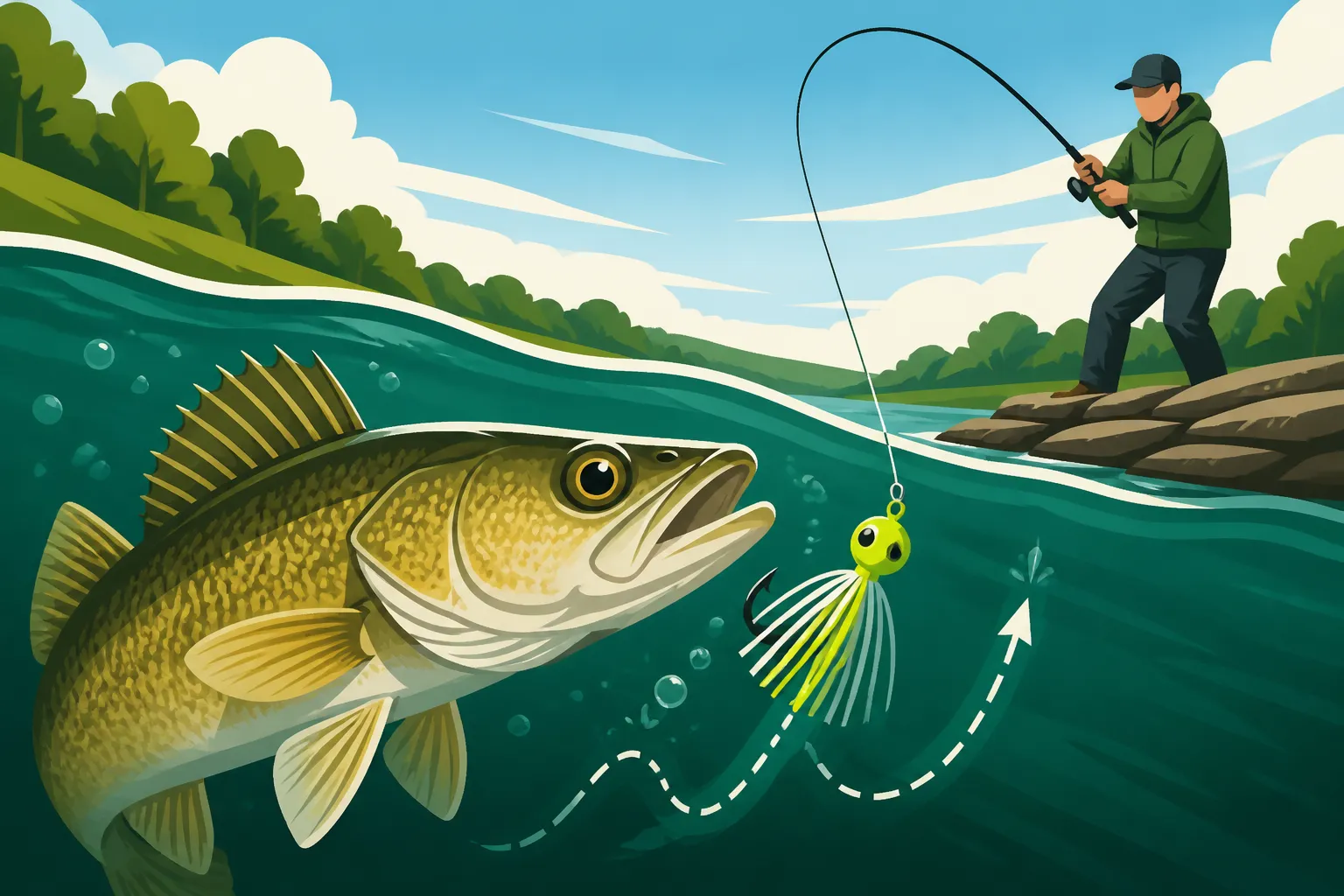
This is an aggressive technique often used when walleye are active and feeding, or when you need to impart a lot of action to trigger a reaction strike. The idea is to quickly lift your rod tip to "snap" or "rip" the jig off the bottom, letting it fall back down on a semi-slack line. The erratic upward movement mimics a darting or fleeing baitfish, and the subsequent flutter on the fall is often when the walleye strikes.
To execute this, cast your jig upstream or quarter-upstream. Let it sink to the bottom. Once you feel contact, give your rod tip a sharp, upward snap of about 1 to 3 feet. Immediately follow the jig back down with your rod tip, keeping just enough tension to feel the jig. Many bites occur as the jig is falling, so pay close attention to any sudden stop, slackening of the line, or light tick. Reel in the slack as the jig drifts downstream and repeat the snap. This technique can be incredibly effective in areas with good current and structure.
Vertical Jigging for Precise Presentations
Vertical jigging is all about precision and keeping your jig directly below your boat, often in deeper holes, around bridge pilings, or along sharp drop-offs. It's particularly effective when walleye are holding tight to structure or aren't aggressively chasing. The goal is to keep your jig dancing right in their strike zone.
Position your boat so you're directly over the target structure, using a trolling motor or spot-lock feature to maintain your position. Drop your jig straight down until you feel it hit the bottom. Then, with small, subtle lifts of your rod tip (often just 6-12 inches), gently raise and lower the jig, allowing it to tap the bottom or hover just above it. The key here is not to lift too high, keeping the jig in the walleye's feeding window. You might experiment with pauses after each lift, as a motionless jig can often entice a hesitant fish. Sometimes, a subtle quiver of the rod tip is all it takes. For winter fishing, this technique is paramount, and our guide on how to jig for winter walleye near Dubuque is an excellent resource.
Dragging and Drifting Jigs
Sometimes, the most subtle presentation is the most effective, especially when walleye are lethargic or the water is very cold. Dragging and drifting jigs allows the current to do most of the work, presenting your jig in a natural, unthreatening manner. This technique is often used from a boat, slowly drifting downstream.
Dragging: Involves using a slightly heavier jig (or a jig with a weight forward design) and letting it maintain contact with the bottom as your boat slowly drifts with the current or is controlled by a trolling motor. You'll feel the jig bumping and scraping along, stirring up small puffs of silt, which can attract walleye. Keep your rod tip low and pointed towards the water, reeling in slack occasionally to stay vertical or maintain bottom contact. When you feel a bite, it often feels like a subtle increase in weight or a mushy pull. For a broader understanding of how this principle applies to other methods, consider reading about drift fishing the Mississippi River.
Drifting (Controlled): This is similar to dragging but involves more finesse. Instead of constant bottom contact, you're letting the current carry your jig just above the bottom, occasionally touching down. This is great for covering larger areas and locating scattered fish. Cast your jig quarter-upstream, let it sink, and manage your line so the jig drifts naturally with the current. This often means paying out line slowly to keep the jig in the strike zone without it dragging too much. You're trying to mimic a baitfish that's been swept off course and is struggling in the current.
Reading the River: Finding Walleye Structure
Understanding walleye behavior is one thing, but knowing where to apply your jigging techniques is another. River walleye are inextricably linked to specific types of structure and current seams. Learning to "read the river" is a skill that comes with practice, but knowing what to look for will give you a significant head start.
Identifying Current Seams and Eddies
Current seams and eddies are prime real estate for river walleye. A current seam is the invisible line where fast-moving water meets slower water. Walleye will often sit on the slower side of this seam, darting into the faster current to grab passing food. Look for visual cues like foam lines, debris accumulation, or changes in water texture to identify these seams.
Eddies are areas where the current swirls and flows upstream, creating a calmer zone. These are essentially large current breaks and can hold significant numbers of walleye, especially during periods of strong flow. They often form behind large obstacles like islands, bridge piers, or prominent points. Jigging along the edges of these eddies, where the swirling water meets the main current, can be incredibly productive. You're essentially presenting your jig as if it's been caught in the eddy and is about to be swept into the main current.
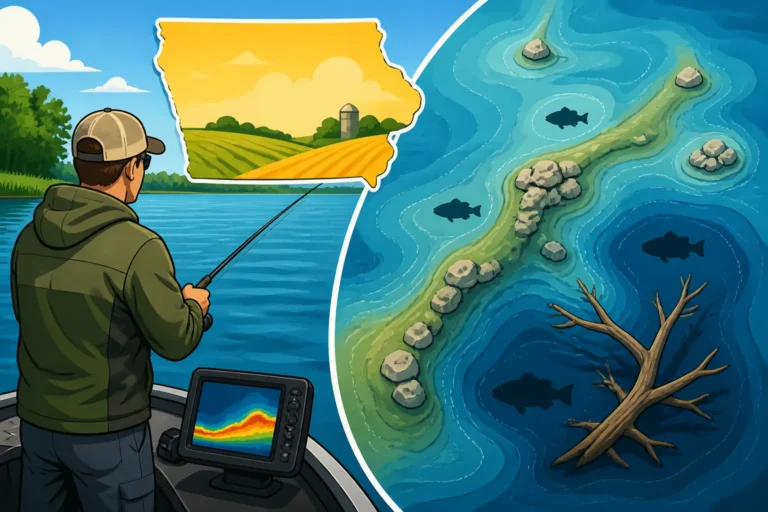
Targeting Submerged Structure: Wing Dams, Rocks, and Logs
Iowa's rivers are rich with submerged structure that provides critical habitat for walleye. These features disrupt the current, offering ambush points and resting areas.
- Wing Dams: These man-made rock structures extend out from the riverbank, designed to direct current and prevent erosion. They are absolute walleye magnets. Walleye will hold on the downstream side (the "slack water" side) of the wing dam, in front of it in the scour hole, or often right on top, especially at the deep "washout" ends where the current scours out a deep hole. Jigging along the face, over the top, and especially around the deeper ends of wing dams is a classic river walleye strategy. Our specific guide on how to fish a wing dam for walleye will provide even more tailored advice.
- Rock Piles and Boulders: Natural rock formations create micro-eddies and current breaks. Any significant change in bottom composition, especially from soft bottom to rock, can hold walleye. Use your fish finder or sensitive jigging rod to locate these rocky areas.
- Log Jams and Timber: While notoriously snaggy, log jams and submerged trees are excellent hiding spots and ambush points for walleye. If you can present a jig without getting hung up (often by casting upstream and letting it drift into the fringes of the timber), you can find some real trophies. These areas typically demand a weedless jig setup or a bit more daring.
Learning how to read your fish finder is also a massive advantage. Our guide on how to read a fish finder for walleye can help you interpret those sonar signals and pinpoint exact locations where fish are holding near structure.
Utilizing Depth Changes and Channels
Walleye are often associated with depth changes. A sudden drop-off from a shallow flat into a deeper channel or hole can be a migration route and a holding area. They'll use the deeper water for comfort and safety, moving onto the shallower flats to feed during low light.
- River Channels: The main river channel, with its consistent depth and current, can hold active walleye. Jigging along the edges of the channel, especially where it meets a shallower flat or a submerged point, is a good bet.
- Deep Holes: These can be scoured out by strong currents, often found below dams, at river bends, or at the ends of wing dams. Walleye will stack up in these holes, particularly during colder water periods or when seeking refuge from extreme current. Vertical jigging is often the best approach here.
- Humps and Ridges: Submerged humps or ridges rising from the river bottom offer prime current breaks and ambush points. Walleye will position themselves on the upstream or downstream side, depending on the current flow, waiting for food to pass.
Always pay attention to your boat's electronics. They can highlight these subtle depth changes and even show you schools of fish holding right where you want to drop your jig.
Seasonal Adjustments for River Jigging
River walleye behavior isn't static; it changes dramatically with the seasons. Water temperature, current speed, and forage availability all play a role in where walleye hold and how they'll react to your jig. Adapting your techniques and locations to the time of year is crucial for consistent success.
Spring Run Walleye: Post-Spawn Aggression
Spring is a magical time for river walleye fishing. After the rigors of the spawn, which typically happens when water temperatures are in the low to mid-40s, walleye become incredibly hungry and aggressive. They'll move out of their spawning grounds (often shallow, rocky areas) and begin to feed heavily to regain energy.
During the spring run, walleye are often found in deeper pools, current seams, and around structure that provides good current breaks and easy access to forage. They'll readily hit jigs tipped with minnows or soft plastics. Focus on areas downstream from traditional spawning grounds, as fish will be migrating back into their feeding patterns. The bites can be strong and consistent. Consider heavier jigs to get down quickly in higher spring flows, and don't shy away from brighter colors if the water is still stained from spring runoff. Our article on Iowa Walleye Season Dates and Limits will give you an idea of when to expect this action.
Summer Heat: Finding Deeper, Cooler Water
As river temperatures climb in the summer, walleye tend to seek out deeper, cooler, and more oxygenated water. They'll often move into the main river channel, deep holes, or hold tight to the bottom in strong current areas where the water is more aerated. Night fishing can also become very productive during the summer, as walleye move into shallower feeding areas under the cover of darkness.
For summer jigging, focus on vertical presentations in those deeper areas. You might need to use heavier jigs to get down to where they are holding. Look for structure in these deeper zones – submerged humps, bridge pilings, or deep rock piles. Live bait (like large minnows or crawlers) tipped on jigs can be particularly effective when walleye are less aggressive in the heat. Early morning and late evening bites will often be the most productive.
Fall Turnover and Pre-Winter Feeding
Fall is another fantastic time for river walleye, often rivaling spring in terms of action. As water temperatures begin to drop, walleye sense the approaching winter and go on a serious feeding binge. They'll actively chase down baitfish, putting on fat for the colder months. This period is sometimes called the "fall turnover" in lakes, but in rivers, it's more about a gradual cooling and increased activity.
During the fall, walleye can be found in a variety of locations, from shallower feeding flats during low light to deeper holes and current breaks as the sun gets higher. They'll often stack up in predictable locations as they prepare for winter. Jigs tipped with large minnows or aggressive soft plastic presentations can be deadly. Look for fish congregating around deep structure, especially near the mouths of tributaries or major river bends. This is a time when the bigger fish are often on the prowl, so be ready for a fight!
Winter Ice-Free River Jigging
While ice fishing dominates much of Iowa's winter fishing, many river stretches, particularly on larger rivers like the Mississippi River or areas with strong current, remain ice-free. This offers a unique opportunity for those brave enough to bundle up. Walleye in winter rivers are typically grouped up in their deepest, slowest-moving holes, often near scour holes below dams or in deep bends. They're conserving energy, and their bites can be incredibly subtle.
Vertical jigging with smaller, finesse jigs tipped with live minnows or small soft plastics is the name of the game. You'll need extreme sensitivity to detect bites. Pay very close attention to your electronics to locate these wintering schools. The bite window can be short, but when you find them, the action can be furious. Dress warmly, be safe, and prepare for a rewarding challenge. Our article on winter walleye fishing near Dubuque can offer specific advice for those colder ventures.
Common Mistakes and Troubleshooting for River Jigging
Even with the best gear and knowledge, river fishing for walleye can be frustrating. Current, snags, and finicky fish are constant variables. Recognizing common pitfalls and knowing how to troubleshoot them will significantly increase your success rate.
Not Adjusting Jig Weight for Current and Depth
This is arguably the most common mistake in river jigging. Using a jig that's too light means you can't get to the bottom, or the current sweeps your presentation unnaturally. You lose control, and the walleye won't even see your bait. Conversely, using a jig that's too heavy can cause it to snag constantly, or it just plummets to the bottom with no enticing action. You won't feel the subtle bites, and it just looks like a dead weight.
The solution is constant adjustment. Start with a weight you think is appropriate, then observe how your jig behaves. Is it sweeping too fast? Go heavier. Is it dragging too much or snagging on every retrieve? Go lighter. The goal is to feel that delicate "tick-tick-glide" or "tap-tap-glide" as your jig briefly contacts the bottom before drifting. Don't be afraid to change jig weights frequently as you move through different current speeds and depths. For specific recommendations, our guide on the best line weight for river walleye might be helpful.
Missing Subtle Bites and Understanding Walleye Takes
River walleye bites are often not the violent tugs you might expect. Especially in current, a bite can feel like nothing more than a slight increase in pressure, a momentary stop in your jig's drift, or a soft "thump" that feels like you've bumped a rock. The current can mask these subtle signals, leading many anglers to miss fish.
To overcome this, keep a keen eye on your line. Any twitch, jump, or slackening can indicate a bite. Always assume it's a fish until proven otherwise and set the hook. Practice developing your "feel" – that intuitive sense of knowing when something is different. This comes from experience and a sensitive rod and line setup. If you feel anything out of the ordinary, set the hook with a firm, sweeping motion. Better to set the hook on a rock than miss a trophy walleye!
Dealing with Snags and Break-Offs
River fishing, by its very nature, is a snaggy business. Rocks, logs, submerged brush, and man-made debris are everywhere. Losing jigs and even entire rigs is a frustrating but unavoidable part of the game. However, you can minimize losses.
- Proper Jig Weight: As discussed, using the right weight prevents excessive dragging and snagging.
- Rod Tip Position: Keep your rod tip relatively high (especially during the fall) to maintain better control and feel, allowing you to lift your jig over obstacles.
- "Pop and Drop" Retrieval: When you feel your jig contact something that isn't a fish, give a quick, sharp pop of the rod to try and free it without letting the line go slack.
- Leader Line: Use a fluorocarbon leader of a slightly lower test than your main line. This way, if you do get snagged, you're more likely to break off just the leader and jig, saving your more expensive main line.
- Snagged Retrieve: If you get truly snagged, point your rod directly at the snag, reel down tight, and pull straight back to try and free it. Avoid pulling to the side, as this often just wedges the jig deeper. If it doesn't free, a slow, steady pull will often break the line where it's weakest.
Having plenty of extra jigs and leader material on hand is also essential. Remember, every snag is a lesson in reading the river bottom!
Disclaimer
Fishing regulations and conditions can change rapidly. Always consult the latest Iowa Department of Natural Resources (DNR) fishing regulations before heading out. Be aware of local conditions, water levels, and weather forecasts to ensure a safe and enjoyable fishing experience. This guide is for informational purposes only and does not supersede official regulations or safety guidelines.