Trotline Fishing Rules and Tips in Iowa
For many Iowa anglers, the idea of consistently catching a good mess of catfish is a dream, but the sheer effort of actively fishing with a rod and reel can be daunting, especially after a long week. This guide dives deep into trotline fishing, a traditional and highly effective method that, when done correctly and legally, can help you fill your cooler with delicious Iowa catfish without having to hold a rod all day.
What is Trotline Fishing and Why Iowa Anglers Use It?
Trotline fishing is a bit different from your typical rod-and-reel experience. It's a method that often sparks curiosity, and sometimes a little confusion, among anglers new to the game or those visiting from states with different regulations. But for many seasoned Iowa fishermen, it's a time-honored way to target a bountiful catch, especially for those powerful bottom-dwellers like channel catfish and flatheads.
Defining the Trotline
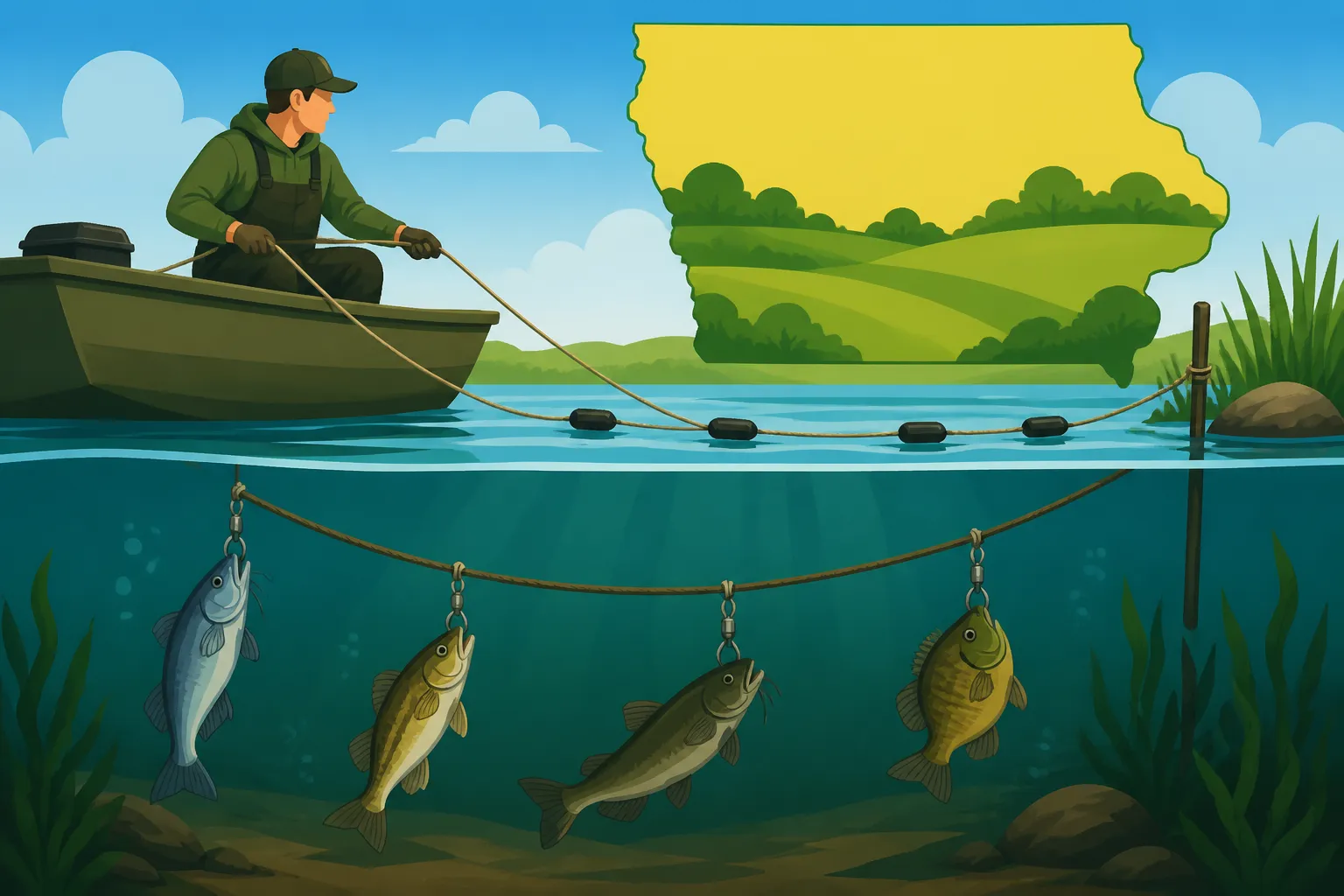
At its core, a trotline is essentially a long, heavy main line from which multiple baited hooks are suspended at intervals. Think of it as a series of baited lines, all connected to one main artery, stretching across a river channel, a quiet backwater, or a section of a lake. Instead of casting and retrieving one lure at a time, you're deploying a fishing system that works continuously while you're away, checking it periodically for your catch. The main line is typically anchored at both ends, either to the shore, to submerged stumps, or to weighted objects on the bottom, keeping it taut. From this main line, shorter "stagings" or "gangions" branch off, each terminating in a baited hook. The number of hooks, the length of the line, and the type of bait used can vary widely depending on the target species and, crucially, the specific regulations of the state you're fishing in. In Iowa, these details are very important to understand before you even think about setting one.
Benefits and Drawbacks for Iowa Fishing
There’s a reason trotlining has persisted as a popular fishing technique for generations in Iowa. The primary benefit is its efficiency. Once set up, a single trotline can work around the clock, covering a much larger area and presenting multiple baits simultaneously, dramatically increasing your chances of catching fish compared to a single rod and reel. This makes it particularly attractive for targeting active nocturnal feeders like catfish, which might be less active during daylight hours when many anglers are out. It’s also incredibly productive for gathering a significant amount of fish for a family fish fry or to stock the freezer. Many anglers appreciate the passive nature of it; you can set your lines, go about other activities, and return to harvest your catch. For those who enjoy the solitude of nature but don't want to spend every waking moment holding a rod, it offers a fantastic compromise.
However, trotlining isn't without its drawbacks. First and foremost, it requires a thorough understanding of and strict adherence to Iowa's fishing regulations. Missteps can lead to fines or confiscated gear. It's also a more labor-intensive setup initially, requiring heavy lines, anchors, and a boat to deploy and retrieve effectively in larger bodies of water. You can find quality trotline components on platforms like Amazon, but assembly and proper rigging take time and effort. There's also the ethical consideration of not overharvesting, and the need to check lines frequently to ensure fish aren't left on hooks for too long, which can cause unnecessary suffering or spoilage. Finally, other boaters, swimmers, or even wildlife can interfere with poorly marked lines, creating hazards or leading to lost gear. It's a powerful tool, but like any powerful tool, it demands respect and responsibility.
Navigating Iowa's Trotline Regulations
Fishing regulations in Iowa are designed to protect fish populations and ensure fair and safe access for all anglers. When it comes to trotlines, the rules are quite specific, and honestly, they can feel a bit overwhelming if you're just starting out. It's not like simply throwing a line in the water; there are strict guidelines you absolutely must follow to avoid legal trouble and ensure you're fishing responsibly. Trust me, the Iowa Department of Natural Resources (DNR) doesn't mess around when it comes to compliance. If you're unclear on any general fishing rules, I highly recommend checking out our comprehensive guide on Iowa Fishing Regulations Explained.
Key Legal Requirements and Gear Specifications
Iowa has very clear rules about what constitutes a legal trotline. The first thing you need to understand is the number of hooks. You are generally limited to no more than 100 hooks per trotline. This might sound like a lot, but it’s a far cry from the commercial-scale lines you might see in other parts of the world. Each hook must be on an individual "staging" or drop line, and these drop lines must be at least 2 feet apart. This spacing is important not only for fish conservation but also to prevent your hooks from tangling up excessively, which is a headache no one wants.
The main line of your trotline must be made of natural or synthetic fiber – no wire or cable is allowed. This is crucial for safety and environmental reasons. The line needs to be strong enough to hold your catch and withstand currents, but also breakable if it becomes snagged or poses a significant hazard. The hooks themselves must be single-pointed, barbless hooks. This is a big one. While barbless hooks might seem like they'd make it easier for fish to escape, they significantly reduce harm to fish you intend to release and make removal much quicker and safer for both you and the fish. You can find barbless hooks from many reputable brands, readily available on sites like Amazon. Using treble hooks or barbed hooks on a trotline is a definite no-go and can lead to penalties. The DNR also stipulates that trotlines cannot be left unattended for more than 24 hours. This means you need to be committed to checking your lines regularly.
Here’s a quick summary of the primary gear regulations:
| Feature | Iowa Trotline Regulation |
|---|---|
| Max Hooks | 100 per trotline |
| Hook Type | Single-pointed, barbless only |
| Hook Spacing | Staging lines must be at least 2 feet apart |
| Main Line | Natural or synthetic fiber (no wire/cable) |
| Attendance | Must be checked and tended at least once every 24 hours |
| Marking | Must be tagged with the angler's name and address or DNR customer ID number |
| Location | Restricted in certain waters (e.g., lakes, some rivers) |
Placement, Marking, and Attendance Rules
Beyond the gear itself, where you set your trotline and how you manage it are equally important. Let's talk about placement first. Generally, trotlines are not permitted in artificial lakes or state-owned natural lakes. This is a critical rule to remember. These waters are typically managed for different types of recreational fishing, and trotlines could interfere with other activities or specific management goals. Instead, trotlining is primarily a technique for rivers and some larger reservoirs. Always double-check the specific regulations for the body of water you plan to fish, as rules can sometimes vary by locality or specific river sections. For instance, the regulations for fishing on the Mississippi River border might have nuances, so it's always best to be informed.
Every trotline you deploy must be clearly tagged with your name and address or your Iowa DNR customer ID number. This identification is non-negotiable. It allows conservation officers to quickly identify the owner of the line, ensuring accountability and aiding in enforcement. Imagine if an unmarked line was found impacting other boaters or left unchecked; there would be no way to track down the responsible party. Make sure your tag is durable and clearly legible, ideally attached securely to one of your anchors or buoy lines.
Finally, the rule about attendance is paramount: you must check and tend your trotline at least once every 24 hours. This isn't just a rule for the DNR; it's a rule of responsible angling. Leaving a line unchecked for days is inhumane to any fish caught and can lead to spoilage, attracting scavengers, and becoming a nuisance. If you're planning a weekend trip, make sure you're either staying close enough to check your lines daily or have someone reliable who can do it for you. This commitment is why many serious trotliners will set their lines in the evening, check them early the next morning, and then again in the late afternoon. This frequency maximizes your catch's freshness and minimizes any negative impact.
Practical Tips for Successful Trotlining in Iowa
Now that we've covered the crucial legal stuff, let's get into the nitty-gritty of making your trotline adventure successful in the Hawkeye State. It's one thing to know the rules, and another entirely to apply them effectively to consistently bring in fish.
Choosing the Right Location and Bait
Location, location, location! Just like real estate, finding the perfect spot is key to trotline success, especially for catfish. Catfish, whether it's a channel catfish or a flathead, love structure and current. Look for areas in rivers or large reservoirs where these two elements combine. Think about outside bends in a river where the current digs deep holes, or confluences where two rivers or creeks meet. These areas often create natural travel lanes and ambush points for catfish. Submerged timber, rock piles, or even old bridge pilings can hold fish. For some great ideas, you might want to explore articles like Where to Catch Catfish on Saylorville Reservoir or dive into specific advice on Catfish Possession Limits for various waters.
When it comes to the mighty Mississippi River, consider setting your lines in backwater sloughs, along wing dams, or in the deeper channels adjacent to sandbars. These spots offer a mix of cover, current breaks, and feeding grounds. You'll often find these details on navigation charts or by talking to local bait shops. The "Iowa Fishing Atlas" is also an excellent resource for identifying public access points and potential hotspots.
Now, let's talk bait. Catfish are not picky eaters, but they definitely have preferences, and the right bait can make all the difference. For channel catfish, smelly baits are king. Think cut bait from shad, carp, or even prepared stink baits. Some anglers swear by chunks of chicken liver allowed to "ripen" in the sun for a few hours. For flathead catfish, fresh live bait is usually preferred. Bluegills, sunfish, or even small carp make excellent flathead offerings. Make sure any live bait you use is legally caught and transported according to Iowa's bait fish regulations. You can get more detailed insights into what these whiskered critters prefer by checking out our Catfish Bait Guide for Iowa Anglers. Remember, the fresher the bait, the better, especially in warmer water conditions.
Setting and Managing Your Trotline Effectively
Setting a trotline requires a bit of planning and muscle. You'll typically need a boat, especially on larger rivers or reservoirs, to effectively deploy and retrieve your line. Start by securing one end of your main line to a sturdy anchor point – a heavy concrete block, a large rock, or a substantial tree on the bank (if permitted and safe). Then, slowly pay out your line as you motor across your chosen area, attaching your baited stagings as you go. Ensure there's enough slack to allow the line to sag slightly to present the baits at various depths, but not so much that it becomes a snagging hazard for boats.
As you set each hook, carefully bait it, making sure the hook point is exposed for a good hook-set. If you're using live bait, ensure they can swim naturally. Once all your hooks are baited and deployed, secure the other end of your main line to another anchor point. Don't forget to attach your identification tag to a prominent location on the line or buoy, making sure it’s easily visible.
Managing your trotline is an ongoing process. As mentioned, you need to check it at least once every 24 hours, but more frequently is often better, especially if the bite is on. When checking, approach your line carefully. A good pair of heavy gloves is essential for handling fish, especially catfish with their sharp spines, and for managing the line itself. Have a cooler with ice ready for your catch.
When you find a fish, carefully bring it to the boat. If you plan to keep it, dispatch it humanely and place it on ice immediately to maintain freshness. If it's undersized or a species you don't want, carefully remove the barbless hook and release it quickly. Remember, Iowa has specific Iowa Fishing Daily Bag Limits Guide for various species, so only keep what's legal. For those interested in maximizing their nocturnal catch, exploring Night Fishing Techniques for Catfish can provide additional context on when catfish are most active.
Common Trotline Mistakes to Avoid
Even with the best intentions and the clearest rules, it's easy to fall into common traps when trotlining. Avoiding these pitfalls can save you from frustration, lost fish, legal trouble, and even unsafe situations.
Ignoring Safety and Ethical Considerations
One of the biggest mistakes is underestimating the power of the water and the fish, leading to safety issues. A trotline with a dozen fighting catfish can exert a surprising amount of force. Always wear a life jacket when setting or checking lines from a boat, especially on larger rivers with current. Strong gloves are non-negotiable to protect your hands from hooks, fish spines, and rough line. Never try to untangle a deeply snagged line by pulling directly on it with full force, as it could snap and recoil dangerously, or even pull you out of the boat. Using a trotline retriever or a strong grapple can help with snagged lines.
Ethical considerations are also paramount. Leaving lines unchecked for extended periods is not only illegal but also incredibly inhumane. Fish suffer on the hook, and their meat can spoil quickly, leading to wasted resources. The 24-hour rule is a minimum; strive for more frequent checks if possible, especially in warm weather. Overharvesting is another concern. Just because you can catch 100 fish doesn't mean you should every time you set a line. Be mindful of daily bag limits and consider what you realistically need and can process. A good angler respects the resource and takes only what is needed, ensuring healthy populations for future generations. If you ever witness someone violating these rules, know that reporting a fishing violation in Iowa is a crucial part of conservation.
Misunderstanding Species-Specific Rules
While trotlines are most commonly associated with catfish, it's important to remember that not all species can be legally caught or kept with this method, and specific size and bag limits apply. For instance, while you might accidentally hook a bass or a walleye, these species are typically managed under different regulations, and it's generally illegal to possess them if caught on a trotline. Your primary target for trotlines in Iowa should almost exclusively be catfish (channel, blue, and flathead) and rough fish (like carp or buffalo). Always consult the current Iowa fishing regulations booklet for specific species limits and legal methods.
The barbless hook rule is particularly important here. It facilitates the quick and safe release of non-target species. Imagine trying to remove a barbed hook from a struggling walleye – it's much harder and more damaging to the fish. Understanding the nuances of "What Happens If You Fish Without a License in Iowa" is a good baseline for understanding legal consequences, but specific trotline violations can carry their own penalties, including fines and confiscation of gear. Being proactive and informed will keep you out of trouble and make your fishing experience much more enjoyable.
Maintaining Your Trotline Gear and Catch
Just like any other piece of fishing equipment, proper care and maintenance of your trotline gear will extend its life and save you money in the long run. And once you've landed your prize, knowing how to handle and process it correctly ensures a delicious meal.
Proper Gear Care for Longevity
After each use, especially if you've had a successful outing, your trotline gear will need some attention. First, clean your line and hooks thoroughly. River and lake water, mud, and fish slime can all contribute to degradation. A good rinse with fresh water, perhaps even a mild soap solution, will remove most of the grime. Pay special attention to the hooks; even barbless hooks can rust if not cared for. A quick wipe-down and ensuring they're dry before storage will prevent corrosion. You can even find rust-resistant hooks on Amazon if you want to upgrade.
Inspect your line for wear and tear. Look for frayed sections, knots that are pulling tight, or any weak spots. The main line and the stagings take a beating from current, snags, and fighting fish. If you find significant damage, it's often better to replace that section or the entire staging than to risk losing a trophy fish or, worse, having your line break and become environmental debris. Many anglers keep a small repair kit with extra line, crimps, and hooks specifically for on-the-spot repairs.
Store your trotline properly. Coiling it neatly on a bucket, a large spool, or a specific trotline winder will prevent tangles and make your next deployment much smoother. Keep it in a dry, cool place away from direct sunlight, which can degrade synthetic fibers over time. Proper storage also helps prevent accidental injuries from loose hooks. If you have weights or anchors, ensure they are also cleaned and stored in a way that won't damage other gear or your boat. A little effort after each trip goes a long way in preserving your investment.
Handling and Processing Your Catch
The moment you pull in a heavy trotline with multiple fish is exhilarating, but the work isn't over. Proper handling of your catch starts immediately. As mentioned, have a cooler with plenty of ice ready. For catfish, immediate immersion in an ice slurry (ice and a little water) will quickly chill the fish, stop enzymatic degradation, and ensure the freshest possible meat. This is particularly vital in warm Iowa summers.
Once you're back on shore, it's time for processing. Catfish are notoriously tricky to clean due to their tough skin and sharp spines. Many experienced anglers use skinning pliers or a dedicated catfish skinning knife. A good, sharp fillet knife is essential for efficiently removing the meat from the bones. There are numerous online tutorials demonstrating effective methods for cleaning catfish, so don't be afraid to watch a few videos before you start if you're new to it. For tips on sharpening your tools, our guide on "How to Sharpen a Fillet Knife" might be helpful.
After filleting, rinse the meat thoroughly in cold water to remove any remaining blood or scales. Pat the fillets dry with paper towels before packaging. For short-term storage, refrigeration in an airtight container is fine. For longer-term preservation, vacuum sealing and freezing is the best method. Properly packaged catfish can last for several months in a freezer without significant loss of quality. Always label your packages with the date to keep track of freshness. Enjoying the fruits of your labor, especially a delicious catfish fry, is one of the most rewarding parts of trotline fishing!
Alternatives and Complementary Methods
While trotlining is fantastic for efficiency, it's not the only way to catch fish in Iowa, and sometimes, combining it with other techniques or exploring alternatives can lead to an even more rewarding fishing experience. After all, the goal is to enjoy your time on the water and bring home some tasty fish.
Exploring Other Passive Fishing Techniques
If the hands-off approach of trotlining appeals to you but you're looking for something with a bit less commitment or a different application, Iowa offers other legal passive fishing techniques worth considering.
Setlines (Jug Fishing): This method involves individual lines, each with one or two hooks, attached to a float (often a plastic jug). Like trotlines, setlines are left to drift or are anchored, and they work passively. In Iowa, specific rules apply to setlines, including limitations on the number of hooks and marking requirements, so it's essential to consult the DNR regulations. Jug fishing is particularly popular for catfish in slow-moving rivers or large ponds where you want to cover a wider area than a single rod, but don't want the complexity of a full trotline. The main difference is that each line is independent, making it easier to manage individually if you have fewer lines out.
Limb Lines: Similar to setlines, but instead of a float, the line is tied directly to a sturdy tree limb overhanging the water. This is a traditional method often used on smaller creeks and rivers. Again, specific regulations apply in Iowa regarding the number of hooks, marking, and checking frequency. Limb lines are generally used for targeting larger catfish that might be lurking near the bank under cover. They require a good understanding of where fish are likely to hold near the shore.
These methods offer a more scaled-down approach than a full trotline, perfect for anglers who want some of the efficiency without the extensive setup. They can also be fantastic for targeting Channel Catfish Daily Limit in Iowa in more confined spaces.
Combining Trotlining with Active Fishing
Perhaps the best way to utilize trotlining is to view it as a complementary strategy rather than an exclusive one. Imagine this scenario: you arrive at your favorite fishing spot on the Des Moines River early in the morning. Instead of immediately casting a line, you spend an hour or two carefully setting your trotline in a prime catfish hole. Once the trotline is deployed and working for you, you can then switch to active fishing with a rod and reel.
While your trotline is soaking, you could be casting for smallmouth bass along rocky banks, jigging for walleye in deeper pools, or even targeting panfish with lighter tackle. This allows you to experience the best of both worlds: the relaxed, efficient productivity of the trotline for your catfish haul, combined with the active engagement and thrill of fighting fish on a rod and reel. It’s a great way to maximize your time on the water and diversify your catch. For more active techniques, our guide on How to Catch Catfish in Iowa offers many tips for rod-and-reel tactics that can be used while your trotline is doing its work.
Another benefit of this combined approach is flexibility. If the trotline bite is slow, you still have the option to actively fish and potentially catch other species. If the rod-and-reel bite is slow, your trotline might still be bringing in dinner. This strategy is especially effective during longer fishing trips or weekend excursions, providing a constant source of excitement and potential harvest. Just remember to adhere to all Iowa Fishing Regulations Explained for both trotlines and rod-and-reel fishing, including bag limits and gear specifics.
Disclaimer
Please note that fishing regulations, including those pertaining to trotlines, can change. Always consult the most current Iowa Department of Natural Resources (DNR) fishing regulations booklet or their official website before engaging in any fishing activities. This guide is for informational purposes only and should not be considered a substitute for official legal guidelines.