Boater Education Requirements for Young Anglers
Navigating the world of boating regulations, especially when you have enthusiastic young anglers in the family, can feel like trying to untangle a stubborn fishing line in the dark. It’s easy to get confused about who needs what certification and when, leading to worries about doing something wrong out on the water. This comprehensive guide is here to clarify all of Iowa’s boater education requirements for young anglers, helping you ensure a safe, legal, and stress-free experience for everyone.
Understanding Iowa's Boater Education Mandates for Youth
Iowa, like many states, takes boater safety very seriously, and for good reason. Our lakes and rivers are popular playgrounds, and ensuring that everyone, especially our younger generation, understands the rules of the water is paramount. It’s not just about avoiding fines; it’s about preventing accidents and fostering a respectful boating community.
Who Needs to Take a Boating Safety Course in Iowa?
The regulations around who needs to complete a boating safety course in Iowa can seem a bit like a jigsaw puzzle, but let's break it down clearly. In Iowa, any person born after January 1, 1979, must successfully complete a boater education course approved by the National Association of State Boating Law Administrators (NASBLA) to operate any motorboat over ten horsepower. This applies whether you're cruising on a big lake like Spirit Lake or just puttering around a smaller pond. So, if your budding angler falls into this age bracket and wants to take the helm of anything with more than a modest kick, they'll need that certification.
Now, it's worth noting that this rule specifically targets motorboats over ten horsepower. Smaller boats, like kayaks, canoes, or even small inflatables with electric trolling motors, typically don't fall under this particular education mandate. However, understanding general boating safety is always a wise move, regardless of the vessel. Even if your child is under 12, they still have specific rules to follow, which we’ll delve into later. For a complete picture of all the necessary documentation, check out our Iowa Fishing Regulations Explained guide.
The Rationale Behind Boater Education Requirements
You might wonder why these rules are in place, especially for young people who often pick up new skills quickly. The rationale is quite simple: safety and responsibility. Boating isn't just about steering a vessel; it involves understanding navigation rules, knowing how to react to emergencies, recognizing weather patterns, and being courteous to other water users. Young anglers, despite their enthusiasm, may lack the judgment and experience that comes with age. A formal education course instills this foundational knowledge.
These courses cover everything from proper lookout procedures to understanding buoys and markers, how to handle adverse weather, and the importance of wearing a life jacket. They teach participants about the dangers of carbon monoxide, the basics of engine maintenance, and how to file a float plan. Essentially, the goal is to equip young operators with the knowledge and skills to make safe decisions, not just for themselves but for their passengers and everyone else enjoying Iowa's beautiful waterways. It builds confidence and competence, transforming a novice into a more responsible captain.
Penalties for Non-Compliance
Ignoring Iowa's boater education requirements or other boating laws isn't just frowned upon; it carries real consequences. If a young angler is found operating a motorboat over ten horsepower without the required education certificate (and they were born after January 1, 1979), they could face fines. These aren't just minor slaps on the wrist; they can be substantial, and nobody wants that kind of damper on a fishing trip.
Beyond the monetary penalties, there's the very real risk of accidents. An untrained operator is more prone to making errors that could lead to collisions, injuries, or worse. The Iowa Department of Natural Resources (DNR) takes enforcement seriously to protect lives and property. It’s always better to be proactive, get the necessary certification, and ensure everyone understands the rules. It prevents a good day of fishing from turning into a costly and potentially dangerous situation. Knowing your Iowa Fishing Daily Bag Limits Guide is important, but knowing how to safely get to your fishing spot is even more critical.
Navigating the Boating Safety Course Options for Young Anglers
Once you understand that a boating safety course is a must-have for your young angler, the next question is usually: "How do we actually get this done?" Thankfully, Iowa offers flexible options to fit various schedules and learning styles, making it easier than ever to get certified.
Online Boating Safety Courses
For many families, online boating safety courses are the go-to solution. They offer unparalleled flexibility, allowing young anglers to learn at their own pace, from the comfort of home, and on their own schedule. This is especially convenient for busy families juggling school, sports, and other commitments. There are several reputable, NASBLA-approved online providers out there. These courses are typically interactive, featuring videos, quizzes, and modules that break down complex information into digestible chunks.
When choosing an online course, make sure it’s officially recognized by the Iowa DNR. A quick search on the Iowa DNR website will usually list approved providers. Some popular options include BoatUS Foundation's online course or Boat-Ed.com. While these courses are paid, they are a worthwhile investment in safety and peace of mind. You can often find study guides or supplementary materials for these courses on platforms like Amazon, making it easier for visual learners or those who prefer a physical textbook alongside digital content. The final exam is usually taken online as well, and upon successful completion, a printable certificate is issued.
In-Person Classroom Courses
While online courses are convenient, some young anglers and their parents prefer the traditional classroom setting. In-person courses offer a different kind of learning experience, with direct interaction with certified instructors and the opportunity to ask questions in real-time. These courses also allow for peer interaction, which can sometimes make learning more engaging for younger participants. The Iowa DNR often partners with local organizations, community centers, or even high schools to offer these classroom sessions, particularly during the off-season or before prime boating months.
The benefits of a classroom course include hands-on learning components (where applicable), group discussions, and immediate clarification of concepts that might be harder to grasp independently. For some, the structured environment of a classroom helps with focus and retention. These courses typically run over a weekend or several evenings, culminating in a proctored exam. To find scheduled in-person courses near you, check the Iowa DNR's boating education page or contact your local county conservation board. This format can be particularly good for covering important topics like Boat Safety Equipment for Iowa Waters in a practical way.
Course Content: What Young Anglers Will Learn
Regardless of whether you choose an online or in-person format, the core curriculum of an Iowa-approved boating safety course is designed to be comprehensive. It covers a wide array of topics essential for safe and responsible boat operation. Think of it as a driver's education course, but for the water!
Here’s a snapshot of what young anglers will typically delve into:
| Topic Area | Key Learning Points | Why It's Important |
|---|---|---|
| Boating Terminology | Parts of a boat, nautical terms, types of vessels | Understanding instructions, communicating effectively |
| Navigation Rules | Right-of-way, aids to navigation (buoys, markers), safe speed | Preventing collisions, knowing your position on the water |
| Boating Safety Equipment | Life jackets, fire extinguishers, sound-producing devices, visual distress signals | Meeting legal requirements, being prepared for emergencies |
| Emergency Procedures | Dealing with capsizing, man overboard, fire, first aid, hypothermia | Reacting quickly and effectively in dangerous situations |
| Weather & Water Conditions | Reading weather forecasts, recognizing dangerous conditions, understanding currents | Avoiding hazardous situations, planning safe trips |
| Responsible Operation | Avoiding hazardous wakes, respecting wildlife, environmental protection, alcohol limits | Being a courteous boater, protecting natural resources |
| PWC (Jet Ski) Specifics | Unique rules and safe operating practices for personal watercraft | Ensuring safe operation of specific vessel types |
| Iowa Boating Laws | Registration, required documentation, age restrictions, accident reporting | Staying legal and avoiding penalties |
This detailed curriculum ensures that when a young angler earns their certification, they have a solid foundation of knowledge. It covers everything from how to put on a Best Life Jackets for Iowa Boaters correctly to understanding basic navigation and what to do if you encounter engine trouble. This deep dive into essential information prepares them not just to pass an exam, but to truly be safer, more confident operators on the water.
Age-Specific Rules for Operating a Motorboat in Iowa
While the general boater education requirement applies to those born after January 1, 1979, Iowa also has specific age-related restrictions that determine who can operate certain motorboats and under what conditions. It’s crucial to understand these nuances to ensure your young angler is always compliant.
Minimum Age to Drive a Motorboat in Iowa
This is where things can get a little specific for our younger crew. In Iowa, children under 12 years of age have strict limitations when it comes to operating motorboats. A child under 12 years old generally cannot operate a motorboat with an engine of ten horsepower or more unless there’s a responsible adult (at least 18 years old) on board and supervising them directly. This adult must be able to take immediate control of the vessel if necessary. So, for the really young ones, it's more about learning by observing and perhaps getting a little hands-on experience under very close supervision, rather than truly being the "captain."
For those who are 12 years of age or older, the rules ease up slightly, but the boater education requirement still looms for those born after the cutoff date. Essentially, if your child is 12 or older and born after January 1, 1979, they must have their boater education certificate to operate a motorboat over ten horsepower independently. If they are 12 or older and were born before January 1, 1979 (meaning they are currently 45 or older), then they are exempt from the education requirement due to their age. It's a bit of a loop, but the intent is to ensure younger generations receive formal safety training. For more specific details on this, you can look up Minimum Age to Drive a Motorboat in Iowa.
Horsepower Restrictions for Young Operators
Beyond the age and education requirements, Iowa also has horsepower limitations that directly impact what kind of motorboat a young angler can operate. This is particularly relevant for those who might be eager to jump into a more powerful vessel. If a person is between 12 and 17 years old, even with a boater education certificate, they might face restrictions on horsepower if they are not supervised by an adult. Specifically, someone aged 12 to 17 years old who holds a boater education certificate can operate a motorboat of any horsepower without adult supervision.
However, if a child under 12 operates a motorboat over ten horsepower, they must be under the direct, onboard supervision of a person at least 18 years old. This means the supervisor needs to be right there, paying attention, and ready to take over. This crucial detail helps prevent scenarios where a very young child might be put in charge of a powerful boat without adequate guidance. Understanding these specific limits, like the Horsepower Limit for Iowa Teen Boat Operators, is vital to avoid any issues while on the water.
Supervision Requirements for Younger Anglers
The concept of supervision is a cornerstone of Iowa’s boating regulations for youth. It’s not enough for an adult to simply be in the boat; they need to be actively engaged in supervising the young operator. For children under 12 years old operating a motorboat over ten horsepower, the supervising adult must be at least 18 years old and capable of taking immediate control of the vessel. This means no texting, no napping, and no getting distracted when a young captain is at the helm.
This direct supervision ensures that if a sudden situation arises – like another boat approaching too fast, an unexpected wave, or mechanical trouble – the experienced adult can step in instantly. It’s all about layering safety measures. Even for older teenagers who have their boater education certificate, having an experienced adult onboard, especially when learning new waters or techniques, can be incredibly beneficial. Think of it as mentoring, where the adult reinforces safe practices and helps develop advanced boat handling skills. It’s a cooperative effort to build competent and confident boaters.
Beyond the Course: Practical Steps for Safe Boating
Completing a boater education course and understanding the age-specific rules are fantastic first steps, but true boating safety goes beyond just checking boxes. It’s about adopting a mindset of preparedness and continuous learning, ensuring every outing on Iowa's waters is enjoyable and safe.
Essential Safety Equipment for Young Anglers
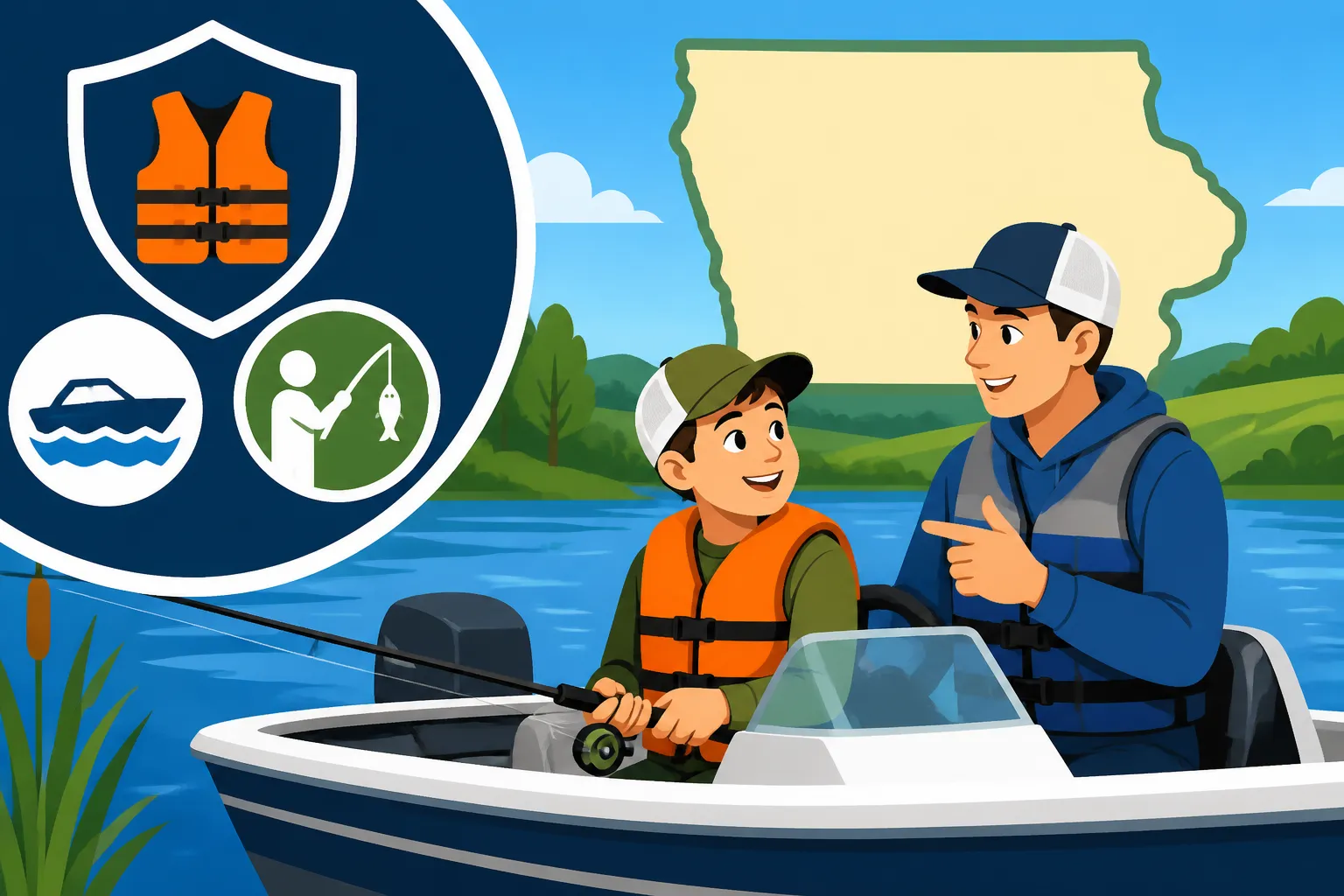
The boater education course will cover this extensively, but it bears repeating: having the right safety equipment is non-negotiable. For young anglers, this starts with a properly fitting, Coast Guard-approved life jacket. And it's not just about having it on the boat; it means wearing it. Many children resist wearing life jackets, especially during warm weather, but the reality is that accidents happen fast. Modern life jackets are much more comfortable than older models, and you can find great options on sites like Amazon that are designed for extended wear.
Beyond life jackets, consider other essentials: a first-aid kit for those inevitable scrapes and minor hooks, a whistle or horn to signal distress, and visual distress signals like flares or flags, especially on larger bodies of water or if you're out past dusk. It's also wise to have a throwable flotation device, like a buoyant cushion, easily accessible. Familiarize young anglers with the location and use of all safety gear. Knowing where the fire extinguisher is or how to use a bilge pump if water starts coming in can make all the difference in an emergency. For a comprehensive list, consult our guide on Required Safety Equipment for Iowa Boats.
Developing Good Boating Habits Early On
The best way to ensure safety is to develop good habits from day one. This starts with pre-departure checks. Before leaving the dock or ramp, make it a routine to check fuel levels, inspect the engine (if you know how), ensure all safety equipment is onboard and accessible, and verify that the drain plug is in. Teaching young anglers to do these checks themselves, or at least assist, instills responsibility and builds their practical knowledge.
Another critical habit is weather awareness. Iowa weather can change rapidly, and a beautiful sunny morning can quickly turn into a stormy afternoon. Teach young anglers how to check the forecast before heading out and how to recognize signs of changing weather while on the water. They should understand that if the sky looks threatening, or if strong winds pick up, it’s time to head back to shore. Additionally, emphasize courtesy on the water – maintaining safe distances from other boats, reducing wake near shorelines, and respecting fishing zones. These habits, cultivated early, contribute to a lifetime of safe and enjoyable boating.
Resources for Continued Learning and Practice
Boater education isn’t a one-and-done deal; it’s an ongoing process. Encourage young anglers to continue learning and honing their skills. Practicing boat handling in various conditions, always with an experienced adult, is invaluable. This could include docking practice, navigating in light chop, or anchoring techniques. Many fishing guides and charter services in Iowa prioritize safety and can offer practical insights during trips, combining fishing instruction with safe boat operation.
The Iowa DNR also offers various resources, including online guides, safety checklists, and even updates on Iowa Fishing Season Dates and Limits that might influence boating activity. There are numerous boating safety books available through retailers like Amazon, often covering more advanced topics or local navigation specifics. Consider joining a local boating club or a fishing organization where experienced members can offer mentorship. The more exposure and practice young anglers get in a supervised and educational environment, the more confident and capable they will become, ensuring that their passion for Iowa fishing continues safely for years to come.
Disclaimer
Please note that while this guide aims to provide accurate and up-to-date information regarding Iowa's boater education requirements for young anglers, regulations can change. It is always the responsibility of the individual to consult the most current Iowa Department of Natural Resources (DNR) regulations or contact the DNR directly for the most precise and legally binding information before operating any vessel. This guide is for informational purposes only and does not constitute legal advice.