Do Out-of-State Anglers Pay More for an Iowa License?
One of the most common questions out-of-state anglers ask when planning a trip to Iowa is, "Do I really have to pay more for a fishing license than a local?" It's a completely fair question that often comes with a bit of frustration, especially when you're just looking to enjoy a peaceful day on the water. The short answer is generally yes, but understanding why and what your options are can make all the difference in planning your trip without any unwelcome surprises. This guide will walk you through Iowa's fishing license requirements for nonresidents, break down the costs, and help you navigate the process so you can focus on reeling in that next big catch.
Understanding Iowa's Residency Requirements for Fishing Licenses
It might seem straightforward, but what truly defines an "Iowa resident" for the purpose of a fishing license can sometimes be a little fuzzy. States establish these definitions to ensure that those who primarily live in and contribute to the state's economy and conservation efforts receive the benefit of lower license fees. For visiting anglers, it's essential to understand these nuances to avoid any misunderstandings or, worse, potential penalties.
What Defines an Iowa Resident for Fishing?
For the Iowa Department of Natural Resources (DNR), residency isn't just about owning property here or having a relative in the state. Generally, an Iowa resident is someone who has resided in Iowa for at least 90 consecutive days immediately before applying for a license, and who doesn't claim residency or fishing/hunting privileges in any other state. This means if you still hold a driver's license, voter registration, or even an annual fishing license from another state, Iowa likely considers you a nonresident.
Think about it this way: if you're coming for a weekend getaway from Omaha or a longer summer vacation from Minneapolis, even if you stay at a cabin you own here, you're still considered an out-of-state angler for licensing purposes. The key is proving your primary domicile and commitment to Iowa as your home. The DNR may ask for various forms of identification or documentation, such as a utility bill, vehicle registration, or a state income tax return, to verify your claim. It's always best to be prepared with solid proof if you believe you qualify as a resident. For a comprehensive overview, check out our guide on what counts as an Iowa Resident for License Purposes.
The Rationale Behind Residency-Based Pricing
States don't charge nonresidents more just to be difficult; there's a practical and vital reason behind it. Fishing license fees, especially those paid by nonresidents, are a critical funding source for wildlife conservation, fisheries management, habitat restoration, and outdoor recreational programs within Iowa. These funds directly support the health of our lakes, rivers, and trout streams, ensuring there are plenty of fish for everyone to enjoy for years to come.
Iowa residents contribute to the state's economy and tax base year-round, which indirectly supports these conservation efforts. Nonresidents, while certainly welcome and valued visitors, typically contribute less to the state's ongoing infrastructure and resource management. Therefore, the higher nonresident fee helps balance that contribution, ensuring that the burden of maintaining Iowa's natural resources is shared equitably. It's an investment in the future of fishing in Iowa, benefiting both residents and those who travel here to experience our beautiful waters.
Comparing Iowa Resident vs. Nonresident Fishing License Costs
The financial difference between resident and nonresident fishing licenses in Iowa can be significant, reflecting the state's investment in its natural resources and the contributions of its residents. It's crucial for out-of-state anglers to understand these price discrepancies when budgeting for their fishing trip.
Annual License Price Differences
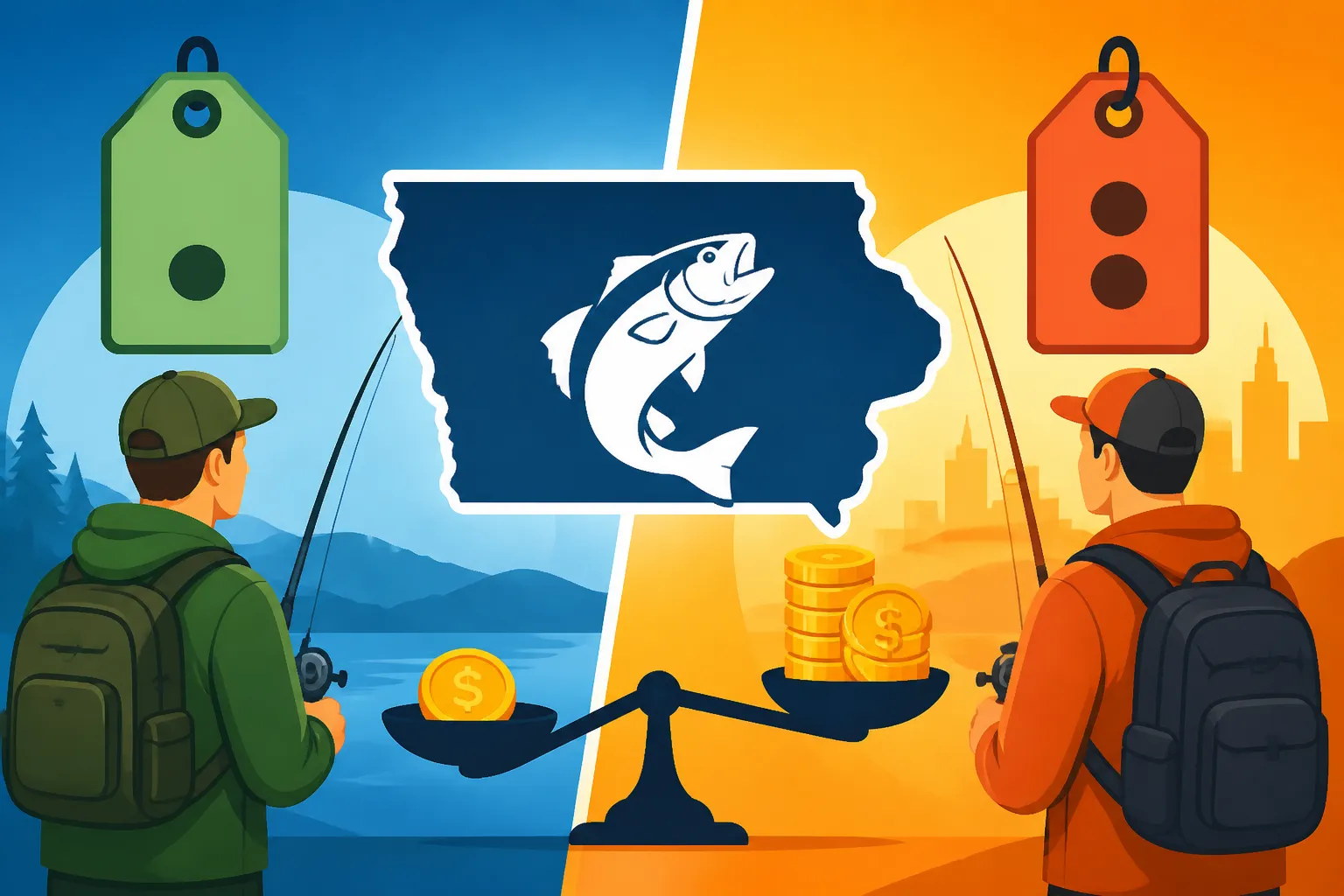
When it comes to annual licenses, nonresidents will indeed pay more. For instance, a standard annual resident fishing license is typically around $20.00. However, for a nonresident looking to enjoy Iowa's waters for a full year, the cost for an Iowa Nonresident Annual Fishing License generally jumps to about $50.00 to $55.00. This difference, while substantial, supports the ongoing conservation efforts that keep Iowa's fisheries thriving.
It's not just the basic fishing license either. If you're planning to target trout in Iowa's picturesque streams, you'll also need to purchase an Iowa Trout Fishing Fee and Stamp Guide. This fee is generally the same for both residents and nonresidents, typically around $14.50, but it's an additional cost to factor in. So, an out-of-state angler wanting to fish for trout for a year would be looking at a combined cost of roughly $64.50 to $69.50, versus a resident's approximate $34.50. You can explore the full breakdown of various licenses and their costs in our comprehensive Iowa Fishing License Costs article.
Short-Term and Specialty License Options for Nonresidents
Iowa understands that not every out-of-state angler needs an annual commitment. Many visitors are here for a weekend, a week, or just a few days. To accommodate this, the Iowa DNR offers several short-term license options that can be much more cost-effective for a brief visit.
- Iowa One-Day Fishing License: This is a fantastic option if you're just passing through or dedicating a single day to fishing. It's generally around $12.00.
- Iowa Three-Day Nonresident Fishing License: Perfect for a long weekend, this license usually costs about $15.50. It allows you three consecutive days of fishing, offering great flexibility.
- Iowa Seven-Day Fishing License: If your vacation extends for a full week, this license is a smart choice, typically priced around $31.00.
These short-term licenses provide a way for nonresidents to legally enjoy Iowa's fishing opportunities without committing to the higher annual fee. Remember that the trout fee is still a separate purchase if you plan to fish for trout, regardless of whether you opt for an annual or short-term license. Always check the most current prices on the Iowa DNR website or when you're purchasing, as they can change annually.
Here's a quick comparison of common fishing license types and approximate costs for residents versus nonresidents in Iowa:
| License Type | Iowa Resident (Approx.) | Nonresident (Approx.) | Notes |
|---|---|---|---|
| Annual Fishing License | $20.00 | $55.00 | Standard annual license. |
| Annual Fishing & Hunting Combo | $35.00 | $100.00 | Often called the "Outdoor Combo Hunting and Fishing License". |
| 1-Day Fishing License | N/A | $12.00 | Perfect for a quick trip. |
| 3-Day Nonresident Fishing | N/A | $15.50 | Ideal for a long weekend visit. |
| 7-Day Nonresident Fishing | N/A | $31.00 | Good for a week-long vacation. |
| Annual Trout Fee | $14.50 | $14.50 | Required in addition to a fishing license for trout. |
Note: Prices are approximate and subject to change. Always verify current prices with the Iowa DNR or an authorized license vendor.
Where and How Nonresidents Can Purchase an Iowa Fishing License
Getting your Iowa fishing license shouldn't add stress to your trip, especially with modern convenience at our fingertips. Whether you prefer digital solutions or a friendly face at a local shop, Iowa provides several ways for nonresidents to secure their permits. And while you're gathering your licenses, you might even consider picking up some last-minute tackle or a new fishing hat you saw on Amazon to complete your gear setup.
Online and App Purchasing Options
For many, the easiest and most convenient way to purchase an Iowa fishing license is online or through a mobile app. The Iowa Department of Natural Resources (DNR) maintains a user-friendly online licensing system on its website. Here, you can select the appropriate nonresident license (annual, 1-day, 3-day, or 7-day) and any necessary endorsements like the trout fee, pay securely with a credit card, and print your license from the comfort of your home. This way, you're ready to hit the water as soon as you arrive in Iowa.
Even better, Iowa offers the "GoOutdoors Iowa" mobile app. This app allows you to purchase and store your license directly on your smartphone. It's incredibly handy, as you'll always have your license with you, and it counts as official proof to present to a conservation officer. You can learn more about buying an Iowa Fishing License on the GoOutdoors App. Having your license digitally also means one less piece of paper to worry about losing when you're out enjoying the outdoors.
In-Person Retailers and Convenient Locations
If you prefer a more traditional approach or just like to chat with local experts before heading out, there are plenty of physical locations across Iowa where you can buy a fishing license. Authorized license vendors include most bait and tackle shops, sporting goods stores, county recorders' offices, and even many Walmart and convenience stores throughout the state.
These local vendors are often invaluable resources, offering tips on local fishing hot spots, bait recommendations, and current conditions. They can also help you understand any specific local regulations or answer questions about the area you plan to fish. Just be sure to bring a valid form of identification when purchasing in person. This is also a great place to stock up on essentials like live bait or some new soft plastics you might need, perhaps even finding some gear you'd typically order from Amazon at a local shop.
Navigating Common Nonresident Angler Concerns
Fishing in a new state can bring up specific questions beyond just license costs. Nonresident anglers often worry about differing regulations, especially on border waters, or the consequences of mistakenly breaking rules. It's important to be informed to ensure a smooth and enjoyable experience.
Reciprocal Agreements on Border Waters
Iowa shares borders with several states, and for anglers fishing on these boundary waters, specific rules known as reciprocal agreements can apply. These agreements aim to simplify licensing for those who fish across state lines.
- Mississippi River Border: If you're fishing on the Mississippi River between Iowa and Illinois, Wisconsin, or Minnesota, a valid fishing license from either state is often recognized in the shared waters. This means if you have an Illinois license, you might not need an Iowa license to fish the main channel of the Mississippi River that borders both states. However, this typically applies only to the main channel and not to tributaries or backwaters wholly within Iowa. It's crucial to understand these nuances, and our article on Reciprocal Fishing Rules on the Mississippi River Border can provide more detailed information.
- Missouri River Border: Similarly, the Missouri River borders Iowa and Nebraska, as well as parts of South Dakota and Missouri. Reciprocal agreements usually exist here too, often allowing anglers with a valid license from either bordering state to fish the shared waters of the main channel. Again, it's vital to confirm the specifics for the exact stretch you plan to fish, as rules can vary and often do not extend into specific sloughs, oxbows, or feeder streams entirely within one state's boundary. Consult resources on Reciprocal Fishing Rules on the Missouri River Border for clarity.
Always, always double-check the current regulations for the specific body of water you intend to fish, as these agreements can have intricate details or even change. When in doubt, it's usually safest to purchase a license for the state you're physically in or planning to fish most heavily.
Penalties for Misrepresenting Residency or Fishing Without a License
Attempting to obtain a resident fishing license when you don't meet Iowa's residency requirements, or simply fishing without any license at all, can lead to serious consequences. Conservation officers are well-versed in verifying residency and are out on the water regularly to ensure everyone is compliant with the law.
If you're caught misrepresenting your residency to purchase a cheaper license, you could face fines, revocation of your fishing privileges, and potentially even be required to purchase the correct nonresident license retroactively. Fishing without any license is a clear violation and typically results in a significant fine, often in the hundreds of dollars, plus court costs. You can read more about what Happens If You Fish Without a License in Iowa or the Fine Amount for Fishing Without a License in Iowa. It's simply not worth the risk. A small savings on a license fee pales in comparison to the financial and legal headaches of a violation. Always ensure you have the correct and valid license for your status before casting a line. And if you're ever in doubt about what counts as Proof of Residency Needed for a Fishing License, contact the Iowa DNR directly for clarification.
Having the correct license is not just about avoiding penalties; it's about supporting the resources you're enjoying. The funds generated from fishing license sales directly contribute to the conservation and management of Iowa's fish populations and aquatic habitats, ensuring that these opportunities remain available for everyone, including those visiting from out of state.
Disclaimer
Please remember that fishing regulations, license costs, and requirements are subject to change. While every effort has been made to provide accurate and up-to-date information, it is always your responsibility to verify the latest details with the official Iowa Department of Natural Resources (DNR) website or by contacting them directly before you head out. This guide is for informational purposes only and should not be considered legal advice.