Boat Safety Equipment for Iowa Waters
Navigating Iowa's beautiful lakes and rivers should be a relaxing experience, but for many boaters, the sheer volume of safety regulations can feel overwhelming, or even a little scary. It's easy to get lost in what's required versus what's simply a good idea, and nobody wants to be caught off guard or, worse, face an unexpected emergency on the water unprepared. This guide is here to cut through the confusion, helping you understand the essential boat safety equipment required for Iowa waters so you can cast your line or cruise with confidence, knowing you're compliant and protected.
Understanding Iowa's Boating Safety Laws
When you're out on the water, whether you're chasing walleye on Clear Lake or enjoying a leisurely cruise on the Mississippi, the last thing you want to worry about is whether you're breaking a rule. Iowa's boating safety laws are designed with one primary goal: to keep everyone safe. It's not about making things difficult; it's about minimizing risks, preventing accidents, and ensuring that if something does go wrong, you have the necessary tools to handle it. Many people find the sheer volume of rules daunting, but once you break them down, they make a lot of sense.
The Iowa DNR and Boating Regulations
In Iowa, the responsibility for setting and enforcing boating regulations falls to the Iowa Department of Natural Resources (DNR). They're the folks who want to ensure our waterways are enjoyable and safe for everyone, from experienced anglers to families just starting out with their first pontoon. These regulations cover everything from how your boat is registered—you can find details in our Iowa Boat Registration Requirements guide—to the specific safety gear you need to have on board. Keeping up-to-date with these rules is crucial, as they can sometimes change, and ignorance, unfortunately, isn't a valid excuse if you're ever stopped by a conservation officer.
The DNR's goal isn't just to issue citations; it's to educate. They provide resources, host boater education courses, and make sure that the requirements are publicly accessible. It's a partnership: boaters take responsibility for knowing the rules, and the DNR works to make those rules clear and enforce them fairly. Think of them as your guides, helping you navigate not just the water, but the legal framework that keeps our aquatic playgrounds safe.
Why Safety Regulations Are So Important
It might feel like a hassle to buy and store all the required safety gear, especially if you're on a tight budget or have a smaller boat where space is precious. However, these regulations exist for very real and often tragic reasons. Accidents happen, motors fail, weather can turn on a dime, and unexpected events can quickly escalate into dangerous situations. Having the right equipment isn't just about avoiding a fine; it's about saving lives – your own, your passengers', and even those of other boaters around you.
Consider a sudden thunderstorm rolling in on the Iowa Great Lakes. Without proper navigation lights or sound signals, your boat becomes a hazard. Or imagine a small fire starting from an electrical issue; a readily accessible fire extinguisher can prevent a minor incident from becoming a disaster. These regulations are born from years of experience and countless incidents, distilled into practical requirements that genuinely make a difference when moments count. It's a small investment in peace of mind and, potentially, in your future.
Essential Personal Flotation Devices (PFDs)
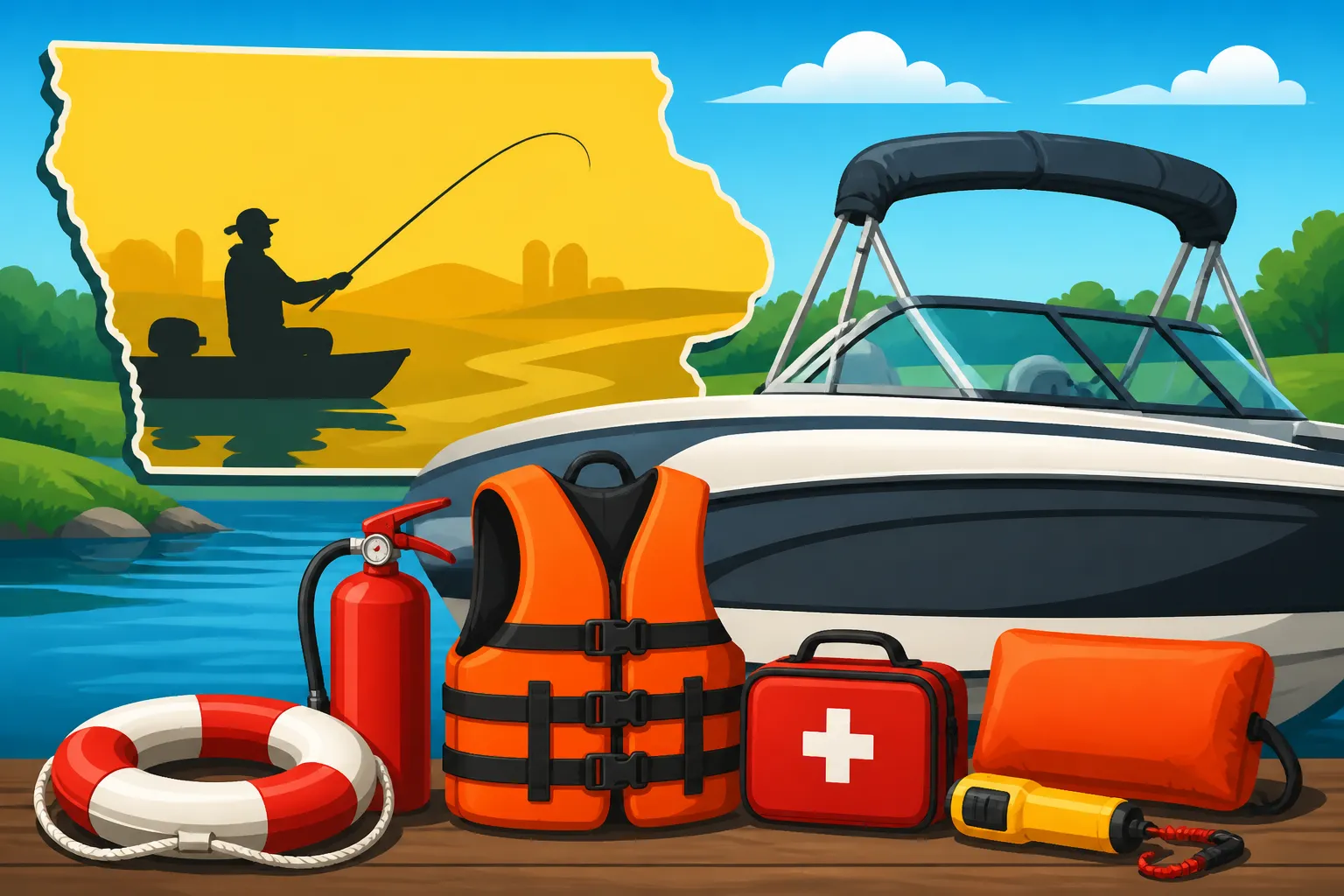
When we talk about boat safety, the first thing most people think of is a life jacket, or as they're officially called, Personal Flotation Devices (PFDs). And they're right to do so! PFDs are, without a doubt, the most critical piece of safety equipment you'll have on board. The rule of thumb in Iowa is simple: you must have one Coast Guard-approved wearable PFD for every person on your vessel. Beyond that, boats 16 feet or longer (excluding canoes and kayaks) must also carry one throwable PFD. Don't let the simplicity fool you; choosing the right PFDs and ensuring they're properly used is key. If you want a deeper dive, check out our guide on Best Life Jackets for Iowa Boaters.
Different Types of PFDs and Their Uses
Not all PFDs are created equal, and understanding the different types is crucial for compliance and effective use. The U.S. Coast Guard classifies PFDs into various types, from Type I (offshore PFDs designed for all waters, offering maximum flotation and turning an unconscious person face up) to Type V (special use devices, often inflatable, that must be worn to be considered legal). For most recreational boating on Iowa lakes and rivers, Type II (near-shore vests, good for calm inland water) and Type III (flotation aids, comfortable for continuous wear in calm water) are the most common and practical choices.
For larger boats, remember that throwable PFD. This is typically a Type IV cushion or ring buoy, meant to be thrown to someone who has fallen overboard. It's not designed to be worn for extended periods, but rather as an immediate aid to keep a person afloat while they're being recovered. Make sure your throwable PFD is immediately accessible and in good condition – not tucked away under a pile of gear. You can often find a great selection of all these types at outdoor retailers like Bass Pro Shops or online platforms such as Amazon, making it easier to ensure you have the correct ones for your specific boating needs.
Sizing and Fit for All Ages
Having a PFD isn't enough; it has to fit properly. This is especially true for children. In Iowa, any child 12 years of age or younger must wear a Coast Guard-approved PFD at all times while on any vessel, unless they are inside an enclosed cabin or below deck. This is a non-negotiable rule, and for good reason. A PFD that's too big will ride up around a child's ears, offering no real protection. One that's too small will be uncomfortably tight or simply won't provide enough buoyancy.
When trying on a PFD, it should fit snugly but allow for comfortable movement. For adults, ensure all straps are buckled and cinched down. If you can raise your arms and the PFD comes up past your ears, it's too loose. For children, a good test is to lift them by the shoulders of the PFD; their chin and ears should not slip through. Remember, a PFD that fits poorly is almost as useless as no PFD at all in an emergency situation.
When and How to Wear a PFD
While Iowa law mandates children under 13 wear PFDs and requires one for every person on board, the best practice is for everyone to wear a PFD, especially when the boat is underway. Many boating fatalities involve people who weren't wearing a life jacket, even when one was available on the boat. It's hard to put one on once you're already in the water, particularly if you're injured, disoriented, or the water is cold.
Make it a habit. If you're on a small craft like a canoe or kayak – even if you think you're a strong swimmer – wear your PFD. If you're fishing solo, wear it. If the weather looks iffy, wear it. Modern PFDs are much more comfortable and less bulky than the old orange "horse collars" you might remember. There are even inflatable options that offer a lot of freedom of movement, though these often have specific use requirements, such as needing to be worn to count as a legal PFD and requiring regular inspection. Making PFD wearing a routine can truly be a lifesaver.
Fire Extinguishers and Ventilation
Fires on boats, while perhaps not as common as other types of accidents, can be incredibly destructive and dangerous. When you're out on the water, far from emergency services, a small spark can quickly turn into an inferno. That's why having the right fire extinguisher and ensuring proper ventilation are critical safety components on many Iowa vessels.
Types of Fire Extinguishers for Boats
The type and number of fire extinguishers required on your boat depend on its size and whether it has an enclosed engine compartment. For most recreational boats in Iowa, you'll need a Coast Guard-approved, marine-type fire extinguisher. These are typically B-I or B-II classification, meaning they're effective against flammable liquids (like fuel or oil) and electrical fires, which are the most common types of fires on boats. A standard automotive fire extinguisher might not meet the marine-grade requirements for corrosion resistance or capacity, so always check for the Coast Guard approval stamp.
Generally, boats with an enclosed engine compartment will need at least one B-I extinguisher. Larger boats might require more, or a B-II unit. Always refer to the current Required Safety Equipment for Iowa Boats guidelines to ensure you have the correct type and quantity for your specific vessel. These regulations are designed to give you the best chance of putting out a fire before it gets out of control, protecting your boat and, more importantly, everyone on board.
Placement and Maintenance of Fire Extinguishers
Having a fire extinguisher isn't enough; it needs to be accessible and in good working order. Imagine a fire breaking out and your extinguisher is buried under fishing gear or locked in a compartment you can't open quickly. It needs to be mounted in a readily accessible location, away from potential fire sources but easy to grab. Often, this means near the helm, in the galley, or close to the engine compartment hatch.
Regular maintenance is also key. Check your extinguisher before each season, and periodically throughout the year. Look at the pressure gauge (if it has one) to ensure it's in the "green" zone. Check for a broken tamper seal, a clogged nozzle, or any signs of physical damage or corrosion. Give it a shake to prevent the extinguishing agent from settling. You'll often find these safety essentials at retailers like Bass Pro Shops or online via Amazon, and they typically come with clear instructions for placement and inspection. Remember, these aren't "set it and forget it" items; they need your attention to be reliable when you need them most. Our post, Do You Need a Fire Extinguisher on a Small Boat?, offers more specific guidance on this.
The Importance of Proper Ventilation
Beyond putting out fires, preventing them from starting is paramount. And a huge part of fire prevention on boats, particularly those with inboard engines and enclosed fuel tanks, is proper ventilation. Gasoline vapors are heavier than air and can accumulate in bilge areas. Just a small spark – from a battery terminal, a faulty wire, or even a static discharge – can ignite these vapors, leading to a devastating explosion.
Boats with enclosed gasoline engine compartments must have a ventilation system that includes at least two ventilation ducts fitted with cowls or equivalent fittings, for intake and exhaust. Additionally, a power blower (usually an exhaust blower) is often required. This blower should be run for at least four minutes before starting the engine and after refueling, to clear out any dangerous fumes. Always check the bilges for any unusual odors before starting your engine, and ensure all vents are clear and unobstructed. It's a simple step that can prevent an unthinkable disaster.
Visual Distress Signals and Sound-Producing Devices
Emergencies don't always happen within shouting distance of shore or other boats. Sometimes, you need a way to signal for help, both visually and audibly. That's where visual distress signals (VDS) and sound-producing devices come into play. They're your way of saying "I need help!" when you can't use your voice or a radio.
Required Visual Distress Signals
For recreational boats operating on federally controlled waters (which includes many of Iowa's larger rivers and the Great Lakes), Coast Guard-approved visual distress signals are generally required. This often means having both day and night signals. Pyrotechnic signals (like flares) are very effective but have expiration dates and must be handled carefully. Non-pyrotechnic signals, like an orange distress flag for daytime use and an electric distress light (such as a highly visible, flashing S.O.S. light) for nighttime, are also popular and have the advantage of being reusable.
The specific number and type of VDS you need will depend on your boat's size and where you're operating. For example, smaller vessels might have slightly different requirements than larger ones. Always keep your VDS in good working order, readily accessible, and protected from moisture. And always check the expiration dates on pyrotechnic flares, replacing them as needed. You can easily find these types of safety items at marine supply stores or through online retailers like Amazon, ensuring you're prepared for any unexpected situation.
Sound Signals for Different Scenarios
Just like visual signals, sound signals are crucial for communicating on the water, especially in low visibility conditions like fog or heavy rain, or to alert other vessels to your presence or intentions. Most boats are required to have a sound-producing device on board. For smaller boats, a whistle or horn that can be heard for at least half a nautical mile is usually sufficient. Larger vessels might need a horn or bell capable of being heard for a greater distance.
Understanding the different sound signals is also part of being a responsible boater. For instance, one short blast means "I intend to pass you on my port side," while two short blasts mean "I intend to pass you on my starboard side." A prolonged blast is a warning signal, often used in restricted visibility. Learning these basic signals, along with ensuring your sound device is always functional, is a fundamental aspect of safe navigation and accident prevention on Iowa's waterways.
Navigation Lights and Nighttime Safety
There's a special kind of magic to being out on the water at dusk or under a starry sky. But night boating also brings increased risks due to reduced visibility. That's why navigation lights aren't just decorative; they're vital safety equipment, letting other boaters know where you are and which way you're headed.
Understanding Navigation Light Requirements
Iowa law mirrors federal regulations when it comes to navigation lights. Generally, if you're operating your boat between sunset and sunrise, or during periods of restricted visibility (like fog or heavy rain), you must display proper navigation lights. The specific configuration depends on the type and size of your vessel. For most powerboats, this means a red light on the port (left) side, a green light on the starboard (right) side, and a white all-around light or a masthead light combined with a stern light. The red and green lights indicate your boat's width and direction of travel, while the white light shows your presence and position.
It's common for smaller vessels, like canoes, kayaks, or even some small fishing boats, to have slightly different requirements, sometimes allowing for a single white light that is visible from all directions. However, even if your small craft is exempt from traditional nav light rules, having a bright, easily visible light source is always a good idea for safety. Always check your lights before heading out at night. A quick inspection can prevent a dangerous encounter with another vessel that simply can't see you.
Best Practices for Night Boating
Beyond simply having the correct lights, there are several best practices that can significantly improve your safety when boating after dark. First, reduce your speed. It takes longer to react to hazards you can't see clearly. Second, keep a sharp lookout for other vessels, navigational aids, and potential obstacles. Your eyes will adjust to the darkness over time, but always be vigilant. Even on familiar waters like Rathbun Lake or Saylorville Reservoir, things can look drastically different at night.
Avoid using bright lights on your boat's interior or helm that can impair your night vision. If you need light for a short period, use a red light, which is less disruptive to your night adaptation. Also, consider having a good spotlight or headlamp on board, not for continuous use, but for briefly identifying buoys, shorelines, or potential hazards. Remember, just because you can see doesn't mean you can be seen. Proper lights are your primary defense in preventing collisions.
Anchors, Oars, and Other Critical Gear
While PFDs and fire extinguishers get a lot of attention, there are other pieces of safety equipment that are just as crucial, especially when you encounter unexpected mechanical failures or adverse conditions. These items often provide a means of control or rescue when your primary systems fail.
The Role of a Proper Anchor and Rode
An anchor isn't just for holding your spot while you're fishing for crappie or enjoying a swim. It's a vital piece of safety equipment. Imagine your engine unexpectedly dying in a strong current on the Mississippi River, or a sudden gust of wind pushing you toward a rocky shore on West Okoboji Lake. A functional anchor, with enough line (called "rode"), can prevent your boat from drifting into danger. The general rule of thumb for rode length is at least 7:1 (seven feet of rode for every one foot of water depth), plus extra for scope, though this can vary based on conditions.
Your anchor should be appropriate for the size of your boat and the type of bottom you're likely to encounter (sand, mud, rock). Make sure the anchor line is securely attached to your boat and in good condition, without frays or weak spots. Having a reliable anchor system stored in an easily accessible location is a non-negotiable for safe boating. You can find robust anchoring systems at marine outfitters like Bass Pro Shops or through online options on Amazon.
Manual Propulsion in an Emergency
What happens if your main engine, and even your trolling motor, completely conks out? On smaller boats, especially those under 16 feet, having a set of oars or paddles is a simple yet effective way to get back to shore or move out of immediate danger. Even if you have an engine, mechanical failures can occur, and being able to manually propel your vessel can save you from a long, frustrating drift or a more serious situation.
This requirement typically applies to smaller boats, but even on a larger vessel, having some form of backup propulsion, whether it's a small kicker motor or simply a sturdy paddle for maneuvering, is a wise precaution. Don't assume you'll always have engine power; planning for the worst-case scenario ensures you're prepared for anything the water throws your way.
First Aid Kits and Emergency Communications
Beyond the legally mandated items, a well-stocked first aid kit is an absolute must. Minor cuts, scrapes, stings, or even seasickness can happen on any outing. Your kit should include bandages, antiseptic wipes, pain relievers, motion sickness medication, and any personal medications you or your regular passengers might need. Tailor it to the length and type of your trips.
Equally important is a means of emergency communication. While cell phones are ubiquitous, they aren't always reliable on the water, especially in more remote areas or during storms. A marine VHF radio is a much more dependable option for calling for help, monitoring weather channels, and communicating with other vessels. Even if it's not strictly required for your size of boat in Iowa, it's a critical safety investment, offering direct contact with the Coast Guard and other emergency services. Always make sure your phone is charged and protected in a waterproof bag, and consider having a portable battery bank.
Here's a handy table summarizing some key Iowa boat safety equipment:
| Equipment Type | Requirement for Most Recreational Boats | Special Notes & Best Practices |
|---|---|---|
| Personal Flotation Devices (PFDs) | One wearable PFD for each person on board; one throwable PFD for boats 16 ft+ (excluding canoes/kayaks) | Children 12 and under must wear a PFD. Ensure proper fit. Consider wearing PFDs at all times, especially in smaller craft. |
| Fire Extinguisher | Required for boats with enclosed engine compartments or fuel tanks, or certain other conditions | Must be Coast Guard-approved (B-I or B-II). Accessible and regularly inspected. Know how to use it. |
| Sound-Producing Device | Whistle or horn (audible for 0.5 NM or more) | Essential for signaling in fog or to alert other vessels. Know basic sound signals. |
| Visual Distress Signals (VDS) | Required for boats on federally controlled waters (often means larger rivers/Great Lakes) | Mix of day and night signals (flares, distress flag, electric light). Check expiration dates on pyrotechnics. Keep accessible. |
| Navigation Lights | Required from sunset to sunrise and in restricted visibility | Specific types vary by boat size/type. Ensure all lights are functional and clean. Reduce speed at night. |
| Anchor and Rode | Not universally required by law, but highly recommended as safety gear | Anchor appropriate for boat size/bottom type. Have adequate rode (7:1 depth ratio). Critical for engine failure or adverse weather. |
| Oars/Paddles | Required for canoes, kayaks, and certain other small boats | Recommended for any small vessel without reliable auxiliary power. Provides manual propulsion in case of engine failure. |
| First Aid Kit | Not universally required by law, but highly recommended as safety gear | Stock with essentials for cuts, scrapes, stings, and personal medications. Keep dry and accessible. |
| Emergency Communication | Not universally required by law, but highly recommended as safety gear | Marine VHF radio preferred over cell phone for reliability. Keep cell phone charged and in waterproof case. |
Boater Education and Additional Safety Considerations
While having the right gear is fundamental, safety on the water goes far beyond a checklist of equipment. A knowledgeable and responsible boater is often the most important safety device on any vessel. Understanding the "rules of the road" and being prepared for various scenarios can make all the difference.
Iowa's Boater Education Requirements
Iowa takes boater education seriously, especially for younger operators, and for good reason. Operating a boat requires skill, judgment, and an understanding of waterway etiquette and safety protocols. In Iowa, anyone born after January 1, 1979, must successfully complete a boater education course approved by the DNR to operate a motorboat or personal watercraft (PWC). There are some exemptions, such as supervised operation by an adult, but generally, this is a firm requirement. Our guide on Boater Education Requirements for Young Anglers provides more specific details on this.
These courses cover everything from navigation rules, hazards, emergency procedures, and even how to be a good steward of our natural resources. Even if you're an experienced boater and not legally required to take the course, enrolling in one can refresh your knowledge and teach you new tips. It’s an investment in your safety and the safety of everyone around you. After all, knowing the Minimum Age to Drive a Motorboat in Iowa is one thing, but having the skills to do so safely is another.
Pre-Departure Checklists and Float Plans
One of the simplest yet most effective safety practices is to always perform a pre-departure check of your boat. This isn't just for long trips; it should be routine for every single outing. Check your fuel levels, battery charge, engine oil, and navigation lights. Ensure all required safety equipment is on board and accessible. Test your bilge pump and verify that all drains are clear. It takes only a few minutes but can prevent frustrating breakdowns and dangerous situations.
For any extended trip, especially if you're venturing into less familiar waters or plan to be out after dark, consider filing a "float plan." This isn't a legal requirement, but it's a smart safety move. A float plan is simply telling a trusted friend or family member:
- Who is on board with you.
- Your boat's description (make, model, color, registration number).
- Your planned route and destination.
- Your expected departure and return times.
- What to do if you don't return on schedule.
This information can be invaluable to rescue personnel if you run into trouble and can't call for help yourself.
Cold Water Safety and Hypothermia Prevention
Iowa's waters can be surprisingly cold, even in spring and fall, and especially during ice fishing season. Cold water is a serious hazard that many boaters underestimate. Falling into water below 70°F (21°C) can quickly lead to hypothermia, which impairs your ability to swim, think clearly, or even hold onto a PFD. Survival time in truly cold water (e.g., below 40°F/4°C) can be alarmingly short.
Always dress for the water temperature, not just the air temperature. Layers of synthetic or wool clothing are best, as they retain insulating properties even when wet, unlike cotton. If there's any chance of falling in, wear your PFD, as it provides crucial flotation and can help retain body heat. If you do find yourself in cold water, try to stay calm, get as much of your body out of the water as possible, and call for help. Understanding the dangers of cold water and taking precautions is a vital part of year-round boating safety in Iowa.
This article is for general informational purposes only and does not constitute professional advice. Laws, prices and regulations vary by location and change over time. Consult a qualified professional for guidance on your specific situation.