Smallest Legal Size for Bass in Iowa
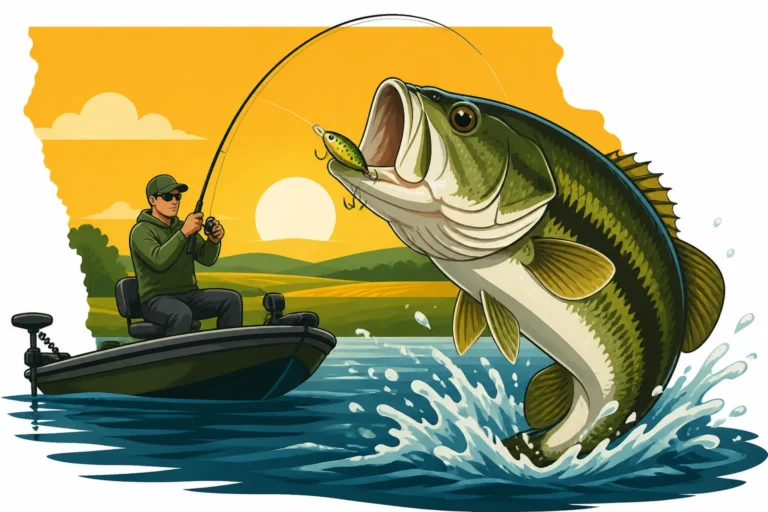
There's nothing quite like the thrill of a bass striking your lure, whether it's a hard-fighting largemouth or a feisty smallmouth. But once you've reeled in that beauty, a common question often pops up: is this fish a keeper? It's a moment of truth many Iowa anglers face, and understanding the specific size regulations for bass isn't just about avoiding a fine; it's about protecting our incredible fisheries for future generations. This comprehensive guide will break down the smallest legal size for bass in Iowa, explain why these rules are in place, and give you practical tips to ensure you're always fishing within the law.
The Essential Bass Length Limits in Iowa: What You Need to Know
Iowa's fishing regulations are designed to maintain healthy fish populations, and that absolutely includes our beloved bass. When it comes to keeping bass, length limits are a crucial component of these rules, preventing anglers from overharvesting younger, smaller fish that haven't had a chance to reproduce or grow to a significant size. Missing these details can be a real headache, not to mention costly, so let's dive into the specifics for both largemouth and smallmouth bass across the state.
For most general waters in Iowa, the rules for bass are fairly straightforward, but it's important to remember that these are minimum length limits. This means any bass you catch that measures under the specified length must be immediately and carefully released.
General Length Limits for Largemouth Bass
Ah, the largemouth! The iconic bucketmouth that lurks in weed beds and structure. For the vast majority of Iowa's public lakes and streams, you'll encounter a minimum length limit. If you're out chasing these green giants, you'll need to pay close attention to your measuring tape.
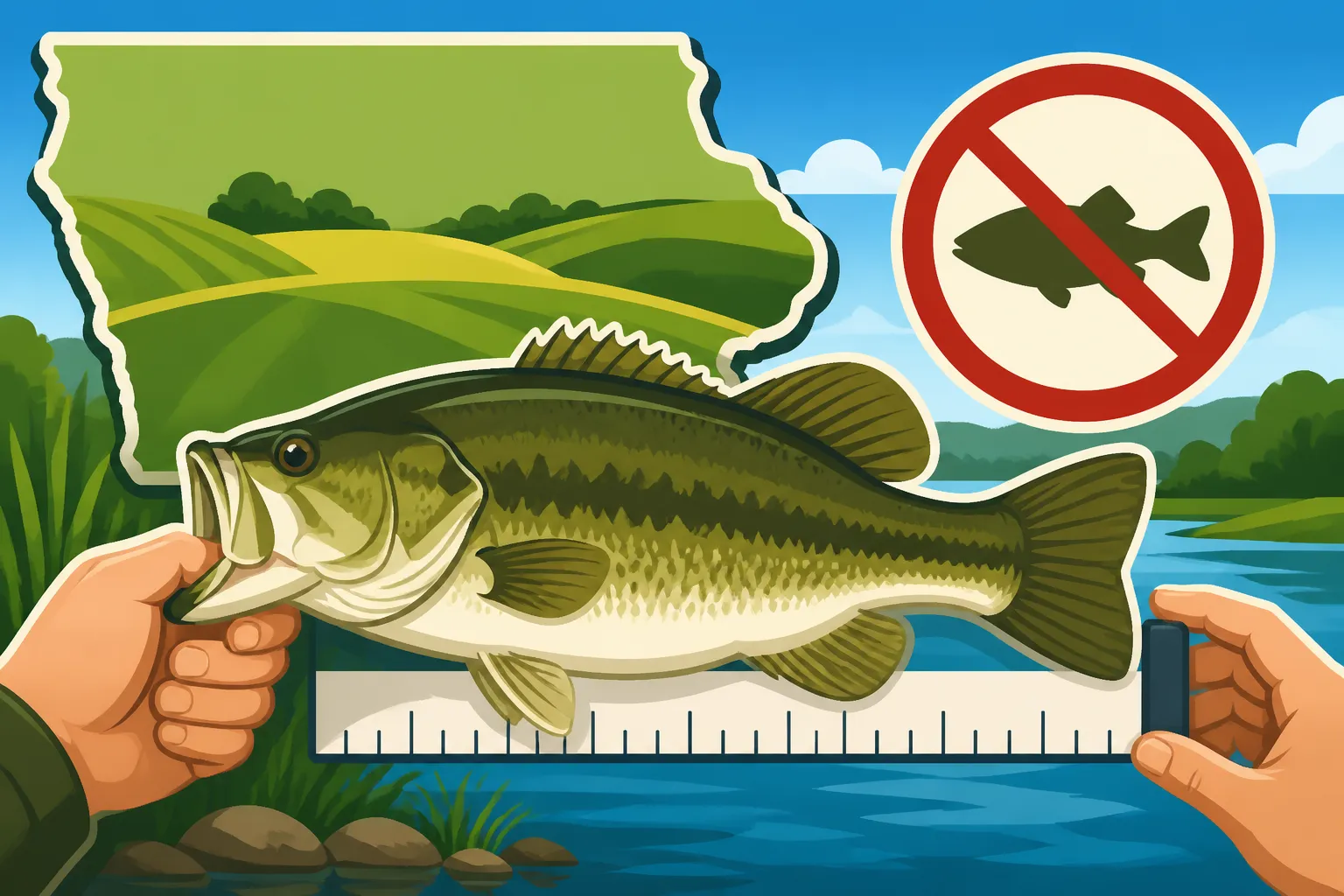
In most places, the general minimum length limit for largemouth bass is 15 inches. This is a pretty common rule you'll find throughout the state's public waters. Imagine you've just hauled in a chunky largemouth from a local county pond, and it measures 14.5 inches. Even if it's a solid, healthy fish, that half-inch makes all the difference – it needs to go back into the water to grow bigger and contribute to the spawn. This rule applies widely, from your smaller community ponds to many larger reservoirs. It’s a conservation measure designed to let those fish mature, spawn a few times, and contribute to the population before they become dinner. Remember, checking the Iowa Fishing Regulations Explained booklet or the official Iowa DNR website is always your best bet to confirm the current rules for the specific body of water you're fishing.
General Length Limits for Smallmouth Bass
Smallmouth bass, with their bronze backs and feisty attitudes, are a favorite among river anglers in particular. They prefer cooler, clearer water, often found in rocky rivers and some of our deeper natural lakes. Similar to largemouth, smallmouth bass also have general length limits that anglers must adhere to.
Typically, the minimum length limit for smallmouth bass in Iowa is also 15 inches. This consistency helps simplify things for anglers who might target both species, or who fish waters where both are present. Picture yourself on the Upper Iowa River, fly fishing for smallmouth. You hook into a gorgeous bronze-back that puts up an incredible fight, but when you measure it against your bump board (easily found on Amazon, by the way), it comes up at 14 inches. What do you do? That's right, back it goes. The intent here is identical to that for largemouth – to protect the breeding stock and allow fish to reach a size where they've had the chance to reproduce multiple times, ensuring a sustainable population for years to come. These rules are especially important in sensitive river ecosystems where smallmouth populations can be more vulnerable to overfishing.
Why Do Bass Size Limits Exist? It's All About Healthy Fisheries
It's easy to look at a regulation and think, "Why bother?" But when it comes to fish size limits, there's a really good reason, and it's all about responsible stewardship of our natural resources. These aren't arbitrary numbers dreamed up to make your fishing trip harder; they're based on scientific research into fish biology and population dynamics. They ensure that we continue to have robust and exciting bass fishing opportunities in Iowa for decades.
Protecting Spawning Stock and Future Generations
One of the primary reasons for minimum length limits is to protect the spawning population. Fish, particularly bass, typically reach sexual maturity and spawn for the first time before they reach the 15-inch mark. By setting a minimum length limit, wildlife agencies ensure that a significant portion of the bass population has at least one, if not several, opportunities to reproduce before they can be legally harvested.
Think about it this way: if anglers were allowed to keep every bass they caught, regardless of size, the younger, easier-to-catch fish would be quickly removed. This would deplete the "recruitment" — the number of young fish entering the population each year. Over time, you'd see fewer and fewer fish, and those that remained would likely be smaller and less healthy. The 15-inch limit acts as a protective shield, allowing those younger fish to grow, mature, and contribute to the future of the fishery. It's a strategic move to ensure that every spring, our lakes and rivers are teeming with bass ready to lay eggs and create the next generation of fighters for us to enjoy. This is a core part of what Iowa Fishing Regulations Explained aims to achieve.
Promoting Larger Fish and Quality Fishing Experiences
Beyond just protecting the spawning stock, length limits also play a huge role in promoting a fishery that produces larger, higher-quality fish. If only bigger fish are kept, it means more food and less competition for the remaining smaller fish. This allows them to grow faster and reach impressive sizes.
Imagine a lake where anglers consistently harvest bass that are only 10-12 inches long. What happens? Those are often the most aggressive, easiest-to-catch fish. If they're all removed, the gene pool for "fast-growing, aggressive bass" diminishes, and you're left with a population of slower-growing, perhaps less active fish. Conversely, when a 15-inch limit is in place, fish under that size are released, allowing them to grow into those desirable "trophy" dimensions. This leads to more exciting battles on the water and a greater chance of catching truly memorable fish. It's not just about what you can keep, but about improving the overall quality of the fish you encounter. This is especially true for species like largemouth, where Largemouth Bass Fishing in Iowa often focuses on finding those lunkers.
Navigating Special Bass Regulations: When the Rules Change
While the 15-inch minimum is a common baseline, Iowa has specific waters where the bass regulations diverge from the general rule. These exceptions are typically put in place for very good reasons, often to address unique ecological conditions, manage specific fish populations, or enhance a particular type of fishing experience. It’s absolutely critical to be aware of these special regulations, as ignorance is never a valid excuse if you get checked by a conservation officer.
Slot Limits and Protected Lengths
Sometimes, instead of a simple minimum length, you'll encounter a "slot limit." A slot limit means you can only keep fish outside a certain size range. For example, a common bass slot limit might be "no bass between 12 and 16 inches may be kept." In this scenario, you could keep bass smaller than 12 inches (usually referred to as "under the slot") or larger than 16 inches ("over the slot"). The fish within the 12-to-16-inch slot would have to be released.
Why use a slot limit? It's often implemented to protect the middle-sized, fast-growing bass that are prime spawning individuals, while allowing for the harvest of smaller, more numerous bass (which can reduce competition) and larger, trophy-sized bass (which often have already spawned multiple times). It's a nuanced management tool that aims to create a very balanced fishery. You might see these on lakes known for producing a lot of smaller bass, where managers want to encourage growth. Always check the signage at boat ramps or the Iowa Fishing Regulations Explained guide for the specific lake you're visiting. A compact measuring tape, like those widely available on Amazon, is an indispensable tool for deciphering these rules on the fly.
Specific Lake and River Exceptions
Iowa's diverse waters mean that a "one-size-fits-all" approach simply doesn't work for every lake or river. Certain bodies of water will have their own unique set of bass regulations. These might include:
- Higher Minimum Length Limits: Some trophy bass lakes might have a 16 or 18-inch minimum length limit to truly foster giant fish. These are often waters where the fish grow exceptionally well and the goal is to produce state-record contenders. For example, a lake known for its impressive Largemouth Bass Fishing in Iowa might have more stringent rules.
- No Length Limit (Catch and Release Only): In rare cases, a particular water might be designated "catch and release only" for bass, meaning no bass can be harvested, regardless of size. This is usually implemented for highly sensitive populations or to create a unique fishing experience focused entirely on the sport of catching.
- Reduced Daily Bag Limits: While not a length limit, some waters might also reduce the number of bass you can keep in a day, further protecting the population. The general daily bag limit for bass is five, but this can be lowered in specific locations. You can find more details on Iowa Fishing Daily Bag Limits Guide.
It’s your responsibility as an angler to check the specific regulations for every body of water you intend to fish. A general license covers you for fishing, but knowing the granular rules for each spot is what separates a responsible angler from one who might end up with a citation. This is especially true when fishing on popular destinations like the Iowa Great Lakes Fishing Guide or the Mississippi River, where regulations can sometimes differ based on specific pools or state border agreements.
Here’s a simplified table illustrating how regulations might vary:
| Water Type | Largemouth Bass Minimum Length | Smallmouth Bass Minimum Length | Notes |
|---|---|---|---|
| Most Iowa Public Lakes/Rivers | 15 inches | 15 inches | Standard regulation for the majority of state waters. |
| Specific Trophy Lakes | 16-18 inches (or more) | 16-18 inches (or more) | Designed to cultivate larger, older bass. Check local signage. |
| Waters with Slot Limits | Varies (e.g., 12-16 inch protected) | Varies (e.g., 12-16 inch protected) | Only fish outside the specified slot may be kept. |
| Catch & Release Only Waters | None (all must be released) | None (all must be released) | No harvest allowed. |
| Mississippi River Border Waters | 14 inches | 14 inches | Often have slightly different rules due to reciprocal agreements with neighboring states. |
This table provides a general overview, but always verify with the current official Iowa fishing regulations for the precise details of your chosen fishing spot.
Best Practices for Measuring and Handling Bass to Ensure Compliance
Okay, so you know the rules and why they exist. Now, how do you actually measure a bass accurately and, just as importantly, handle it properly to ensure its survival if it's a short fish? This isn't just about legality; it's about ethical angling and giving that fish the best chance to grow bigger for someone else to catch another day.
Accurate Measurement Techniques
Getting an accurate measurement is crucial, especially when you're right on the edge of the legal limit. Here's how to do it right:
- Use a Reliable Measuring Device: A stiff, flat measuring board or tape is ideal. Flexible cloth tapes can be inaccurate, especially on a squirming fish. Many anglers prefer a bump board where the fish's nose can be pressed against an end-stop for precise measurement. You can find many durable, waterproof measuring boards designed specifically for fish on Amazon.
- Lay the Fish Flat: Gently lay the bass on its side on your measuring device. Make sure the mouth is closed and the fish is straight, not bent or curled.
- Position from Nose to Tail: The measurement is taken from the tip of the jaw (or snout) to the end of the tail. For bass, the general rule is to pinch the tail together to get the maximum length. However, always double-check the specific regulations as some species might call for a "total length" (tail spread naturally) or "fork length" (to the fork of the tail). For bass in Iowa, it's typically the tip of the nose to the pinched tail tip.
- Read Carefully: Read the measurement at eye level to avoid parallax error. If it's even a fraction under the limit, it's considered too short. When in doubt, always err on the side of caution and release the fish.
Practicing your measuring technique, even on fish you know are legal or clearly too small, will make you quicker and more confident when that borderline fish comes along. This skill is as important as knowing How to Catch Bass in Iowa.
Responsible Catch and Release
Releasing an undersized bass, or any fish you don't intend to keep, is a critical part of ethical angling. A poorly handled fish is less likely to survive, negating the purpose of the length limit entirely.
Here are some tips for responsible catch and release:
- Minimize Time Out of Water: The moment a fish leaves the water, it's stressed. Have your measuring device, camera (if you're snapping a quick photo), and hook removal tools ready before you even bring the fish in. The quicker you can measure and release, the better its chances.
- Use Wet Hands: Always wet your hands thoroughly before touching a fish. Dry hands can remove the protective slime coat, leaving the fish vulnerable to disease.
- Support the Fish: Never hold a large bass solely by its jaw (lipping) while it's struggling. This can damage its jaw and spine. Support its belly and tail, especially if you're holding it horizontally for a photo or measurement. Avoid vertical hangs from the jaw unless the fish is completely docile and supported otherwise.
- Quick Hook Removal: Use needle-nose pliers or a dehooking tool to remove hooks quickly and cleanly. If the hook is deeply swallowed, it's often better to cut the line as close to the hook as possible rather than tearing the fish's internal organs trying to retrieve it. Barbless hooks can also make removal much easier.
- Revive If Necessary: If a fish seems lethargic before release, hold it gently in the water, facing into a mild current, and move it back and forth to force water over its gills. Don't throw it back until it shows signs of vigor and can swim away strongly under its own power.
- Consider the Conditions: On very hot days, or when water temperatures are high, fish are under more stress. Be extra diligent with quick handling and release, or consider not fishing at all during periods of extreme heat when catch and release mortality might be high.
By mastering both accurate measurement and responsible handling, you're not just following the rules; you're becoming a true steward of Iowa's precious fishing resources, ensuring that the thrill of the bass bite continues for everyone. And remember, sometimes the biggest thrill isn't keeping a fish, but knowing you've sent a healthy one back to grow even larger.
Disclaimer
This article is for general informational purposes only and does not constitute professional advice. Laws, prices and regulations vary by location and change over time. Consult a qualified professional for guidance on your specific situation.