White Bass Runs in Iowa Rivers
Oh, the white bass run in Iowa rivers! If you've ever been lucky enough to hit it just right, you know it's one of the most exciting, fast-paced fishing experiences Iowa has to offer. But if you've missed it, or struggled to find them, you're not alone – these fish can be tricky, appearing in huge numbers one day and seemingly vanishing the next. This guide is all about helping you understand the magic of these annual migrations, where to find them, and how to make the most of those incredible days when the white bass are on fire in our Iowa rivers.
Understanding White Bass and Their Annual Migration
White bass are truly fascinating fish, and their annual spawning migration up Iowa's rivers is a prime example of their unique biology. They're built for speed and schooling, and when they decide to move, they do it in force. Understanding why they do what they do is key to predicting when and where you might encounter them for some truly unforgettable fishing.
What Makes White Bass Unique
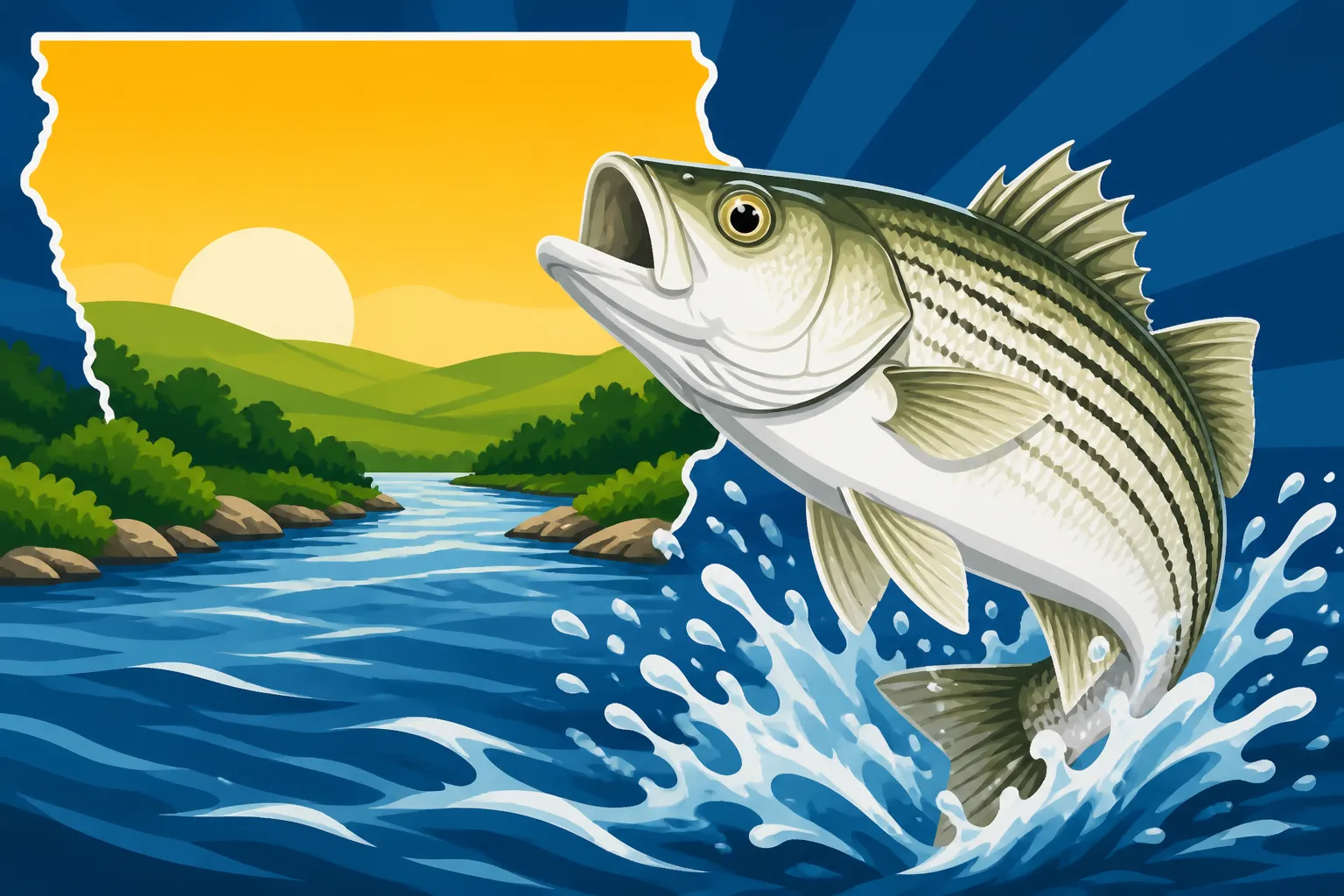
White bass (Morone chrysops) are a species of temperate bass, easily recognizable by their silvery-white bodies and distinct horizontal stripes running from head to tail. Unlike their black bass cousins (largemouth and smallmouth), white bass are pelagic, meaning they prefer open water, and they are almost always found in large schools. This schooling behavior is what makes their runs so spectacular – when you find one, you've often found hundreds! They're aggressive eaters, chasing down schools of baitfish like shad, which makes them incredibly fun to catch on a variety of artificial lures. You might notice their streamlined bodies and powerful tails, perfectly adapted for navigating currents and chasing prey in rivers and larger impoundments.
What’s also unique about white bass is their relatively short lifespan compared to some other popular game fish. They grow quickly, mature early, and often have boom-and-bust cycles in populations, heavily influenced by successful spawning years. This rapid life cycle contributes to their "feast or famine" nature for anglers – when conditions are right, there are seemingly endless numbers, but off years can make them feel scarce.
Their Spawning Migration Patterns
The entire phenomenon of the "white bass run" revolves around their instinctual drive to spawn. As water temperatures begin to rise in early spring, usually when river temperatures hit the mid-50s Fahrenheit, white bass start migrating from larger lakes and reservoirs up into the tributary rivers and streams. They're looking for moving water, often gravelly or rocky bottom areas, where they can deposit their eggs. This mass movement upstream can be incredibly intense, with thousands of fish pushing against the current.
This migration isn't a single, continuous event; it often happens in waves, with smaller groups moving first, followed by the main schools as conditions stabilize. They don't typically build nests like black bass; instead, the females scatter their eggs, and the males fertilize them in the current. Once spawning is complete, they'll gradually drift back downstream to their home lakes and reservoirs, but the post-spawn period can still offer fantastic fishing as they recover and feed heavily. Understanding these phases – pre-spawn migration, actual spawning, and post-spawn recovery – is crucial for timing your trips.
Identifying White Bass vs. Similar Species
While generally easy to identify, white bass can sometimes be confused with their close relatives, the yellow bass or even smaller striped bass hybrids, especially for those new to Iowa fishing. The key is to look at their stripes and body shape. White bass typically have a clean, silvery-white body with distinct, unbroken horizontal stripes. The most defining feature is that the first stripe below the lateral line is usually unbroken all the way to the tail.
Yellow bass, which are also common in Iowa, are smaller and have a more yellowish tint to their bodies. Their stripes are often broken or offset, particularly below the lateral line. Striped bass hybrids (often called "wipers") are much larger, have a more robust, football-like body shape, and their stripes are typically broken and somewhat irregular. If you catch a fish and you're unsure, comparing these features will usually give you the answer. Always double-check the Iowa Fishing Daily Bag Limits Guide to ensure you're in compliance, as limits can differ for similar-looking species.
Key Rivers for White Bass Runs in Iowa
Iowa might be known for its rich farmlands, but it's also crisscrossed by an incredible network of rivers that become vibrant highways for white bass during their annual runs. Knowing which rivers are prime targets and understanding their specific characteristics can put you right in the middle of the action.
The Des Moines River Hotspots
The Des Moines River is arguably one of Iowa's premier destinations for white bass runs, especially the stretches below major reservoirs like Saylorville and Red Rock. These impoundments act as huge holding grounds for white bass, and when spring arrives, the fish pour out of them and upstream into the river. You'll often find excellent fishing in the swift currents below the dams and spillways, as well as in the slower pools and eddies just downstream.
Popular areas include the stretch below the Saylorville Dam, particularly around the city of Des Moines, and further south below the Red Rock Dam. These areas offer good public access, and during the run, you'll see plenty of anglers lining the banks, all hoping to hook into a school. The flow of water below the dams can create prime feeding opportunities, concentrating baitfish and, consequently, white bass. Keep an eye on river levels; too high and fast, and it can be difficult to fish, but a steady flow after a rise can be fantastic. Fishing the Des Moines River in Iowa is a fantastic resource if you're planning a trip to this river.
Mississippi River Opportunities
While the Mississippi River might not have the dramatic "runs" in the same concentrated way as tributary rivers feeding into smaller impoundments, it certainly holds an abundance of white bass. These fish will move into the main river channels, backwaters, and tributary mouths as spring progresses. The Mississippi offers vast stretches of diverse habitat, from wing dams to rip-rap shorelines, and below lock and dam systems.
Anglers targeting white bass on the Mississippi often find success by focusing on current breaks, points, and areas where smaller creeks or streams enter the main river. These feeder streams can also experience smaller, localized white bass runs. Fishing below the many locks and dams, such as those near Dubuque or Bellevue, can be incredibly productive, as the turbulent water creates natural feeding zones. Remember that Iowa Fishing Regulations on the Mississippi River Border can have unique considerations, so always double-check.
Other Notable Iowa Rivers
Beyond the Des Moines and Mississippi, several other Iowa rivers offer excellent white bass fishing, often providing a more tranquil experience away from the crowds. The Skunk River, Iowa River, and Cedar River, especially stretches below larger lakes or reservoirs, can experience impressive white bass runs. These rivers tend to be smaller and might require a bit more local knowledge or exploration to find the hotspots, but the reward can be well worth the effort.
For example, the Iowa River, especially segments near Coralville Reservoir, can see good runs. Similarly, the Cedar River below dams or major riffle areas can concentrate fish. Don't overlook smaller tributaries that feed into major river systems or lakes; these can be forgotten gems. A little bit of research and talking to local bait shop owners can often lead you to an uncrowded honey hole. The key across all these rivers is to look for that moving water, current breaks, and areas where baitfish might be congregating.
Timing Your Trip: When to Expect the Runs
Timing is everything when it comes to white bass runs. You could be on the right river with the perfect gear, but if the fish aren't there, you'll be out of luck. Understanding the environmental cues that trigger these migrations can significantly increase your chances of being in the right place at the right time. It's often a bit of a moving target, so flexibility and staying informed are your best friends.
Early Spring Cues
The earliest signs of a white bass run typically appear as winter's grip loosens and spring truly begins to take hold. Water temperature is the most critical factor. Anglers generally start looking for runs when river temperatures consistently climb into the mid-40s to low 50s Fahrenheit, with the peak often occurring when temperatures hit the mid-50s to low 60s. This usually translates to late March, April, and sometimes early May in Iowa, depending on how mild or harsh the winter was and the speed of spring thaw.
Beyond temperature, watch for river levels. After snowmelt and spring rains, rivers can swell and become muddy. While white bass will still move in stained water, extremely high and fast flows can make fishing difficult and even dangerous. Ideal conditions often follow a rise in water level, as the river begins to drop and clear slightly. This is when the fish are less scattered and more willing to bite. Keep an eye on local river gauges and weather forecasts; consistent warm temperatures with stable or slowly dropping water levels are prime indicators.
Peak Run Conditions
When everything aligns – water temperatures are in that sweet spot (mid-50s to low 60s F), river levels are moderate, and spring sunshine is plentiful – that's when you hit the peak of the white bass run. During this time, the fish are aggressive, focused on spawning, and often stacked up in incredible numbers. You might see surface activity, birds diving, or even notice other anglers with stringers full of fish, indicating the run is in full swing.
The peak can last anywhere from a few days to a couple of weeks, but it's often fleeting and can vary from river to river. It’s during this period that you can experience non-stop action, sometimes catching a fish on nearly every cast. This is when local knowledge becomes invaluable; chatting with bait shop owners or other experienced anglers can give you real-time updates on which rivers are "on" and which are still waiting. Don't be afraid to travel a bit if one river isn't producing – conditions can vary significantly across the state.
Post-Spawn Dispersal
Once the peak spawning activity subsides and water temperatures continue to climb, the white bass will begin to disperse and slowly make their way back to the main lakes and reservoirs. This doesn't mean the fishing immediately shuts down, however. Post-spawn white bass are often hungry and recovering from the energy expenditure of spawning, making them eager to feed.
You might find them holding in slightly deeper pools, current seams, or near cover as they migrate downstream. While the massive, concentrated schools of the peak run might be harder to find, you can still enjoy excellent fishing by targeting these holding areas. Look for them in areas with good current, but where they can also find a bit of a break to rest and ambush baitfish. Fishing in early summer, especially around large lake outlets, can still produce good numbers of white bass that are transitioning back to their summer patterns.
Essential Gear and Techniques for White Bass
You don't need a boatload of expensive gear to have a blast during a white bass run. In fact, simpler is often better! These fish are usually not shy, and their aggressive nature makes them a perfect target for lightweight tackle and a variety of common lures.
Light Tackle Setups
For white bass, light to medium-light spinning gear is absolutely perfect. You're looking for a setup that's sensitive enough to feel the subtle taps of smaller fish or faint bites in current, but robust enough to handle a feisty schoolie. A 6 to 7-foot spinning rod with a fast or moderate-fast action will give you good casting distance and sensitivity. Pair this with a 1000 to 2500 size spinning reel.
For line, 4 to 8-pound test monofilament or fluorocarbon is generally ideal. If you prefer braided line, a 6 to 10-pound braid with a fluorocarbon leader (say, 8-pound test) offers excellent sensitivity and casting distance. The lighter line allows your lures to run more naturally in the current and gives you a better feel for the bite. Plus, fighting a strong white bass on light tackle is just plain fun! You can find a wide array of quality spinning reels and rods for these applications on Amazon, suitable for any budget.
Best Lures and Baits
White bass are aggressive and will strike a wide variety of artificial lures, making them a fantastic target for experimenting with your tackle box. The key is often to "match the hatch" – meaning, use lures that imitate the small baitfish they feed on, like shad.
Here's a breakdown of some go-to options:
- Small Jigs: This is probably the most consistent producer. Think 1/8 to 1/4 ounce jigs, often tipped with a soft plastic grub (like a Mister Twister or curly-tail grub) or a small minnow. White, chartreuse, and pearl are classic colors. Cast upstream and let it drift downstream, bouncing it along the bottom or jigging it vertically in deeper holes.
- Spinnerbaits/Inline Spinners: Small inline spinners (like Mepps or Rooster Tails) in sizes #0 to #2 are deadly. Silver, gold, and white blades with white, yellow, or black dressings are excellent choices. Cast and retrieve at a steady pace, allowing the blade to flash and vibrate.
- Spoons: Casting spoons, especially thin, flashy ones like a Kastmaster or Little Cleo in 1/8 to 1/4 ounce, can mimic struggling baitfish. Silver and gold are common colors. Cast out and retrieve with a jigging motion, allowing it to flutter on the fall.
- Small Crankbaits: Shallow-diving crankbaits that imitate shad can be very effective, especially in areas with less current. Look for lipped crankbaits in shad patterns or bright colors that run 2-6 feet deep.
- Live Bait: While artificials are often all you need, a small minnow fished under a bobber or on a bottom rig can also be very effective, especially if the bite on lures slows down. Just be sure to check Can You Use Live Bait Fish? regulations for any restrictions in certain waters.
Many anglers find it helpful to carry a selection of these lures in a small tackle bag, easily found on Amazon, so they can adapt to conditions.
Effective Fishing Methods
Once you have your gear, how do you fish for them? It's often about covering water and adapting to the conditions.
- Casting and Retrieving: This is the most common method. Cast your chosen lure upstream and across the current, allowing it to sink slightly, then retrieve it at a speed that allows it to work effectively. For jigs, a slow lift-and-drop or steady retrieve that just keeps it off the bottom can be deadly. For spinners and spoons, a consistent retrieve is usually best.
- Vertical Jigging: If you're fishing from a boat or pier in deeper holes or below dams, vertical jigging can be incredibly effective. Drop your jig or spoon straight down to the bottom, then lift and drop it, keeping it in the strike zone.
- Drift Fishing: In areas with a moderate current, you can let your boat drift downstream, presenting your lure or bait naturally. This is particularly effective for covering larger stretches of river and finding schools of fish.
- Shore Fishing: Many prime white bass spots, especially below dams, are easily accessible from shore. Focus on areas where the current slows down, like eddies, seams, and behind structure. Cast out and work your lure back towards you. Keep an eye out for other anglers, as their success can often point you to the fish.
Don't be afraid to experiment with retrieve speeds, lure colors, and depths. White bass can be finicky one day and bite anything the next. If you're not getting bites, change something up! Iowa Fishing Techniques Guide might offer further insights into general river fishing methods that apply to white bass.
Reading the Water and Locating White Bass
Finding white bass during their run isn't always as simple as just showing up at the river. While they do tend to congregate, they're constantly on the move, and understanding how to "read" the river can make all the difference in locating those productive spots.
Current Breaks and Structure
In a river system, current is king, and white bass use it to their advantage, both for spawning and feeding. They'll often hold in areas where the current is disrupted, allowing them to rest while still being close to the food being swept downstream. These are known as current breaks or seams. Look for:
- Eddies: Swirling pockets of slower water behind larger rocks, fallen trees, or points. White bass will often sit in these eddies, waiting to dart out into the main current to grab a passing baitfish.
- Seams: The visible line where fast-moving water meets slower water. These are natural highways for baitfish, and white bass will patrol these edges.
- Underwater Structure: Anything that changes the river bottom, like submerged rocks, gravel beds, old bridge pilings, or log jams. These provide hiding spots and ambush points.
- Dam Tailwaters: Below dams, the turbulent water and constricted flow create powerful current breaks and oxygenated water that attracts both baitfish and predatory species like white bass. This is often where the most concentrated schools are found during the run.
Spend time observing the water. Look for changes in surface texture, which can indicate varying current speeds or underwater structure. These subtle clues are often where the fish are hiding.
Visual Cues and Surface Activity
Sometimes, white bass will give themselves away! Keep a sharp eye out for visual cues that indicate their presence, or the presence of the baitfish they are chasing.
- Surface Activity: Look for splashing or dimpling on the water, which could be white bass chasing schools of shad or other small baitfish to the surface. Sometimes, you'll see small baitfish jumping out of the water in a desperate attempt to escape.
- Diving Birds: Gulls, terns, or other piscivorous (fish-eating) birds often follow schooling fish. If you see birds diving repeatedly into the water, there's a good chance they're keying in on baitfish being pushed up by white bass from below.
- Other Anglers: While not a direct fish sign, seeing other anglers actively catching fish is a pretty strong indicator that you're in a productive area! Don't be afraid to politely ask what they're using, but always be respectful of their space.
- Water Clarity: While white bass tolerate some stained water, clearer water allows you to better observe these surface activities. Extremely muddy water can make it harder to spot fish and sometimes disperses them.
Using Electronics (If Applicable to River Fishing)
If you're fishing from a boat, particularly on larger rivers or reservoir tailwaters, a fish finder can be an invaluable tool for locating white bass. While not as crucial as in open lake fishing, it can help you identify deeper pockets, submerged structure, and even schools of fish holding in the water column.
- Depth and Structure: Use your fish finder to map the river bottom, identifying sudden drops, humps, or hidden rock piles. These are often prime holding areas.
- Schooling Fish: White bass typically show up as dense, amorphous blobs or arches on your screen, indicating a tight school. If you see these signs, drop a jig or cast a lure directly into the school.
- Baitfish: Often, you'll see clouds of smaller dots or lines, which represent schools of baitfish. White bass will rarely be far from their food source, so finding bait is a strong indicator of potential white bass presence.
Remember that river currents can affect how fish appear on your sonar, and the bottom composition can be quite varied. Take some time to learn how your particular unit interprets the river environment. Do You Need a Fish Finder for River Fishing? explores this in more detail.
Conservation and Responsible Angling Practices
While white bass runs can offer incredible catch rates, it's vital to remember our role as stewards of Iowa's natural resources. Practicing responsible angling ensures that these exciting runs continue for future generations to enjoy.
Bag Limits and Regulations
The Iowa Department of Natural Resources (DNR) sets specific regulations for white bass, including daily bag limits and possession limits. These limits are in place to ensure sustainable populations and prevent overfishing, even during times of abundance like the spring run. It's your responsibility as an angler to know and adhere to these rules.
Always check the current Iowa Fishing Regulations Explained booklet or the DNR website before you head out. Regulations can sometimes change, and being informed means you avoid unintentional violations. For white bass, you'll typically find quite generous bag limits, which reflects their robust populations and shorter lifespans. However, this doesn't mean you have to keep every fish you catch. Only take what you can reasonably consume or share, and consider practicing catch and release for a portion of your catch, especially if you're experiencing a particularly hot bite.
Catch and Release Best Practices
If you're planning to release some or all of your white bass, doing so properly helps ensure their survival. White bass are generally hardy fish, but proper handling is still important.
Here are a few tips:
- Minimize Handling Time: The less time the fish is out of the water, the better.
- Wet Your Hands: Always wet your hands before handling a fish to protect its protective slime coat.
- Handle Gently: Support the fish horizontally, especially larger ones, to avoid damaging internal organs or the jaw.
- Use Barbless Hooks: Consider crimping down the barbs on your hooks. This makes hook removal much easier and faster, reducing stress on the fish. You can buy these hooks pre-made or modify your existing ones.
- Tool Up: Keep a pair of long-nosed pliers or a hook remover handy. This allows you to quickly and safely remove hooks, especially if the fish has swallowed the lure deep. A pair of these can easily be found on Amazon and should be a staple in any angler's tackle box.
- Revive If Necessary: If a fish looks sluggish, hold it gently in the water, facing into the current, until it regains its strength and swims away on its own.
By following these practices, you help ensure that the white bass you release can continue their life cycle, contributing to future runs and fishing opportunities.
Minimizing Environmental Impact
Beyond fish handling, think about your overall impact on the river environment.
- Pack It In, Pack It Out: Leave no trace. Take all your trash, including discarded fishing line, bait containers, and food wrappers, with you.
- Stay on Designated Paths: Avoid trampling sensitive vegetation along the riverbanks.
- Respect Private Property: Always be aware of property lines and only fish in areas with public access or where you have explicit permission. License Rules for Fishing on Private Property can provide more detail on these considerations.
- Boating Safety: If you're using a boat, be mindful of other anglers and boaters. Obey speed limits, especially in no-wake zones, and operate your vessel safely. Always have the required safety equipment on board, as detailed in Required Safety Equipment for Iowa Boats.
By being a responsible angler, you not only protect the fish and their habitat but also contribute to a positive public image of our sport, ensuring that everyone can continue to enjoy Iowa's fantastic fishing resources.
White Bass Run Quick Reference Table
Here's a handy table summarizing some key aspects of white bass runs in Iowa:
| Aspect | Typical Conditions/Indicators | Prime Locations | Best Lures/Baits | Key Tip |
|---|---|---|---|---|
| Season | Early-to-late Spring (March-May) | Below Dams, River Confluences | Small Jigs, Inline Spinners, Spoons | Watch river temps: 50-60°F is ideal. |
| Water Temp | Consistent mid-40s to mid-60s Fahrenheit | Current Breaks, Eddies, Riffles | Curly-tail Grubs, Shad-imitating Crankbaits | Look for current seams where fast meets slow. |
| Water Levels | Moderate to slightly elevated, dropping and clearing after rain | Wing Dams, Rip-Rap, Bridge Pilings | Minnows (live/artificial), Small Topwaters (post-spawn) | Be cautious during extreme high water flows. |
| Visual Cues | Surface splashes, diving birds, other anglers catching fish | Anywhere fish are concentrating | Observe your surroundings for signs of activity. | |
| Fish Behavior | Aggressive, schooling, actively spawning or post-spawn feeding | Moving upstream, then dispersing downstream | If you catch one, there are likely many more! |
Conclusion: Chasing the White Bass Run
The white bass run in Iowa rivers is truly one of the state's natural angling spectacles. It's an opportunity for fast-paced, exciting fishing that can turn a regular spring day into an unforgettable adventure. While they might be small, white bass fight hard, taste great, and provide an abundance of action when you hit the run at its peak.
Remember, success often comes down to timing your trip right, understanding the river's unique features, and having the right (but simple) gear. Don't be afraid to explore different rivers, pay attention to those crucial water temperature readings, and always be prepared to adapt your techniques. Most importantly, enjoy the process, embrace the challenge, and revel in the incredible bounty these fish bring to our Iowa waters each spring. With a little preparation and a lot of passion, you'll be well on your way to experiencing the thrill of a white bass run yourself.
Disclaimer
This article is for general informational purposes only and does not constitute professional advice. Laws, prices and regulations vary by location and change over time. Consult a qualified professional for guidance on your specific situation.