How to Tell a Sauger From a Walleye
One of the most common head-scratchers for Iowa anglers, especially those casting lines in our magnificent rivers, is distinguishing between a walleye and its close cousin, the sauger. It's a tricky business because they look so similar, leading to confusion about regulations, limits, and even bragging rights! This guide is here to clear up that confusion, providing clear, actionable tips to help you accurately identify these fantastic fish species every time.
The Basics: Understanding Walleye and Sauger in Iowa Waters
Before we dive into the nitty-gritty of telling these two apart, let's get a general feel for each species. Both walleye and sauger are members of the perch family, known for their delicious white, flaky meat and their elusive nature. They are prized catches across Iowa, particularly in our larger rivers and lakes. However, while they share many traits, understanding their general characteristics and preferred hangouts is the first step in successful identification.
General Appearance and Size Differences
At first glance, both walleye and sauger have that classic torpedo-shaped body, olive-brown to golden coloration, and large, opaque eyes that give them their "walleyed" look, adapted for low-light feeding. However, there are some subtle size and overall shape distinctions. Walleye tend to grow larger and beefier than sauger in Iowa. While a sauger pushing 20 inches is a trophy, walleye often reach lengths well over that, with some true giants caught in places like the Mississippi River and the Iowa Great Lakes. Think of a walleye as the bigger, more robust sibling, generally possessing a deeper body and a more pronounced forehead. Sauger, on the other hand, often appear more slender and elongated, almost eel-like in comparison to a hefty walleye. It's not a foolproof method, especially with juvenile fish, but it's a good general indicator. For more on just how big these fish can get, check out How Big Walleye Get in Iowa.
Habitat Preferences and Behavior
Knowing where you're likely to find each fish can also give you a strong clue, though there's certainly overlap. Walleye are quite adaptable and thrive in a variety of environments, from the vast open waters of our larger lakes like Spirit Lake and Clear Lake to the current breaks and deeper pools of rivers like the Des Moines and Mississippi. They prefer clean, cooler water with some structure, whether it's submerged timber, rock piles, or weed beds. You might find them suspended over deep water or hugging bottom in a current. Sauger, while also found in rivers, tend to be more river-specific. They absolutely love current and turbid, often muddier, water. You'll frequently find them hugging the bottom in faster currents, around wing dams, rip-rap, and other structure in the Mississippi and Missouri Rivers. They are less common in the clearer, shallower inland lakes where walleye thrive. If you're fishing the Mississippi River, you've got a good chance of catching both, but in a clear, deep lake like West Okoboji, your odds of a walleye are significantly higher. Understanding Where Walleye Live in Iowa Rivers can give you an edge in targeting your preferred species.
Key Distinguishing Features for Identification
This is where we get into the definitive "tells" that will help you confidently identify your catch. Forget the general feel and focus on these critical anatomical differences. These are the details you absolutely need to look for when you pull a fish out of the water.
Dorsal Fin Markings – The Easiest Clue
Hands down, the dorsal fin is your go-to spot for telling these two apart quickly and accurately. Both species have two dorsal fins, a spiny front one and a soft-rayed back one.
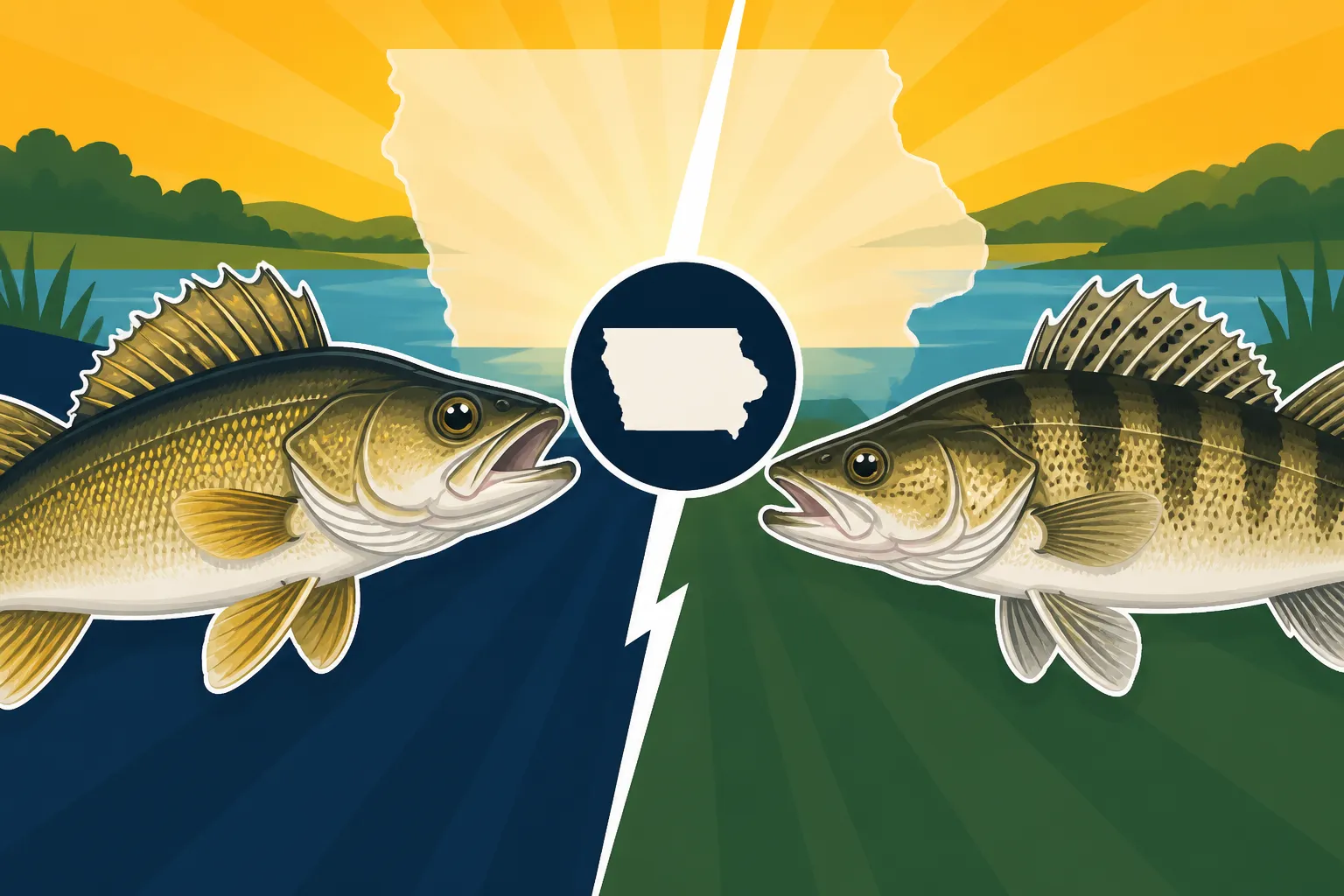
- Walleye: Look at the spiny dorsal fin (the one closer to the head). A walleye will almost always have a distinct, dark blotch at the very rear base of this spiny dorsal fin. It looks like a thumbprint or a small, round black spot. This marking is usually very obvious, a dead giveaway.
- Sauger: Now, look at a sauger's spiny dorsal fin. Instead of a single dark blotch, it will be covered in rows of distinct dark spots or speckles, forming horizontal bands. There will be no single large blotch at the base. This speckled pattern often extends onto the soft dorsal fin as well.
This dorsal fin difference is the most reliable and easiest way to tell them apart, even for a beginner. If you can only remember one thing, make it this!
Body Patterning and Coloring
Beyond the dorsal fin, the overall body pattern and coloration can also provide strong clues. While both are generally olive to golden, the specific markings differ.
- Walleye: Walleye usually have a more uniform, often mottled coloration. They might have faint, saddle-like bars or blotches across their back, but these are often subtle and less distinct. Their sides tend to be smoother, with a general golden sheen.
- Sauger: Sauger typically have more pronounced, darker blotches or saddle patterns across their back and sides. These markings are often more distinct and irregular, almost like tiger stripes or camouflage, breaking up their outline. This can be particularly noticeable on fish from murkier river environments. Also, sauger often lack the distinct white tip on the lower lobe of the caudal (tail) fin that many walleye possess.
While the dorsal fin is king for identification, these body patterns can serve as good secondary indicators. If you're struggling, comparing the overall pattern can push you towards a definitive answer. Many seasoned anglers keep an Iowa Fishing Regulations Explained booklet or use the GoOutdoors Iowa app on their phone for quick reference, which often includes images to help with identification.
Caudal Fin and Pyloric Caeca (More Advanced)
For those who want to be absolutely certain, or perhaps are involved in scientific data collection, there are a couple of other, more advanced anatomical differences you can look for. These require a closer inspection and aren't typically necessary for general fishing identification, but they offer irrefutable proof.
- Caudal Fin (Tail Fin) Coloration: Many walleye, particularly larger ones, will have a noticeable white tip on the lower lobe of their caudal fin. This isn't universally present on all walleye, but if you see it, it's a very strong indicator. Sauger almost never have this white tip; their tail fins tend to be uniformly colored or have the same mottled pattern as their body.
- Pyloric Caeca: This is a stomach appendage, and it's definitely for the scientifically curious. If you were to examine the internal anatomy (which, for catch-and-release, you definitely wouldn't!), walleye have three long pyloric caeca, while sauger have four short ones. Again, not practical for the average angler, but an interesting anatomical distinction if you're ever at a fish cleaning station and curious.
Why Accurate Identification Matters for Iowa Anglers
It might seem like a minor detail, but correctly identifying your catch is crucial for several reasons, impacting both your fishing trip and the long-term health of Iowa's fisheries. It's not just about knowing what you caught; it's about fishing legally and responsibly.
Legal Implications – Bag Limits and Size Restrictions
The most immediate and important reason to know the difference is because walleye and sauger often have different regulations. Iowa's fishing laws, which are designed to protect fish populations and ensure sustainable angling for everyone, can vary for these two species. For instance, there might be different daily bag limits, possession limits, or even length limits depending on whether you've caught a walleye or a sauger, especially in specific bodies of water like the Mississippi River. Catching and keeping a fish that violates these rules, even unintentionally, can result in fines or penalties. Always double-check the current Iowa Fishing Regulations Explained or consult the official Iowa DNR guide before you head out. These regulations are updated periodically, so staying informed is key.
Here's a simplified example of how regulations might differ (always check current state regulations for actual numbers):
| Feature / Species | Walleye | Sauger |
|---|---|---|
| Daily Bag Limit | Often 5-6 fish (statewide) | Often 10 fish (statewide) |
| Length Limit | Minimum 15 inches (many waters) | No minimum length (many waters) |
| Closed Season | Specific closed seasons (e.g., Great Lakes) | Generally open year-round |
| Water Body | Lakes & Rivers | Primarily Rivers |
Note: These are illustrative examples. Actual regulations can vary by specific water body and change over time. Always consult the Iowa DNR for current rules.
Conservation and Responsible Angling
Beyond avoiding legal trouble, accurate identification plays a vital role in conservation. When anglers correctly identify and report their catches, or follow species-specific regulations, they contribute to better data for fisheries management. If a certain species, like the sauger, is experiencing population decline, specific regulations can be put in place to help it recover. If anglers can't tell the difference, those regulations become less effective. As responsible stewards of Iowa's natural resources, it's our duty to help maintain healthy fish populations for future generations. This means knowing what we're catching, adhering to the rules, and practicing proper catch and release when necessary. For example, if you're targeting walleye but accidentally catch a sauger below the size limit for walleye, but legal for sauger, knowing the difference prevents you from unnecessarily releasing a legal sauger or keeping an illegal walleye.
Practical Tips for On-the-Water Identification
When you're out on the water, excited about a fresh catch, sometimes the details can blur. Here are some practical tips to help you make that identification quickly and confidently, minimizing stress for both you and the fish.
Quick Check Guide
Keep these key identifiers in mind for a rapid assessment right after you land a fish:
- Dorsal Fin First: This is your number one differentiator. Gently spread the spiny dorsal fin.
- Walleye: Look for that distinct, dark blotch at the rear base of the spiny dorsal fin.
- Sauger: Look for rows of distinct dark spots or speckles across the entire spiny dorsal fin, no single blotch.
- Body Pattern: While looking at the dorsal fin, glance at the body.
- Walleye: Generally more uniform, often mottled, sometimes with faint saddle marks.
- Sauger: More pronounced, irregular dark blotches or saddle marks, a more "camouflaged" look.
- Tail Fin (Bonus): Check the lower lobe of the caudal fin.
- Walleye: Often (but not always) has a white tip.
- Sauger: No white tip.
If you're still unsure, and local regulations allow it, consider keeping the fish separate until you can get a definitive answer from a fishing buddy, a regulation guide, or by taking a clear photo. Having a waterproof fishing regulations guide or accessing the How to Check Current Iowa Fishing Regulations Online through your phone can be a lifesaver.
Using Photography for Later Review
In this day and age, your smartphone is more than just a communication device; it's a powerful identification tool! If you're genuinely uncertain about a fish and need to release it quickly or if you just want to verify your identification later, snap a few clear photos. Make sure to get shots that clearly show:
- The entire fish, especially the body pattern.
- A close-up of the spiny dorsal fin, clearly showing whether it has a single blotch or multiple spots.
- A clear view of the tail fin, looking for that potential white tip.
You can then review these photos at home, compare them to reliable sources like the Iowa DNR website, or even share them with experienced anglers in online forums for confirmation. Waterproof phone cases are widely available on sites like Amazon, making it easy to keep your device safe while still having it handy for photo evidence. This way, you can release the fish promptly and safely, minimizing its stress, while still getting the information you need. Remember, catch and release is an important part of conservation, and quickly identifying your fish allows you to make informed decisions about keeping or releasing based on regulations for Walleye Season and Size Limits or sauger.
Disclaimer
This article is for general informational purposes only and does not constitute professional advice. Laws, prices and regulations vary by location and change over time. Consult a qualified professional for guidance on your specific situation.