How to Find Deep Holes for Catfish
The thrill of chasing Iowa's powerful catfish is something every angler can appreciate, but sometimes it feels like they just vanish, especially when the weather shifts or the pressure is on. It's a common frustration to know those big channel cats and flatheads are out there, hunkered down, but not knowing exactly where to find their deep-water hideouts. This guide is dedicated to helping you demystify the art of locating those elusive deep holes, giving you the edge you need to put more whiskers in your net.
Understanding Catfish Behavior and Habitat
To truly find deep holes for catfish, you first need to think like a catfish. These fish aren't just randomly lounging in the deepest water; they're strategically positioned for comfort, safety, and feeding. Understanding their instinctual behaviors is the first step in narrowing down your search.
Why Catfish Seek Deep Water
Catfish, particularly the larger channel and flathead varieties, are incredibly sensitive to changes in their environment. Deep holes offer a sanctuary from a multitude of external factors that can make them uncomfortable or vulnerable. During periods of bright sunlight, the cooler, darker depths provide relief from the heat and harsh light. This is especially true in summer, when surface temperatures can soar, driving fish down to more stable thermal layers. Deep water also offers a refuge from strong currents, which can be exhausting for fish, allowing them to conserve energy.
Beyond comfort, these deeper areas provide a crucial sense of security. The increased depth offers protection from aerial predators like eagles and ospreys, as well as from recreational boat traffic and shoreline disturbances. It's a natural hiding spot where they can feel safe and ambush prey from below. Think of it as their underwater fortress, a place where they can relax and feel less exposed. This is particularly true for larger, older fish that have learned to avoid danger.
Preferred Structures within Deep Holes
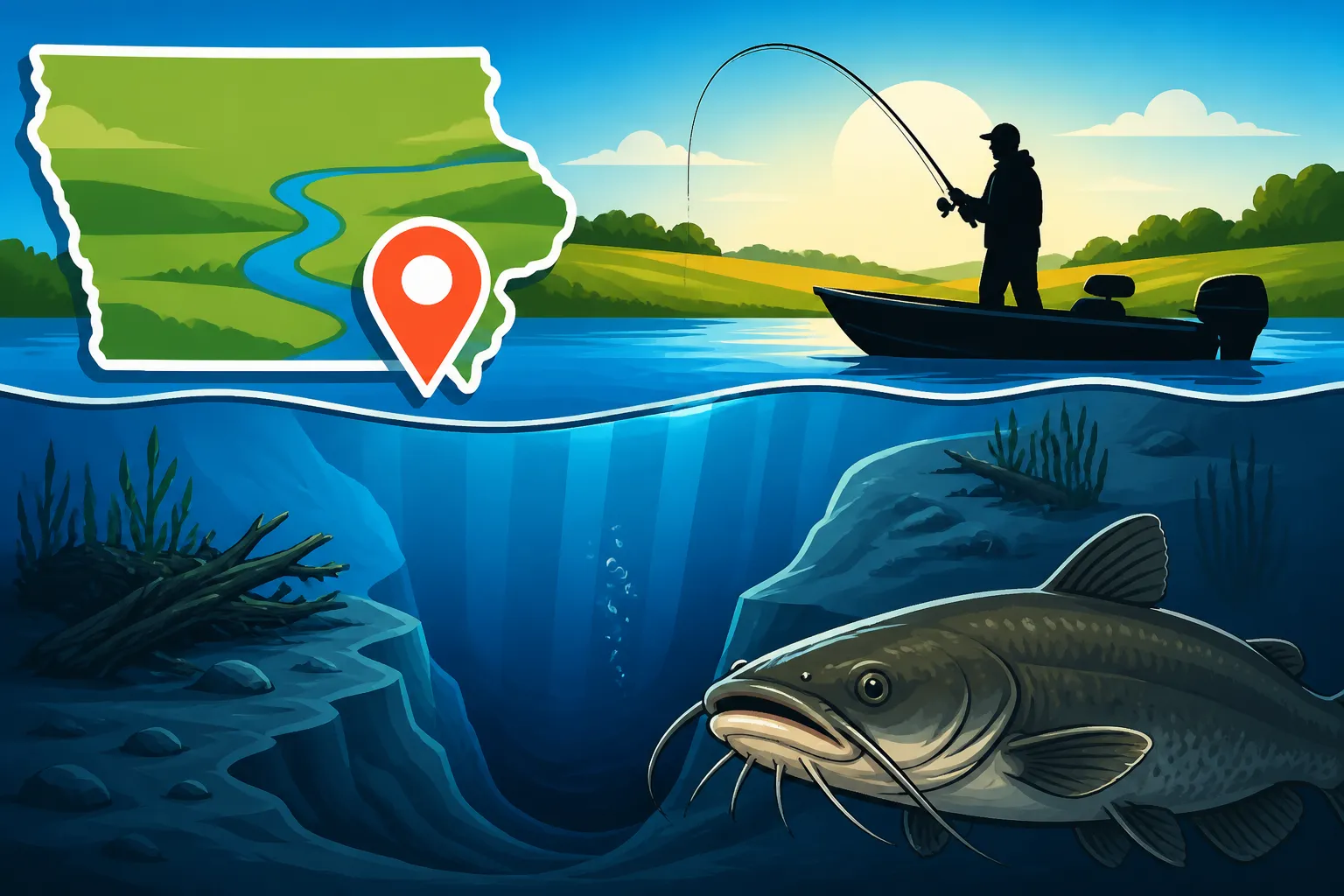
It's not just about depth; it's about what's in that deep water. Catfish love structure, especially when it's combined with a good deep hole. Submerged trees, brush piles, rock formations, and even old tires or debris create vital ambush points and additional cover. These structures break up the current, providing quiet eddies where a catfish can rest while still being close to a food source. They also attract baitfish, which in turn draws in hungry catfish.
For flatheads, in particular, dense cover in deep water is non-negotiable. They are ambush predators who prefer to lie in wait in dark, secluded spots, darting out to grab an unsuspecting meal. Channel catfish are a bit more nomadic but still appreciate the security and feeding opportunities that structure in deep holes provides. Learning to "read" the water and anticipate where these submerged features might be is a key part of the puzzle. This understanding ties directly into effective Iowa Fishing Techniques Guide strategies.
Identifying Promising Deep Hole Locations in Iowa
Iowa's diverse waterways, from its mighty border rivers to its numerous inland lakes and reservoirs, all hold potential for deep-hole catfish. Knowing where to start looking in each type of water body will save you countless hours of unproductive casting.
Deep River Channels and Confluences
Rivers are prime real estate for catfish, and deep holes are often carved out by the relentless flow of water. On larger rivers like the Mississippi or Missouri, the main river channel will have numerous deep sections, especially along outside bends where the current scours out the bottom. Look for areas where feeder creeks or smaller rivers merge with the main body of water, creating what's known as a confluence. The meeting of these currents often creates significant scour holes and deep pockets just downstream from the merge point.
Another critical feature on rivers are wing dams and rip-rap areas. These man-made structures are designed to direct current, and they invariably create deep scour holes on their downstream side, often at their tips. The current washing over and around these structures carves out deep pockets where catfish can sit out of the main flow, waiting for food to be delivered to them. Even subtle changes in current speed or direction can indicate deeper water. Always pay attention to how the current behaves; it's nature's dredge. For more specific river strategies, consider reading our guide on Catfish Gear Guide for Iowa Rivers.
Lake and Reservoir Basins
While rivers rely on current to carve out holes, lakes and reservoirs have different dynamics. Here, deep holes are often remnants of old riverbeds or creek channels that existed before the impoundment was created. These submerged channels snake across the lake bottom and are goldmines for catfish. You'll also find deep holes associated with sharp drops-offs, underwater points, and the edges of submerged islands or humps.
Many Iowa reservoirs, such as Fishing Rathbun Lake in Iowa or Fishing Saylorville Reservoir in Iowa, were created by damming rivers, so those original river channels are still there, albeit underwater. These provide excellent deep-water highways for catfish. Look for variations in bottom composition too; areas where soft mud transitions to rock or gravel at a certain depth can often indicate a deeper depression that catfish will frequent. The deepest part of any lake isn't always the best, but areas with depth changes and structure are usually a good bet.
Oxbows, Backwaters, and Pits
Don't overlook the often-forgotten waters connected to major rivers: oxbow lakes and backwater areas. These areas are usually quieter, but during high water events, they get flushed with nutrients and often hold substantial populations of catfish. When the water levels recede, catfish in these areas will often retreat to the deepest available holes, especially those with some form of overhead or submerged cover like old stumps or fallen trees.
Similarly, old gravel pits or quarry ponds that are deeper than typical farm ponds can also hold significant deep-water catfish. These often have abrupt depth changes and steep drops, providing quick access to deep, cool water. While less common, these often-overlooked spots can be incredible for catching large catfish that have grown old and wise in relative seclusion.
Here's a quick comparison of deep-hole characteristics across different Iowa water bodies:
| Water Body Type | Typical Deep Hole Locations | Key Features to Look For | Catfish Species Likely |
|---|---|---|---|
| Rivers | Outside bends, downstream of wing dams, confluences, scour holes around bridges | Strong current breaks, abrupt depth changes, submerged timber, rock piles | Channel, Flathead, Blue Catfish (Mississippi/Missouri) |
| Lakes/Reservoirs | Old river/creek channels, deep basins, sharp drop-offs, submerged humps/islands | Underwater contours, structure (brush, rocks), transition lines (mud to rock) | Channel, Flathead |
| Oxbows/Backwaters | Deepest sections near river connections, submerged timber, isolated pockets | Protected from current, dense cover, stable water levels after floods | Channel, Flathead |
| Gravel Pits/Ponds | Deepest pits, steep drop-offs, scattered structure | Abrupt depth changes, minimal current, unique bottom features | Channel, sometimes stocked Flathead |
Tools and Techniques for Locating Deep Holes
Finding these deep holes isn't just guesswork; modern technology and a keen eye can drastically improve your success rate. Equipping yourself with the right tools and knowing how to use them is essential.
Using Sonar and Fish Finders
A quality fish finder is arguably the most valuable tool an angler has for locating deep holes and the fish within them. Units with side-imaging or down-imaging capabilities, like those offered by Amazon, can paint a detailed picture of the bottom contour and any submerged structure. As you idle over an area, watch for sudden drops in depth, irregular bottom contours, and distinct "blips" or arches that indicate fish. Don't just look for the deepest water; search for the edges of those deep holes, where structure meets a significant depth change. This is often where catfish will stage.
Learning to interpret your fish finder's display takes practice. A smooth, hard bottom might indicate rock or compacted sediment, while a soft return could be mud. Look for "humps" on the bottom indicating submerged brush or timber. Many modern fish finders allow you to mark waypoints directly on the screen, so when you find a promising deep hole or piece of structure, save it for future reference. For an in-depth dive into these tools, check out our guide on Fish Finders and Electronics for Iowa Anglers. Understanding How to Fish Deep Structure With Electronics is a game-changer.
Interpreting Topographical Maps and Lake Charts
Before you even launch your boat, spend time studying topographical maps (for rivers) and lake contour maps (for lakes and reservoirs). These maps are essentially blueprints of the underwater world. Topo maps for rivers will show you where the deepest channels run, indicating old riverbeds, and where significant current breaks or scour points might exist. Look for closely spaced contour lines, which signify steep drop-offs into deeper water.
For lakes, contour maps will detail the depths and bottom features. Identify submerged creek channels, deep points, humps, and the main lake basin. These maps are invaluable for identifying potential deep holes and planning your approach. Many state natural resource departments and even apps provide digital versions of these maps. Cross-referencing what you see on the map with what your fish finder shows on the water will greatly enhance your understanding of the underwater landscape.
Physical Scouting and Dragging Weights
Sometimes, you need to go old school. If you don't have a sophisticated fish finder, or even as a complementary technique, physical scouting can be very effective. This involves literally dragging a heavy weight, like a three-way rig with a heavy sinker, along the bottom. You can feel changes in depth and bottom composition through your rod. A sudden "clunk" could be a rock or timber, while a smooth slide might be mud. As you drift, pay attention to the line angle and how quickly your weight drops, indicating a drop-off.
Another method is using a long pole or a marked rope with a weight to manually probe for depth changes from your boat or kayak. While more labor-intensive, it's a surefire way to confirm what you suspect might be a deep hole. This approach is particularly useful in smaller, more remote waters or backwater areas where navigating with a large boat might be difficult. Combining physical scouting with careful observation of current patterns and visible shoreline features can lead you to hidden gems.
Fishing Deep Holes for Catfish
Once you've successfully located those coveted deep holes, the next step is to present your bait effectively to entice those bottom-dwelling giants. This often requires specific techniques and rigging to combat current and reach the fish.
Proper Rigging for Deep Water
Fishing deep holes, especially in rivers, demands a robust and effective rig. The most common and successful setup is a slip-sinker rig or a Carolina rig. This involves a heavy lead sinker (often a flat, coin-shaped, or no-roll sinker) that slides freely on your main line, above a swivel, and then a leader connected to your hook. The sliding sinker allows the fish to pick up the bait and move off without immediately feeling the full weight of the lead, giving you a better hookset.
In strong currents, you might need surprisingly heavy sinkers, sometimes 3-6 ounces or more, just to hold your bait in place. The length of your leader can vary, but generally 12 to 24 inches works well. Use strong, sharp hooks appropriate for the size of catfish you expect to encounter – often a 5/0 to 8/0 circle hook is ideal. Circle hooks are excellent for catfish as they tend to hook the fish in the corner of the mouth, making for easier release and less gut-hooking. Ensure all your terminal tackle is sturdy; deep-water catfish can be incredibly powerful. A good quality braid or heavy monofilament line is also essential.
Best Baits for Deep-Hole Catfish
When it comes to bait, deep-hole catfish, especially flatheads, have a strong preference for live or very fresh cut bait. For flatheads, live bluegill, sunfish, or even large shiners are irresistible. Hook these baits carefully, perhaps through the back or lips, to keep them alive and struggling on the bottom. The struggling action is what triggers a flathead's predatory instinct.
For channel catfish, a wider array of baits works wonders. Fresh cut bait from oily fish like shad, skipjack, or even carp is highly effective. You can also use traditional stink baits, chicken livers, shrimp, or nightcrawlers. The key is to use baits that release a strong scent plume in the water, drawing catfish from a distance into your deep hole. Experiment with different baits to see what the fish are keying in on that day. A detailed guide like Best Bait for Channel Catfish can offer more specific recommendations. For purchasing quality catfish bait or tackle, checking a retailer like Amazon for specialty items can be convenient.
Presentation and Retrieval Tips
Once your bait is rigged and ready, getting it into the deep hole and keeping it there is crucial. Cast upstream from your target deep hole, allowing the current to carry your rig down into the desired spot. You want your sinker to just barely hold the bottom; if it's constantly rolling, you need more weight. If it's completely static, you might be using too much weight, or you're not in the right spot.
Once your bait is in position, anchor your boat securely or allow a slow, controlled drift. Keep a close eye on your rod tip for bites. Catfish bites can range from a subtle tap to a rod-bending thud. When you feel a bite, resist the urge to immediately set the hook, especially with circle hooks. Instead, let the fish take the bait, then slowly reel down and apply steady pressure. The circle hook will usually find its way into the corner of the fish's mouth. Knowing how to present your bait properly, whether drifting through a deep scour hole or setting up shop on a submerged channel, is key to success in any of Iowa's Best Fishing Spots in Iowa. Remember, patience is a virtue when waiting for a big cat to commit!
Disclaimer
This article is for general informational purposes only and does not constitute professional advice. Laws, prices and regulations vary by location and change over time. Consult a qualified professional for guidance on your specific situation.