Best Month to Catch Crappie in Iowa
Oh, the elusive crappie! If you've ever spent countless hours on an Iowa lake, casting diligently, only to feel that familiar pang of disappointment as you pack up with an empty livewell, you're not alone. Figuring out the prime time to catch crappie in Iowa can feel like a secret handshake among seasoned anglers. But don't worry, this guide is here to unravel that mystery and tell you exactly when those papermouths are most active, helping you turn those frustrating outings into triumphant ones.
The Unquestionable Crappie Goldmine: Spring in Iowa
When it comes to consistently filling your cooler with crappie in the Hawkeye State, there’s truly no season that holds a candle to spring. Specifically, the months of April and May are often considered the absolute sweet spot. This isn't just a matter of folklore among anglers; it's deeply rooted in the crappie's biological imperatives. As the ice recedes and the days lengthen, crappie transition from their deeper winter haunts to shallower, warmer waters, driven by the urge to spawn and feed aggressively after the lean winter months.
Understanding the Pre-Spawn Crappie Frenzy
The earliest part of spring, typically late March into April, marks the pre-spawn phase, a time of immense opportunity. As lake temperatures begin to climb into the upper 40s and low 50s Fahrenheit, crappie start to move from the main lake basins towards transitional areas. These can be points, submerged creek channels, or the mouths of shallow coves. During this period, their metabolism begins to ramp up, and they're actively feeding to build energy reserves for the strenuous spawning process. This makes them incredibly aggressive and willing to chase down a well-presented lure or bait.
Imagine a group of hungry teenagers heading to a buffet – that's your pre-spawn crappie. They're not yet focused solely on reproduction, but rather on gorging themselves. Anglers targeting this phase often find slabs of crappie congregated in large schools, making it possible to catch a significant number once you locate them. This movement towards shallower structure, before they fully commit to bedding, is a golden window for many Iowa anglers.
The trick during this pre-spawn period is often patience and a good fish finder to locate those transition zones. Think about structure near deeper water, like brush piles on a drop-off or the edge of a submerged timber line. For many anglers, the excitement of the "first bite" of spring crappie is unmatched, signaling the start of a fantastic fishing season.
The Spawn: A Brief, Explosive Opportunity
Once water temperatures consistently hit the upper 50s and low 60s Fahrenheit, usually around late April to mid-May in many Iowa lakes, the crappie spawn kicks into high gear. This is when crappie, particularly males, move right up into the shallowest cover – think flooded timber, weed beds, docks, or even riprap shorelines – to construct their nests. Females will move in to deposit their eggs, and then typically retreat to slightly deeper water while the males guard the nests.
During the actual spawn, crappie can be incredibly easy to catch, sometimes even visible in the shallows. They become highly protective and will strike at anything perceived as a threat to their nests. However, this peak spawning period can be fleeting, often lasting only a week or two in any given area, though it might extend longer across a larger lake as different sections warm up at varying rates. It's a short but intense window where you can often pinpoint concentrations of fish.
Many anglers find success by sight fishing during the spawn, quietly approaching shallow cover and presenting small jigs or minnows directly to visible fish or likely bedding areas. Places like Rathbun Lake Crappie Hotspots often see this flurry of activity. The sheer volume of fish in the shallows during this time makes it one of the most productive periods, provided you hit it just right.
Navigating Post-Spawn Crappie Patterns
After the intense energy expenditure of spawning, crappie tend to disperse from the super shallow nesting sites. This is the post-spawn phase, typically occurring from late May into early June. The fish are often recuperating, moving to slightly deeper, but still cover-rich, areas. They're still hungry, but perhaps not as frantically aggressive as during the pre-spawn or as territorial as during the spawn.
During post-spawn, you'll often find crappie relating to submerged brush piles, deeper weed lines, or suspended over open water near baitfish schools. They might be a bit more finicky, requiring a more subtle presentation. The key here is often to look for these fish in that 8-15 foot range, particularly around structures that offer both cover and access to food. This phase, while still productive, requires a bit more searching and adaptation compared to the more predictable pre-spawn and spawn periods.
Understanding Post-Spawn Crappie Patterns in Iowa involves looking at where the baitfish are. Crappie will follow their food source as they recover and continue to feed throughout the warmer water. This might mean trolling small crankbaits or vertically jigging around deeper submerged trees or brush. It's still a fantastic time to catch crappie, but it demands a different approach than just blindly casting into the bank.
Why Spring Reigns Supreme for Crappie Fishing
The reason spring is consistently the best month to catch crappie in Iowa boils down to a perfect storm of environmental factors and biological drives that make these fish both accessible and aggressive. It's a combination of rising temperatures, habitat shifts, and their natural urge to reproduce that creates such a prolific bite.
The Critical Role of Water Temperature
Crappie are cold-blooded creatures, meaning their metabolism is directly tied to the surrounding water temperature. After a long, cold Iowa winter, their bodies are craving warmth and nutrients. As the water warms from freezing to the crucial 50-65°F range, crappie become increasingly active. In early spring, when the water hits the low 50s, their feeding response really kicks in. This is when they move shallower to feed and prepare for the spawn.
When the water reaches that ideal 60-68°F for spawning, they're fully committed to the shallows. This temperature window is a biological trigger that dictates much of their behavior and location. A sudden cold front can temporarily push them back deeper and slow the bite, creating frustration for anglers, but they'll quickly return to the shallows once the warming trend resumes. Conversely, a prolonged warm spell can accelerate the spawn, making that "prime window" arrive earlier than expected.
Monitoring water temperature is perhaps the single most important factor for consistently finding and catching crappie in the spring. Many avid anglers use portable temperature gauges or rely on the readings from their fish finders to pinpoint the ideal zones. This also helps understand when to expect the Iowa Walleye Season Opening Day to coincide with favorable water temperatures.
Crappie Habitat Changes During Spring
Winter sees crappie congregating in deeper, more stable environments, often near main lake channels or deep timber, where water temperatures remain relatively constant. But with spring's arrival, everything changes. The sun penetrates the shallower water more effectively, warming it faster than the deeper sections. This draws crappie into these warmer, more protected areas, which also happen to be rich in food sources like insect larvae and smaller baitfish that are also becoming more active.
These habitat shifts mean that crappie become concentrated in predictable areas. Instead of being scattered across vast, deep expanses, they'll be found around shallow cover: laydowns, submerged brush, docks, cattails, and rocky banks. This concentration makes them much easier to locate and target for anglers. You'll hear local bait shops and online forums buzzing about certain coves or specific brush piles holding schools of crappie as the spring progresses.
These accessible locations are perfect for bank anglers, kayakers, or those with smaller boats. Suddenly, you don't need fancy electronics to find fish; a quiet approach and careful observation of prime shallow cover can yield fantastic results. Checking out Public Boat Ramps on the Iowa Great Lakes can give you access to these early spring hotspots.
Predicting the Best Weeks for the Crappie Bite
While April and May are generally the best months, the precise "best week" can fluctuate year to year based on weather patterns. A warm, early spring might mean the crappie bite starts strong in early April, while a prolonged cold spring could push it closer to late April or even into May. The key is to pay attention to local conditions.
Look for stable weather patterns with consistent sunshine and minimal cold fronts. A few consecutive days of warm weather can dramatically improve the bite. You can also monitor online fishing reports, talk to local bait shop owners, or even check water temperature readings from lake websites if available. Many anglers plan their trips around the full moon in spring, as this often coincides with peak spawning activity for many fish species, including crappie.
Another great strategy is to start fishing slightly earlier in the spring than you might think, targeting those pre-spawn fish in slightly deeper transition areas. As the water warms, gradually move shallower. This allows you to follow the crappie migration and extend your productive fishing window throughout the spring.
Essential Techniques and Gear for Spring Crappie
To truly capitalize on the incredible spring crappie bite in Iowa, having the right techniques and gear in your arsenal can make all the difference. It's not just about being there at the right time; it's about knowing how to present your offerings effectively to entice those papermouths.
Mastering Jigging and Bobber Fishing
For spring crappie, especially in the shallows, jigging and bobber fishing are king.
Jigging involves using small, lightweight jigs (often 1/32 oz to 1/16 oz) tipped with a small plastic grub, tube, or even a live minnow. The key is to impart a subtle, lifelike action. Cast your jig near cover and allow it to sink slowly, twitching your rod tip gently to make the jig "dance." Crappie often hit on the fall, so watch your line for any slight twitch or pause. The retrieve should be slow and deliberate, mimicking a struggling baitfish or insect. This technique is incredibly effective for active crappie.
Bobber fishing, particularly with a slip bobber, is fantastic for presenting bait at a precise depth and detecting the often-subtle crappie bite. A small jig or a live minnow suspended under a bobber near brush piles, submerged timber, or dock pilings can be irresistible. The slip bobber allows you to adjust your depth easily without having excess line hanging from your rod. A small split shot a few inches above the bait helps it get down and stay put. When the bobber dips, even slightly, it's time to set the hook! This method is especially popular for beginners and those looking for a relaxing day on the water.
Whether you're jigging or using a bobber, the key is finesse. Crappie have soft mouths, so a gentle hookset is usually all that's needed. Learning these techniques will greatly increase your success rate, especially when you're looking for that "Best Bait for Spring Crappie".
Effective Baits and Lures for Spring Crappie
When it comes to tempting spring crappie, you have a few go-to options that rarely disappoint:
Live Minnows: Without a doubt, live minnows are often the most effective bait, especially when crappie are picky. Hook them lightly through the lips or just behind the dorsal fin and suspend them under a bobber or slowly troll them. The natural movement of a live minnow is hard for any crappie to resist. You can find minnows at most local bait shops, and some anglers even raise their own.
Small Jigs: As mentioned, small jigs are incredibly versatile. Plastics come in countless colors, but chartreuse, white, pink, and various shades of green often perform exceptionally well in Iowa's waters. The size of the jig head should match the depth and current; lighter for shallow, calm water, and slightly heavier for deeper or moving water. Brands like Bobby Garland or Crappie Magnet are popular choices and readily available on Amazon or at local tackle shops.
Tiny Crankbaits & Trolling Jigs: While not as common in the immediate spawn, small crankbaits can be deadly for pre-spawn or post-spawn crappie, especially when Trolling for Crappie in Iowa. These lures imitate baitfish and are excellent for covering water to find scattered schools. Troll them slowly along contours or near submerged structure. Additionally, specialized trolling jigs, sometimes called spider jigs, can be effective when crappie are suspended or in open water.
Optimizing Your Gear for Iowa's Spring Waters
Having the right gear makes a huge difference in your crappie success and enjoyment.
Rods and Reels: A light-action or ultralight spinning rod (5-7 feet in length) paired with a small spinning reel (size 500-1000) is ideal. This setup allows for light line, long casts with small lures, and the sensitivity needed to detect subtle bites. It's also perfect for the delicate nature of a crappie's mouth.
Fishing Line: Stick with light line. 4-6 pound test monofilament or fluorocarbon is perfect. Monofilament offers good knot strength and stretch, while fluorocarbon is virtually invisible underwater and has less stretch for increased sensitivity. Some anglers prefer a very thin braided line with a fluorocarbon leader for ultimate sensitivity, especially when Ice Fishing for Crappie where line visibility isn't a primary concern.
Accessories: Don't forget a small pair of pliers for hook removal, a stringer or livewell to keep your catch fresh (check the Crappie Daily Limit in Iowa first!), and a good pair of polarized sunglasses to help spot fish in shallow water. A small tackle box with various jigs, bobbers, hooks, and sinkers completes your setup. You can find a wide range of these essential items on Amazon, often in convenient starter kits perfect for beginners.
Crappie Fishing Beyond the Spring Bloom
While spring is undoubtedly the peak, crappie fishing in Iowa doesn't completely shut down in other seasons. Anglers just need to adapt their strategies and expectations, as the fish's behavior and locations will change dramatically with the seasons.
Summer Strategies for Deeper Crappie
Once the dog days of summer arrive and water temperatures soar into the 70s and 80s, crappie retreat from the extreme shallows to deeper, cooler waters. They often suspend over open water or relate to deep structure like submerged timber, bridge pilings, or significant brush piles in 15-30 feet of water. This can be a challenging time for bank anglers but offers opportunities for boaters with good electronics.
During summer, look for crappie to be associated with thermoclines (layers of water with different temperatures) where oxygen levels are favorable. They'll often school tightly, making them a great target if you can find them. Vertical jigging directly over these schools with small jigs or minnows is a highly effective technique. Alternatively, slow trolling with small crankbaits or spider rigs (multiple rods with various baits) can cover a lot of water and help you locate scattered fish. Remember to check the Crappie and Sunfish Limits in Iowa, as limits generally remain consistent year-round.
One common frustration in summer is that crappie can become quite lethargic in the heat, making their bite incredibly subtle. You might need to experiment with slower retrieves and even smaller baits to coax a strike. Clear Lake Panfish and Crappie Spots, for instance, often require a deeper presentation during the summer months to find success.
Fall Crappie: A Second Chance for Success
As the days shorten and water temperatures begin to cool in late September and October, crappie experience a "second spring" in terms of feeding activity. This is arguably the second-best time of year to target them. Crappie sense the approaching winter and begin to feed aggressively to fatten up, similar to their pre-spawn behavior.
During the fall, crappie will often move back to shallower or mid-depth areas, though not usually as shallow as during the spring spawn. Look for them around points, submerged humps, weed line edges, and brush piles in 8-20 feet of water. They'll be actively chasing baitfish, so lures that mimic these forage species work exceptionally well.
Jigging with small plastics or fishing live minnows under a bobber remains effective. Trolling small crankbaits can also be a productive way to locate schools of hungry crappie as they chase baitfish. The fall bite can be incredibly rewarding, offering another excellent window to fill your freezer, and the cooler weather makes for a more comfortable day on the water.
Winter Crappie: Ice Fishing Opportunities
When Iowa's lakes and reservoirs freeze over, the crappie bite shifts dramatically to ice fishing. While the fish's metabolism slows down in the cold water, they still need to feed, and they often school tightly, making them a prime target for ice anglers. The winter months, typically December through February, can be very productive if you know where to look.
Crappie in winter will often suspend over deeper water or relate to deep structure like brush piles, submerged islands, or points. They'll typically be found in 15-35 feet of water. The key is to use very small jigs, often tipped with a grub, wax worm, or a small plastic trailer, and fish them slowly. Ultra-light ice rods and sensitive spring bobbers are crucial for detecting the incredibly subtle bites.
Finding the schools is half the battle, but once you do, you can often catch several fish from the same hole. Ice fishing for crappie offers a unique challenge and reward, and it's a fantastic way to extend your fishing season through the cold months. Just remember to prioritize Ice Fishing Safety on Iowa Lakes.
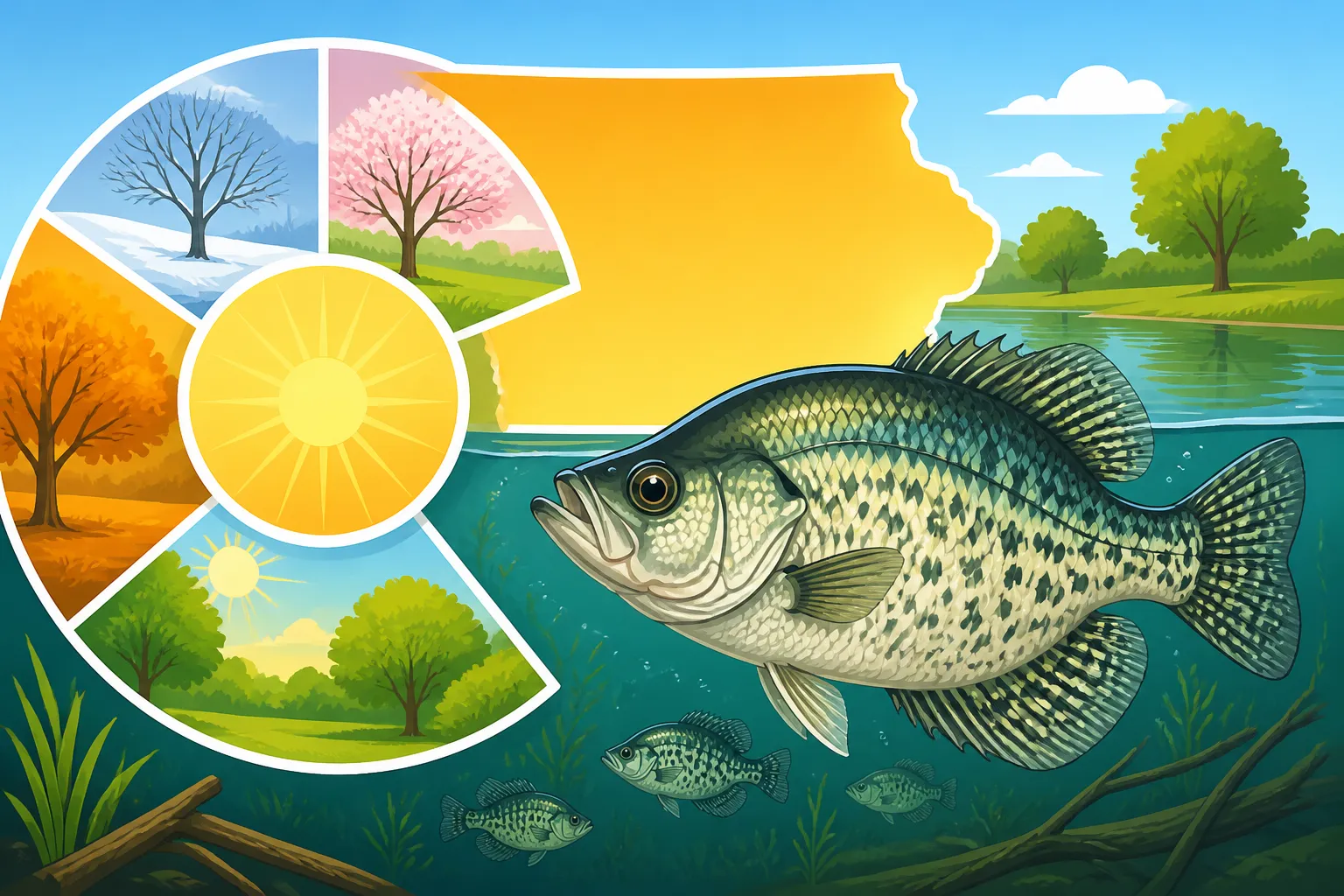
| Season | Prime Months | Typical Water Temp (F) | Crappie Location | Key Techniques | Primary Baits/Lures |
|---|---|---|---|---|---|
| Spring | April – May | 55-68 | Shallow cover (weed beds, docks, brush, timber) | Jigging, Bobber Fishing, Sight Fishing | Live Minnows, Small Plastic Jigs |
| Summer | June – August | 70-85 | Deeper water (15-30 ft), suspended over open water, deep structure | Vertical Jigging, Slow Trolling, Spider Rigging | Live Minnows, Small Crankbaits, Blade Baits |
| Fall | September – October | 55-65 | Mid-depth structure (8-20 ft), points, weed edges, humps | Jigging, Bobber Fishing, Trolling | Live Minnows, Small Plastic Jigs, Tiny Crankbaits |
| Winter | December – February | 32-40 | Deep structure (15-35 ft), suspended over basins | Vertical Jigging, Micro-Jigs | Wax Worms, Spikes, Tiny Ice Jigs, Live Minnows |
Disclaimer
Please note that fishing conditions and regulations can change. Always consult the latest Iowa Department of Natural Resources (DNR) fishing regulations booklet or website before heading out on the water. This information is intended as a general guide and should not replace official regulations.