Crappie Jig Fishing Techniques
There's nothing quite like the subtle tap of a crappie bite on a cold day, or the aggressive thump when they're really feeding, but sometimes it feels like they vanish into thin air. Many Iowa anglers find themselves frustrated, knowing crappie are present in their favorite lakes and rivers, yet struggling to entice them with their usual lures. This comprehensive guide will unravel the mysteries of crappie jig fishing, providing you with the techniques, gear, and strategies needed to consistently fill your livewell with these delicious panfish.
Why Jigs Reign Supreme for Iowa Crappie
When it comes to consistently catching crappie across Iowa's diverse waters, from the Mississippi River backwaters to the popular Rathbun Lake Crappie Hotspots and even smaller farm ponds, jigs are, without a doubt, the undisputed champion. There’s a versatility to jigs that few other lures can match, making them incredibly effective year-round.
The Undeniable Appeal of Jigs for Crappie
Crappie are ambush predators, often holding tight to cover like submerged brush piles, weed lines, or bridge pilings. Their diet primarily consists of small minnows, insects, and crustaceans. Jigs, in their myriad forms, perfectly mimic these natural food sources. Unlike a large crankbait or spinner, a small jig offers a subtle, lifelike presentation that crappie, especially finicky ones, find irresistible. The compact size allows them to be worked precisely in tight quarters without snagging constantly, which is a huge advantage when you're fishing dense structure where crappie often hide. You can swim them, twitch them, dead-stick them, or even drag them, making them adaptable to almost any crappie mood or water condition.
Moreover, jigs are incredibly accessible and affordable. You don't need a boatload of expensive tackle to get started. A few different jig heads, some soft plastic bodies, and a light-action rod are often all it takes. This makes them perfect for beginners eager to learn how to catch crappie, as well as seasoned pros looking to fine-tune their approach. Their effectiveness combined with their simplicity truly makes them a staple in any serious Iowa angler's tackle box.
Matching the Hatch with Jig Selection
The concept of "matching the hatch" is usually associated with fly fishing, but it applies perfectly to crappie jigging. Crappie can be incredibly picky eaters, and offering them a jig that closely resembles what they're actively feeding on can make all the difference. This isn't just about color; it's about size, profile, and action. Are they gorging on tiny shad? A small, silvery-white tube jig might be the ticket. Are there a lot of insect larvae in the water? A dark, subtle grub could be more effective.
The beauty of jigs is the sheer variety available. From tiny micro-jigs under 1/32 oz to heavier 1/8 oz or even 1/4 oz options for deeper water or strong currents, there's a jig for every scenario. Similarly, the soft plastic trailers come in countless shapes: grub tails, paddle tails, split tails, tubes, and more. Each offers a different action in the water, from subtle wiggles to aggressive thumps. Taking a moment to observe the baitfish in the area or even checking the stomach contents of your first catch can provide valuable clues about what size and profile jig to start with. Don't be afraid to experiment; sometimes, the crappie want something totally different from what you expect.
Essential Jig Fishing Gear for Iowa Crappie
Having the right equipment can make a world of difference when you're targeting crappie with jigs. These are not giant fish, and their bites can be incredibly subtle, so your gear needs to be sensitive enough to detect those faint taps and light enough to make the presentation natural.
Rod and Reel Setup for Jigging Success
For crappie jigging, the name of the game is sensitivity and finesse. You want a rod that can transmit even the slightest vibration from your jig or the faintest tick of a crappie bite directly to your hand.
- Rods: A light to ultralight action spinning rod is the ideal choice. Look for rods in the 5 to 7-foot range. A longer rod can provide better casting distance and leverage for playing fish, while a shorter rod offers more precision for vertical jigging in tight spots. The rod blank material is also crucial; graphite rods generally offer superior sensitivity compared to fiberglass, though composite rods can offer a nice balance of sensitivity and durability. A fast or extra-fast action tip is preferred as it allows the rod to load quickly for instant hooksets, crucial for crappie's delicate mouths. Brands like St. Croix, Ugly Stik, and Berkley offer excellent options that are widely available, even on Amazon.
- Reels: Pair your sensitive rod with a small, lightweight spinning reel in the 1000 to 2000 size range. A smooth drag system is essential, as crappie can be feisty, especially the bigger slabs. You want a reel with minimal wobble and a comfortable retrieve, allowing you to focus on the feel of your jig. Make sure the reel balances well with your chosen rod to reduce fatigue during a long day of fishing. Having the right Best Spinning Reels for Panfish can truly elevate your crappie jigging game.
Line Choices and Their Impact
Your fishing line is the direct link between you and your jig, and it plays a critical role in how well you feel bites and present your lure.
- Monofilament: This is a classic choice for crappie fishing due to its stretch, which can act as a shock absorber against sudden jerks, and its forgiving nature. It's often more affordable than other lines and has good knot strength. However, its stretch also reduces sensitivity, making it harder to detect light bites, especially in deeper water or windy conditions. Common breaking strengths range from 4 to 6 pounds.
- Fluorocarbon: Known for its low visibility in water and good abrasion resistance, fluorocarbon is a favorite among many crappie anglers. It has less stretch than monofilament, offering better sensitivity, and sinks faster, which can be an advantage when trying to get your jig down quickly. It's generally more expensive and can be a bit stiffer, sometimes leading to more memory on the reel. A 4 to 6-pound test is standard.
- Braided Line: Offering the ultimate in sensitivity with virtually no stretch, braided line transmits every bump and vibration directly to your rod. It also has excellent strength-to-diameter ratio, meaning you can use lighter test lines (6-10 lb) that cast farther and cut through water better without sacrificing breaking strength. The main drawback is its high visibility, which can spook wary crappie. Many anglers overcome this by tying a 2 to 4-foot leader of fluorocarbon or monofilament to the end of their braid, offering the best of both worlds: sensitivity with stealth. This setup is highly recommended for detecting those famously subtle crappie bites.
The Mighty Jig Head Itself
The jig head is the foundation of your crappie jig setup, determining everything from casting distance to sink rate and presentation. Don't underestimate its importance!
- Weight: Jig head weights typically range from 1/64 ounce up to 1/8 or even 1/4 ounce.
- 1/64 to 1/32 oz: These ultra-light jigs are fantastic for shallow water, calm conditions, or when crappie are very finicky and suspended high in the water column. They offer a very slow, natural fall.
- 1/16 oz: This is arguably the most versatile and popular weight for crappie jigging. It offers a good balance of casting distance, sink rate, and sensitivity for most conditions.
- 1/8 to 1/4 oz: These heavier jigs are used for deeper water, strong currents (like on the Mississippi River), or when you need to get your lure down quickly to active schools. They also aid in casting heavier plastics.
- Hook Size: The hook size on a jig head must match the size of your soft plastic trailer. For crappie, hooks generally range from size #8 (very small) to #1 (larger). A good starting point is a #4 or #2 hook, which will accommodate most 1.5 to 2.5-inch crappie plastics. A hook that is too small won't offer a good hookset, and one that is too large can hinder the lure's action or make it look unnatural. Investing in a variety of Best Jig Heads for Iowa Crappie Fishing is key.
- Shape: Jig heads come in various shapes (round, aspirin, stand-up, mushroom). The most common is the simple round head, which is highly effective. Other shapes can influence the jig's fall or how it sits on the bottom. For instance, a stand-up head can keep your plastic upright off the bottom, making it more visible.
Here's a quick reference table for common crappie jig head weights and their applications:
| Jig Head Weight | Ideal Depth | Water Conditions | Presentation Speed | Best For |
|---|---|---|---|---|
| 1/64 oz | Shallow (0-5 ft) | Calm, still | Very slow | Finicky crappie, light bites, shallow structure |
| 1/32 oz | Shallow-Mid (0-10 ft) | Calm to light breeze | Slow | General shallow to mid-depth crappie, slow fall |
| 1/16 oz | Mid-Deep (5-20 ft) | Light breeze, light current | Moderate | Most versatile, all-around crappie jigging |
| 1/8 oz | Deep (15+ ft) | Wind, moderate current | Fast | Deep crappie, faster search, strong currents |
| 1/4 oz | Very Deep (25+ ft) | Strong wind, heavy current | Very fast | Vertical jigging deep structure, river fishing |
Mastering Crappie Jigging Techniques
Successful crappie jigging isn't just about having the right gear; it's about knowing how to present your jig effectively. Different situations call for different techniques, and understanding them will greatly increase your catch rate.
Vertical Jigging in Structure
Vertical jigging is perhaps the most precise and often most effective way to catch crappie, especially when they are schooled tightly around specific submerged structures like brush piles, submerged trees, bridge pilings, or docks. The beauty of this technique is its ability to keep your lure in the strike zone for extended periods.
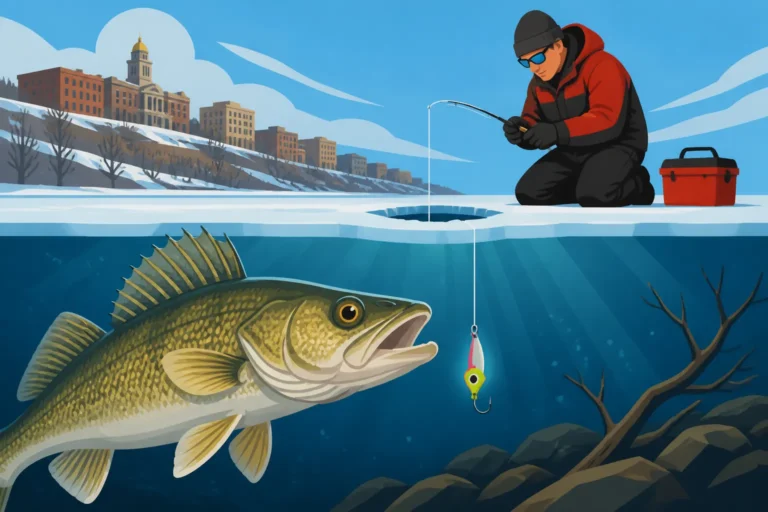
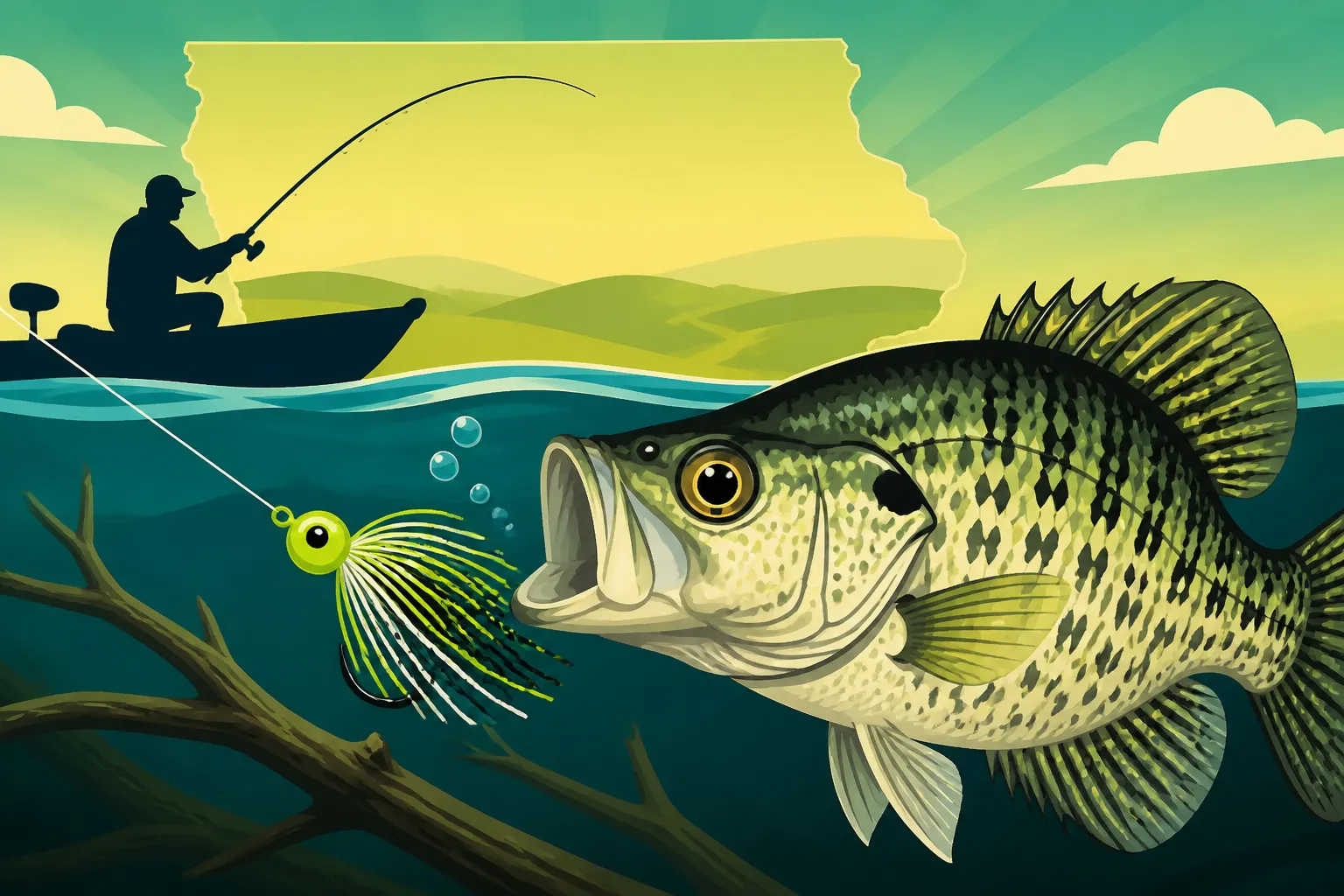
To execute this, position your boat or kayak directly over or very close to the structure where crappie are holding. Drop your jig straight down, letting it fall until it's just above the fish you're seeing on your electronics, or until it hits the cover. The goal is to keep the jig dancing right in front of their faces without snagging. Use small, subtle rod tip movements – a slight lift, a gentle twitch, or simply holding it still (dead sticking). Experiment with the cadence until you find what triggers a strike. Sometimes a gentle rise and fall, mimicking a dying minnow, is all it takes. Other times, just holding the jig perfectly still is the ticket, allowing it to "hover" in place. Pay close attention to your line for any unusual movements or a sudden slackening, as crappie often "suck in" a jig rather than hitting it hard. This technique is especially potent during winter Ice Fishing in Iowa when crappie are often suspended in deep water.
Casting and Retrieving for Active Crappie
When crappie are more scattered, cruising flats, or feeding aggressively in shallower water, casting and retrieving can be a highly productive strategy. This technique allows you to cover more water and find those active fish.
Cast your jig out to likely crappie holding areas, such as the edges of weed beds, submerged points, or shallow timber. Let the jig sink to your desired depth – count it down, or use your knowledge of the water. Then, begin a slow, steady retrieve, imparting subtle action with your rod tip. A common retrieve involves a series of slow lifts and drops, or a "twitch, twitch, pause" action that mimics a struggling baitfish. The key is to keep the retrieve slow enough that the crappie have time to see the jig and decide to strike, but fast enough to cover ground. Vary your retrieve speed and depth until you find what works. Sometimes, a slow roll just above the bottom is all it takes, while other times, a more erratic, stop-and-go retrieve will trigger a reaction bite. This is a great technique to use when crappie are actively feeding in areas like the shallow bays of Clear Lake or along the shorelines of Saylorville Reservoir.
Spider Rigging and Trolling Jigs
For anglers who prefer a more systematic approach to covering large areas and presenting multiple baits, spider rigging and trolling jigs are excellent techniques, particularly from a boat.
- Spider Rigging: This technique involves using multiple long rods (often 8 to 16 feet) spread out around the bow of the boat, resembling a "spider." Each rod typically fishes a single jig or a double-jig rig, vertically presented. The boat moves very slowly, often with an electric trolling motor, allowing the jigs to drift through potential crappie holding areas. This is fantastic for targeting suspended crappie over deep water or slowly working through brush fields. The multiple lines allow you to experiment with different jig colors, sizes, and depths simultaneously, quickly identifying what the crappie prefer on a given day. Once you find a productive pattern, you can replicate it across all your rods. This is a common sight on larger Iowa lakes when anglers are trying to locate roaming schools.
- Trolling Jigs: Similar to spider rigging but often covering more water at slightly higher speeds, trolling jigs involves dragging jigs behind the boat, either directly or with planer boards to spread them out. This is effective for finding schools of crappie that are suspended over open water or along contours. You can use single jigs or a "tandem rig" with two jigs spaced a foot or two apart on the same line, which can double your chances and sometimes even tempt a double hook-up! When trolling, pay close attention to your speed and the action of your jig. You want it to swim enticingly, not just drag. Using different jig weights and line types can help you present jigs at various depths simultaneously. This method is incredibly effective for covering expansive waters and finding the Best Time of Year to Fish Rathbun Lake for crappie.
Reading the Water and Locating Crappie with Jigs
The best jigging techniques in the world are useless if you're not putting your lure where the fish are. Crappie are creatures of habit, often relating to specific types of structure and depth depending on the season and conditions.
Understanding Seasonal Crappie Movements
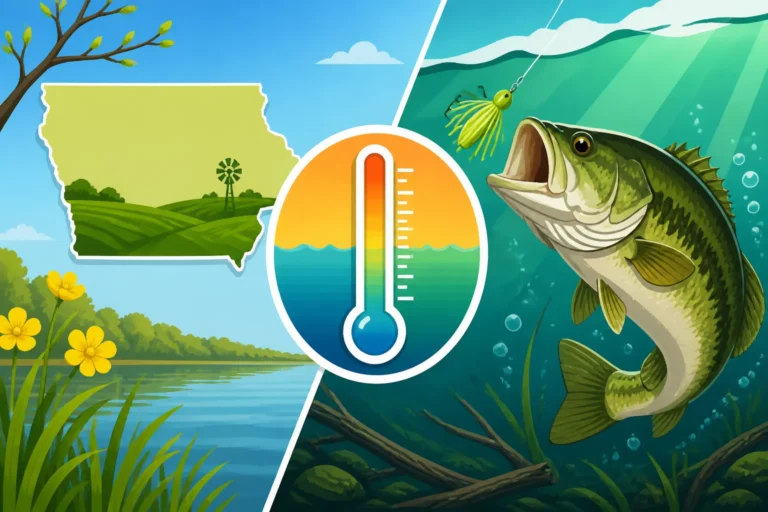
Crappie movements are largely dictated by water temperature and their spawning cycle. Knowing these patterns will dramatically improve your success.
- Spring (Pre-Spawn & Spawn): As water temperatures rise into the 50s and low 60s, crappie move from deeper wintering holes towards shallower spawning grounds. During pre-spawn, they might stage on the first available cover adjacent to deep water, such as submerged points or creek channels. As the spawn approaches (mid-50s to low 60s), they'll move into very shallow water (1-5 feet) to lay eggs, often around brush, submerged weeds, or even cattails. This is when you can find large concentrations of fish. Jigging small, dark jigs around this cover is highly effective. Learn more about Post-Spawn Crappie Patterns in Iowa for continued success.
- Summer: After spawning, crappie often retreat to deeper, cooler water, though they may make forays into shallower areas during low light conditions to feed. Look for them suspending over open water, especially near baitfish schools, or holding tight to deep brush piles, timber, or bridge pilings. Trolling jigs or vertical jigging these deeper structures are prime tactics.
- Fall: As water temperatures begin to drop in autumn, crappie become increasingly active, feeding heavily in preparation for winter. They often move back to shallower flats and creek channels, congregating around baitfish schools. This can be a fantastic time for both casting and retrieving jigs, as well as vertical jigging once you locate a school.
- Winter: During winter, crappie typically move to their deep-water wintering holes, often suspending in deep basins or holding tight to vertical structure like drop-offs, deep brush piles, or river channel edges. This is prime time for vertical jigging through the ice or from a boat in open water areas. They tend to be less active, requiring slower, more subtle jig presentations.
Targeting Structure and Cover
Crappie are masters of camouflage and often prefer to hide in or near structure. Understanding what kind of cover they prefer and how to fish it is crucial.
- Brush Piles & Submerged Timber: These are crappie magnets. The branches offer shelter from predators and ambush points for baitfish. When fishing brush, approach quietly and present your jig as close to the branches as possible without snagging. Vertical jigging or carefully casting a small jig is best here. You'll often find multiple fish in a single good brush pile. Understanding How to Find Crappie Brush Piles is a game-changer.
- Docks & Piers: Especially those with brush or old tires sunk underneath, docks provide shade and structure. Skip jigs under the docks or pitch them into the darker recesses where crappie often hold.
- Weed Beds & Lily Pads: The edges and sparse pockets within weed beds offer excellent crappie habitat. Cast jigs along the edges or through open lanes, letting them fall slowly.
- Bridge Pilings & Riprap: Vertical structure in deeper water, like bridge pilings, can hold crappie year-round. Riprap, especially where it transitions to a flatter bottom, can also be productive.
- Creek Channels & Ledges: Underwater contours, particularly drop-offs and channel bends, provide natural travel routes and holding areas for crappie. Trolling or slow-drifting jigs along these contours is very effective.
Using Electronics to Pinpoint Schools
In today's fishing world, electronics are an indispensable tool for locating crappie, especially when they are suspended or in deep water. Don't leave home without your fish finder!
- Sonar/Down Imaging: Your fish finder can reveal a wealth of information. Look for "arches" or "clumps" of fish marks, which indicate crappie schools. Pay attention to their depth and how they relate to any visible structure. Modern down imaging provides photographic-like views of the bottom and structure, making it easier to identify brush piles and fish holding within them.
- Side Imaging: Side imaging can sweep large areas to the left and right of your boat, helping you locate distant brush piles, submerged roadbeds, or channels that might be holding crappie, without having to drive directly over them. This is a huge time-saver for finding new spots.
- Mapping & GPS: Use your GPS to mark successful spots, brush piles, or channel swings. Over time, you'll build a valuable library of waypoints. Many fish finders come with detailed lake maps, or you can purchase aftermarket chips (e.g., from Navionics or Lakemaster, which you can often find on Amazon) that provide incredible detail, showing depth contours, submerged structure, and even specific brush piles.
By using your electronics effectively, you can go from blindly casting to precisely presenting your jig to schools of crappie, dramatically increasing your efficiency and catch rate.
Advanced Jigging Strategies and Tips
Once you've mastered the basic techniques, there are several advanced strategies and refinements that can make you an even more effective crappie jig angler.
Scent and Enhancements
Crappie rely heavily on their sense of smell and taste, especially when they're in a neutral or negative mood. Adding scent to your jigs can often turn a "looker" into a "biter."
- Liquid Scents: Various companies produce liquid scents (e.g., Berkley Gulp! Alive!, Pro-Cure, Fish-N-Mate) that can be applied directly to your soft plastic jigs. These often come in baitfish, garlic, or "attractant" formulas. Reapply frequently, as the scent washes off over time.
- Scented Plastics: Some soft plastic jigs are impregnated with scent directly into the material (e.g., Berkley Gulp!, Bobby Garland Itty Bitty Swim'R). These release scent continuously and can be incredibly effective.
- Live Bait Tipping: One of the oldest and most effective crappie tricks is to tip your jig with a small piece of live bait, usually a minnow head or a small maggot/waxworm. This adds natural scent, taste, and a subtle wiggling action that crappie often can't resist. While it's technically a jigging technique, the added live bait gives it an edge when crappie are particularly finicky.
Experiment to see what works best in your local waters. Sometimes a specific scent will outperform all others.
Jig Color and Size Science
While "matching the hatch" is important, understanding the broader principles of jig color and size selection can give you a significant advantage. It's not always about exact imitation.
- Water Clarity:
- Clear Water: In clear water, natural colors like shad, minnow, white, clear with flakes, and light greens tend to be most effective. Subtle presentations are key, as crappie have a good view of your lure.
- Stained/Murky Water: In darker or stained water, brighter, more contrasting colors shine. Chartreuse, lime green, orange, pink, and black/chartreuse combos create a silhouette and vibration that crappie can detect even with limited visibility. Fluorescent colors and glow-in-the-dark jigs can also be very effective.
- Light Conditions:
- Bright Sun: In bright sun, crappie often prefer more subtle colors. Silvers, whites, and light blues can imitate baitfish well.
- Overcast/Low Light: Under cloudy skies or during dawn/dusk, brighter or darker, contrasting colors can stand out better.
- Crappie Mood: Sometimes, a "reaction color" like hot pink or firetiger, even if it doesn't match anything natural, can trigger an aggressive strike from less active fish. Don't be afraid to try something outlandish if the traditional colors aren't working.
- Size: As a general rule, use smaller jigs (1/32 or 1/16 oz) with smaller plastics (1-1.5 inches) when crappie are finicky, cold, or feeding on very small bait. When they are aggressive or feeding on larger bait, you can bump up to 1/8 oz jigs with 2-3 inch plastics.
The key is to start with a couple of tried-and-true colors and sizes, then adjust based on the conditions and the fish's response. Have a variety of the Best Lures for Panfish on hand, covering different sizes and colors.
Dealing with Different Weather Conditions
Iowa weather can be unpredictable, and understanding how it impacts crappie behavior and how to adapt your jigging strategy is crucial.
- Cold Fronts: Cold fronts can shut crappie down instantly. They'll often move deeper, become lethargic, and suspend tighter to structure. Your strategy should shift to a very slow, subtle presentation. Downsize your jig, fish deeper, and use vertical jigging with minimal movement, often dead sticking for extended periods. Sometimes, simply holding the jig still for 10-15 seconds is what it takes to tempt a strike.
- Warm Fronts/Stable Weather: During periods of stable, warm weather, especially in spring and fall, crappie become much more active. They'll move shallower and feed aggressively. This is when you can be more active with your retrieves, covering more water with casting and retrieving techniques.
- Windy Conditions: Wind can be a blessing and a curse. A light chop can break up the surface, making fish less wary, and can push baitfish into concentrated areas. Jigging on the windy side of structure can be very productive. However, heavy wind makes boat control difficult and can make feeling subtle bites nearly impossible. In these conditions, heavier jigs (1/8 oz or more) are often necessary to maintain contact with your lure. Consider anchoring or using a strong trolling motor to hold your position.
- Rain: Light rain can sometimes improve fishing, especially in warmer months, as it can cool the surface water and wash insects into the lake. Crappie might move shallower to feed. Heavy rain, however, can muddy the water, making visibility low and often scattering fish. In muddy water, focus on bright, contrasting jig colors and add scent.
Always pay attention to the forecast and be prepared to adjust your tactics accordingly.
Common Mistakes and How to Avoid Them
Even experienced anglers can make mistakes, and crappie fishing with jigs is no exception. Recognizing and correcting these common pitfalls can significantly boost your success.
Fishing Too Fast or Too Deep/Shallow
One of the most frequent mistakes crappie anglers make is fishing at the wrong speed or depth. Crappie are often very particular about where and how they want their meal presented.
- Fishing Too Fast: Crappie, especially in cooler water or during a post-front funk, are not going to chase down a rapidly moving jig. They are often ambush predators, waiting for an easy meal to drift by. If you're not getting bites, slow down, significantly. Try pausing your retrieve for longer, or reducing your rod tip movements when vertical jigging. A dead stick presentation – holding the jig perfectly still – is often the key to triggering strikes from lethargic fish. Remember, it's easier to speed up if you're not getting bites than to slow down when you're already going too fast.
- Fishing Too Deep or Too Shallow: Crappie are often suspended at a very specific depth within the water column. If your jig is a foot above or below them, they might ignore it entirely. This is where your electronics come into play. If you see fish at 12 feet, make sure your jig is consistently working at 12 feet. If you're fishing without electronics, experiment with different depths. Try letting your jig sink for longer counts on each cast, or use a slip bobber to present your jig at a fixed depth. Don't assume crappie are on the bottom; they are just as likely to be suspended halfway up. Continuously adjust your depth until you find the sweet spot. When crappie are in their winter patterns, knowing the optimal depth is vital, especially when referring to When the 2026 Iowa Fishing License Goes On Sale, you should be thinking about applying your deep-water jigging skills soon after.
Ignoring the Subtle Bite
Crappie have incredibly delicate mouths and can be notoriously light biters. Many anglers miss fish because they're waiting for a strong "thump."
- The "Weightless" or "Slight Tick" Bite: Instead of a hard strike, you'll often feel nothing more than a slight "tick," a spongy feeling, or even just your line going slack as a crappie "sucks in" the jig and swims towards you. If your line suddenly feels weightless, or you notice any unusual movement of your line where it enters the water, set the hook!
- Watching Your Line: This is paramount, especially with braided line or in windy conditions where feel is compromised. Watch the point where your line enters the water. Any twitch, jump, or subtle movement that isn't caused by your retrieve is often a bite. A bright-colored braided line or a high-visibility monofilament can aid in seeing these subtle indications.
- Using Sensitive Gear: This circles back to using an ultralight, sensitive graphite rod and a quality spinning reel. Your gear should be an extension of your hand, transmitting every minute detail from your jig. If you're using a stiff, heavy rod, you'll miss a lot of these subtle bites.
By paying keen attention to your line and trusting even the slightest irregularity, you'll start catching more crappie that you previously would have missed. These fish often feed by inhaling their prey, so a gentle "sip" is more common than an aggressive chomp.
Disclaimer
Fishing regulations, including bag limits and licensing requirements, can change. Always consult the latest Iowa Department of Natural Resources (DNR) fishing regulations before heading out on the water. This guide is for informational purposes only and does not supersede official regulations. For specific details on local rules, please refer to the Iowa DNR website or their official printed guide, which you can usually pick up at any licensed vendor where you'd buy your Iowa Fishing License Guide.