How to Report Someone Fishing Without a License
It's incredibly frustrating, isn't it? You go through all the steps to get your Iowa Fishing License Guide, understand the rules, and pay your fair share, only to see someone else blatantly disregard the system. Not only is it unfair, but unlicensed fishing directly harms Iowa's precious natural resources and the conservation efforts we all contribute to. This comprehensive guide is here to empower you with the knowledge and official channels to report individuals fishing without a license, ensuring our waters remain healthy and vibrant for everyone.
Understanding Why Reporting Matters for Iowa's Fisheries
When you see someone fishing without a license, it might feel like a minor infraction, but in reality, it undermines the very foundation of how Iowa manages and protects its aquatic ecosystems. Every license purchased, every stamp acquired, contributes directly to the health of our lakes, rivers, and streams.
The Impact of Unlicensed Fishing on Conservation
Think about it this way: your fishing license isn't just a piece of paper; it's a vital contribution to Iowa's conservation efforts. The funds generated from fishing license sales are a primary source of revenue for the Iowa Department of Natural Resources (DNR). This money goes directly towards critical programs like fish stocking, habitat restoration, water quality monitoring, and the enforcement of Iowa Fishing Regulations Explained. Without these funds, the DNR couldn't perform the essential work of keeping our fisheries robust and diverse.
When someone fishes without a license, they're not just breaking a rule; they're essentially getting a free ride on the back of every responsible angler. They're enjoying the benefits of well-maintained public waters and stocked fish without contributing to the system that makes it all possible. This drain on resources can lead to fewer fish, poorer water quality, and a general decline in the fishing experience for everyone who does follow the rules. It also compromises the ability of the DNR to implement new programs or expand existing ones, impacting future generations of anglers.
Protecting Fair Play and Resource Allocation
Beyond the financial aspect, reporting unlicensed fishing is about maintaining a sense of fairness and protecting the integrity of our shared natural resources. Imagine diligently checking the Iowa Fishing Daily Bag Limits Guide and meticulously releasing undersized fish, only to watch someone else pull in whatever they want, consequence-free. It's disheartening and can erode the motivation for others to adhere to regulations.
The rules around fishing licenses and limits are designed for a reason: to ensure sustainable fishing practices. They help prevent overharvesting of popular species, especially in high-pressure areas like the Iowa Great Lakes or prime spots on the Mississippi River. When individuals ignore these rules, they contribute to localized depletion of fish populations, making it harder for everyone else to have a successful and enjoyable outing. By reporting, you're not just being a "tattletale"; you're acting as a steward of Iowa's natural heritage, helping to ensure that the fish populations thrive and that everyone who participates plays by the same rules. It's about preserving the privilege of fishing for all law-abiding citizens.
The Official Channels for Reporting Fishing Violations in Iowa
When you spot a suspected fishing violation, it's important to know who to call and how to convey the information effectively. The Iowa DNR has specific mechanisms in place for these situations, designed to handle reports efficiently and, when necessary, discreetly.
Contacting the Iowa Department of Natural Resources DNR
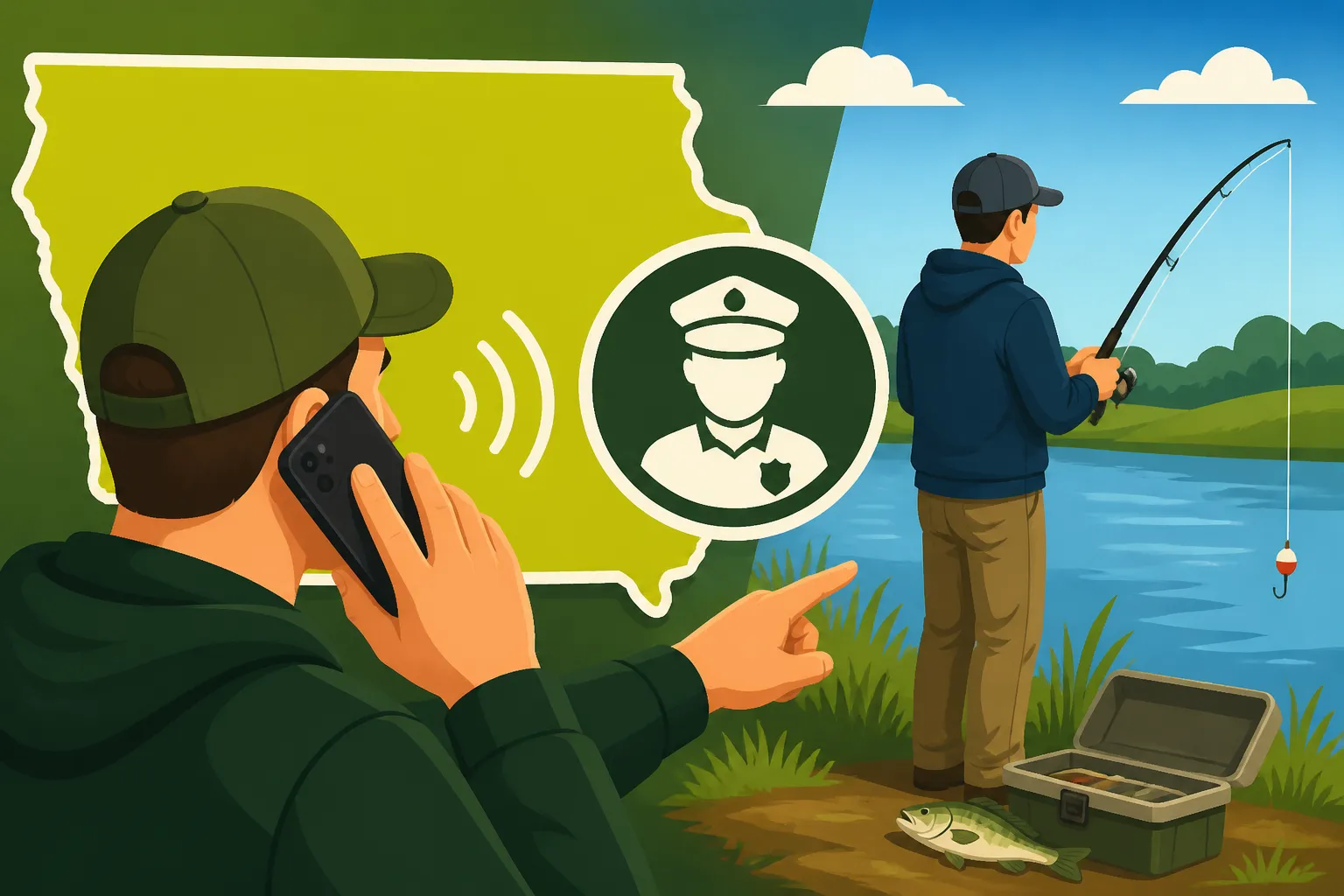
The most direct and effective way to report someone fishing without a license, or any other fishing violation, is to contact the Iowa Department of Natural Resources (DNR) Law Enforcement Bureau. These are the dedicated conservation officers who patrol our waterways and are responsible for upholding all state fishing regulations.
You can reach the DNR Law Enforcement by calling the main DNR phone number, which is 515-725-8200. When you call, you'll want to clearly state that you need to report a potential fishing violation. They can direct your call to the appropriate conservation officer for the area you're reporting from. While a general number, it's the gateway to getting your report to the right people. Be prepared to provide as many details as possible (we'll cover that in the next section), including the exact location, time, and a description of the individuals and their activities. Remember, these officers are often out in the field, so a phone call is usually the quickest way to get their attention for an active situation.
Using the Turn In Poachers TIP Program
For situations where you prefer to remain anonymous or if the violation isn't immediately urgent but still needs to be addressed, the Turn In Poachers (TIP) program is an excellent resource. TIP-IOWA is a confidential program that allows concerned citizens to report poaching and other illegal activities involving Iowa's fish and wildlife.
You can contact TIP by calling their toll-free hotline at 1-800-TIP-IOWA (1-800-847-4692). The beauty of the TIP program is its anonymity; you don't have to give your name if you don't want to, though providing contact information can sometimes help officers with follow-up questions. TIP is not just for hunting violations; it's equally effective for reporting fishing offenses, including individuals who are fishing without a license, exceeding bag limits, or using illegal methods. There's even a reward system in place for information leading to an arrest. Rewards can range up to $1,000, funded by concerned citizens and organizations, not taxpayer money. This incentive encourages people to step forward when they witness illegal activities, helping to deter violations across the state. Using the TIP line is a crucial way to contribute to conservation without compromising your identity.
Local Law Enforcement and When to Involve Them
While the DNR is the primary agency for fishing violations, there are specific circumstances where involving local law enforcement, such as the county sheriff's office or city police department, might be appropriate or necessary.
If you witness a fishing violation that is also accompanied by an immediate threat to safety, aggressive behavior, vandalism, or any other criminal activity that requires an urgent response, then calling 911 is absolutely the right course of action. For example, if someone fishing illegally is also engaging in public intoxication and threatening others at a public access point like the docks at Lake Macbride, this escalates beyond just a fishing offense. The local police can respond rapidly to ensure public safety, and they can then coordinate with the DNR regarding the fishing violation itself.
For less urgent, non-life-threatening situations that still involve a public safety component or occur in an area where local law enforcement has a more immediate presence than a DNR officer, you might consider calling the non-emergency line for the local sheriff's department or police. They can assess the situation and, if necessary, contact the DNR on your behalf. However, for a pure fishing license violation without any other accompanying criminal behavior or immediate danger, the DNR or TIP line remains the most appropriate first point of contact. Remember, local law enforcement officers may not be as well-versed in specific fishing regulations as a DNR conservation officer, so providing clear details about the suspected violation is even more crucial if you go this route.
What Information to Gather Before Making a Report
Making an effective report isn't just about calling the right number; it's about providing clear, concise, and detailed information that helps conservation officers act quickly and efficiently. The more specific you can be, the better chance they have of locating the individual and addressing the violation.
Key Details About the Individual(s)
When you're trying to report someone fishing without a license, or any other infraction, the primary goal for law enforcement is to identify the individual(s) in question. This is where your observational skills come into play.
Try to note down as much as you can about their physical appearance. This includes:
- Gender and approximate age: Are they male or female? Roughly how old do they appear?
- Hair color and style: Long, short, bald, color?
- Clothing: Specific colors, types of shirts, hats, jackets, pants. A bright orange hat or a distinct band t-shirt can be very helpful identifiers.
- Build and height: Are they tall, short, slender, heavy-set?
- Distinguishing features: Do they have tattoos, scars, a limp, glasses, or anything else that makes them stand out?
- Number of people: How many individuals are involved?
Beyond their personal appearance, if they arrived in a vehicle, that information is GOLD.
- Vehicle make, model, and color: "A blue Ford F-150 pickup truck" is far better than "a blue truck."
- License plate number: This is perhaps the most crucial piece of information. Even a partial plate number can be helpful.
- Any distinguishing marks on the vehicle: Bumper stickers, dents, specific equipment like a unique boat trailer.
- Direction of travel: If they leave the scene, which way did they go?
For instance, you might report, "There's a man in a red baseball cap and blue jeans, roughly 40s, medium build, fishing without a visible license from the shore on the north side of Saylorville Reservoir. He arrived in a green Chevy Silverado, license plate might be ABC 123." This level of detail provides officers with actionable intelligence.
Specifics of the Alleged Violation
It's not enough to just say, "Someone's fishing illegally." You need to articulate what they are doing that constitutes a violation.
- Date and Time: Even an approximate time frame is better than nothing.
- Precise Location: This is critical. "Near the bridge on the Des Moines River" is okay, but "Under the Highway 141 bridge on the Des Moines River, just downstream from the public access ramp" is much better. Using landmarks, road names, and specific bodies of water will guide officers directly to the scene. If you're using a map app on your phone, you can often get GPS coordinates.
- Nature of the Violation:
- No visible license: This is the core of our topic. Note if they have one pinned to their hat, vest, or if there's clearly no license displayed.
- Exceeding bag limits: "They just pulled in their sixth walleye, and it looks like their daily limit is five." You can find information on specific limits in the Iowa Fishing Season Dates and Limits guide or the Iowa Fishing Daily Bag Limits Guide.
- Undersized fish: "They kept a bass that looked way too small for the slot limit."
- Illegal gear/methods: "They're using more than the allowed number of fishing lines" (see How Many Fishing Poles You Can Use in Iowa for specifics). Or, "They're using a cast net in a restricted area."
- Fishing in a closed area or during a closed season.
- Fishing on private property without permission: Refer to Private Pond Fishing Rules in Iowa for nuances here.
The more specific you are about what you observed, the easier it is for an officer to verify the violation and take appropriate action.
Importance of Evidence Without Direct Confrontation
While gathering information is vital, your personal safety should always be the top priority. Under no circumstances should you ever confront someone you suspect of violating fishing laws. This can be dangerous and potentially escalate a situation unnecessarily. Your role is to be an observer and a reporter, not an enforcer.
However, gathering evidence from a safe, discreet distance can be incredibly helpful for officers.
- Photos and Videos: If you can safely and inconspicuously take a photo or short video of the individual(s), their vehicle (especially the license plate), or the specific violation (e.g., a stringer full of undersized fish), this can be invaluable. Modern smartphones make this easy. Just ensure you're not putting yourself at risk or making the situation worse. Do not approach them for a close-up; a distant shot that identifies the subject and scene is usually sufficient.
- Eyewitness Account: Your detailed written or mental notes of what you saw, when you saw it, and where it happened are powerful. Even without photographic evidence, a clear, credible eyewitness account from a responsible citizen holds weight.
Remember, the goal is to provide officers with enough information to investigate properly. They are trained professionals who know how to approach these situations safely and legally. Your detailed report is the first step in their process.
What Happens After You File a Report
Once you've made your report to the Iowa DNR or through the TIP program, you might wonder what the next steps are. The process is designed to be thorough, but also to protect the privacy of those who come forward.
The Investigation Process
After you file a report, whether by phone or through the TIP line, the information is immediately routed to the appropriate conservation officer for that specific geographic area. These officers have designated patrols and a deep understanding of local fishing spots, like Fishing the Iowa Great Lakes or popular stretches of Fishing the Mississippi River in Iowa.
What happens next depends on the urgency and nature of your report:
- Immediate Response: If you report an active, ongoing violation that is clearly stated as such (e.g., "someone is currently netting fish illegally at this exact location"), an officer will attempt to respond as quickly as possible.
- Follow-Up Investigation: For less urgent reports, or if the individuals have left the scene, officers will use the details you provided to investigate. This might involve patrolling the area more frequently, running license plate numbers, or using other investigative techniques.
- Confidentiality: A key aspect of the reporting process, especially through TIP, is reporter confidentiality. The DNR understands the importance of protecting those who report violations. Your identity is kept strictly confidential, and officers will not reveal who made the report to the suspected violator. This ensures that you can report issues without fear of retaliation.
- No Direct Feedback (Often): While you might not always receive direct feedback on the outcome of your specific report, rest assured that every credible tip is taken seriously and investigated. Conservation officers are busy, and they prioritize enforcement based on the severity and immediacy of the violation. If they do need more information, they might contact you, especially if you provided your contact details.
The goal is always to enforce the laws and protect Iowa's natural resources. Your report is a critical piece of that puzzle.
Penalties for Fishing Without a License in Iowa
Fishing without a valid license in Iowa isn't just a minor oversight; it's a serious offense that carries specific legal consequences. The penalties are designed to deter illegal activity and reinforce the importance of contributing to conservation.
Generally, fishing without a license in Iowa is classified as a simple misdemeanor. The exact fines can vary depending on the jurisdiction and specific circumstances, but typically, an angler caught fishing without a license can expect a fine in the range of $135 to $200, plus court costs and surcharges. For example, a common first-offense fine might be around $135 plus an additional $60-$80 in court costs and surcharges, bringing the total to over $200. This is a significant amount to pay for something that costs far less to acquire legally. You can learn more about this in our specific guide, "Fine Amount for Fishing Without a License in Iowa."
Beyond monetary fines, there are other, potentially more impactful penalties:
- Loss of Fishing Privileges: Conservation officers and the courts can revoke or suspend an individual's fishing privileges for a certain period. For repeat offenders, this can be a lengthy suspension, preventing them from legally fishing in Iowa waters.
- Seizure of Equipment: In some cases, officers may have the authority to seize fishing equipment used in the commission of a serious violation.
- Restitution: If the violation involves the illegal take of fish, particularly protected species or large quantities, the court may order the violator to pay restitution for the value of the poached wildlife.
- Increased Penalties for Repeat Offenders: Someone who repeatedly fishes without a license or commits other fishing violations will face progressively harsher penalties, including higher fines and longer suspensions of privileges. Our article on "What Happens If You Fish Without a License in Iowa" delves deeper into the long-term consequences.
These penalties underscore the fact that obtaining a fishing license is not optional but a fundamental requirement for anyone casting a line in Iowa's public waters, with some exceptions for Iowa Fishing License Exemptions such as during the Iowa Free Fishing Weekend Guide or for very young anglers (see Do Kids Need a Fishing License in Iowa?). It's a small price to pay for the privilege and for supporting the health of our fisheries.
| Reporting Method | Best Use Case | Key Information to Provide | Anonymity | Potential Outcome |
|---|---|---|---|---|
| Iowa DNR Law Enforcement (515-725-8200) | Active, ongoing violations; non-anonymous reports. | Date, time, precise location (GPS if possible), detailed description of individual(s), vehicle (make, model, license plate), specific violation (e.g., no visible license, exceeding limits), type of fish, number of lines used. | No | Officer response, investigation, potential citation/arrest. |
| Turn In Poachers (TIP-IOWA) (1-800-847-4692) | Anonymous reports; violations that aren't immediate. | Same as above, focusing on actionable details. Photos/videos can be submitted via their website or app after initial call. | Yes | Investigation, potential reward if information leads to arrest. |
| Local Law Enforcement (911 or non-emergency) | Immediate danger, criminal activity in conjunction with fishing violation. | Any threats, dangerous behavior, or other crimes witnessed. Also, precise location, individual/vehicle descriptions. Local officers will then coordinate with DNR for the fishing aspect. | Varies | Immediate safety response, coordination with DNR, potential arrest. |
Disclaimer
The information provided in this guide is for general informational purposes only and does not constitute legal advice. While we strive to provide accurate and up-to-date information, fishing regulations and laws can change. Always consult the official Iowa Department of Natural Resources website or current regulations booklet for the most precise and legally binding information before fishing or reporting violations.