Best Fly Rod Weight for Small Streams
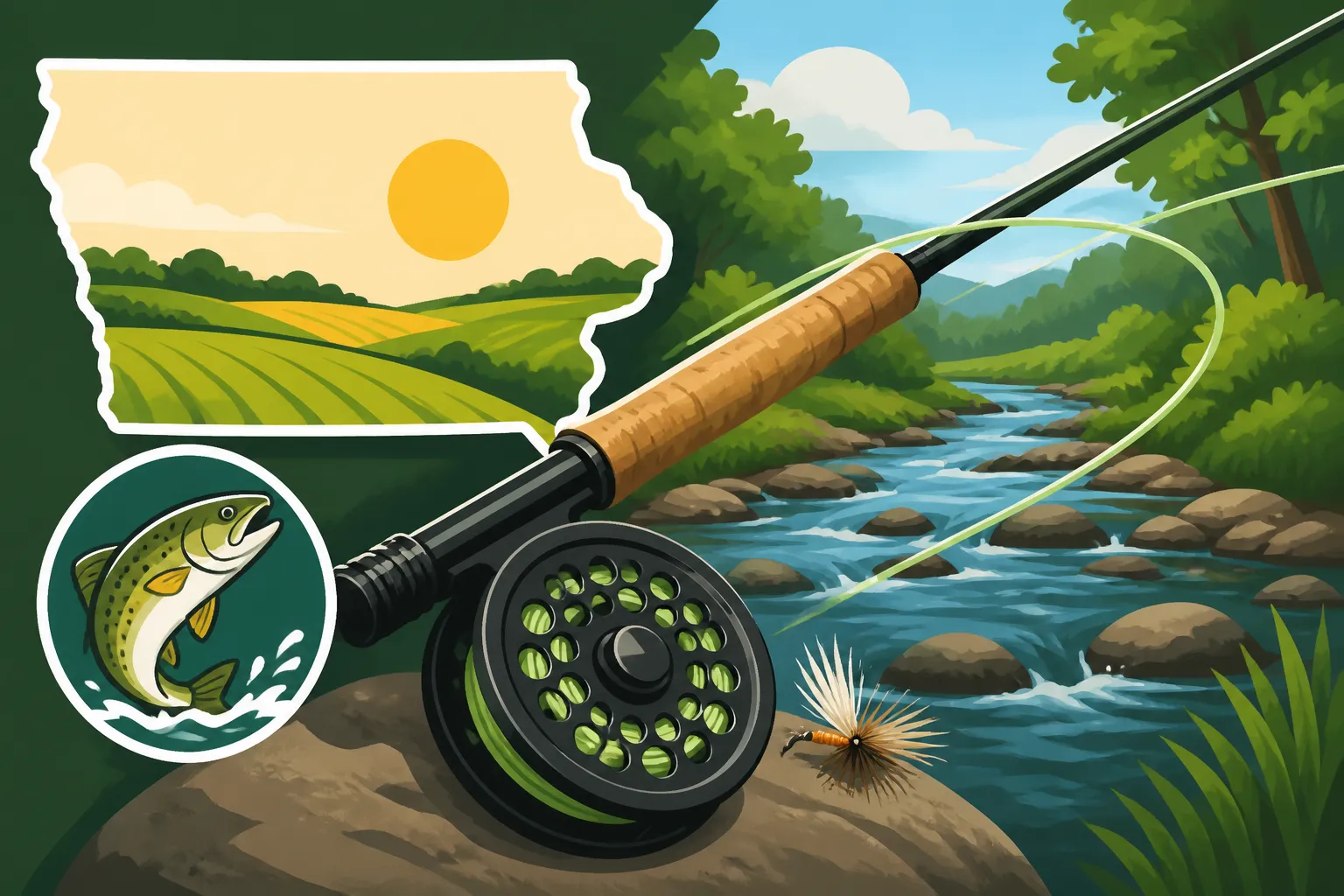
If you're an angler dreaming of those quiet, secluded moments on Iowa's smaller trout streams, you know the struggle: showing up with the wrong gear can turn a peaceful outing into a frustrating battle with overhanging branches and spooked fish. Choosing the best fly rod weight for these intimate waters is crucial, and this guide is here to walk you through exactly what you need to consider to make your next small stream adventure a success.
Understanding Fly Rod Weights
Before we dive into specific recommendations for Iowa's small streams, let's talk a little about what fly rod weight actually means and why it's so important. It's not just a number; it's the core characteristic that dictates how a rod performs, how much finesse you can achieve, and what kind of fishing it's best suited for.
The AFTMA Standard
Fly rod weights are rated according to a standardized system developed by the American Fishing Tackle Manufacturers Association (AFTMA). This rating, typically from 0 (ultra-light) to 15 (heavy saltwater or spey rods), corresponds to the ideal weight of the fly line designed to be cast by that rod. So, a 3-weight rod is designed to efficiently cast a 3-weight fly line, and a 5-weight rod works best with a 5-weight line. It’s all about creating the right amount of energy to propel your line and fly forward.
This system ensures that when you pick up a 4-weight rod, you know it's built for a certain class of fishing, regardless of the brand. It helps avoid the frustration of trying to cast a heavy line with a flimsy rod or a delicate line with a stiff, powerful one. The balance between rod, line, and reel is paramount for enjoyable and effective fly casting.
How Weight Impacts Casting and Presentation
The weight of a fly rod directly influences several key aspects of your fishing experience. Lighter rods (lower numbers) are generally more flexible and offer a delicate touch. They excel at presenting smaller flies with precision and subtlety, which is often exactly what's needed on wary trout in clear, small streams. You can feel every subtle twitch of the line, every gentle take.
Heavier rods (higher numbers), on the other hand, are stiffer and more powerful. They're built for casting larger, heavier flies, punching through wind, and fighting bigger, more powerful fish. Imagine trying to cast a huge streamer with a 2-weight rod – it would be an exercise in futility. Conversely, trying to delicately present a tiny dry fly with an 8-weight would be like trying to pick up a feather with a baseball bat. The right rod weight allows for efficient energy transfer and the perfect touch.
Why Small Streams Are Different
Fishing Iowa's small, often overlooked trout streams isn't like casting big water. These intimate environments present a unique set of challenges and opportunities that demand a different approach to gear selection, especially when it comes to your fly rod.
Tight Quarters and Overhanging Branches
Anyone who's spent time on the smaller tributaries and spring creeks in Northeast Iowa's Driftless Area knows the struggle. These streams are often narrow, sometimes barely wider than a few feet, and almost always shrouded by dense riparian vegetation. Think about the branches reaching out from oaks and willows, the tall grasses, and the occasional thorny bush. Traditional long, heavy fly rods become a liability, making overhead casting nearly impossible.
In these conditions, anglers need a rod that can make short, accurate casts without a lot of backcast room. Roll casts, bow-and-arrow casts, and various forms of steeple casts become your best friends. A shorter, lighter rod with a quicker action allows you to navigate these tight spaces with far less snagging and frustration. It's all about making the presentation with minimal interference and avoiding the dreaded "tree monster" that likes to eat your flies.
Smaller Fish and Delicate Presentations
While Iowa does have some truly respectable trout, the fish in many small streams tend to be on the smaller side. We're talking about feisty little rainbows, browns, and even some native brook trout in the most pristine waters. These fish are often easily spooked by heavy lines, splashing flies, or clumsy presentations. A delicate approach is key to enticing a bite.
A lighter fly rod helps you achieve that delicate presentation. It allows for softer landings of small dry flies, subtle drifts of nymphs, and an overall more natural delivery that won't send a ripple of alarm through the pool. The rod's sensitivity also means you can feel the lightest of takes, which are common with smaller, cautious trout, and react quickly to set the hook without tearing it from their mouths. This is especially true when you're targeting fish in crystal clear water where they have ample time to scrutinize your offering.
The Need for Finesse Over Power
Unlike fishing for large steelhead or aggressive bass, small stream trout fishing is primarily about finesse. It's about accurately dropping a size 20 midge into a tiny pocket behind a rock or drifting a perfectly presented nymph through a subtle current seam. You're rarely battling a fish that will strip hundreds of yards of line off your reel or require heavy lifting to bring in.
This emphasis on finesse means you don't need a rod built for brute force. Instead, you need one that feels like an extension of your arm, allowing for subtle wrist movements and precise control. A lighter rod prevents you from over-powering your cast, which can lead to splashy presentations or tangled leaders in tight spots. It's about making a quiet statement, not a loud proclamation, to those wary fish. This is where a lighter rod truly shines, offering an unparalleled connection to the subtle art of fly fishing.
Recommended Fly Rod Weights for Small Streams
Now for the main event! When it comes to Iowa's smaller trout streams, choosing a fly rod weight on the lighter side of the spectrum is almost always the way to go. You want something that balances delicate presentation with enough backbone to handle a feisty fish, even if it's not a monster.
The 2-Weight Rod: For the Truly Tiny Water
If you're truly dedicated to exploring the absolute smallest, most overgrown spring creeks and feeder streams in Iowa – those little ribbons of water where the trout might be measured in inches rather than pounds – a 2-weight fly rod is an absolute joy. These rods are incredibly light, offering the most delicate presentation possible. They make even a small 8-inch brook trout feel like a trophy, bending delightfully with every head shake.
- Pros: Unmatched delicacy for tiny flies and wary fish. Exceptional sensitivity for subtle takes. Makes fighting smaller fish incredibly fun. Perfect for tight, technical casting in very confined spaces where accuracy at short range is paramount.
- Cons: Struggles with wind or heavier, air-resistant flies (like hoppers or larger streamers). Limited ability to turn larger fish, should you hook one. Can feel underpowered on slightly larger streams or if you encounter strong currents. These are specialized tools, not all-arounders.
- Ideal Use: Micro-streams, spring seeps, very brushy stretches where stealth and precision trump distance and power. Think those tucked-away gems in areas like Backbone State Park, or certain stretches in the Decorah region.
The 3-Weight Rod: The Small Stream Sweet Spot
For many Iowa anglers, the 3-weight fly rod hits that perfect sweet spot for small stream fishing. It offers much of the delicacy of a 2-weight but provides a little more versatility. You can still make those gentle presentations with small dry flies and nymphs, but you'll have a bit more backbone to handle a little wind, cast slightly larger flies, or control a surprisingly strong 14-inch brown trout that decides to make a run for a logjam.
- Pros: Excellent balance of delicacy and power for typical Iowa small stream trout. Handles small to medium-sized flies well. Offers better wind penetration than a 2-weight. Still incredibly sensitive and fun to fish with. A great choice if you only want one rod for small stream specific fishing.
- Cons: Can still be challenged by very strong winds or truly large, bushy flies. Might feel a little light if you happen to hook into a truly big fish that's made its way up from a larger river.
- Ideal Use: Most of Iowa's dedicated trout streams, including those with moderate brush and open stretches. Great for nymphing, dry fly fishing, and light streamer work. Many anglers will find their go-to small stream rod is in this weight class. You can find quality 3-weight rods at Bass Pro Shops or through online retailers like Amazon.
The 4-Weight Rod: The Versatile All-Arounder
While technically a step up, a 4-weight fly rod can still be an excellent choice for small streams, especially if you're looking for a single rod that can also handle slightly larger water, or if you prefer a bit more casting power. It's often considered the most versatile "light" rod. You sacrifice a tiny bit of ultimate delicacy compared to a 2- or 3-weight, but you gain significant advantages in other areas.
- Pros: Handles a wider range of fly sizes, from tiny midges to modest streamers. Better performance in wind. More power to cast a bit further or to fight slightly larger fish more confidently. A fantastic option if your "small stream" fishing might also include slightly wider, more open sections or small rivers. This is often the recommended weight for general trout fishing if you're only buying one rod.
- Cons: Less delicate presentation with the smallest flies compared to lighter rods. Takes a bit of the "sport" out of fighting very small fish.
- Ideal Use: Small to medium-sized trout streams, larger spring creeks, or when you anticipate a mix of smaller and potentially larger fish. It's a superb all-around trout rod that excels in varied conditions, allowing you to easily switch between nymphing techniques for Iowa streams or casting dry flies.
Here's a quick comparison to help visualize the differences:
| Rod Weight | Primary Use Case (Iowa Small Streams) | Key Advantages | Potential Disadvantages |
|---|---|---|---|
| 2-Weight | Very narrow, overgrown, tiny creeks | Extreme delicacy, maximum fun with small fish, excellent in tight spots | Poor in wind, struggles with larger flies/fish, highly specialized |
| 3-Weight | Most typical Iowa trout streams | Great balance of delicacy and versatility, handles most small stream scenarios well | Can be challenged by strong wind or very large flies |
| 4-Weight | Varied small streams, also good for slightly larger water | Most versatile light rod, handles more fly sizes and wind, better for slightly larger fish | Less delicate than 2- or 3-weight, may overpower very small fish |
Matching Your Gear to the Stream
Choosing the right fly rod weight is a fantastic first step, but it's just one piece of the puzzle. To truly optimize your setup for Iowa's small streams, you need to ensure the rest of your gear is in harmony with your rod. Think of it like a perfectly composed symphony, where every instrument plays its part to create a beautiful sound.
Fly Line Selection
The fly line is the engine of your fly casting system, and it needs to be perfectly matched to your rod's weight. For small stream fishing, you'll generally want a weight-forward (WF) floating line that matches your rod's rating (e.g., a WF3F line for a 3-weight rod). The weight-forward taper helps load the rod quickly for short, accurate casts, which is essential in tight, brushy environments.
However, consider specific characteristics of your line. Some anglers prefer a "trout specific" taper, which often has a longer, more delicate front taper for subtle presentations. Others might opt for a line that's slightly heavier at the front (half a line size up) to help load fast-action rods more quickly for those quick, close-range casts. A good quality fly line makes a huge difference in how your rod performs and how easily you can make those delicate casts required to fool wary fish. You can find excellent fly lines from various manufacturers on sites like Amazon or at your local Bass Pro Shops.
Leader and Tippet for Delicate Work
On small streams, especially those with clear water and spooky fish, your leader and tippet selection are just as critical as your fly line. You'll want to use longer leaders, typically 9 to 12 feet, with a fine taper down to a light tippet. For a 2- or 3-weight rod, a 5X or 6X tippet is often appropriate for most dry flies and nymphs. For extremely small flies (size 20 or smaller) or very shy fish, you might even drop down to 7X.
The goal is to create an almost invisible connection between your fly line and your fly, minimizing the chance of spooking fish and allowing for a natural drift. Fluorocarbon tippet can be a great choice due to its low visibility underwater and abrasion resistance, but nylon monofilament is often sufficient, especially for dry fly presentations where its buoyancy can be an advantage. Remember, delicate is the name of the game here; a heavy leader or tippet can undo all the effort you put into choosing the perfect light rod and line.
Fly Choice for Small Stream Success
The types of flies you'll typically use on Iowa's small streams also align perfectly with lighter rod weights. You'll often be fishing smaller patterns – tiny dry flies like Parachute Adams or Elk Hair Caddis in sizes 16-22, small emergers, or delicate nymphs like Pheasant Tail or Hare's Ear in similar sizes. These flies are lightweight and don't create much air resistance, making them ideal for casting with a lighter rod.
While you might occasionally throw a small woolly bugger or sculpin pattern, you're generally not going to be casting large, heavily weighted streamers or massive articulated flies. Your fly box for these waters should be stocked with a variety of "match the hatch" patterns and generalist nymphs that imitate the abundant aquatic insect life. A lighter rod allows you to precisely place these small offerings exactly where you need them, whether it's under an overhanging branch or in a tiny eddy behind a rock. If you're looking for more guidance, check out our guide on Best Fly Patterns for Iowa Trout Streams.
Reel Balance and Functionality
When choosing a reel for your small stream setup, balance is key, but functionality often outweighs capacity. You don't need a huge, heavy reel with a massive drag system designed for fighting saltwater giants. Instead, look for a lightweight reel that balances comfortably with your chosen 2-, 3-, or 4-weight rod. The goal is to make the entire setup feel comfortable and effortless in your hand during a long day of casting and wading.
A click-and-pawl drag system is often more than sufficient for the size of trout you'll encounter, providing just enough resistance to prevent overruns while still allowing for the exciting runs of a spirited fish. Many anglers even prefer the classic sound of a click-and-pawl reel on a small stream – it adds to the nostalgic charm of the experience. Ultimately, the reel's primary job is to hold your line and provide counter-balance, not necessarily to be a powerful fish-fighting machine for these waters.
Understanding these interconnected elements will not only improve your casting and presentation but also enhance your overall enjoyment as you explore the hidden treasures of Iowa's small trout streams. Remember, it's not just about the rod; it's about the entire system working together seamlessly.
Disclaimer
This article is for general informational purposes only and does not constitute professional advice. Laws, prices and regulations vary by location and change over time. Consult a qualified professional for guidance on your specific situation.