Best Anchor Type for Iowa River Fishing
Trying to hold your boat steady in a swift Iowa river current can feel like wrestling an alligator – you're fighting against constant movement, and if you don't have the right tools, you'll spend more time re-positioning than actually fishing. This guide is all about helping you understand the unique challenges of anchoring in Iowa's diverse rivers and finding the absolute best anchor type to keep you locked on your spot, whether you're chasing walleye on the Des Moines or catfish on the Mississippi.
Understanding Iowa River Dynamics and Why Anchors Matter
Iowa's rivers aren't your typical calm lakes. They are dynamic, constantly changing environments, and what works perfectly in a serene pond often falls short when you're battling a steady current or navigating a rocky bottom. Anglers often get frustrated trying to make a lightweight lake anchor work, only to find themselves drifting away from that perfect fishing hole they just spent twenty minutes locating. It's not you, it's the anchor! Understanding these river characteristics is the first step to choosing an anchor that truly performs.
The Relentless Push of River Current
Anyone who has spent time fishing rivers knows the persistent force of the current. It's not just about how fast the water is moving; it's about the sheer volume of water pushing against your boat, especially if you have a larger vessel or a lot of gear catching the flow. This constant pressure demands an anchor designed to dig in and hold, rather than just sit on the bottom and get dragged along. If your anchor isn't suited to the current, you'll find yourself constantly repositioning, burning valuable fishing time and fuel, and potentially spooking fish with all the commotion. This is particularly true when targeting species like walleye, which often hold in specific current breaks or seams.
Think about fishing a prime current seam on the Mississippi River, or a deep bend on the Des Moines River. You spot fish on your electronics, or you know from experience that a certain rock pile is a hotspot. Without a reliable anchor, you're constantly fighting the river's pull, unable to present your bait effectively or stay on the fish long enough to get a bite. It's a frustrating dance that can ruin an otherwise promising day on the water.
Diverse River Bottoms: A Challenge for Any Anchor
Iowa's rivers are incredibly varied in their bottom composition. You might encounter soft, silty mud in slower backwaters, shifting sandbars, gravel beds, or hard, rocky stretches with submerged snags and logs. What anchors well in soft mud will likely just skate across hard rock, and what digs into gravel might get hopelessly snagged in a log jam. This diversity means a one-size-fits-all approach to anchors often leads to headaches and lost gear.
Consider the challenge of anchoring in the larger rivers like the Mississippi, where you could encounter anything from mud to riprap, or the rocky stretches of a smaller stream where snags are abundant. A traditional fluke anchor, excellent for sand and mud in lakes, might struggle to penetrate a gravel bar or get caught irrevocably in a tangle of branches. This is why specialized river anchors are so important – they're designed to adapt to these unpredictable underwater landscapes, providing a secure hold without becoming a permanent resident of the river bottom. Knowing the general bottom type of your preferred fishing spots can really narrow down your choices when you're looking for new gear at Bass Pro Shops or browsing online.
Why a Dedicated River Anchor is a Game Changer
While it might be tempting to use a general-purpose anchor for all your fishing adventures, a dedicated river anchor truly shines in the unique conditions of Iowa's waterways. These anchors are specifically designed to cope with current, resist dragging, and often incorporate features that minimize snagging. They are built for stability, ensuring your boat stays put even when the river tries its best to move you. This stability isn't just about convenience; it's about safety, allowing you to focus on fishing rather than constantly monitoring your position.
A specialized river anchor, like a box anchor, dramatically improves your fishing experience. You can precisely position your boat to cast to a particular seam, drop-off, or structure. This means more accurate presentations, better bait control, and ultimately, more fish in the boat. For serious river anglers, it's an investment that pays dividends in reduced frustration and increased success. It also means you can spend more time enjoying the scenery and less time wrestling with your equipment. You can find a good selection of these specialized anchors online at Amazon or at your local outdoor outfitter.
Top Anchor Types for Iowa River Fishing
When you're out on the water, you quickly learn that not all anchors are created equal. For the dynamic conditions of Iowa's rivers, certain designs stand head and shoulders above the rest. It's about finding that sweet spot between holding power, ease of deployment, and resistance to snagging. Let's dive into the anchors that truly deliver when the current is pushing and the bottom is unpredictable.
The Mighty River Anchor (Box Anchor)
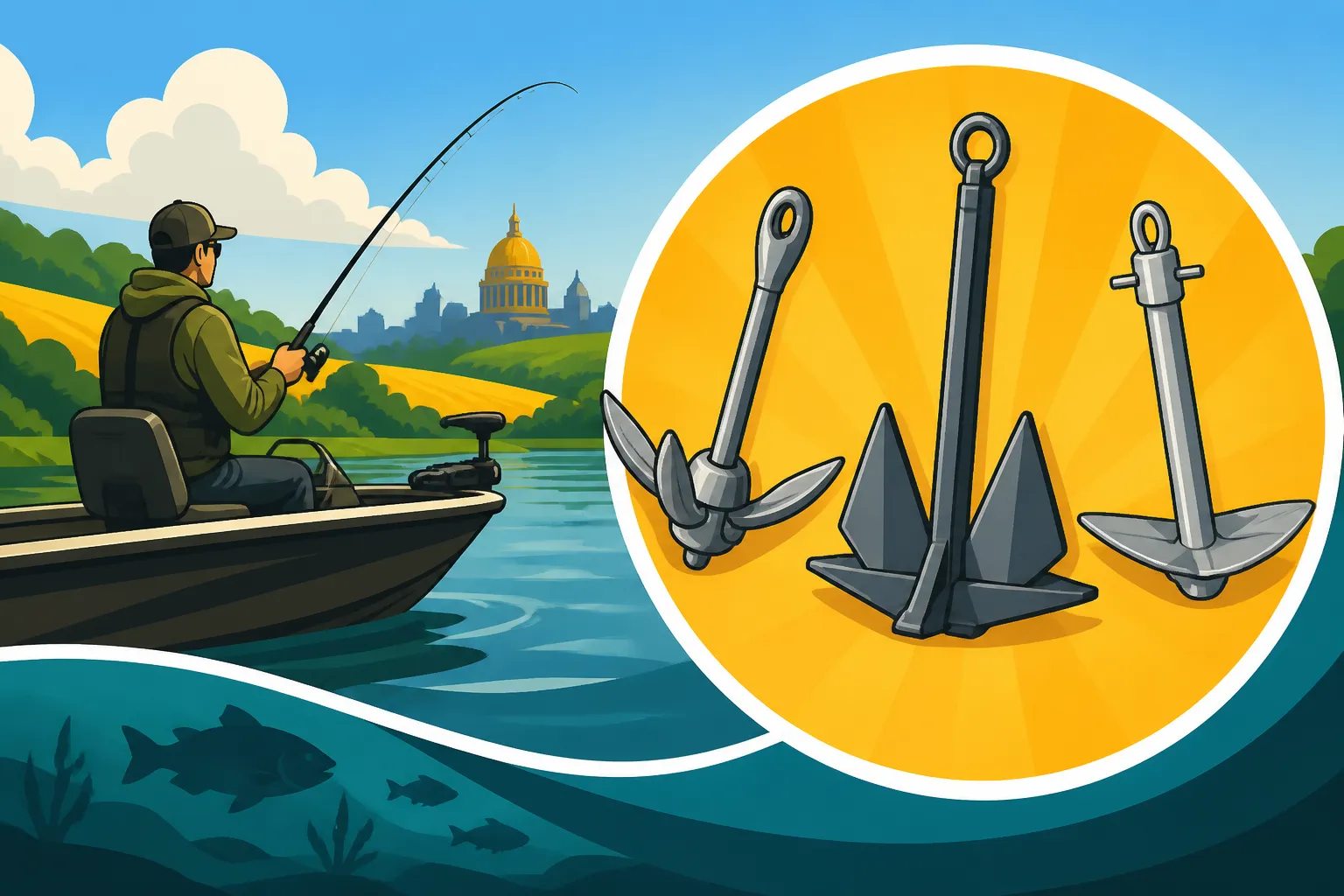
When anglers talk about the "best" anchor for river fishing, the river anchor, often called a box anchor or sometimes a drag anchor, is almost always at the top of the list. These anchors are distinct because of their box-like shape, often with four "flukes" or paddles that deploy as the anchor hits the bottom. What makes them so effective in current is their ability to dig in quickly and hold firmly without having to drag a significant distance. They don't rely on being buried deep; instead, they dig into the top layer of the riverbed and use their broad surface area to resist the pull of the current.
The design of a river anchor allows it to set almost instantly. As it drifts down and settles, the current catches the "box" and pushes its flukes into the riverbed. This provides a remarkably strong hold, even in fast currents or on bottoms that might challenge other anchor types. Many river anchors are also designed to be relatively snag-resistant; if they get caught, a steady pull from a different angle can sometimes free them. Some even have a trip-line attachment point at the bottom, allowing you to pull the anchor free by reversing the tension, which is incredibly useful in snag-prone areas. For anyone serious about Iowa River Fishing, this is a must-have piece of equipment.
Grapnel Anchors: Versatility for Varying Depths and Debris
Grapnel anchors, characterized by their multiple prongs or "tines," are another solid option for river fishing, particularly in areas with rocky bottoms or submerged debris. Their design allows them to hook onto rocks, logs, or other underwater structures, providing a secure hold where other anchors might simply slide. Many grapnel anchors also feature collapsible tines, making them compact for storage and safer to handle, which is a nice bonus when space is at a premium in your boat.
The real strength of a grapnel anchor lies in its adaptability. While not as universally effective in soft mud as a river anchor, it truly excels in hard-to-hold environments. If you frequently fish sections of the Mississippi River with lots of riprap or submerged trees, a grapnel can be invaluable. However, this strength can also be its weakness: if it hooks too well into a solid underwater feature, it can be incredibly difficult to retrieve without a proper breakaway system. Implementing a breakaway rig, which involves attaching the anchor chain to the bottom of the anchor and using a zip tie or light line at the top, is highly recommended to prevent losing your anchor entirely.
Mushroom and Vinyl-Coated Anchors: When Simplicity Reigns
For smaller boats, kayaks, or situations where the current isn't overwhelming, mushroom anchors and vinyl-coated anchors can be viable, simpler alternatives. Mushroom anchors, true to their name, have a mushroom-shaped head that is designed to sink into soft, muddy bottoms and create suction. They work by burying themselves, making them effective in low-current, soft-bottomed areas like calmer stretches of rivers, backwaters, or oxbow lakes off the main current.
Vinyl-coated anchors, often shaped like a pyramid or river anchor, offer a few practical advantages. The vinyl coating protects your boat's finish from scratches and dents, and it also makes them quieter to deploy and retrieve. While they might not offer the ultimate holding power of a dedicated box anchor in strong currents, they can be perfectly adequate for smaller craft or lighter current conditions. They're usually more affordable and readily available, making them a good entry-level option, especially if you're exploring Kayak Fishing Techniques in Iowa. Just be realistic about their limitations in heavy flow or very rocky areas.
Chain and Rope: Your Anchor's Best Friends
No matter which type of anchor you choose, its effectiveness is greatly enhanced by the proper use of anchor chain and rope. The anchor chain, typically a few feet long, serves a crucial purpose: it provides weight that helps the anchor lie flat on the bottom and allows it to dig in more effectively. The weight of the chain absorbs shock from waves or current, preventing the anchor line from pulling straight up and dislodging the anchor.
The anchor rope, or rode, connects your anchor to your boat. The length of this rope is absolutely critical for effective anchoring. A general rule of thumb for river fishing is to have an anchor rode that is at least 7-10 times the depth of the water you're anchoring in, plus any freeboard (the height of your boat's side above the water). This "scope" allows the anchor to pull horizontally along the bottom, maximizing its holding power. Too short a scope, and the anchor will pull vertically, causing it to drag. Always ensure your anchor rope is strong enough for your boat and the expected conditions. How Much Anchor Rope You Need will depend on where and how you fish.
Choosing the Right Anchor for Your Iowa River Adventure
Picking the perfect anchor isn't just about grabbing the heaviest one you can find. It's a thoughtful process that considers your specific fishing needs, the characteristics of the Iowa river you'll be on, and of course, safety. A mismatched anchor can lead to endless frustration, lost fishing time, or worse, a dangerous situation if your boat drifts into hazards.
Matching Anchor Weight to Boat Size and Current Strength
The weight of your anchor is paramount, especially in a river environment. A common mistake is using an anchor that's too light for your boat's size and the strength of the current. A small, light anchor simply won't have the mass to dig in or resist the consistent push of a river like the Mississippi or the Des Moines. On the other hand, an unnecessarily heavy anchor can be a pain to deploy and retrieve, and can take up valuable space.
Here’s a general guideline, but remember to always err on the side of caution with heavier currents:
| Boat Length (Feet) | Light Current (e.g., slow backwater) | Moderate Current (e.g., typical river flow) | Strong Current (e.g., main channel, high water) | Recommended Anchor Type |
|---|---|---|---|---|
| Up to 14 | 10-15 lbs | 15-20 lbs | 20-25 lbs | Grapnel, Small Box Anchor |
| 15-18 | 15-20 lbs | 20-30 lbs | 30-40 lbs | Box Anchor, Heavy Grapnel |
| 19-22 | 20-25 lbs | 30-40 lbs | 40-50 lbs+ | Large Box Anchor |
| 23+ | 25-30 lbs | 40-50 lbs+ | 50-70 lbs+ (or two anchors) | Heavy Box Anchor |
Note: These are general guidelines. Always consult specific anchor manufacturer recommendations and consider your boat's weight and wind resistance.
If you find yourself frequently fishing strong currents or on larger rivers, investing in a robust box anchor in the higher weight range for your boat size is a wise decision. For example, a 20-foot bass boat fishing the main channel of the Mississippi could easily need a 40-pound-plus box anchor to stay put. For smaller boats like kayaks or canoes, a lighter grapnel or a smaller river anchor might suffice, but always be mindful of how quickly you can get swept downstream if your anchor fails.
Considering the River Bottom Composition
The bottom of an Iowa river can be a mosaic of different materials, and your anchor choice should reflect this. As we discussed, a soft, silty bottom is ideal for mushroom anchors or broad-fluked river anchors that can dig in and create suction or purchase. However, those same anchors might struggle to set on hard gravel or rocky stretches, where they could just slide along.
For areas with a lot of rocks, rubble, or submerged logs, a grapnel anchor is often your best bet, as its tines can hook onto these features. This is particularly useful in many of Iowa's smaller, rockier streams where you might be Trout Fishing Streams in Northeast Iowa. However, be prepared for potential snags and consider a breakaway rig. If you fish a river with a mix of bottom types, a versatile box anchor can often handle a broader range, or you might consider carrying two different types of anchors to be prepared for anything. This is why many experienced river anglers will have a primary heavy-duty anchor and a secondary, lighter anchor for different situations.
Safety First: Anchor Line Length and Breakaway Rigs
When anchoring on a river, safety should always be your top priority. The proper anchor line length, or "scope," is not just about holding power; it's also about preventing your anchor from suddenly breaking loose and sending your boat downstream into hazards. As a rule, aim for at least a 7:1 scope (seven feet of anchor line for every one foot of water depth). In strong currents, or if there's significant wind, you might even want to increase that to 10:1. For example, in 10 feet of water, you'd want 70-100 feet of anchor line out.
Another critical safety consideration, especially in snag-prone Iowa rivers, is a breakaway anchor rig. This simple setup involves attaching your anchor chain to the bottom of your anchor and using a weak link (like a zip tie, thin rope, or a shackle with a light line) to secure it to the top. If your anchor gets permanently snagged, a hard pull can break the weak link, allowing you to retrieve the anchor from the bottom first, freeing it. This saves your anchor, and more importantly, prevents you from having to cut your line in a potentially dangerous situation. You can find all the components for this setup at most outdoor retailers, including Bass Pro Shops or online through Amazon. Knowing How to Anchor a Kayak in Current safely involves understanding these principles.
Best Practices for Anchoring on Iowa Rivers
Having the right anchor is only half the battle. Knowing how to properly deploy, set, and retrieve it on a moving river is crucial for both success and safety. Many frustrating fishing trips could have been avoided with a few simple best practices.
Deploying and Retrieving Your Anchor Safely
Deploying your anchor on a river isn't like dropping it in a calm lake. The current will try to take your boat downstream the moment you stop. The safest and most effective method is to approach your desired spot from upstream, allowing the current to slowly carry you into position.
Once you're slightly upstream of where you want to fish, slowly lower your anchor, rather than throwing it. This helps prevent the anchor line from tangling and ensures the anchor hits the bottom correctly. As the current carries your boat downstream, pay out enough anchor line to achieve the proper scope (at least 7:1 ratio of rope to depth). Once you've paid out enough line, slowly snub the line to allow the anchor to dig in and set. You should feel a distinct "thump" or resistance as the anchor grabs. Watch your surroundings to ensure your boat isn't dragging. If it is, pay out more line or consider moving to a different spot with a better bottom for holding.
Retrieving the anchor also requires a systematic approach. Motor slowly upstream towards your anchor, taking up slack in the line as you go. Once you're directly over the anchor, pull straight up with steady pressure. If it's snagged, try motoring in a slow circle around the anchor while keeping tension on the line; this can sometimes free it from a different angle. Remember, never put your hand or foot in a loop of the anchor line – if it snags and you're caught, it can be extremely dangerous. Always wear your life jacket, especially when handling anchors in current.
Understanding Anchor Hold and Scope
The "hold" of your anchor refers to how securely it's gripping the bottom. A good hold means your boat is stable and not dragging. "Scope," as mentioned earlier, is the ratio of your anchor line length to the water depth. Achieving proper scope is paramount for a strong hold. Insufficient scope is the most common reason anchors drag. When the line pulls too vertically, the anchor's flukes or blades don't have the angle to dig in effectively.
Imagine a plow. If you pull it straight up, it won't dig into the soil. But if you pull it horizontally, it digs deep. An anchor works much the same way. The longer the scope, the more horizontal the pull, and the better the anchor can set and hold. Keep an eye on your surroundings, watching stationary objects on shore. If you notice yourself slowly moving relative to them, your anchor might be dragging, and you'll need to pay out more line or re-anchor. Fishing Walleye Season and Size Limits or Catfish Possession Limits effectively often depends on staying precisely on a productive spot.
When and How to Use Two Anchors
For larger boats, very strong currents, or extremely precise positioning, using two anchors can be a game-changer on Iowa rivers. This technique, often called a "bow and stern" or "fore and aft" anchor setup, allows you to hold your boat steady in a specific orientation, preventing it from swinging in the current or wind. This is invaluable when you need to cast to a very specific structure or seam and want to maintain your boat's position without constantly correcting.
To deploy two anchors, first, drop your upstream anchor, letting out plenty of line. Then, allow the current to carry your boat downstream past your desired fishing spot, all while continuing to pay out line on the first anchor. Once you're downstream of your spot, deploy your second anchor off the stern, paying out enough line for it to set. Finally, slowly retrieve line on both anchors simultaneously until your boat is positioned exactly where you want it, with both lines taut, holding your boat firmly in place. This technique is especially useful for Drift Fishing the Mississippi River when you want to stop in a specific location for extended periods, or when trying to maintain a boat length from a wing dam. Using two anchors minimizes swing, provides maximum stability, and allows you to present your baits with unparalleled precision.
Disclaimer
This article is for general informational purposes only and does not constitute professional advice. Laws, prices and regulations vary by location and change over time. Consult a qualified professional for guidance on your specific situation.