Best Fly Rod Setup for Trout
Stepping into the world of fly fishing for Iowa's beautiful trout can feel like a daunting task, especially when you're faced with a bewildering array of rods, reels, and lines. It's easy to get overwhelmed trying to figure out what combination will actually work for our unique streams and elusive fish. This guide is here to break down the best fly rod setup for trout fishing in Iowa, ensuring you pick the right gear to make your time on the water more successful and enjoyable.
Understanding the Core Components of a Fly Rod Setup
Before we dive into the specifics of what works best for Iowa, let's get a handle on the fundamental pieces that make up any fly rod setup. Think of it like a finely tuned instrument; each part plays a crucial role in casting and presenting your fly. Getting these basics right is the first step toward a successful day chasing trout.
The Fly Rod Itself: Weight, Length, and Action
When you're looking at fly rods, you'll immediately notice numbers like "5-weight," "8'6"," or descriptions like "fast action." These aren't just arbitrary figures; they tell you a lot about how the rod will perform. The "weight" (e.g., 5-weight) refers to the rod's power and the size of the line it's designed to cast. For most Iowa trout fishing, you're usually looking at lighter weights, which allow for delicate presentations and make fighting smaller fish more exciting without overpowering them.
Rod "length" is measured in feet and inches. Shorter rods (around 7 to 8 feet) are often better for tight, brush-lined streams where long casts aren't needed, and you need to maneuver around obstacles. Longer rods (8'6" to 9'6") provide more leverage for longer casts, better line control for mending, and are generally preferred on wider rivers or when roll casting is essential. "Action" describes how much the rod bends when casting. Fast-action rods are stiff and bend mostly at the tip, offering power and accuracy for experienced casters. Medium-action rods bend further down the blank, providing a good balance of power and feel, while slow-action rods bend through most of the blank, making them great for delicate presentations and beginners due to their forgiving nature.
For the average Iowa trout angler, especially those just starting or fishing typical Northeast Iowa streams, a medium-fast action rod strikes a fantastic balance. It's forgiving enough for learning the casting stroke but still offers enough power for some wind or slightly heavier flies. Thinking about the tight spaces you often encounter when trout fishing in Iowa, you might initially lean towards a shorter rod. However, the benefits of a longer rod for line control, especially when nymphing in variable currents, often outweigh the slight inconvenience in brushy areas once you get the hang of it.
The Fly Reel: Matching It to Your Rod
The fly reel, unlike a spinning reel, isn't primarily for casting distance; its main job is to store your line and provide drag when a fish takes off. Therefore, matching the reel to your rod's weight is critical for balance. A properly balanced setup will feel comfortable in your hand and make casting less tiring over a long day. If your reel is too heavy or too light for your rod, it can throw off your casting stroke and make the whole experience feel awkward.
Reels come in different styles, but for trout fishing, you'll mostly encounter "large arbor" reels. These reels have a larger diameter spool, which allows for quicker line retrieval and reduces line memory (the coils that form when line is stored on a small spool for too long). While drag systems vary in complexity and smoothness, a decent, smooth drag is important for protecting light tippets when a feisty trout decides to run. You don't need a super high-end, sealed drag system for average Iowa trout, but one that is consistent and easily adjustable is a huge plus.
When selecting your reel, consider its weight. Many manufacturers list the recommended rod weights for their reels. For instance, a reel marked "4/5/6 weight" would be appropriate for a 4, 5, or 6-weight rod. Aim for a reel that balances your chosen rod nicely. You can test this by assembling the rod and reel, then placing your finger just above the grip where your hand would naturally hold it. If the rod tip doesn't immediately fall or rise too sharply, you've likely found a good balance. A quality reel doesn't have to break the bank, but investing in one that's smooth and durable will serve you well for years on the water, whether you're on Brush Creek or a smaller tributary.
Fly Line Selection: Weight Forward, Double Taper, and Backing
The fly line is the actual "weight" you cast in fly fishing, propelling your fly through the air. This is a fundamental difference from spin fishing, where the lure's weight does the work. There are two primary types of floating fly lines for trout: "weight forward" (WF) and "double taper" (DT). Weight forward lines have a heavier, thicker section at the front, which helps with casting distance and punching through wind. This is by far the most popular and versatile choice for most trout situations.
Double taper lines are equally thick in the middle and taper towards both ends. They are excellent for delicate presentations, roll casting, and can be reversed when one end wears out, essentially giving you two lines in one. However, they generally don't cast as far as weight-forward lines. For most Iowa trout anglers, especially those learning or looking for a versatile setup, a weight-forward floating line is the way to go. Its ability to handle a variety of casting situations and fly sizes makes it incredibly practical.
Beneath your fly line, you'll spool on "backing." Backing is a thin, strong line (usually Dacron) that serves two purposes: it fills up the spool, preventing your fly line from having tight coils, and it provides extra line if a large fish makes a long run. While Iowa trout might not spool you into your backing often, it's good practice to have at least 50-100 yards of backing. It's an inexpensive insurance policy and ensures your expensive fly line performs optimally. Best Fly Line for Iowa Trout Fishing delves deeper into these choices.
Choosing the Right Rod for Iowa's Trout Streams
Iowa's trout fishing is a unique beast. We're not talking about wide, open western rivers. Our streams in Northeast Iowa are often intimate, can be brush-lined, and feature both stocked rainbows and browns, and even some wild brook trout in specific stretches. Your rod choice needs to reflect these local realities.
Small Stream vs. Larger River Considerations
Many of Iowa's best trout streams, like those found in the Decorah area or near Backbone State Park, are relatively small. They weave through timber, have overhanging branches, and offer limited backcasting room. For these scenarios, a shorter rod can be a real blessing. A rod in the 7 to 8-foot range allows for tighter loops and easier maneuvering in constricted spaces. It also makes roll casting and bow-and-arrow casts much more manageable when you literally have no room behind you.
However, if you find yourself on slightly wider stretches of streams or rivers like portions of the Yellow River or Waterloo Creek, a longer rod, say 8'6" to 9 feet, starts to shine. The extra length aids significantly in line control, especially when high-stick nymphing or mending your line to achieve a drag-free drift over varying current seams. It helps keep more line off the water, reducing drag, which is crucial for presenting flies naturally to wary trout. Consider what kind of water you'll be fishing most often. If it's always tight, go shorter. If you have some room, the longer rod provides versatility.
Matching Rod Power to Target Trout Species
Iowa's trout program primarily focuses on rainbow trout, with brown trout also stocked and some wild brook trout in designated areas. Most of these fish, while spirited fighters, are not giants. A 10 to 15-inch trout is a fantastic catch. For this reason, you don't need a heavy saltwater setup. A 3-weight or 4-weight rod is excellent for smaller fish and offers incredibly delicate presentations, making even a modest trout feel like a trophy. However, these lighter rods can struggle with larger flies or in windy conditions.
A 5-weight rod is often considered the most versatile "all-around" trout rod. It has enough backbone to handle larger flies (like small streamers or heavier nymph rigs), can deal with moderate wind, and will still provide plenty of fight with a 12-inch rainbow. It's also more forgiving for beginners learning to cast. If you anticipate fishing mostly small flies in calm conditions for smaller fish, a 3 or 4-weight is a joy. If you want one rod that can do almost everything well in Iowa, from dry flies to nymphs, a 5-weight is probably your best bet.
What Rod Weight is Best for Beginners in Iowa?
For someone just getting started with fly fishing in Iowa, the sheer number of options can be overwhelming. My advice almost always steers beginners toward a 5-weight, 9-foot, medium-fast action rod. This combination is incredibly versatile for Iowa's trout streams. The 5-weight line is easy to feel during the casting stroke, making it simpler to learn the rhythm. The 9-foot length provides good line control, which is essential for managing your drift in our varied currents, and the medium-fast action is forgiving yet capable.
This setup is robust enough to handle the majority of flies you'll want to throw, from small dry flies to indicator nymph rigs, and even small streamers. It's also suitable for fighting the average Iowa trout without overworking the rod or constantly breaking off fish. Many reputable brands offer excellent "starter kits" or combos at various price points that feature this exact configuration, often including the rod, reel, line, and backing, making it a convenient way to get into the sport without guessing at every component. You can often find great value options at places like Bass Pro Shops or even a quick search on Amazon for "5 weight fly rod combo" will show you a range of choices.
Selecting Your Fly Line and Leader System
Once you've got your rod and reel, the next crucial step is equipping them with the right line and leader. These are the unsung heroes of your fly fishing setup, directly impacting your ability to cast accurately and present your fly naturally to the fish. Skimping here can negate all the benefits of a good rod and reel.
Essential Fly Line Characteristics for Trout Fishing
As mentioned, a weight-forward (WF) floating line is the go-to for most Iowa trout fishing. Within WF lines, you'll find different tapers designed for specific purposes. A general-purpose WF line will serve you well. Some lines are designed for maximum distance, others for delicate presentations, and some for turning over large, wind-resistant flies. For Iowa's typical conditions, a standard, all-around WF floating line matched to your rod weight is ideal. For example, if you have a 5-weight rod, you'll use a WF5F (Weight Forward, 5-weight, Floating) line.
Consider the color of your fly line. While it might seem trivial, some anglers prefer brightly colored lines that are easy to see for casting practice and line management on the water. Others prefer more subdued colors to be less visible to fish, though the fly line usually isn't the primary concern for spooking fish if you're casting well. Beyond floating lines, there are also sinking tips or full sinking lines, which are useful for streamer fishing in deeper pools or larger rivers, but for general trout fishing in Iowa, a floating line is sufficient for 90% of your needs. Best Fly Line for Iowa Trout Fishing provides more detail on specific line types.
Leader and Tippet: The Invisible Connection
The leader is the clear, tapered section of monofilament or fluorocarbon that connects your fly line to your fly. Its tapered design helps transfer the energy from the heavier fly line smoothly to your tiny fly, allowing for delicate presentations. Leaders are designated by an "X" rating (e.g., 5X, 6X), with lower numbers indicating thicker, stronger leaders and higher numbers meaning thinner, more delicate ones. For general trout fishing in Iowa, a 4X, 5X, or 6X leader is common, depending on fly size and water clarity.
The tippet is a separate, untapered section of line, usually matching the end of your leader's X-rating, that you tie onto the end of your leader. It's where you tie your fly. The beauty of tippet is that it allows you to change flies without shortening your expensive tapered leader. When your leader gets too short from changing flies, you simply tie on a new section of tippet. Many anglers will carry spools of 4X, 5X, and 6X tippet to match various situations. Fluorocarbon tippet is often preferred for nymphing due to its invisibility underwater and faster sink rate, while monofilament is fine for dry flies.
Setting Up Your Line for Different Techniques
The great thing about a versatile fly rod setup is that it can adapt to various fishing techniques. For dry fly fishing, you'll want a slightly longer leader (9-12 feet) with a finer tippet (5X or 6X) to ensure your fly lands softly and naturally. This allows the dry fly to float freely on the surface, fooling selective trout. For nymphing, where you're trying to get your fly down quickly, a shorter leader (7.5-9 feet) with a heavier tippet (4X or 5X) is often preferred, sometimes with the addition of a strike indicator.
When you're rigging up, don't forget to put a small loop in the end of your fly line (a "perfection loop" or a "nail knot loop") and a loop in the butt section of your leader. This allows for a quick and easy "loop-to-loop" connection between your fly line and leader, making it simple to change leaders if conditions demand it. This simple technique is much more efficient than constantly tying knots directly to your fly line. Mastering these connections and understanding your leader/tippet ratios will significantly improve your presentation and success rate on the water.
| Component | Description | Typical Iowa Trout Use |
|---|---|---|
| Fly Rod | Weight, Length, Action (e.g., 5wt, 9ft, Medium-Fast) | Versatile for various conditions |
| Fly Reel | Balances rod, stores line, provides drag (Large Arbor) | Matches rod weight, smooth drag |
| Fly Line | Weight Forward Floating (WF5F) | All-around, easy to cast |
| Backing | Thin, strong line under fly line | Fills spool, extra line for big fish |
| Leader | Tapered, clear line (9ft, 5X) | Connects fly line to tippet, aids presentation |
| Tippet | Untapered, clear line (5X, 6X spools) | Connects leader to fly, changeable |
Essential Accessories and Terminal Tackle for Iowa Trout
While the rod, reel, and line form the core, a few key accessories and pieces of terminal tackle can make or break your fishing experience. These items enhance comfort, efficiency, and safety, allowing you to focus on the fish rather than fumbling with gear.
Waders, Boots, and Landing Nets: Staying Comfortable and Safe
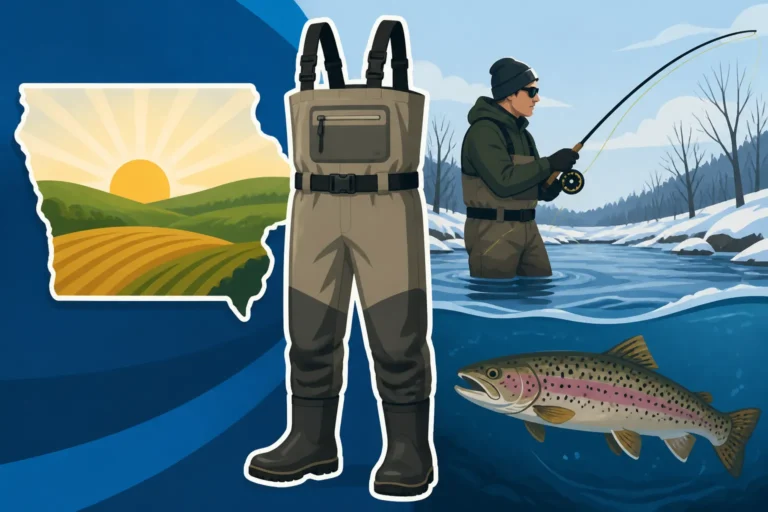
If you're going to truly experience Iowa's trout streams, you'll be wading. That means a good pair of waders and wading boots are essential. Breathable waders are typically preferred over neoprene, especially for warmer months or if you do a lot of hiking between spots, as they prevent overheating. They might cost a bit more up front, but the comfort is worth it. Wading boots, separate from the waders, provide crucial ankle support and grip on slippery streambeds. Felt soles offer excellent grip on slimy rocks, but rubber soles are often more durable and allowed in more places. Consider getting wading boots with good ankle support – it's a game-changer for navigating uneven terrain. Do You Need Waders for Iowa Trout Streams? covers this in more detail.
A landing net is another non-negotiable item, especially when practicing catch-and-release, which is common in Iowa's trout streams. A net with a rubber or silicone basket is ideal as it's gentler on the fish's delicate slime coat, prevents snags, and won't harm fins. It also helps you safely control a fish for a quick photo before release. Trying to land a slippery trout by hand, especially with a barbless hook, can be a frustrating experience for both you and the fish. Having a net makes the process smoother and safer for everyone involved.
Fly Boxes, Nippers, and Hemostats: Small Tools, Big Impact
You'll need a way to organize and carry your flies. Fly boxes come in various sizes and styles, from small pocket-sized ones for a quick trip to larger ones that can hold hundreds of patterns. Look for boxes that are durable, waterproof, and have good slit foam or magnetic compartments to keep your flies secure. A variety of boxes for different fly types (dry flies, nymphs, streamers) can be helpful.
Small tools like line nippers and hemostats (or forceps) are indispensable. Nippers, often attached to a lanyard or zinger on your vest, make quick work of trimming tag ends from knots, preventing you from fumbling with teeth or a knife. Hemostats are perfect for crimping barbs (a common practice for ethical catch-and-release and often required in special regulation areas), safely removing hooks from a fish's mouth, and even splitting shot. These tiny tools might seem insignificant, but you'll reach for them constantly throughout the day. You can find excellent value in multi-tool accessories that combine nippers, a knot-tying tool, and even a small hook sharpener at your local fly shop or online retailers like Bass Pro Shops.
Protecting Your Setup: Rod Cases and Reels Bags
Your fly rod and reel are investments, and protecting them during transport and storage is crucial. Most quality fly rods come with a fabric sock and a hard case (usually made of Cordura or aluminum). Always store your rod in its case when not in use to prevent accidental breakage. Even a small bump can damage a sensitive rod blank.
Fly reels, too, benefit from protection. Many come with a small neoprene pouch or a soft case. Keeping your reel in its bag, especially when it's attached to the rod in its case, prevents scratches and dings. When traveling, consider a larger rod and reel case that can hold your entire setup securely. This is especially important if you're flying or if your gear will be tossed around in a vehicle. Properly protected gear will last longer and perform better, saving you money and frustration in the long run.
Assembling and Maintaining Your Fly Rod Setup
Getting your gear ready the right way and keeping it in good shape are key to hassle-free fishing. A little attention to detail before and after each trip can significantly extend the life of your equipment and prevent annoying malfunctions on the water.
Step-by-Step Rod and Reel Assembly
Assembling your fly rod is straightforward once you know the steps. First, ensure each rod section is clean and free of grit; sand or dirt can damage the ferrules (the connection points between sections). Align the guides on each section as you push them together. Don't twist them too hard, but apply firm, steady pressure until they're snug. Once assembled, mount your reel. Most fly reels have a foot that slides into two rings on the rod grip. Tighten the rings securely so the reel doesn't wobble or come loose during casting.
Next, carefully pull your fly line off the reel through all the rod guides, starting from the closest one to the reel and working your way to the tip-top guide. Take your time to ensure the line isn't tangled around any guides. Once the line is threaded, you're ready to connect your leader using a loop-to-loop connection. This method is incredibly strong and allows for quick changes. Remember, a smoothly assembled rod ensures optimal casting performance and minimizes frustrating tangles or breakages.
Winding Your Fly Line and Backing
Properly spooling your fly line and backing onto the reel is more important than you might think. Start by tying your backing to the arbor (center spindle) of the reel using an arbor knot. Wind on the recommended amount of backing (usually 50-100 yards for trout). It's helpful to have a friend hold the spool of backing on a pencil or use a line winder to apply consistent tension. Then, connect your fly line to the backing using a strong knot like an Albright knot or a blood knot, or a loop-to-loop connection if your backing has a loop.
Finally, spool your fly line onto the reel, again applying consistent, moderate tension. The goal is to have the line lay evenly across the spool, without any humps or valleys. Don't overfill the reel; leave a small gap between the line and the reel cage to prevent line from catching or rubbing. If your line is wound too loosely, it can create frustrating "bird's nests" or "wind knots" when casting. A properly spooled reel ensures smooth line payout and retrieval, which is essential for effective fly fishing.
Post-Fishing Care and Storage Tips
After a rewarding day on Iowa's trout streams, a little post-fishing care goes a long way. If your rod or reel gets dirty or sandy, rinse them gently with fresh water and wipe them dry. Pay special attention to the reel's drag system to flush out any debris. Store your rod in its case, making sure it's completely dry to prevent mildew on the rod sock. If you plan to store your rod for an extended period, you might consider taking it apart and allowing each section to air dry fully.
Your fly line also benefits from occasional cleaning. Dirt, grime, and sunscreen can build up on the line, causing it to sink or stick to the guides, hindering casting performance. Use a specialized fly line cleaner or a mild soap and water solution, wiping the line down with a soft cloth. This restores the line's slickness and prolongs its life. By taking these simple steps, you'll ensure your fly rod setup is ready for your next adventure chasing Rainbow Trout Fishing in Iowa or exploring Trout Streams Near Decorah.
Brands and Where to Find Your Gear
Navigating the vast market of fly fishing gear can be a challenge. There are countless brands, from boutique custom builders to large manufacturers, all offering various levels of quality and price points. Knowing where to look and what to consider can save you both time and money.
Exploring Options at Local and Online Retailers
When it comes to purchasing your fly fishing setup, you have a few primary avenues: local fly shops, larger sporting goods stores, and online retailers. Local fly shops are invaluable resources. The staff are typically experienced anglers who can offer personalized advice, help you cast different rods, and recommend flies and techniques specific to Iowa's trout waters. They often host casting clinics and have a deep understanding of local conditions, like which Trout Streams in Northeast Iowa are fishing well. Supporting these shops also helps foster the local fly fishing community.
Larger sporting goods stores, such as Bass Pro Shops, also carry a wide range of fly fishing gear. They might not have the same hyper-local expertise as a dedicated fly shop, but they often have competitive pricing and a broad selection, making it easy to compare different brands side-by-side. For sheer convenience and competitive prices, online retailers like Amazon offer an enormous selection. However, the downside is you can't physically hold the rod or get tailored advice, which can be a significant drawback, especially for a beginner trying to find the right "feel."
Considerations for Budget-Friendly vs. Premium Gear
Fly fishing gear, like any hobby equipment, ranges dramatically in price. You can find entry-level combos for a few hundred dollars, and high-end rods and reels can cost thousands. For beginners or those on a budget, many brands offer excellent value in their mid-range or entry-level combos. These often include a rod, reel, line, and backing, providing a complete, ready-to-fish setup. You might not get the lightest, most sensitive rod, but it will be perfectly capable of catching Iowa trout and teaching you the fundamentals.
As you gain experience, you might choose to upgrade individual components. A premium rod might offer enhanced sensitivity, lighter weight, and improved casting performance, making long days on the water more enjoyable. A high-end reel might have a smoother, more durable drag system. However, for most anglers pursuing Iowa trout, a mid-range setup provides an excellent balance of performance and value. Don't feel pressured to buy the most expensive gear; focus on quality and functionality that matches your skill level and fishing goals.
The Value of Expert Advice at Your Local Fly Shop
I can't stress enough the benefit of visiting a local fly shop if you have one nearby. Beyond just buying gear, these shops are hubs of knowledge and community. The staff often spend their days off on the very streams you'll be fishing and can give you up-to-the-minute reports on hatches, water levels, and the best fly patterns. They can recommend the exact Best Fly Patterns for Iowa Trout Streams that are working right now and even show you how to tie specific knots or refine your casting stroke.
Think of it as investing in your education as an angler, not just buying a product. The advice you get from a seasoned local expert is often worth far more than any discount you might find online. They can help you troubleshoot issues, suggest specific locations like optimal spots within Trout Streams Near Decorah, and guide you in choosing the perfect Best Fly Rod Weight for Small Streams if you frequent those tight, brushy spots. This personal connection and localized knowledge are invaluable assets for any fly angler in Iowa.
Disclaimer
This article is for general informational purposes only and does not constitute professional advice. Laws, prices and regulations vary by location and change over time. Consult a qualified professional for guidance on your specific situation.