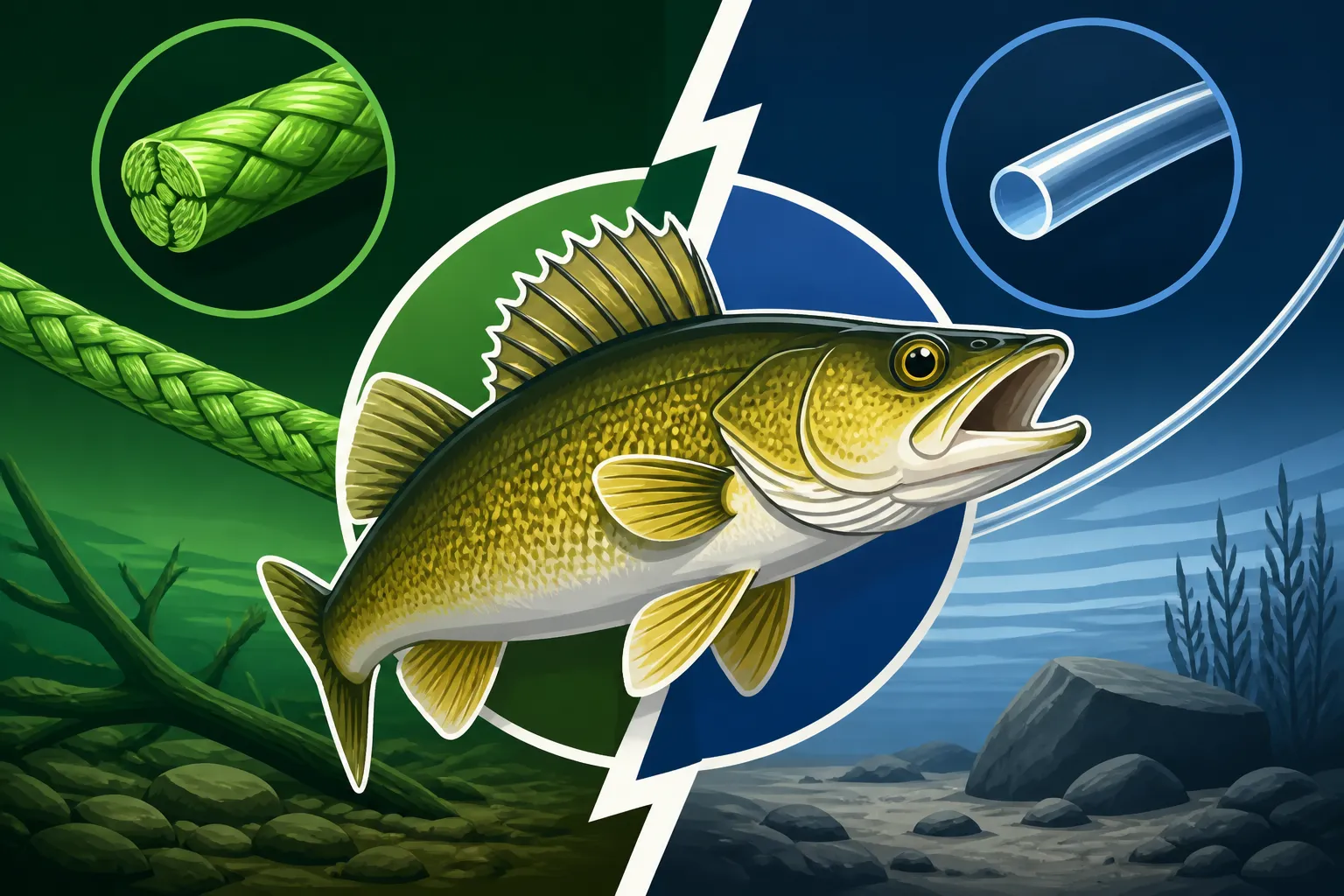
Braided Line vs Monofilament for Walleye
The question of what fishing line to spool onto your reel for walleye fishing in Iowa can feel like a real head-scratcher. Every angler has their favorite, and the debates can get lively! You're trying to figure out if you should stick with the tried-and-true monofilament or jump on the braided line bandwagon, and it's tough when you just want to know what's best for landing those elusive Iowa walleye. This guide is here to untangle that knot, breaking down the pros and cons of braided versus monofilament line so you can make an informed choice for your next fishing adventure.
The Classic Choice: Monofilament Fishing Line
Monofilament line, often just called "mono," has been a staple in tackle boxes for generations, and for good reason. It's the line many of us learned to fish with, a true workhorse that has brought countless fish to the net. But just like anything, it has its strengths and weaknesses, especially when you're targeting a savvy fish like the walleye in Iowa's diverse waters.
Understanding Monofilament's Characteristics
What makes monofilament, well, monofilament? At its core, it's a single strand of nylon extruded in a continuous filament. This manufacturing process gives it a very specific set of characteristics that impact how it performs on the water. The most notable trait is its stretch. Mono can stretch quite a bit under pressure, often 10-25% of its length. This stretch acts like a shock absorber, helping to prevent hooks from tearing out of a fish's mouth, especially when a big walleye makes a sudden lunge at the boat.
Another key characteristic is its knot strength. Monofilament typically forms very strong, reliable knots. If you're someone who values simplicity and dependable connections, mono is often quite forgiving. However, it does have what anglers call "memory." If you leave it spooled on your reel for a long time, it tends to retain the shape of the spool, leading to coils and kinks that can impact casting distance and create tangles. Its visibility in the water can also be a factor; clear or low-visibility green lines are popular, but the line itself is generally more visible than fine braided lines.
Advantages of Monofilament for Walleye Anglers
So, why would an Iowa walleye angler still choose monofilament today, with so many other options available? Several reasons make it a compelling choice. First off, mono is generally more cost-effective. You can spool up multiple reels for the price of one spool of high-end braided line, which is a big plus for budget-conscious anglers or those who like to have a variety of setups ready. You can often find great deals on quality monofilament at places like Bass Pro Shops or even when browsing online through Amazon.
That inherent stretch we talked about is a double-edged sword, but it's definitely an advantage in certain situations. When a walleye hits a lure aggressively, that stretch can absorb the impact, preventing the line from snapping or the hook from pulling free. This cushioning effect is especially valuable when trolling with crankbaits where there's constant pressure on the line and you don't want to rip the lure out of a fish's mouth too easily. It also allows for a bit more forgiveness if your drag isn't perfectly set.
Furthermore, mono is notoriously easy to handle. It's less prone to wind knots than braid, it's simpler to tie, and it lays nicely on the spool. For beginners or those who prefer a more traditional feel, monofilament offers a comfortable and familiar fishing experience. It's also less likely to damage rod guides over time compared to some of the tougher braided lines.
Disadvantages and When Monofilament Falls Short
Despite its advantages, monofilament isn't without its drawbacks, especially when you're trying to coax a subtle bite from a finicky walleye. The biggest complaint often revolves around its stretch and memory. While stretch can be a benefit, it significantly reduces sensitivity. Imagine fishing in 25 feet of water on Saylorville Reservoir; a walleye might just "mouth" your jig, and that slight tap can be completely lost in the line's stretch. You might not even know you had a bite until you reel in to check your bait. This lack of direct feel can be incredibly frustrating when walleye are being particularly light biters, which, let's be honest, is a common scenario in Iowa.
The line memory, those annoying coils, can lead to less-than-optimal casting distance and increased tangles, particularly if you're using lighter tackle or casting small jigs. If you're doing a lot of bank fishing, trying to reach a specific submerged structure, every extra foot of casting distance matters.
Lastly, monofilament is susceptible to UV degradation over time, meaning it weakens with exposure to sunlight. It also tends to absorb water, which can temporarily reduce its strength and increase stretch. For the serious walleye angler who spends countless hours on the water, this means more frequent re-spooling compared to other line types. It’s also generally less abrasion-resistant than braided line, which can be a concern when fishing around rocky bottoms or submerged timber in places like the Mississippi River.
The Modern Powerhouse: Braided Fishing Line
Braided line has revolutionized fishing for many anglers, and walleye enthusiasts are certainly among them. It's a completely different animal from monofilament, made by weaving multiple strands of synthetic fibers together. This construction gives it a set of characteristics that are almost the polar opposite of mono, making it incredibly effective for certain walleye techniques.
Exploring Braided Line's Unique Properties
The most defining characteristic of braided line is its near-zero stretch. When a walleye inhales your bait, you feel it instantly. This direct connection transmits even the faintest tap straight to your hands, which can be a game-changer when bites are subtle or when fishing deep water. This lack of stretch also means more solid hooksets, as energy isn't absorbed by the line.
Another remarkable property is its incredible strength-to-diameter ratio. A 10-pound test braided line is often much thinner than a 10-pound test monofilament line. This thinner diameter offers several advantages: it cuts through the water more efficiently, reducing drag, and it allows you to spool more line onto your reel, which is great for long casts or deep-water presentations. Its construction also makes it incredibly abrasion-resistant. If you're fishing around zebra mussel-encrusted rocks or sharp stumps in a reservoir like Rathbun Lake, braided line can often withstand the abuse that would fray monofilament.
The Benefits of Braided Line for Iowa Walleye
For walleye anglers in Iowa, braided line offers some undeniable advantages that can significantly improve your success rate. The enhanced sensitivity is often cited as the biggest benefit. Imagine you're jigging for walleye on a calm day on Clear Lake; with braid, you'll feel every bump, every rock, and most importantly, every soft take from a walleye. This immediate feedback allows you to react faster, leading to more hookups, especially during those notoriously finicky bites that walleye are famous for.
Its thin diameter and slick surface also lead to incredibly long casting distances. If you need to reach that distant weed edge or deep drop-off from shore or boat, braid helps your lure fly farther with less effort. This is particularly useful when you need to cover a lot of water. The superior strength of braided line also means you can often use a lighter test line than you would with mono, further enhancing casting and sensitivity without sacrificing the power needed to battle a trophy walleye. For deeper applications, like vertically jigging or using heavy bottom bouncers, braid helps your lure get to the strike zone faster and stay there with less current resistance. It also cuts through weeds much better than mono, which can save you a lot of grief when fishing around vegetation.
Overcoming Braided Line's Challenges
While braided line offers many advantages, it also comes with its own set of challenges that can frustrate anglers if not addressed properly. One of the most common issues is its visibility in the water. Braided lines are often brightly colored (green, yellow, red), making them highly visible to fish, especially in clear water like some of Iowa's natural lakes. Walleye are known for being wary, so this can sometimes deter bites. The common solution, which we'll dive into more later, is to use a Braided Mainline with Fluorocarbon Leader Setup. Fluorocarbon is virtually invisible underwater, offering a stealthy presentation while still enjoying the benefits of braid for your main line.
Another hurdle is knot tying. Because braid is so slick and thin, not all knots hold well. Knots that work perfectly with mono might slip with braid. You'll need to learn specific knots designed for braided line, like the Palomar knot or the double Uni knot, to ensure secure connections. Furthermore, the cost of braided line can be a deterrent. It's generally more expensive per spool than monofilament. However, many anglers argue that its durability and longevity balance out the initial investment, as you don't need to replace it as often.
Finally, braid can sometimes "dig in" on your reel spool, especially after a hard fight or a snag. This means the line can bury itself under other wraps, leading to snags or poor casting on subsequent casts. Proper spooling and tension are key to minimizing this issue.
Walleye Fishing Techniques: Line Selection in Action
The "best" line isn't always about one being inherently better; it's often about matching the line to the specific technique you're employing. For walleye, who can be caught in countless ways across Iowa, understanding how line choice impacts your presentation is crucial.
Jigging and Live Bait Rigs: Feeling the Finesse
When it comes to jigging for walleye, whether it's snapping jigs on the Mississippi River or slowly dragging them along the bottom of a lake, sensitivity is absolutely paramount. Walleye often don't smash a jig; they'll just inhale it softly, making it feel like a subtle "tick" or simply a sudden heaviness on your line. This is where braided line shines. Its near-zero stretch transmits those delicate bites directly to your rod tip and hands. You'll feel things you'd never detect with monofilament, giving you precious extra seconds to set the hook. For jigging, especially in deeper water or strong current, braid is often the go-to choice for seasoned walleye anglers.
Similarly, when fishing with live bait rigs, like slip sinker rigs or How to Rig a Crawler Harness for Walleye, that sensitivity can make all the difference. You want to feel every movement of your minnow or crawler, and more importantly, the moment a walleye picks it up. While monofilament is still used by many for these techniques, particularly when fishing closer to shore or in shallower water, the advantage of braid for detecting light bites in challenging conditions is hard to ignore. For finesse techniques, the ability to "read" the bottom and feel your bait is heightened significantly with braid.
Trolling and Crankbaits: Managing Depth and Stretch
Trolling with crankbaits is a popular and effective way to cover water and find active walleye in Iowa's larger lakes and reservoirs like Rathbun Lake or Coralville Reservoir. Here, the choice between braid and mono can depend heavily on your desired lure depth and how you like to fish. Monofilament's stretch actually plays a beneficial role when trolling. The inherent elasticity helps to absorb the sudden shock of a walleye strike, often preventing the fish from ripping the hooks out of its mouth during the initial powerful run. It also allows for a bit of forgiveness if you hit a snag, as the stretch can provide a slight buffer before something breaks.
However, the stretch in monofilament can also affect how deep your crankbait runs. Line diameter and type play a huge role in How Deep to Fish for Walleye in Spring and other seasons. Braided line, with its thinner diameter and lack of stretch, allows crankbaits to run deeper on the same amount of line compared to monofilament. This is a significant advantage when you're trying to reach walleye holding in specific deep zones. With braid, you also get a more direct "feel" of your lure's action and any subtle changes in retrieve or bottom contact. Many experienced trollers will use braid for their main line and then add a short monofilament or fluorocarbon leader to absorb shock and provide stealth. If you're wondering about speeds, check out our guide on Best Trolling Speed for Walleye.
Slip Bobber and Bank Fishing: Practical Considerations
Slip bobber fishing is a fantastic way to present live bait at a precise depth, whether you're targeting walleye near weed lines or over submerged structure. When using slip bobbers, monofilament often has an edge due to how easily a bobber stop slides over its smooth surface. Braided line, being rougher, can sometimes cause bobber stops to slip or get chewed up more quickly. The visibility of braid can also be a concern when presenting bait under a bobber in clear water.
For Shore Fishing Techniques for Beginners, both lines have their place. Monofilament is often more forgiving for new anglers dueosing, as it's less prone to wind knots. Its stretch can also help cushion unexpected snags or provide a little extra give if you're not used to playing fish from the bank. However, if you need to make incredibly long casts to reach distant drop-offs or combat heavy winds, the thinner diameter and lower memory of braided line can give you a significant advantage in distance and accuracy. Additionally, if you're fishing in areas with heavy cover or potential snags, the superior abrasion resistance of braid can mean fewer lost rigs.
Making the Right Choice: Factors to Consider
Deciding between braided and monofilament line for walleye fishing isn't just about what's "better" in a vacuum; it's about what's best for your specific fishing situation, your gear, and your personal style. A few key factors should guide your decision.
Water Conditions and Environment
The conditions of the water you're fishing in Iowa play a huge role in line selection. If you're fishing in exceptionally clear lakes, like some of the Iowa Great Lakes, where walleye can be incredibly line-shy, the visibility of your line becomes a major factor. In such scenarios, opting for a clear monofilament or using a fluorocarbon leader with braided line is often crucial. The lower visibility of these lines can lead to more bites from wary walleye.
Conversely, if you're fishing murky, stained rivers like sections of the Des Moines or Skunk River, where visibility is already low, the color of your line matters less. Here, the strength and abrasion resistance of braided line might be more beneficial, especially if you're fishing around rocky bottoms, log jams, or other abrasive structures. Braided line can handle the constant rubbing against rough surfaces better than monofilament. Walleye Fishing Techniques for Iowa Rivers often lean towards lines that can stand up to current and structure. The type of cover also matters: braid excels at cutting through dense weeds, while mono can get tangled more easily.
Your Rod, Reel, and Fishing Style
Your existing gear and how you prefer to fish should definitely influence your line choice. If you're using a fast-action rod with a lot of backbone, designed for detecting subtle bites, pairing it with a high-sensitivity braided line makes perfect sense. The rod and line work together to transmit even the slightest tap. On the other hand, if you're using a more moderate-action rod, often favored for trolling or handling aggressive strikes, the stretch of monofilament might complement that rod action perfectly, providing a smoother fight. Our Fishing Rod and Reel Guide for Iowa Anglers offers more insights into matching your gear.
Reel choice is also important. Some older or less expensive spinning reels might struggle to lay thin braided line perfectly, leading to tangles or wind knots. Modern reels are generally designed to handle braid well. Consider the reel's line capacity; because braid is thinner, you can spool on much more of it, which is great if you anticipate long runs or need extra line for deep-water techniques. Ultimately, your personal fishing style is key. Do you prefer maximum feel and direct hooksets? Braid. Do you value shock absorption and easy handling? Mono.
Cost and Maintenance
Let's be realistic about budgets and upkeep. Monofilament is almost always the more economical choice upfront. You can buy larger spools for less money, allowing you to re-spool more frequently without breaking the bank. This frequent re-spooling is often necessary because mono degrades over time from UV exposure and can develop memory.
Braided line, while pricier to buy initially, tends to last much longer on the reel. It doesn't degrade from UV light in the same way, and its strength is incredibly durable. Many anglers find they can leave braid on their reel for several seasons, only needing to replace leaders or snip off a few feet of line if it gets frayed. So, while the initial cost is higher, the long-term value can be quite good. Consider how often you fish and how much you're willing to spend on maintenance when making your decision.
Hybrid Approaches: The Best of Both Worlds
For many serious walleye anglers, the answer isn't a strict "either/or" between braided and monofilament. Instead, it's about combining the strengths of both to create a hybrid setup that maximizes advantages while minimizing drawbacks. This is where the concept of a leader really comes into play.
The Braided Mainline with Fluorocarbon Leader Setup
This is arguably the most popular and effective line setup for walleye fishing in a wide array of Iowa waters. The core idea is simple: you spool your reel with braided line as your main line, and then you tie a section of fluorocarbon line to the end of it as a leader.
Why this combination? It's a powerhouse for walleye. You get all the incredible benefits of braided line for your main line:
- Superior Sensitivity: You still feel those subtle walleye bites instantly, thanks to the braid's near-zero stretch.
- Exceptional Strength: The braid gives you the power to pull fish out of cover and make strong, confident hooksets.
- Long Casting: The thin diameter of braid ensures maximum casting distance, which is often crucial.
Then, the fluorocarbon leader addresses braid's primary weakness: visibility. Fluorocarbon is renowned for being almost invisible underwater because its refractive index is very close to that of water. This means even the most cautious walleye are less likely to spot your line and shy away from your bait. Fluorocarbon also offers excellent abrasion resistance, which is a bonus when fishing around sharp rocks or zebra mussels. It has a bit of stretch, too, offering a slight shock absorber close to your lure without compromising the overall sensitivity of your main line.
The length of your leader can vary, but generally, 3-6 feet is a good starting point. You'll need to learn a reliable knot to join the braid to the fluorocarbon, such as the FG knot, Alberto knot, or a modified Albright knot. Mastering this connection is key to making this setup work flawlessly. If you’re looking for Best Live Bait for Iowa Walleye, pairing it with a fluoro leader can definitely increase your chances.
When to Opt for a Full Monofilament or Braided Spool
While the braid-to-fluoro leader setup is incredibly versatile, there are still situations where a full spool of either monofilament or braided line might be the best option for simplicity or specific performance needs.
Full Monofilament Spool:
- Trolling: For those who prefer the shock-absorbing properties of mono for trolling crankbaits, a full spool can be ideal. It provides a consistent depth factor and forgiveness on aggressive strikes.
- Beginner Anglers: For newcomers to walleye fishing, mono is easier to handle, less prone to wind knots, and more forgiving if drag settings aren't perfect. It's a great choice to get started without the complexities of leader knots.
- Specific Live Bait Rigs: Sometimes, for very light split-shot rigs or when using a simple slip bobber setup where the bobber stop needs to slide very freely, mono's smooth texture can be preferred.
Full Braided Spool:
- Heavy Cover/Snagging: If you're fishing extremely dense cover or areas prone to constant snags, like thick weed beds or heavy timber, the sheer cutting power and abrasion resistance of a full braid spool can be an advantage. You can sometimes cut through minor snags that would break other lines.
- Night Fishing: When visibility is already zero, the "invisible" aspect of a fluorocarbon leader becomes less critical. A full braid spool gives you maximum sensitivity to feel those subtle night bites.
- Vertical Jigging in Deep Water: For pure vertical presentations in deep water, where you're focused solely on feeling the bottom and subtle bites, a full braid spool offers the most direct connection possible.
Ultimately, understanding the strengths and weaknesses of each line type allows you to adapt your approach to the specific conditions and techniques you're using. There's no single "right" answer for all Iowa walleye fishing, but by combining knowledge with practical experience, you'll be well on your way to more successful outings.
| Feature | Monofilament (Mono) | Braided Line (Braid) | Ideal Walleye Scenario |
|---|---|---|---|
| Stretch | High (10-25%) | Near zero | Trolling, absorbing aggressive strikes |
| Sensitivity | Low | Very High | Jigging, detecting light bites in deep water |
| Visibility | Medium (can be clear/low-vis) | High (often bright colors) | Clear water, wary fish (use clear mono or fluoro leader) |
| Abrasion Resistance | Moderate | High | Rocky bottoms, heavy cover, zebra mussels |
| Knot Strength | Good, easy to tie common knots | Excellent, but requires specific knots | Simple setups, quick re-ties |
| Memory | High (prone to coiling) | Low | Less tangles, longer casts |
| Diameter (for same test) | Thicker | Thinner | Reaching deeper, less current resistance |
| Cost | Lower | Higher | Budget-friendly, frequent re-spooling |
| Casting Distance | Good, but affected by memory | Excellent (thin, slick) | Long casts from shore or boat |
| Shock Absorption | Excellent | Minimal | Protecting light leaders, preventing hook tears |
| UV Resistance | Poor (degrades over time) | Excellent | Line longevity, less frequent replacement |
Disclaimer
This article is for general informational purposes only and does not constitute professional advice. Laws, prices and regulations vary by location and change over time. Consult a qualified professional for guidance on your specific situation.