What Crappie Eat
Anyone who's spent a chilly morning on an Iowa lake, jigging for crappie, knows the frustration: one day they're biting everything you throw at them, the next they seem to vanish, completely uninterested. It's enough to make you scratch your head and wonder what on earth these elusive panfish are actually looking for! The truth is, crappie, like most fish, are creatures of habit and opportunity, and what they eat changes with the seasons, water conditions, and even their size. This guide is all about peeling back the curtain on the crappie's dining habits in Iowa, so you can better understand their preferences and, hopefully, fill your cooler more consistently.
The Crappie's Natural Diet Throughout the Seasons in Iowa
Understanding what crappie eat isn't just about listing a menu; it's about recognizing how their diet shifts with the changing seasons in Iowa. Their metabolism, available forage, and preferred depths all play a significant role in what ends up on their plate, or rather, in their mouths!
Springtime Feasting: Pre-spawn and Spawn Periods
As the ice finally melts and the water temperatures slowly climb from the frigid winter lows, crappie start to awaken from their sluggish state. This is often a time of intense feeding, as they need to build up energy reserves for the upcoming spawn. Initially, in those cooler waters, their diet consists primarily of easily digestible, slow-moving prey.
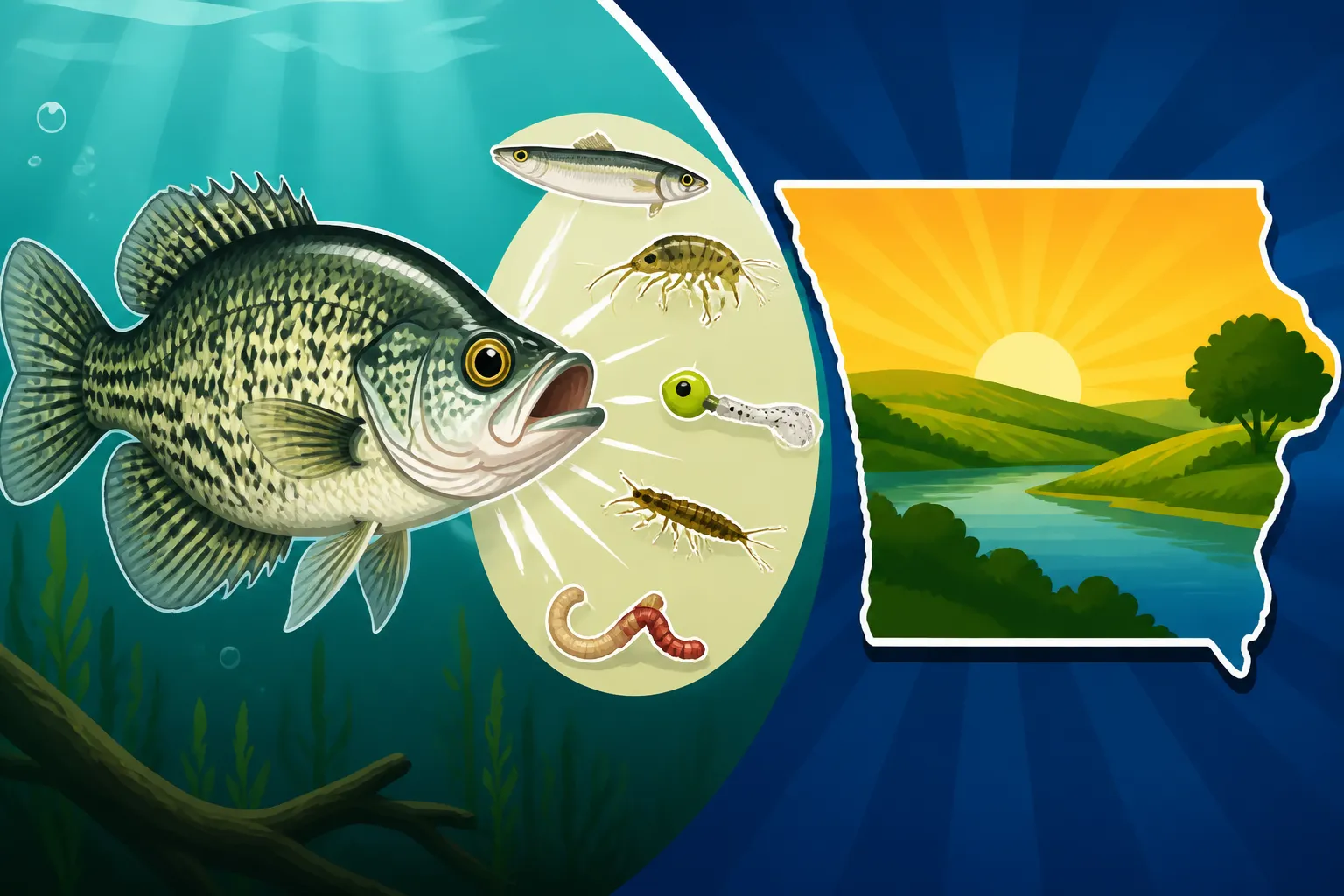
You'll find them gorging on abundant insect larvae, which have been dormant under the ice or are just starting to emerge. Small crustaceans, like scuds and freshwater shrimp, are also high on the list, providing a protein-rich snack. As the water warms further and they move into shallower spawning areas, their focus might shift slightly to anything small and vulnerable, including tiny baitfish that are also moving into the warmer, protected zones. It's a period of opportunity, and they'll take advantage of whatever is most readily available and requires the least amount of energy to catch. Think of it as their pre-game meal, where they're not too picky but certainly prioritize nutritious options. Spring Fishing in Iowa offers more insights into this exciting time.
Summer Sustenance: When the Water Warms Up
Iowa summers bring higher water temperatures, which means crappie's metabolism kicks into high gear. They become much more active and, consequently, hungrier. While they'll still consume insects and crustaceans, their diet often expands to include larger, more mobile prey, particularly small baitfish. Think of young-of-the-year shad, minnows, and even the fry of other panfish like bluegill or sunfish.
During the warmer months, crappie tend to seek out deeper, cooler water, often congregating around submerged timber, brush piles, weed lines, and bridge pilings. These structures not only offer them protection from predators but also attract vast schools of baitfish, creating a perfect hunting ground. The warmer water also means a higher concentration of zooplankton, which continues to be a vital food source, especially for smaller crappie. It's a time of growth, and they need plenty of calories to sustain their energy and put on weight. If you're looking for Crappie and Sunfish Limits in Iowa, be sure to check the regulations for your specific lake or river.
Fall Foraging: Building Reserves
As summer wanes and the air cools, signaling the approach of winter, crappie enter another critical feeding period. Much like in spring, they need to bulk up to survive the lean months ahead. This means an intensified focus on high-calorie prey, and small baitfish become their absolute priority.
Crappie will actively chase down schools of shad and minnows, often ambushing them near drop-offs, submerged humps, or the edges of deeper channels. They become quite aggressive during this time, making them a fantastic target for anglers. The cooler water also means less insect activity, so while insects and crustaceans are still part of their diet, they take a backseat to the more substantial meals offered by baitfish. It's a race against time to pack on enough fat before the water temperatures plummet and their metabolism slows down dramatically. You might find great success around Rathbun Lake Crappie Hotspots during this period.
Winter Bites: Slow and Steady
Winter fishing in Iowa, particularly ice fishing, presents a unique challenge when it comes to understanding crappie diet. Their metabolism slows considerably, and they become much less active. They don't need as much food, and they're certainly not going to expend a lot of energy chasing down a meal.
During the cold months, crappie's diet shifts to whatever is easiest to catch and requires minimal effort. This often means relying heavily on zooplankton, which can still be found suspended in the water column, albeit in reduced numbers. Tiny insect larvae that persist under the ice, and very small, sluggish minnows, also become important. They tend to school tightly in deeper basins or near prominent submerged structures, conserving energy. Ice Fishing in Iowa requires patience and a subtle approach, as crappie bites can be incredibly light during this time. The key is to offer small, slow-moving baits that mimic these natural, easy meals.
What Crappie Eat: Common Forage Species in Iowa Waters
Let's get down to the nitty-gritty of the specific foods that make up a crappie's diet in Iowa. While they are opportunistic feeders, there are definitely preferred snacks they're always on the lookout for.
Aquatic Insects and Larvae
Believe it or not, these tiny creatures form a substantial part of a crappie's diet, especially for younger fish and during certain times of the year when other forage is less abundant. Crappie will actively "graze" on insect larvae clinging to submerged vegetation or structures. Think of the larval stages of mayflies, caddisflies, and dragonflies – these are readily available and provide a good source of protein.
When these insects hatch and emerge, crappie will also rise in the water column to feed on them. This is particularly noticeable during evening hatches when the surface might be dimpled with rising fish. Even the smallest crappie rely heavily on these insect meals to fuel their initial growth. Understanding the insect life cycle in your local lake or river can give you a significant advantage, as it tells you what natural food sources are present and what kind of artificial bait might mimic them best.
Crustaceans and Zooplankton
This category is often overlooked by anglers, but it's absolutely vital, especially for juvenile crappie. Zooplankton are microscopic animals that drift in the water column, and they are the primary food source for crappie fry and young crappie. As crappie grow, they still consume zooplankton, particularly when larger forage is scarce or when their metabolism is slowed (like in winter).
Larger crustaceans like scuds (freshwater shrimp) and even small crayfish (though less common for crappie than bass) also find their way onto the crappie menu. These provide a dense, nutritious meal that's relatively easy to catch. You might not be "matching the hatch" with zooplankton on your hook, but knowing they're a key part of the food chain helps you understand why crappie might be in certain areas where plankton congregates, such as over deep flats or along weed lines.
Small Baitfish and Minnows
Ah, the "meat and potatoes" for adult crappie! Once crappie reach a certain size, usually around 6-8 inches, they become much more predatory, and small baitfish become their preferred meal. This is where they start to put on significant weight and grow into those slab crappie we all dream about catching.
In Iowa, this often means species like gizzard shad, emerald shiners, fathead minnows, and the fry or small juveniles of other panfish, like bluegill or small sunfish. Crappie are ambush predators, often hiding in submerged cover like brush piles, fallen trees, or dense weed beds, waiting for schools of baitfish to swim by. They'll then dart out, engulfing as many as they can. Their diet of small baitfish is why live minnows are such a consistently effective bait, and why so many artificial lures are designed to imitate these tiny forage fish. The presence of these baitfish schools is a huge indicator of where the crappie will be.
Opportunistic Feeds
Crappie are not picky eaters when the opportunity arises. Beyond their regular diet, they will also opportunistically feed on whatever is available and easy to consume. This can include:
- Fish Eggs: During the spawn of other species, crappie won't hesitate to gorge on unguarded fish eggs.
- Small Worms/Larvae: Anything resembling a small worm or grub that falls into the water or is found in vegetation might be fair game.
- Decaying Matter: While not a primary diet, they will sometimes pick at organic debris if food is extremely scarce, though this is less common for healthy fish.
This opportunistic nature is why sometimes you can catch crappie on baits intended for other species, or on something completely unexpected. It's all about being in the right place at the right time with something that looks appealing.
How Understanding Crappie Diet Can Improve Your Fishing Success
Knowing what crappie eat isn't just a fun fact; it's a fundamental pillar of successful crappie fishing. When you align your tactics with their natural feeding behaviors, you dramatically increase your chances of a productive day on the water.
Matching the Hatch: Choosing the Right Baits and Lures
This is where the rubber meets the road. If crappie are primarily feeding on zooplankton and tiny insects, a large crankbait isn't going to cut it. Conversely, if they're hammering schools of shad, a microscopic jig might be too small to grab their attention.
- Mimicking Insects and Crustaceans: For those times when crappie are focused on smaller invertebrates, think tiny jigs, particularly those under 1/16 oz. Soft plastics that imitate a grub, worm, or insect larva are excellent choices. Amazon has a fantastic selection of micro-jigs and small plastic baits in various colors that can perfectly mimic these natural food sources. Fly anglers can also excel here, using small nymph patterns or wet flies.
- Imitating Baitfish: When crappie are on the hunt for minnows and shad, your lure selection should reflect that. Live minnows are, of course, a classic and highly effective option. For artificials, consider small jigs dressed with plastic minnow bodies, tube jigs, small spinnerbaits, or even tiny crankbaits that mimic a struggling baitfish. Colors that match natural baitfish (silver, white, clear with flecks) are often best, but don't be afraid to experiment with brighter "attractor" colors, especially in stained water. The Best Lures for Panfish often cross over into crappie territory.
The goal is to present something that looks, moves, and even feels like what they're already eating. Don't be afraid to change baits frequently if you're not getting bites; the crappie might just be telling you they want something different on the menu.
Locating Crappie Based on Their Food Sources
Fish don't just swim around aimlessly; they go where the food is. By understanding what crappie eat, you can make educated guesses about where they'll be hiding.
- Shallow Vegetation in Spring: In early spring, when crappie are gorging on insect larvae and emerging insects, look for them around shallow weed beds, lily pad fields, or brushy shoreline cover. These areas are teeming with invertebrate life.
- Deep Structures and Baitfish Schools in Summer/Fall: As waters warm, crappie will follow baitfish into deeper water. Use your fish finder to locate schools of baitfish, and you're likely to find crappie nearby. Look for submerged timber, brush piles, rock piles, creek channels, and even bridge pilings. These spots provide cover for both crappie and their prey. Fishing near these structures, especially on the sunny side where baitfish might warm up, can be incredibly productive. Fish Finders and Electronics for Iowa Anglers can be a game-changer for finding these hidden hotspots.
- Deep Basins in Winter: Under the ice, crappie often suspend over the deepest basins of a lake or reservoir, or hold tight to the deepest parts of submerged structures. Zooplankton and tiny minnows are often found in these areas, making them prime winter feeding grounds. They're conserving energy, so they're not going to roam far for a meal.
Thinking like a crappie, and anticipating where their food will be, is a much more efficient strategy than simply casting randomly.
Seasonal Adjustments for Bait and Presentation
Finally, it's crucial to adapt your bait presentation to the season, reflecting how crappie are feeding during that time of year.
| Season | Primary Forage | Recommended Bait/Lure (General) | Presentation Strategy |
|---|---|---|---|
| Spring | Insect larvae, crustaceans, small baitfish | Small jigs, soft plastics (grubs, worms), small minnows | Slow retrieve, vertical jigging, near shallow cover |
| Summer | Baitfish, larger insects, crustaceans | Live minnows, small crankbaits, spinnerbaits, jigs | Varying retrieve speeds, target deep cover, suspended fish |
| Fall | Baitfish (heavy focus) | Live minnows, larger jigs, small crankbaits | Aggressive jigging, trolling, target schools of bait |
| Winter | Zooplankton, tiny minnows, larvae | Micro jigs, small plastic baits, waxworms, tiny minnows | Very slow, subtle jigging, vertical presentation under ice |
In spring, with cooler water, crappie are often sluggish. A slow, subtle presentation is key. Let your jig sit still for a moment, then just barely twitch it. In summer, they might be more aggressive, so a slightly faster retrieve or a jigging motion can trigger strikes. Trolling for Crappie in Iowa can be especially effective during summer and fall when they're chasing baitfish in open water. Come fall, they're often actively chasing, so don't be afraid to speed up your retrieve or twitch your jig more forcefully. And in winter, it's back to extreme subtlety – tiny baits, minimal movement, and absolute patience are required. Understanding How to Catch Crappie in Iowa means mastering these seasonal nuances.
By taking the time to understand the nuances of what crappie eat throughout the year in Iowa, you’re not just increasing your chances of catching fish; you’re becoming a more informed and adaptable angler. It’s about more than just throwing a line in; it’s about engaging with the entire ecosystem of the water you’re fishing. Happy crappie fishing!
Disclaimer
This article is for general informational purposes only and does not constitute professional advice. Laws, prices and regulations vary by location and change over time. Consult a qualified professional for guidance on your specific situation.