What to Wear Ice Fishing in Iowa
Iowa winters can be brutal, and stepping out onto the ice for a day of fishing without the right clothing is a surefire way to cut your trip short, or worse, put your safety at risk. The biting wind, relentless cold, and sometimes unexpected slush or even a tumble into frigid water demand a strategic approach to what you wear. This guide is all about helping you understand how to dress effectively for a successful, warm, and safe ice fishing adventure across Iowa's frozen lakes and rivers.
The Core Principle: Layering for Iowa's Winter Extremes
When you're out on the ice, especially in Iowa where temperatures can swing wildly and wind chills can plunge, simply throwing on a big, thick coat isn't enough. The secret to staying warm and comfortable, no matter the conditions, lies in understanding and utilizing the power of layering. This isn't just about adding more clothes; it's about adding the right clothes in the right order, creating a personal climate control system that adapts to your activity level and the changing weather.
Understanding the "Base, Mid, Outer" System
Think of your ice fishing attire in three distinct layers: the base layer, the mid-layer, and the outer layer. Each plays a crucial, interconnected role in keeping you warm, dry, and protected.
- The Base Layer (Wicking Away Moisture): This is your first line of defense against the cold, and arguably the most important. Its primary job isn't insulation, but rather to wick moisture (sweat) away from your skin. When you're active — drilling holes, setting up your shelter, or walking to your spot — you're going to sweat, even in freezing temperatures. If that sweat stays on your skin, it will cool rapidly and make you feel much colder, leading to hypothermia risks. Materials like merino wool or synthetic fabrics (polyester, polypropylene) are excellent choices because they move moisture away from your body and dry quickly. Avoid cotton at all costs here! Cotton absorbs moisture and holds it against your skin, turning into a cold, clammy sponge that robs you of warmth. It's a common mistake that can ruin an otherwise perfect day on the ice. You can find excellent base layers from a variety of reputable brands, and even places like Amazon offer a wide selection with helpful reviews to guide your choice.
- The Mid-Layer (Providing Insulation): This is where the bulk of your warmth comes from. The mid-layer traps air close to your body, creating an insulating barrier against the cold. You might wear one or multiple mid-layers depending on how cold it is and how active you plan to be. Fleece jackets and pants are popular choices for their warmth-to-weight ratio and breathability. Down vests or jackets, or synthetic insulated jackets, also work wonderfully. The key is to have layers that you can easily add or remove. If you're busting through a foot of ice with an auger, you might shed a mid-layer to avoid sweating, then put it back on when you settle down to fish. This flexibility is what makes layering so effective for Ice Fishing in Iowa.
- The Outer Layer (Protection from Elements): Your outermost layer is your shield against the harsh Iowa elements: wind, snow, sleet, and even slush. It needs to be waterproof and windproof to prevent these elements from penetrating your inner layers and stealing your warmth. Many dedicated ice fishing suits are designed with these features in mind, often offering a combination of warmth and durability. A good outer layer should also be breathable enough to allow some moisture vapor to escape, further preventing sweat buildup.
Prioritizing Moisture-Wicking and Insulation
Let's dive a little deeper into why moisture-wicking is so critical, and how different types of insulation perform. It's not just about staying dry; it's about thermal regulation.
Imagine you're bundled up, feeling warm. You start drilling holes, your body generates heat, and you sweat. If your base layer isn't wicking that moisture away, your sweat-soaked clothes will quickly become cold when you stop moving. This is evaporative cooling working against you, pulling heat directly from your body. Merino wool, for example, is fantastic because it can absorb a surprising amount of moisture without feeling wet against your skin, and it retains much of its insulating properties even when damp. Synthetics are great because they dry incredibly fast.
When it comes to insulation, you'll often encounter fleece, down, and synthetic fills.
- Fleece: Lightweight, breathable, and dries relatively quickly. Excellent for active mid-layers.
- Down: Offers superior warmth-to-weight ratio and compressibility. However, it loses its insulating power when wet, so it needs a good waterproof outer layer.
- Synthetic Fills (like Primaloft or Thinsulate): Designed to mimic down's insulating properties but retain warmth even when wet. A great choice for those who might encounter more moisture or prefer an alternative to down.
The goal is to create air pockets between layers, which your body heats up. The more effectively you can trap these pockets of warm air, the warmer you'll be. This system is key to understanding How Cold Iowa Gets During Ice Fishing Season and dressing appropriately for it.
Essential Gear for Head to Toe Warmth
Now that we've covered the principles, let's break down the specific items you'll want to consider for each part of your body. Remember, neglecting one area can make your whole body feel cold.
Keeping Your Extremities Protected: Head, Hands, and Feet
Your head, hands, and feet are often the first parts of your body to get cold. They have a high surface area to volume ratio, making them efficient at losing heat. Plus, blood flow can be reduced to these areas in cold temperatures as your body prioritizes keeping your core warm.
- Head: You lose a significant amount of body heat through your head, so covering it is non-negotiable.
- Warm Hat: A thick wool or fleece beanie is a must. Look for options that cover your ears well.
- Balaclava or Neck Gaiter: These are fantastic for protecting your face, neck, and chin from biting winds. A good balaclava can be pulled up over your nose and mouth, providing surprising warmth and preventing chapped skin.
- Hood: Many outer ice fishing jackets come with insulated hoods, which offer an extra layer of protection when conditions are truly nasty.
- Hands: This is a tricky area because you need warmth, but also dexterity for tying knots, baiting hooks, and handling fish.
- Layered Gloves/Mittens: A common strategy is to wear thin, moisture-wicking liner gloves (like merino wool or synthetic) under thicker, insulated mittens or gloves. When you need fine motor skills, you can slip off the bulky outer layer, perform your task, and quickly put them back on.
- Convertible Mittens: These have a flap that allows your fingers to pop out when needed, then tuck back into the mitten for warmth.
- Waterproof Outer Layer: Your outer gloves or mittens should be waterproof, especially if you're frequently handling wet fish or ice. Nobody wants wet, frozen fingers.
- Hand Warmers: Disposable hand warmers are a game-changer. Stick them in your mittens or pockets for an instant burst of heat. You can buy these in bulk on Amazon and they are a lifesaver on a frigid day.
- Feet: Cold feet are miserable feet. Keeping them warm and dry is paramount.
- Layered Socks: Start with a thin, moisture-wicking liner sock (again, no cotton!). Over that, wear a thick pair of wool or synthetic insulated socks. Some anglers even wear two pairs of thick socks.
- Insulated, Waterproof Boots: This is one area where you absolutely cannot skimp. Your boots need to be rated for extreme cold (e.g., -40°F/-40°C or lower, especially for Iowa's deep winter). They also must be waterproof. Look for boots specifically designed for ice fishing or extreme winter conditions, often featuring removable liners for faster drying. Brands like Muck Boots or Baffin are popular for a reason. Remember that your boots should be roomy enough to accommodate thick socks without compressing your feet, which can restrict circulation and lead to cold toes.
Your Body's Defense: Outerwear and Safety
This is your battle armor against the elements, and in ice fishing, it often comes as a specialized suit.
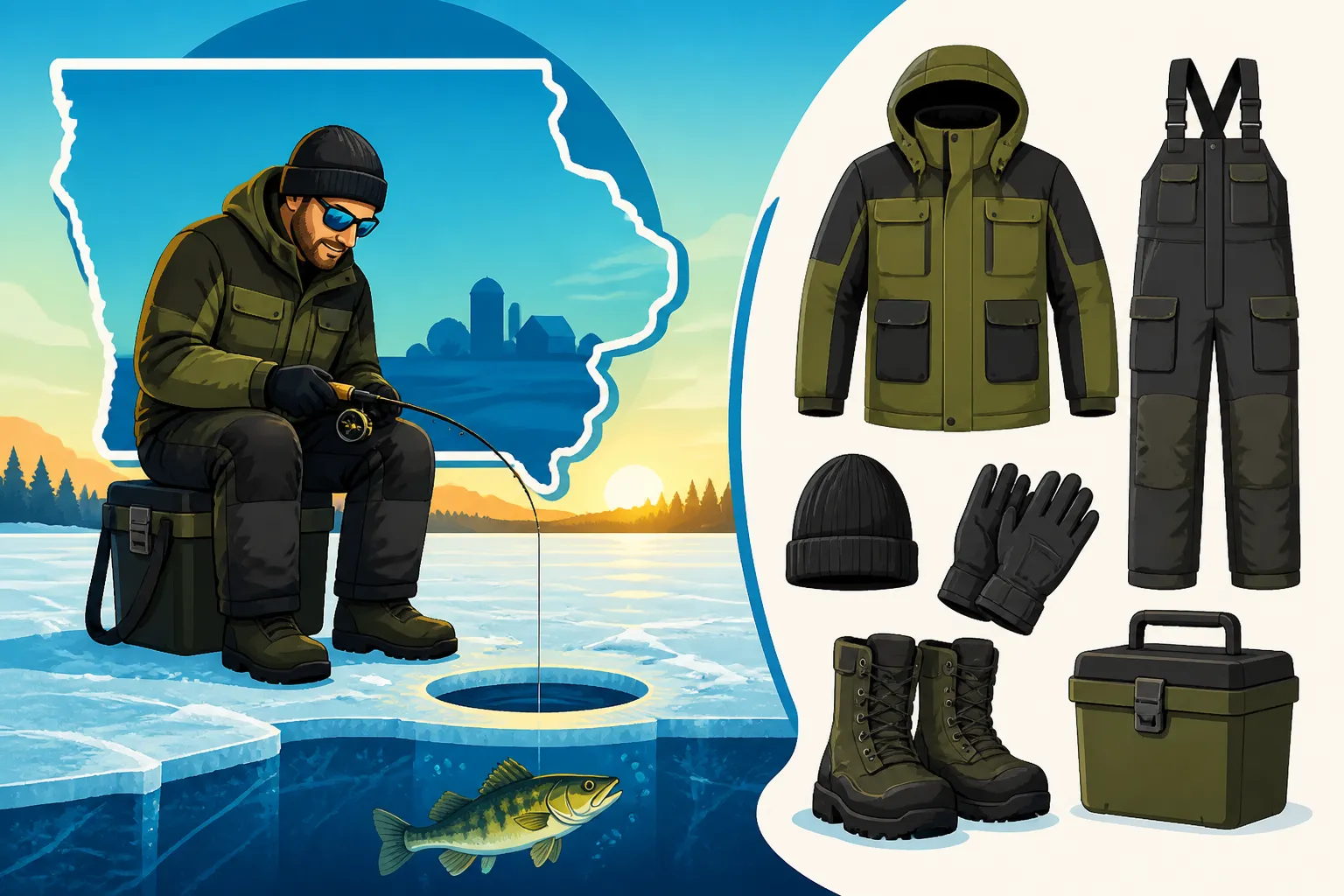
- Ice Fishing Suits: Many serious ice anglers invest in a dedicated ice fishing suit. These typically come as a two-piece jacket and bib overall set, or sometimes a one-piece suit. They are specifically designed to be:
- Warm and Insulated: Heavily insulated with synthetic materials to trap heat.
- Waterproof and Windproof: Essential for protection against snow, slush, and biting winds.
- Durable: Built to withstand the rigors of ice fishing, including kneeling on ice, scraping against augers, etc.
- Safety Features: Crucially, many modern ice fishing suits incorporate flotation technology. These suits are designed to provide buoyancy if you were to break through the ice, giving you precious extra time and helping you stay afloat while awaiting rescue. This is a massive safety advantage that a regular ski jacket simply can't offer. When considering Ice Fishing Safety on Iowa Lakes, a flotation suit is one of the best investments you can make.
- Bib Overalls: These are often preferred over pants because they extend high up your torso, providing extra warmth and preventing cold air from seeping in where your jacket and pants meet. They also protect your back when you're bending over to tend to holes or fish.
Here's a quick reference table for your layering essentials:
| Layer Type | Purpose | Recommended Materials | What to AVOID! | Key Features to Look For |
|---|---|---|---|---|
| Base Layer | Wicks moisture | Merino Wool, Synthetics | Cotton | Snug fit, quick-drying |
| Mid Layer(s) | Insulation | Fleece, Down, Synthetic | Cotton | Easily removable, good loft |
| Outer Layer | Wind & Water Protection | Waterproof/Windproof Shell | Porous fabrics | Durable, breathable, flotation (for suits), pockets |
| Headwear | Heat Retention | Wool, Fleece, Synthetics | Cotton | Covers ears, balaclava/neck gaiter for face protection |
| Handwear | Warmth & Dexterity | Merino, Synthetics, Waterproof | Cotton | Layered system (liner + mitten), convertible options |
| Footwear | Warmth & Dryness | Wool, Synthetics | Cotton | Insulated, waterproof, cold-rated boots, layered socks |
Beyond the Basics: Practical Considerations and Accessories
Dressing for ice fishing isn't just about the major layers; it's also about understanding how your activity affects your warmth and having the right small accessories to enhance your comfort and safety.
Adjusting for Activity Levels and Conditions
One of the biggest challenges in ice fishing is managing your body temperature when your activity level fluctuates. Think about it:
- High Activity: Drilling multiple holes with an auger, pulling a heavy sled, walking a long distance to your spot. These activities generate a lot of body heat and can cause you to sweat profusely.
- Low Activity: Sitting still in an ice shanty, waiting for a bite, reading a book. Here, your body isn't generating much heat, and you need maximum insulation.
The layering system directly addresses this. When you're active, shed a mid-layer or even your outer jacket if it's not too windy. This prevents overheating and sweating. Once you've settled down, put those layers back on. This constant adjustment is the hallmark of an experienced ice angler.
Consider the external conditions, too. A sunny, calm day at 20°F feels much different than an overcast, windy day at the same temperature. Wind chill is a huge factor on the ice, so your windproof outer layer is critically important on breezy days. Sudden snow squalls or freezing rain can also appear, so having that waterproof protection ready is vital. Being prepared for these changes helps you stay out longer and more comfortably.
The Little Things That Make a Big Difference
Sometimes it's the small, often overlooked items that can turn a good day into a great one, or save a cold one.
- Hand and Foot Warmers: As mentioned, these disposable packets are fantastic. Buy a big box, and always have a few in your pockets. They can warm up frozen fingers or make your boots feel toasty.
- Portable Heaters: If you're fishing in an ice shanty, a small, safe portable heater can elevate your comfort significantly. These often use propane and can make your shelter feel downright cozy, allowing you to dress in slightly lighter layers than if you were fishing completely exposed.
- Sunglasses: The glare from the sun reflecting off vast expanses of snow and ice can be intense. Polarized sunglasses not only protect your eyes but can also help you see down into the water better, sometimes spotting fish or structure.
- Lip Balm and Sunscreen: Don't underestimate the power of the sun and wind, even in winter. Chapped lips and sunburned faces are common among ice anglers. A good lip balm and a high-SPF sunscreen are small additions that prevent discomfort.
- Extra Layers in a Dry Bag: Always pack an extra pair of dry socks, gloves, and perhaps a base layer in a waterproof dry bag. If you get something wet, changing into dry clothes instantly boosts your morale and warmth. This is especially important for anyone venturing onto the ice. You never know when a splash from a fish or a slip on the ice could lead to wet clothing.
- Ice Cleats: These attach to your boots and provide essential traction on slippery ice. A fall can not only be painful but also potentially dangerous if you hit your head or drop gear. Do You Need Ice Cleats for Ice Fishing? Yes, almost always! They make moving around the ice much safer and less tiring.
- A Warm Beverage: A thermos full of hot coffee, tea, or cocoa isn't just a comfort; it's a way to internally warm your core, giving you a boost of energy and heat on a cold day.
Common Mistakes and How to Avoid Them
Even seasoned anglers can sometimes make mistakes when it comes to dressing for the ice. Being aware of these common pitfalls can help you avoid them and have a much better experience.
The Perils of Cotton and Overdressing
We've touched on cotton, but it bears repeating: cotton kills in cold, wet conditions. Once cotton gets wet (either from sweat or external moisture), it loses almost all its insulating properties and takes forever to dry. It will actively draw heat away from your body, making you feel much colder and significantly increasing your risk of hypothermia. Leave the cotton hoodies, t-shirts, and jeans at home. Stick to wool or synthetics for all layers that touch your skin or provide insulation.
Another common mistake, perhaps counter-intuitive, is overdressing. While it's tempting to put on every warm thing you own, especially when you step out of a warm vehicle into the cold, this can quickly lead to overheating. Overheating causes sweating, and as we just discussed, sweat is your enemy in cold weather. Start with enough layers to feel warm but not stifled, and have extra layers readily accessible. It's always better to start a little on the cool side if you know you'll be active, allowing your body to warm up as you move. A prime example of this is when you're preparing to drill holes with one of the Best Ice Fishing Auger Types; you'll want to shed that outer layer before you start the heavy work.
Neglecting Safety Features
Focusing solely on warmth and comfort can sometimes lead anglers to overlook critical safety features in their clothing, particularly when fishing on ice.
The most significant safety feature to consider is flotation. Many ice fishing suits, like those from companies found on Amazon, are now designed with built-in flotation material. These are not full life jackets, but they significantly enhance your chances of survival if you were to fall through the ice. The buoyancy helps keep your head above water, and the insulation helps delay hypothermia. Given the inherent risks of Ice Fishing in Iowa, this is a feature that truly warrants the investment. A standard winter jacket offers no such protection.
Beyond flotation, the overall design of dedicated ice fishing apparel often incorporates reflective strips or bright colors for visibility. This is crucial, especially in low light conditions or during heavy snowfall, making it easier for others to spot you on the vast, white expanse of a frozen lake. When you're out there, even if you think you're alone, being visible to snowmobilers or other anglers is always a good idea.
Finally, while your clothing protects you from the cold, it's just one part of ice safety. Always remember to check Best Ice Thickness for Safe Ice Fishing and carry essential safety gear like ice picks, a spud bar, and a rope. Your clothing can help you survive a fall, but preventative measures are always the best defense.
The right attire can truly transform your ice fishing experience from a frigid endurance test into an enjoyable winter pursuit. Dress smart, stay warm, and have a fantastic time out on Iowa's frozen waters!
Disclaimer
This article is for general informational purposes only and does not constitute professional advice. Laws, prices and regulations vary by location and change over time. Consult a qualified professional for guidance on your specific situation.