Best Lake for Muskie Fishing in Iowa
The thrill of chasing a true freshwater giant like the muskie is unmatched, but for anglers in Iowa, narrowing down the best lake for these elusive predators can feel like searching for a needle in a haystack. Many spend countless hours wondering where their best chances lie for a trophy fish. This comprehensive guide cuts through the speculation, pinpointing Iowa's premier muskie destination and equipping you with the exact knowledge you need for a successful hunt.
Spirit Lake: Iowa's Premier Muskie Destination
When it comes to muskie fishing in Iowa, one name consistently rises above the rest: Spirit Lake. Nestled in the heart of the Iowa Great Lakes region, this magnificent body of water has earned its reputation as the place to pursue these elusive and powerful fish. It's not just a rumor; the numbers, the habitat, and the sheer number of successful anglers all point to Spirit Lake as Iowa's top muskie fishery.
Why Spirit Lake Stands Out for Muskie
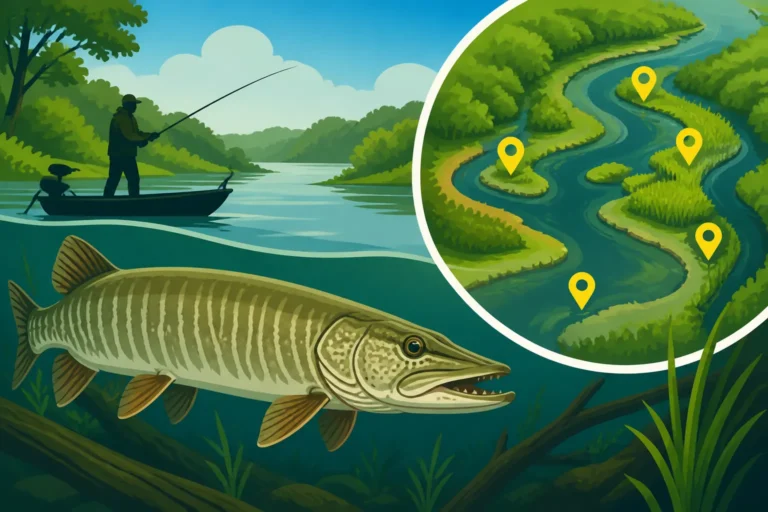
Spirit Lake isn't just big; it's perfectly suited for muskie. Covering over 5,600 acres, it boasts a diverse underwater landscape that muskies thrive in. You'll find expansive, nutrient-rich weed beds, especially in bays and along shallower flats, which serve as prime ambush points for these apex predators. These weeds, often a mix of coontail and milfoil, provide critical cover for both muskies and their abundant prey, creating a thriving ecosystem.
Beyond the vegetation, Spirit Lake features significant depth variations, dropping to over 20 feet in some areas, alongside numerous submerged structures like rock piles, humps, and subtle contours. These features offer cool, oxygenated water during warmer months and act as crucial holding areas for muskie throughout the year. The Iowa Department of Natural Resources (IDNR) also maintains a robust muskie stocking program in Spirit Lake, ensuring a healthy population of young fish that grow into formidable adults. This consistent effort, combined with the ideal habitat, means anglers have a legitimate shot at catching a truly large fish.
The trophy potential in Spirit Lake is very real. Anglers frequently report catching muskies in the 40-inch class, and fish exceeding 50 inches are caught every year. While the state record Muskie Fishing in Iowa still holds a legendary status, Spirit Lake consistently produces fish that push the upper limits of what Iowa waters offer. It's not uncommon to hear tales of encounters with fish that would be the catch of a lifetime for many anglers, solidifying its reputation for producing giants.
Understanding Muskie Behavior in Spirit Lake
To consistently hook into Spirit Lake muskies, you need to understand their seasonal movements and feeding patterns. In the early season, typically late spring to early summer, muskies will often be found shallower, cruising the newly emerging weed lines and sun-warmed bays as they recover from the spawn. This is a great time to target them with bucktails and glide baits in areas like Marble Beach or the north end shallows.
As summer progresses and water temperatures rise, muskies tend to retreat to deeper weed edges, submerged humps, and points, seeking cooler water and dense cover. They'll often be suspended near baitfish schools or holding tight to structure. This is when understanding your electronics becomes crucial to locate those hidden hotspots. The fall, however, is often considered the prime time for trophy hunting. As water temperatures drop, muskies enter a "feedbag" period, aggressively bulking up for winter. They can be found shallower again, gorging on large baitfish. This is when big crankbaits and large bucktails often shine, and anglers will spend long hours targeting specific breaks and rock formations.
Spirit Lake boasts an incredibly rich prey base, which is a major factor in its muskie success. The lake is teeming with yellow perch, white bass, and various panfish, all of which provide ample sustenance for growing muskies. This abundance means the muskies are well-fed and reach impressive sizes. Changes in water clarity and temperature also heavily impact muskie behavior. Clearer water might mean fish are spookier and holding tighter to cover, while a slight stain can make them bolder. Temperature fluctuations, especially cold fronts, can often shut down a bite, requiring patience and a willingness to adjust your approach.
Essential Techniques and Gear for Spirit Lake Muskie
Chasing muskie on Spirit Lake demands specialized techniques and gear to match the power and elusiveness of these formidable fish. You can't just show up with a bass rod and expect success; these fish are called the "fish of 10,000 casts" for a reason, and being prepared is half the battle.
Top Techniques for Spirit Lake
Casting is arguably the most popular and effective technique for muskie on Spirit Lake. Anglers will repeatedly cast large bucktails, jerkbaits, and glide baits along weed edges, over submerged structure, and around points. For bucktails, a fast, rhythmic retrieve is often key, mimicking fleeing baitfish. Think about the classic Mepps Musky Killer or Bucher Outdoors Bucktails. Jerkbaits, like those from Grandma Lures or Bondy Baits, require a more erratic retrieve, with sharp snaps and pauses to entice a strike. Glide baits, often called "walk-the-dog" baits underwater, are worked with a side-to-side motion that imitates an injured baitfish.
Trolling can also be incredibly effective, especially when muskies are scattered or holding deeper. This involves pulling large crankbaits, often 8-12 inches long, behind your boat at specific speeds and depths. Specialized trolling gear, including planer boards, can help spread out your lines and cover more water. Key areas for trolling include the main lake basin, large flats, and along the edges of deep weed lines. Pay close attention to your electronics to dial in the depth where the fish are holding and adjust your baits accordingly.
No matter your chosen technique, one action you absolutely must master is the "figure-eight" at the boat. Muskies are notorious for following a bait right up to the boat before striking. When your lure approaches the boat, instead of simply lifting it out of the water, plunge your rod tip into the water and trace a large figure-eight pattern alongside the boat. This sudden change in direction and speed can often trigger a follow-up strike from a hesitant muskie. It's a critical moment that can turn a "follow" into a "catch."
Gear You Can't Live Without
Muskie fishing requires robust equipment designed to handle powerful strikes and heavy baits. Your rod and reel setup should be nothing short of heavy-duty. Look for rods that are 8 to 9.5 feet long with heavy or extra-heavy action, capable of throwing baits weighing several ounces. A high-quality baitcasting reel with a strong drag system and a fast retrieve ratio is essential. Many anglers prefer reels like the Shimano Tranx or Abu Garcia Revo Toro Beast for their durability and power.
For line, braided line is almost universally preferred due to its strength, sensitivity, and lack of stretch, which is crucial for setting hooks on tough-mouthed muskies. You'll want to use 80-100 pound test braided line. To prevent bite-offs from their razor-sharp teeth, a heavy-duty fluorocarbon or steel leader is absolutely non-negotiable. Check out a detailed guide on Best Line Weight for Muskie Fishing for more insights.
Beyond your primary rod and reel, several other pieces of gear are critical. A large, rubberized landing net, often called a "muskie net," is vital for safely landing and handling these big fish. While a guide on the Best Landing Net for Catfish might give you some ideas, understand that muskie require an even larger, more robust net. Long-nosed pliers and jaw spreaders are essential for safely removing hooks from a muskie's mouth without injuring yourself or the fish. A good pair of cutting pliers can also be useful for emergencies. Remember, safety for both you and the fish is paramount.
Planning Your Muskie Adventure on Spirit Lake
A successful muskie trip to Spirit Lake isn't just about showing up with the right gear; it's about strategic planning. Knowing when to go, where to launch, and who to consult can drastically improve your chances of tangling with one of these freshwater giants.
Best Times to Hit the Water
While muskies can be caught throughout their open season, certain periods offer significantly better chances. The fall, particularly from September through November, is widely considered the prime time for trophy muskie on Spirit Lake. As discussed, falling water temperatures trigger an aggressive feeding binge, and the fish are often more accessible in shallower areas as they chase baitfish into the bays. This "fall turnover" period means fish are actively hunting, making your presentations more likely to draw a strike.
Late spring to early summer, roughly May and June, can also be productive. Muskies are recovering from the spawn and are often found in warmer, shallower water, making them good targets for casting. However, they can be a bit more finicky during this post-spawn period. Summer fishing, from July to August, tends to be more challenging as muskies move to deeper, cooler waters, often suspending or holding tight to structure. Early morning and late evening, or even night fishing, can be more productive during the hotter months.
Regarding daily timing, low-light conditions often prove most fruitful. Dawn and dusk provide a natural advantage, as muskies use the reduced light to ambush prey. Overcast days can also keep muskies active throughout the day, whereas bright, sunny conditions often push them into deeper, shadier cover. Pay attention to weather patterns too; stable weather for a few days often leads to a better bite than fishing immediately before or after a major cold front.
Access, Guides, and Accommodations
Spirit Lake offers numerous public boat ramps that provide excellent access to its expansive waters. Popular ramps include those at Templar Park, Mini-Wakan State Park, and the city of Spirit Lake itself. Always check local signage and conditions, especially during peak seasons. For anglers looking to fish from shore, while less common for muskie, there are various public access points and park areas that allow bank fishing, though catching muskie from shore is a rare feat here. For a comprehensive overview of general rules, be sure to review the Iowa Fishing Regulations Explained.
If the thought of tackling Spirit Lake's vast waters on your own feels daunting, or if you're new to muskie fishing, consider hiring a local guide. These professionals spend countless hours on the water and possess invaluable knowledge about current muskie patterns, hotspots, and effective techniques. Platforms like FishingBooker can be an excellent resource for finding experienced muskie guides in the Iowa Great Lakes region, offering you the chance to learn from the best and significantly increase your odds of success. They can pinpoint the exact locations where muskie are most active, help you choose the right gear, and teach you the nuances of the "figure-eight" retrieve.
The towns surrounding Spirit Lake, including Spirit Lake, Okoboji, Arnolds Park, and Milford, offer a wide range of accommodations, from hotels and motels to cabins and campgrounds. You'll also find numerous bait and tackle shops, restaurants, and other amenities to support your fishing trip. Make sure to stock up on the right baits and check for any last-minute tips from local experts. Remember that having your Iowa Fishing License Guide in order is essential before you even cast a line.
Beyond Spirit Lake: West Okoboji's Muskie Opportunities
While Spirit Lake takes the crown for sheer muskie numbers and consistent action, its neighboring lake, West Okoboji, offers a different kind of muskie challenge – one often pursued by anglers seeking truly enormous, wary fish.
West Okoboji: A Close Second for Trophy Hunters
West Okoboji Lake, another gem in the Iowa Great Lakes chain, shares many characteristics with Spirit Lake, making it an excellent muskie fishery in its own right. It's significantly deeper, plunging to over 130 feet in places, and its waters are often clearer, presenting a unique challenge. Like Spirit Lake, it benefits from IDNR stocking efforts and boasts a healthy population of baitfish, including ciscoes (tullibees), which are a high-fat meal for growing muskies, contributing to their impressive size potential.
Anglers targeting West Okoboji often speak of its "lesser numbers, bigger fish" reputation. While you might not encounter as many follows or strikes as on Spirit Lake, the muskies you do connect with tend to be truly impressive specimens, often pushing the 50-inch mark or even beyond. These fish are typically older, wiser, and have survived many encounters, making them a significant accomplishment to catch. The lake's clear, deep waters and complex structure mean these muskies are often holding in specific, hard-to-find locations, rewarding patience and meticulous electronics use.
Compared to Spirit Lake, West Okoboji often sees slightly less overall muskie fishing pressure. This can sometimes translate to fish that are a bit less "educated" to common lures, or at least less pressured in certain areas. However, its reputation means it still draws dedicated muskie anglers. For a deeper dive into fishing this specific waterbody, consider consulting a West Okoboji Lake Fishing Guide.
Key Differences and Strategies for West Okoboji
Fishing West Okoboji requires some adjustments in strategy due to its unique characteristics. The lake's greater average depth and exceptional water clarity mean muskies often relate to deeper structure and are more sensitive to boat traffic and presentation. Targeting deep main lake points, sharp drop-offs, and deep weed edges becomes even more critical here. Look for subtle changes in bottom contour and use your fish finder extensively to locate baitfish schools and potential muskie holding areas.
Due to the clearer water, lure color choices might lean towards more natural patterns, especially on bright days, though vibrant colors can still trigger strikes. Techniques like trolling can be highly effective in covering large areas of open water and hitting specific depth ranges where fish are suspended. When casting, consider lures that can dive deeper or that present a larger profile to draw attention from a distance.
Patience is perhaps the most important virtue for West Okoboji muskie anglers. These fish are known for their wariness, and it might take longer to entice a strike. Don't be discouraged by long periods without action. Focusing on prime feeding windows, often during low light or periods of stable weather, and making every cast count by executing a perfect figure-eight at the boat are paramount. Many successful West Okoboji anglers also employ guide services found on platforms like FishingBooker to leverage local expertise for these challenging waters, as even subtle nuances can make a big difference. Remember, the challenge is part of the allure when pursuing these truly magnificent fish.
Here's a quick comparison of Iowa's top muskie lakes:
| Feature | Spirit Lake | West Okoboji Lake |
|---|---|---|
| Size (Acres) | ~5,600 | ~3,800 |
| Max Depth | ~24 feet | ~136 feet |
| Water Clarity | Moderate to Good | Very Clear |
| Muskie Population | Excellent, consistently stocked | Very Good, consistently stocked |
| Trophy Potential | High (numerous 40-50+ inch fish) | Very High (fewer, but often larger/older fish) |
| Primary Habitat | Diverse weed beds, shallow flats, rock piles | Deep structure, main lake points, clear water weed lines |
| Avg. Angler Success | Higher frequency of follows/strikes | Fewer strikes, but often from larger, wary fish |
| Best Seasons | Fall, Late Spring/Early Summer | Fall, Summer (deep water) |
| Ideal Techniques | Casting bucktails, jerkbaits; Trolling | Trolling, deep casting, subtle presentations |
Disclaimer
Please remember that fishing regulations, conditions, and fish populations can change. Always consult the official Iowa Department of Natural Resources (DNR) regulations before heading out on the water. This guide is for informational purposes only and does not constitute professional advice.