Where to Catch Walleye on Red Rock Reservoir
Finding walleye on a massive body of water like Red Rock Reservoir can feel like searching for a needle in a haystack, especially when the water levels are constantly changing and the conditions vary so much. It's a common frustration for anglers who spend hours scanning only to come up empty-handed. This guide is dedicated to helping you demystify Red Rock's walleye fishery, pointing you toward the most productive areas and equipping you with the knowledge to make your next trip a success.
Understanding Red Rock Reservoir for Walleye Fishing
Red Rock Reservoir, Iowa's largest lake by surface area when at flood stage, presents a unique set of challenges and opportunities for walleye anglers. It's not your typical clear-water northern walleye lake. This reservoir is part of the Des Moines River system, and its characteristics are heavily influenced by the river itself, making walleye fishing here a different ballgame.
The Unique Challenges of Red Rock's Ecosystem
One of the biggest hurdles at Red Rock is its highly dynamic environment. The U.S. Army Corps of Engineers manages the reservoir primarily for flood control, which means water levels can fluctuate dramatically throughout the year, sometimes by many feet in a short period. This constant rise and fall can disorient fish, make finding stable patterns difficult, and alter the accessibility of prime fishing spots. What was a productive point last week might be bone dry or submerged under many feet of extra water today. Anglers must be prepared to adapt, constantly checking water levels and adjusting their approach.
Beyond the fluctuating water levels, turbidity is another significant factor. Red Rock Reservoir often carries a substantial sediment load, especially after heavy rains upstream. The water can range from a light stain to a chocolate milk consistency, which certainly affects how walleye see and react to baits. Walleye are visually oriented predators, but they also thrive in lower light conditions, so the murky water isn't always a bad thing. It often means they'll stay shallower or closer to cover during bright daylight hours than they might in clearer lakes. This characteristic also emphasizes the importance of scent and vibration in your lure choices.
Walleye Behavior and Habitat Preferences in Reservoirs
Despite the challenges, walleye in Red Rock are still walleye, and they exhibit predictable behaviors based on their instinctual needs for food, cover, and spawning. In a reservoir setting, especially one with a strong river influence, they tend to relate heavily to the old river channels, submerged creek beds, and any remaining hard structure. Think about what was there before the reservoir was filled – old roadbeds, timber stands, foundations, and bridge abutments can all act as walleye magnets.
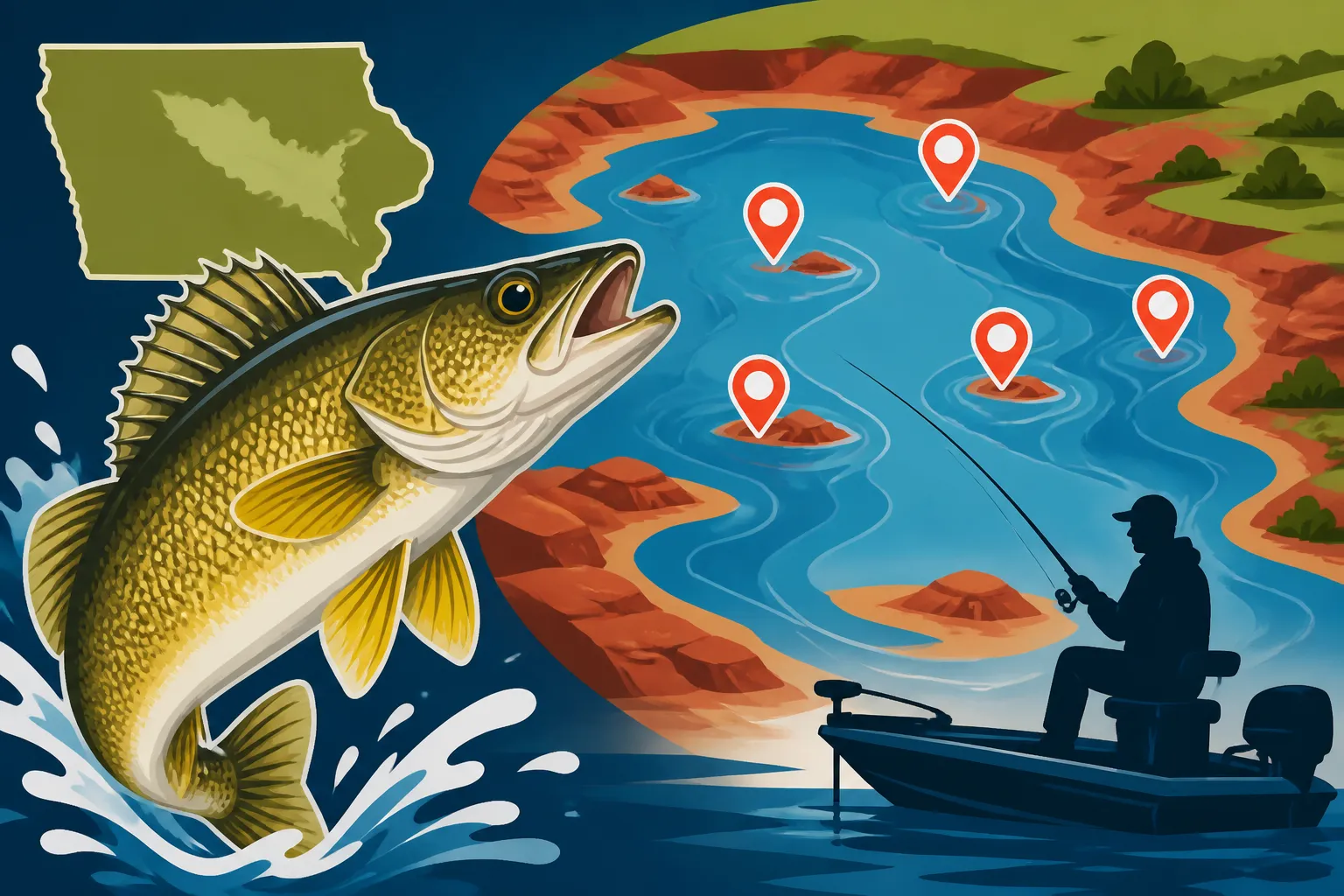
During periods of stable water, walleye will often gravitate towards points, humps, and submerged islands, particularly those with access to deeper water nearby. These structures act as ambush points where they can intercept baitfish moving along contour lines or current breaks. In murkier water, they might position themselves even tighter to these structures, making precise presentations crucial. Understanding the natural contours of the lake bottom, rather than just the visible shoreline, is paramount here.
Key Walleye Hotspots on Red Rock Reservoir
To consistently catch walleye on Red Rock, you need to think like a walleye and focus on areas that offer them a combination of food, cover, and favorable conditions. Given the reservoir's size and changing nature, knowing where to start is half the battle.
Targeting Submerged Structure and River Channels
Red Rock is notorious for its underwater hazards, but these hidden features are often exactly where the walleye are holding. The old Des Moines River channel winds its way through the reservoir, and this channel, along with its associated bends, holes, and ledges, is a primary highway for walleye movement. Look for areas where the channel swings close to a point or intersects with a submerged creek bed. These intersections create current breaks and diverse habitat that walleye love.
Beyond the main channel, focus on submerged timber and brush piles. While many larger trees were cleared before impoundment, numerous stumps and smaller brush fields remain, especially in the shallower arms and bays. These provide excellent cover for both walleye and their prey. Modern electronics, particularly side-imaging and down-imaging, are invaluable for locating these subtle, yet crucial, pieces of structure. Once you mark a significant brush pile or a cluster of stumps in or near the old channel, you've likely found a walleye ambush point. Try to drop a vertical jig or a slip bobber rig right on top of them.
Identifying Productive Points and Humps
Points that extend into the main lake or into larger bays are classic walleye holding areas, particularly during migration periods or when baitfish are congregating. These points can funnel baitfish past hungry walleye, and they often offer a quick transition from shallow feeding flats to deeper refuge. Look for points with harder bottoms, like rock or gravel, if you can find them. These bottom compositions are preferred by walleye and also attract invertebrates and baitfish.
Submerged humps and islands are equally important. These are essentially underwater high spots that can be completely undetectable from the surface, making them fantastic secret spots for those with good electronics and mapping. A hump rising from 20 feet of water to 10 feet, especially if it has some rocky patches or scattered timber, can be a walleye magnet. They'll often school on the windblown side of these humps, waiting for baitfish to be pushed their way. Remember, the wind can be your friend here, concentrating both bait and predators. For more general advice on where to cast your line across this large body of water, check out our guide on Red Rock Reservoir Fishing Spots.
Exploring the Tailwaters and River Sections
The area immediately below the Red Rock dam, often referred to as the tailwaters, is consistently one of the most productive walleye fisheries on the reservoir system. The continuous discharge of water through the dam creates a predictable current, which walleye absolutely love. This current oxygenates the water, disorients baitfish, and provides a constant buffet for predatory species. Walleye will stack up in eddies, current seams, and deeper holes below the dam, waiting for an easy meal.
Upstream from the main pool of the reservoir, the Des Moines River flows more naturally, but it's still influenced by the reservoir's operations. This river section offers different opportunities, especially for those who prefer to fish moving water. Look for deeper scour holes, submerged log jams, and bridge pilings in the river bends. These are prime spots for river walleye, particularly during spring and fall runs. These river sections can be excellent, but boaters need to be extra cautious of shallow areas and debris, especially with fluctuating water levels. You might even consider hiring a local guide through services like FishingBooker to navigate these specific, often tricky, river stretches safely and effectively.
Essential Techniques and Baits for Red Rock Walleye
Once you've identified potential walleye locations on Red Rock, the next step is to present your baits effectively. Different conditions and areas call for different approaches.
Trolling Strategies for Covering Water
Given Red Rock's vast size, trolling is an incredibly effective way to cover water and locate active fish, especially when they are scattered or holding at a particular depth. Crankbaits are a staple for trolling walleye, and having a diverse selection in various sizes, diving depths, and colors is key. For Red Rock's often stained water, colors with good contrast like firetiger, chartreuse, or even bright oranges and reds can be very effective. Perch and shad patterns also work well when the water is clearer.
Crawler harnesses are another deadly trolling presentation, particularly in warmer water. These rigs typically consist of a weight, a clevis with a spinner blade, and a two-hook harness for a live nightcrawler. The vibration and flash of the blade, combined with the scent and natural movement of the crawler, are irresistible to walleye. Vary your trolling speed (generally between 1.0-2.5 mph) and use planer boards or snap weights to present your baits at different depths and distances from the boat. Understanding how to rig a crawler harness for walleye is crucial for success. If you're looking for more general strategies, our guide on Walleye Fishing Techniques for Iowa Lakes offers some great universal tips.
Jigging and Live Bait Rigs for Structure Fishing
When walleye are concentrated on specific pieces of structure, like a submerged hump or a brush pile, jigging becomes the go-to technique. Lead-head jigs tipped with a minnow, a piece of a nightcrawler, or a soft plastic grub are incredibly versatile. The key is to maintain bottom contact and impart a subtle, lifelike action to your bait. In murky water, jigs with rattles or those painted in bright, visible colors can help walleye zero in.
For a more stationary approach, especially when current is minimal or fish are finicky, live bait rigs shine. A simple slip bobber setup with a live minnow or a leech can be incredibly effective when suspended just above structure or a school of fish you've marked on your fish finder. Another excellent option is a simple Carolina rig or a three-way rig, presenting a live minnow or nightcrawler on the bottom. When considering the best live bait for Iowa walleye, minnows (like shiners or fatheads) are almost always a top choice, especially in cooler water.
Seasonal Considerations and Adjustments
Walleye behavior at Red Rock changes dramatically with the seasons. In spring, as water temperatures rise, walleye will move to shallower spawning areas, often around rocky points or rip-rap. Post-spawn, they'll often be hungry and can be caught trolling shallow cranks or pitching jigs to shoreline structure. Learning how deep to fish for walleye in spring can give you a significant advantage.
Summer fishing means walleye will often retreat to deeper, cooler water, relating to the old river channel, deep humps, and thermoclines (if present). Trolling deep-diving crankbaits or slow-trolling crawler harnesses on the breaks becomes the dominant strategy. At night, they might move shallower to feed.
By fall, walleye become very active again, aggressively feeding to bulk up for winter. They can often be found on main lake points, humps, and shallower flats as baitfish move in. Trolling crankbaits and vertical jigging with minnows are both highly effective. As winter approaches, if ice fishing becomes possible, walleye can be found on main lake structure using jigs and spoons tipped with minnow heads.
Tips for a Successful Red Rock Walleye Trip
Fishing Red Rock can be incredibly rewarding, but it requires preparation and a willingness to adapt. Here are some extra tips to stack the odds in your favor.
Utilizing Electronics and Mapping
On a reservoir as dynamic and vast as Red Rock, a good fish finder with GPS and detailed mapping is not just an advantage; it's almost a necessity. Utilize your GPS to mark waypoints on productive spots, old river channels, and submerged structure. Side-imaging and down-imaging technologies allow you to scan large areas and pinpoint subtle contours, brush piles, or even individual fish that a traditional 2D sonar might miss. Learning how to read your fish finder for walleye can drastically improve your catch rates. Consider checking out our guide on the Best Fish Finder for Iowa River Fishing for recommendations that would also apply to a river-influenced reservoir like Red Rock.
Don't forget to regularly update your mapping cards if possible, as lakebed contours can shift over time, especially with sediment deposition. Before you even launch your boat, spend some time studying detailed lake maps (paper or digital) to identify promising areas based on depth changes, old creek beds, and structural elements.
Timing Your Trip for Optimal Conditions
The timing of your trip can greatly influence your success at Red Rock. Beyond the seasonal changes in walleye behavior, paying attention to current conditions is vital. Watch the Iowa Department of Natural Resources (DNR) reports and local bait shop updates for information on recent catches, water levels, and clarity. A stable weather pattern, especially a few days without significant rainfall or major temperature swings, often leads to more predictable fishing.
Wind can be your friend or foe. A moderate chop on the water can break up light penetration and activate walleye, pushing baitfish to specific shorelines or structures. However, too much wind can make boat control difficult and create unsafe conditions on such a large body of water. Early mornings, late evenings, and overcast days generally offer the best low-light conditions that walleye prefer, especially when the water is clear.
Connecting with Local Expertise and Resources
While online research is great, nothing beats local knowledge. Strike up conversations at local bait shops in nearby towns like Pella or Knoxville – they'll often have the most up-to-date information on what's biting, where, and on what. They might even share tips on the latest water levels or specific areas to avoid due to hazards.
For a deeper dive, consider hiring a local fishing guide. A professional guide, perhaps one you find through a platform like FishingBooker, will have years of experience on Red Rock, know its intricacies, and can put you on fish quickly. They can also teach you specific techniques tailored to the reservoir's unique conditions, accelerating your learning curve. Many guides also operate on other fantastic walleye fisheries in the state, so you might learn a thing or two that you can apply when exploring Walleye Fishing in Iowa more broadly.
| Red Rock Walleye Hotspots | Prime Seasons | Recommended Techniques | Key Features to Look For |
|---|---|---|---|
| Old Des Moines River Channel | All Year | Trolling crankbaits/harnesses, vertical jigging | Bends, deep holes, intersections with submerged creeks |
| Submerged Points & Humps | Spring, Summer, Fall | Trolling, jigging, slip bobber rigs | Hard bottom, rocky patches, scattered timber, access to deep water |
| Tailwaters Below the Dam | All Year | Jigging, bottom bouncing, slip bobber rigs | Current seams, eddies, deep scour holes, bridge abutments |
| Submerged Timber/Brush Piles | All Year | Vertical jigging, weedless presentations | Clusters of stumps, fallen trees near channel edges |
| Rip-rap & Causeway Areas | Spring, Fall, Night | Pitching jigs, shallow crankbaits | Rock transitions, current breaks, baitfish presence |
Remember, Red Rock Reservoir is a dynamic fishery, and while these spots are historically productive, conditions can change. Always prioritize safety, especially with fluctuating water levels and potential debris. Before heading out, it's always wise to review the current Iowa Fishing Regulations Explained to ensure you're compliant with all rules and limits. Knowing the Iowa Walleye Season Dates and Limits is also crucial for a responsible and enjoyable trip.
Disclaimer
Please note that fishing conditions, regulations, and fish populations can change. Always consult the latest Iowa Department of Natural Resources (DNR) fishing regulations booklet or website before heading out on the water to ensure you have the most current information and valid licenses. Stay safe and practice responsible angling.