Special Fishing Rules Inside Iowa State Parks
It's easy to assume that when you head out to fish in Iowa's stunning state parks, the rules are just like any other public lake or river. But that's a common misconception that can lead to frustration, or even worse, a citation. Many anglers are surprised to discover that these beautiful natural havens often come with their own unique set of fishing regulations designed to protect their precious ecosystems and enhance the visitor experience. This guide is here to untangle those specific rules, ensuring your next fishing trip in an Iowa State Park is not only fruitful but also fully compliant and worry-free.
Why State Parks Have Different Fishing Rules
Iowa's state parks are cherished natural resources, and managing them for both conservation and recreation is a delicate balance. The unique fishing rules you encounter in these areas aren't arbitrary; they stem from a thoughtful approach to preserving the environment, managing wildlife, and ensuring everyone can enjoy the park safely.
Conservation Efforts and Ecosystem Protection
One of the primary drivers behind park-specific fishing regulations is conservation. State parks often encompass sensitive habitats that require extra protection. For instance, a park might contain a critical spawning area for a particular species of fish, or it might be home to unique aquatic plants and invertebrates that are vital to the local food web. Unregulated fishing pressure, or certain fishing methods, could easily disrupt these delicate balances.
Think about a small, pristine lake nestled within a state park. If every angler were allowed to use unlimited numbers of live baitfish, there's a risk of introducing invasive species or diseases that could devastate the native fish population. To prevent this, some park lakes might restrict the use of live bait, or specify that only bait purchased from a certified local dealer can be used. These rules are put in place to safeguard the long-term health of the ecosystem, ensuring that future generations of anglers, and wildlife, can continue to thrive. It’s all about maintaining that natural integrity.
Managing High Traffic and Visitor Experience
Iowa State Parks are popular destinations, drawing not just anglers, but also swimmers, kayakers, hikers, and families picnicking. With so many different activities happening in close proximity, specific rules are essential to manage high traffic and prevent conflicts between users. Imagine trying to cast a line while swimmers are splashing nearby, or having a serene canoe trip interrupted by an angler loudly operating a gas motor in a no-wake zone.
These regulations create designated spaces and limitations that allow various park visitors to coexist harmoniously. For example, many parks will have specific areas for swimming where fishing is prohibited, or they might limit boating to electric motors only on smaller lakes to preserve tranquility and water quality. These rules aren't meant to make your fishing trip harder; they're designed to make everyone's experience, including yours, more enjoyable and safe. It's about respecting shared spaces and ensuring that the beauty and peace of the park can be appreciated by all.
General Fishing Regulations Within Iowa State Parks
While state parks do have their own quirks, it's crucial to remember that they don't operate in a vacuum. The overarching Iowa Fishing Regulations Explained still form the foundation of legal angling within park boundaries. However, state parks often overlay additional, more specific rules on top of these general guidelines.
Statewide Regulations Still Apply
First and foremost, you'll still need a valid Iowa Fishing License Guide to fish in any Iowa State Park, unless you qualify for one of the specific Iowa Fishing License Exemptions. This isn't optional, regardless of where you're casting your line within the state. You'll also need to adhere to the general Iowa Fishing Season Dates and Limits for various species, unless a park-specific rule explicitly states otherwise.
For example, if you're targeting walleye in a state park lake, you'll generally follow the statewide walleye season opening and closing dates and minimum length limits. The park rules typically add more restrictions, not fewer. So, always have your license readily available, understand the fundamental state regulations, and then layer on the park-specific details. It’s like learning a language – you start with the basics before diving into regional dialects. Kids, for instance, still need to know Do Kids Need a Fishing License in Iowa? before heading to a state park pond.
Specific Species and Size Limits
This is where you often see the most noticeable differences in state park fishing rules. To promote trophy fisheries, protect vulnerable populations, or enhance specific angling opportunities, some parks implement stricter length limits or reduced daily bag limits for certain fish species. For example, while the statewide limit for largemouth bass might be more generous, a particular state park lake could have a "protected slot limit" where bass between 12 and 16 inches must be immediately released, allowing them to grow larger.
Similarly, you might find that some parks have a lower daily creel limit for panfish like crappie or bluegill than the general Iowa Fishing Daily Bag Limits Guide. These measures are often in place because smaller, contained lakes in state parks can be heavily fished, and stricter limits help sustain healthy populations for everyone. Before you even pack your tackle box, it's wise to check the specific regulations for the park you plan to visit. Ignorance of these special rules is unfortunately not a valid excuse if a park ranger checks your stringer.
Bait and Tackle Restrictions
Beyond species and size, state parks might also regulate the type of bait and tackle you can use. As mentioned earlier, live baitfish can be a vector for invasive species, so it's not uncommon to find parks where live minnows or other baitfish are prohibited. Sometimes, only artificial lures are allowed, or perhaps only worms and leeches are permitted as live bait.
Certain fishing methods might also be restricted. For example, while trotlines might be allowed on certain large rivers in Iowa, they are almost universally prohibited within the confines of state park lakes to prevent hazards for other water users and to reduce incidental catches. Some parks may even have restrictions on the number of lines an angler can use at one time, especially from a fishing pier during peak season, to ensure fair access for all. Always double-check signage at the boat ramp or fishing pier, or consult the park's specific regulations, to avoid any surprises. You might even find that you need to adjust your Iowa Fishing Techniques Guide to match the park's rules.
Special Considerations for Iowa State Park Waters
Beyond the general fishing regulations, state parks often have unique geographic or recreational features that necessitate additional special rules. These can significantly impact how and where you can fish within park boundaries.
Designated Fishing Piers and Zones
Many Iowa State Parks are incredibly thoughtful about providing accessible fishing opportunities, often building fantastic Best Fishing Piers in Iowa State Parks. These structures are wonderful resources, but their very existence sometimes comes with rules about where fishing isn't allowed. You might find that fishing is restricted to these designated piers or specific shoreline areas, particularly near swimming beaches, boat launch ramps, or sensitive ecological zones.
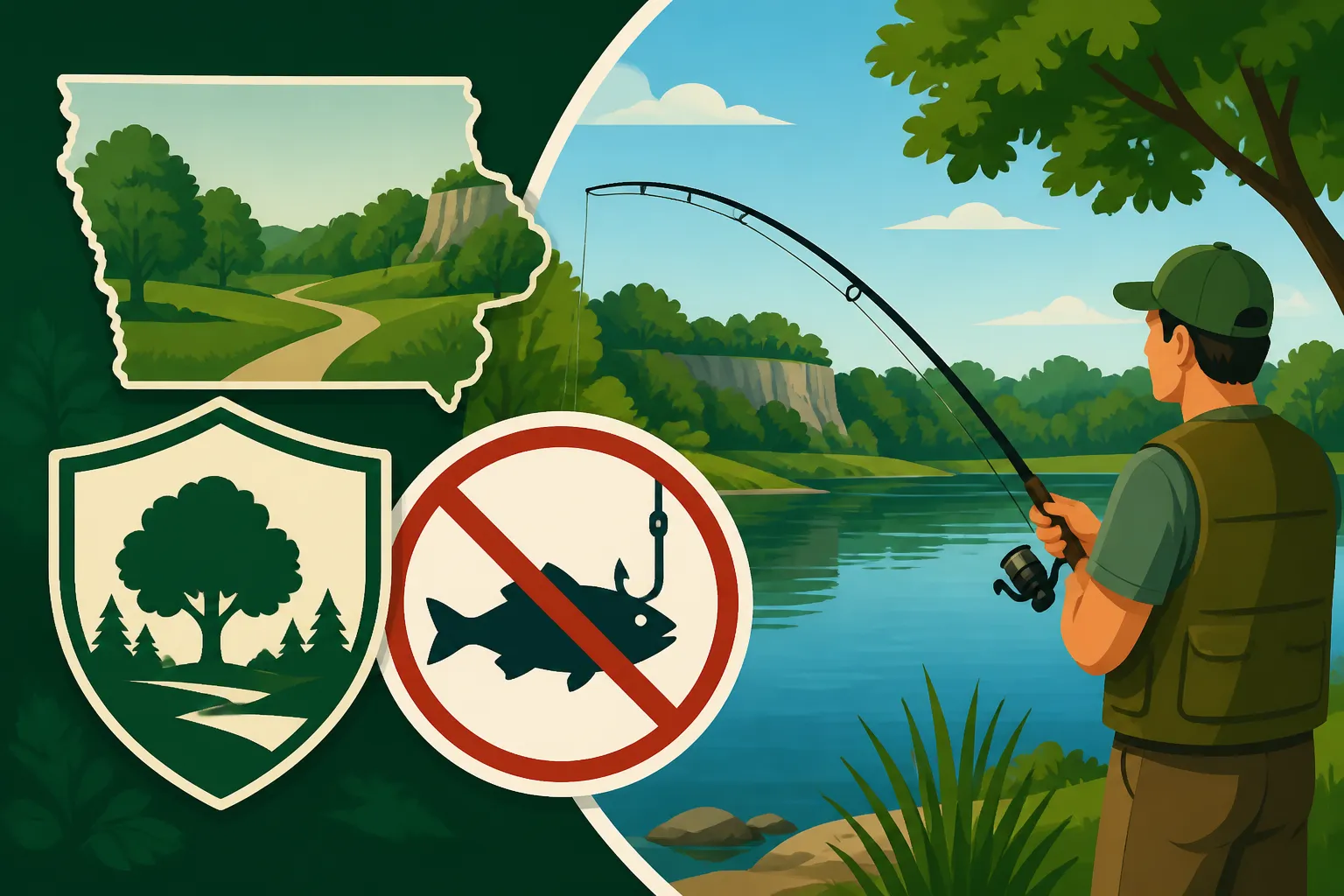
Imagine a beautiful swimming beach packed with families. Allowing fishing lines and hooks there would clearly pose a safety hazard. Similarly, some areas might be set aside as wildlife observation zones where active fishing could disturb nesting birds or other animals. Always look for signs indicating "No Fishing" zones or areas designated specifically for anglers. Respecting these boundaries helps ensure everyone can enjoy the park safely and peacefully.
Boating and Shoreline Access Limitations
The types of watercraft allowed, and where you can launch or access the shoreline, are another common area for special state park rules. Many smaller lakes within state parks, often highlighted as some of the Best State Park Lakes for Fishing in Iowa, are designated as "no-wake" zones or even "electric motors only" to preserve tranquility, reduce erosion, and protect water quality. This means your powerful gas outboard might need to stay on the trailer for that particular trip.
Shoreline access might also be limited in certain areas. While you might be able to roam freely along some natural shorelines, others could be marked as restricted due to steep terrain, sensitive plant life, or private property boundaries that abut the park. Always look for designated public access points and boat ramps. Trying to bushwhack your way to a secluded spot could lead you into an area where fishing is prohibited or inadvertently damage fragile habitats. Being aware of these boating and access rules is crucial for both legal compliance and minimizing your impact on the park environment.
Catch-and-Release Only Waters
For certain prized species or in areas where conservation is paramount, some state park waters might implement catch-and-release only rules. This means that any fish you catch, regardless of size or species, must be immediately and carefully returned to the water. This is a powerful management tool used to bolster fish populations, create trophy fisheries, or protect endangered species.
While it can be tough to release a particularly impressive catch, these rules are vital for the long-term health of the fishery. These regulations are typically well-marked, often with signs at access points or clearly stated in the park's specific guidelines. If you plan to fish in a catch-and-release only area, make sure you're equipped with the right tools – like dehooking tools and a soft landing net (you can find great options on Amazon) – to ensure the fish has the best chance of survival upon release. It's a way for all of us to contribute to sustainable fishing for the future.
How to Stay Informed About Park-Specific Rules
Navigating all these different layers of regulations might seem daunting, but it doesn't have to be. There are several reliable resources available to ensure you're always in the know before you cast your line in an Iowa State Park. A little preparation goes a long way in avoiding any fines or misunderstandings.
Checking Official DNR Resources
Your absolute best first stop for any fishing regulation information is always the official Iowa Department of Natural Resources (DNR) website. They maintain comprehensive listings of all statewide regulations and often include specific details for individual lakes, rivers, and, crucially, state parks. The DNR website allows you to How to Check Current Iowa Fishing Regulations Online by searching for specific bodies of water or parks.
In addition to the website, the Iowa DNR publishes an annual fishing regulations booklet, available digitally online and in print at license vendors. While this booklet covers statewide rules, it often includes special regulations tables that highlight park-specific or lake-specific exceptions. Make it a habit to review these resources before heading out, especially if you're exploring a new park. You can even sometimes find digital copies or print-on-demand versions of these booklets on platforms like Amazon, making it easy to keep a reference copy handy.
On-Site Signage and Park Rangers
When you arrive at an Iowa State Park, make it a point to observe the informational signage, especially around park entrances, boat ramps, and fishing access points. Park managers are typically diligent about posting any unique rules that apply to their specific park. These signs will often detail length limits, bag limits, bait restrictions, or boating regulations that differ from the statewide norms.
Furthermore, never underestimate the invaluable resource that is a park ranger or park staff member. These individuals are the experts on their specific park and are usually more than happy to answer your questions. Don't be shy about asking before you start fishing. A quick chat can clarify any doubts and save you from unintentional violations. They've seen it all, and they're there to help you have a safe and legal experience. They can also often point you to the best fishing spots or recent activity.
Planning Your Visit
A successful and compliant fishing trip to an Iowa State Park starts with good planning. Once you've identified which park you want to visit, take a few minutes to research its specific regulations. If you're traveling from out of state, be sure to confirm if Can Nonresidents Fish in Iowa State Parks? and if there are any additional requirements beyond the standard nonresident license.
Consider using online maps, like the Iowa DNR's interactive fishing atlas, to identify access points, fishing piers, and any restricted areas within the park. Look at the forecast, pack appropriate gear, and if you plan to use live bait, confirm it's allowed in that specific park beforehand. By integrating this research into your pre-trip routine, you'll not only be a more responsible angler but also one who is better prepared to find success on the water.
| Rule Category | Common Statewide Rule | Potential State Park Special Rule (Examples) |
|---|---|---|
| Fishing License | Required for most residents/nonresidents over 16 | Still required, no special exemptions unless stated for specific park programs. |
| Daily Bag Limits | General statewide limits (e.g., 5 walleye, 10 crappie) | Reduced limits for certain species (e.g., 3 walleye, 5 crappie) or protected slot limits. |
| Length Limits | Statewide minimums (e.g., 15" walleye, 12" bass) | Increased minimums or catch-and-release only for specific lengths (e.g., 18" walleye minimum, 12-16" bass slot). |
| Bait | Live bait, artificial lures generally allowed | Live baitfish prohibited, artificial lures only, or only specific types of live bait (e.g., worms). |
| Boating | Varies by water body, often gas motors allowed | Electric motors only, no-wake zones, specific launch/retrieve points only. |
| Fishing Location | Public access points, shorelines | Designated fishing piers only, no fishing near swimming beaches, restricted shoreline access. |
| Method/Lines | Up to 2 lines per angler | Might be restricted to 1 line from piers during busy times, trotlines prohibited. |
Disclaimer
The information provided in this guide is for general informational purposes only and is subject to change. While we strive to offer the most accurate and up-to-date details, fishing regulations, especially those for specific locations like Iowa State Parks, can be updated by the Iowa Department of Natural Resources at any time. Always consult the official Iowa DNR website or current fishing regulations booklet before heading out to fish in any Iowa State Park to ensure full compliance with the law.