License Rules for Fishing on Private Property
Ever wondered if you still need that Iowa fishing license when you're casting a line into a friend's private pond or a stream running through your own acreage? It's a common question that can lead to a lot of confusion, and frankly, unnecessary stress. Many folks assume "private property" automatically means freedom from state regulations, but the reality in Iowa is a bit more nuanced. This guide is here to clear up the muddy waters around Iowa's fishing license requirements for private property, making sure you can enjoy your time on the water without a worry.
The General Rule: A License is Usually Required
It's a common misconception: "It's my pond, so I don't need a license to fish it." While the sentiment is understandable, Iowa's Department of Natural Resources (DNR) has specific rules to ensure the sustainable management of all fish populations, even those that seem isolated. Generally, if you're fishing in Iowa, you need a valid fishing license. This holds true whether you're on public waters like the Mississippi River or what you perceive as private property.
The core reason behind this seemingly strict rule is the interconnectedness of many waterways. What might appear to be a self-contained pond could have an underground spring, a small culvert, or even seasonal overflow that connects it to a larger public stream or river system. Fish can and do move between these waters, meaning that unregulated fishing in one "private" spot could still impact the broader ecosystem and fish populations that the DNR is tasked with protecting. Without a proper understanding of the Iowa Fishing Regulations Explained, it's easy to inadvertently break the rules.
This means that if you're invited to fish at a friend's beautiful secluded pond, you'll still need to have your license in hand. The same goes for fishing a small creek that meanders through private farmland. Unless a very specific exemption applies, assume you need to be licensed. It’s always better to be safe and spend a little money on an Iowa Resident Annual Fishing License or an Iowa Nonresident Annual Fishing License than to risk a fine.
Key Exemptions for Private Waters
While the general rule leans towards needing a license, there are a few very specific situations where you might be exempt when fishing on private property in Iowa. These exemptions are usually tied to direct ownership and the nature of the water body itself.
Fishing Your Own Truly Private Pond
The most significant exemption applies to landowners fishing in their own private pond. But there's a crucial caveat: the pond must be completely private, meaning it has no inlet or outlet that connects it to any public waters. This is often referred to as a "landlocked" pond. If you own the land surrounding such a pond and it truly doesn't connect to other waterways, you and members of your immediate family who reside with you are typically exempt from needing a fishing license to fish that specific pond.
It's important to stress the "truly private" aspect. If your pond is fed by a small stream that flows into a larger river system, or if it has an overflow pipe that empties into a public ditch, it's generally not considered a truly private pond for licensing purposes. In such cases, even as the landowner, you would still need a license. The DNR carefully defines what constitutes Private Pond Fishing Rules in Iowa, and it's essential to understand these definitions to avoid unintentional violations.
For example, imagine you have a pond dug out in the middle of your cornfield, fed entirely by rainwater runoff, and it never drains into any other body of water. In this scenario, you and your kids living at home could fish it without a license. However, if that same pond was fed by a tile line that eventually discharged into a county drainage ditch connected to a river, you'd be looking at public water implications, and a license would be necessary.
Specific Age-Based Exemptions
Iowa also has age-based exemptions that apply regardless of whether you're on public or private land. Children under a certain age do not need a fishing license. Currently, residents and non-residents alike under the age of 16 are exempt from needing a fishing license in Iowa. This means if your child or grandchild is under 16, they can fish that private pond, or any other water in Iowa, without needing to buy a license.
This is fantastic news for families who want to introduce youngsters to the joys of fishing without the added expense or hassle of purchasing a license for them. However, it's still crucial for adults accompanying them to be properly licensed themselves, assuming the adult isn't also exempt. For more details on these specific age groups, you can refer to the Do Kids Need a Fishing License in Iowa? guide or general Iowa Fishing License Exemptions information.
Even with kids, it's still a good idea to teach them about responsible fishing, respecting bag limits (unless the private pond has specific, clear, non-DNR related management rules), and property etiquette. It instills good habits that they'll carry with them as they get older and require their own license.
Navigating Public Access and Waterway Connections
Understanding what truly constitutes "private waters" is where many anglers get tripped up. The distinction isn't always as clear-cut as property lines on a map. Iowa's regulations often prioritize the connectivity of water bodies, meaning even waters on private land can fall under public regulation if they are part of a larger, navigable system.
The "Public Water" Definition on Private Land
If a stream, river, or even a small creek flows through your private property, it is generally considered public water for fishing purposes. This means that anyone fishing in that water body, even if they are standing on your private land (with your permission, of course), needs a valid Iowa fishing license. The critical factor isn't land ownership, but rather the nature of the water itself and its connection to the broader hydrological network.
This can be a point of contention for landowners who feel they should have exclusive rights. However, the state’s interest in managing migratory fish species and ensuring public access to fishing opportunities often supersedes private land ownership when it comes to the water itself. For example, if the Des Moines River flows through your property, you don't own the fish in the river, nor do you own the river itself; you merely own the land the river flows over. Thus, all applicable Iowa Fishing License Guide rules apply.
Imagine a scenic trout stream winding through your beautiful private acreage in Northeast Iowa. While the land is yours, the trout stream itself is public water. Anyone fishing there needs a license, and all state regulations, like those for Trout Fishing Streams in Northeast Iowa, must be followed. This is why it's so important for both landowners and visiting anglers to understand the regulations before casting a line.
The "Guest" Dilemma
A common scenario involves a landowner inviting friends or family (who do not reside with them) to fish their property. If the water body is not a truly landlocked pond, or if it’s a stream or river, those guests absolutely need a license. The landowner's exemption does not extend to guests simply because they are on private property. Each angler must meet the licensing requirements individually.
Let's say your cousin from out of state comes to visit and wants to fish your stream. Even with your permission to be on your land, they will need an Iowa Nonresident Annual Fishing License to legally fish the stream. The same applies to an adult neighbor who lives down the road. They are not part of your immediate household, so they don't fall under your landowner exemption for a truly private pond, and they certainly don't for public waters flowing through your land.
It's a small detail that can have big consequences. Nobody wants to see a friend get a citation for fishing without a license. Always encourage your guests to check the rules and get their licenses beforehand. You can direct them to the Iowa DNR website or suggest they pick up a copy of the regulations booklet, often found at sporting goods stores, or even browse fishing guides on Amazon for clarification.
What Happens If You're Unsure?
The complexities of private vs. public waters can sometimes feel overwhelming. When in doubt, it's always best to err on the side of caution and assume a license is required.
How to Verify if a License is Needed
If you're unsure about the specific status of a body of water, especially a pond or lake on private land that might have subtle connections to public systems, your best bet is to contact the Iowa DNR directly. They have biologists and enforcement officers who can provide clarity on specific locations and situations. They can help you determine if the water body in question qualifies as a "private water" exempt from licensing requirements for the landowner, or if it's considered part of the public domain.
Another proactive step is to review the official Iowa Fishing Regulations Explained booklet, available online and at many license vendors. This booklet details definitions and general rules that can help you make an informed decision. While it might not cover every single pond in Iowa, it provides the framework. You can also find various fishing resources, including maps and regulation summaries, on sites like Amazon if you prefer a physical copy for easy reference.
Remember, ignorance of the law is not a valid defense. It’s your responsibility as an angler to know and follow the rules. Taking a few minutes to verify can save you a lot of trouble down the line, including potential fines outlined in What Happens If You Fish Without a License in Iowa.
Best Practices for Private Property Angling
Even when you're legally exempt from needing a license on a truly private pond, practicing ethical and responsible angling is still paramount. This means respecting the resource and maintaining good relationships with landowners.
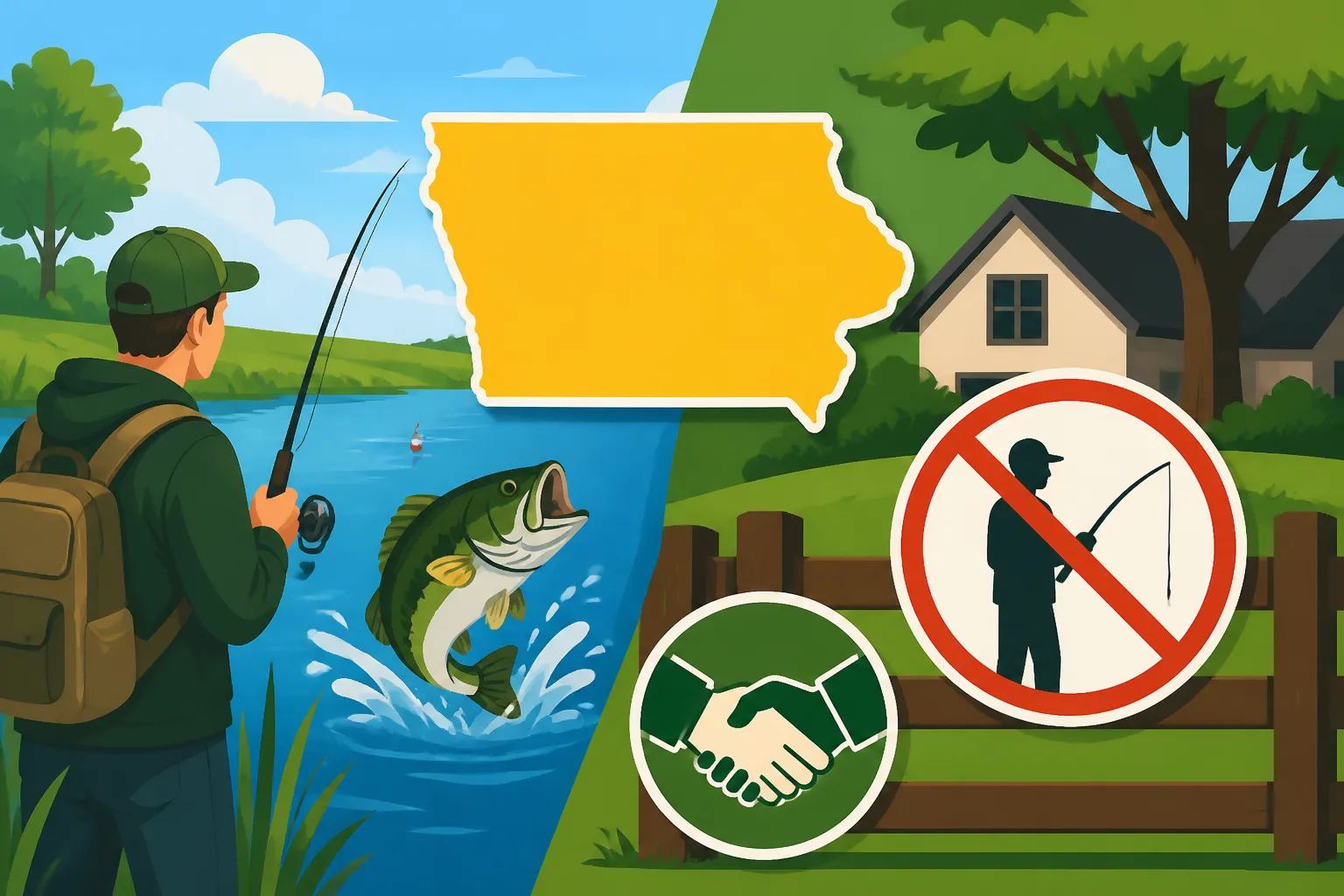
Always get permission before fishing on private land, even if you know the owner. A quick call or knock on the door goes a long way in building trust. Respect property lines, close gates, don't litter, and drive only on designated paths. These courtesies ensure that private property remains accessible to those who are invited. While bag limits might not apply to a truly private, self-contained pond you own, it's still good practice to manage your catch to maintain a healthy fish population in your water. If you're fishing a stream that runs through private land, remember that state daily bag limits, like those for crappie and sunfish in the Crappie and Sunfish Limits in Iowa article, or the maximum number of poles you can use, found in How Many Fishing Poles You Can Use in Iowa, still apply.
Consider this: even if you own the landlocked pond and don't technically need a license, adhering to good conservation practices helps foster a positive image for all anglers. It also demonstrates respect for the fish and the environment, which is what the spirit of the Iowa Fishing License Guide is all about. You might even find some specialized fishing gear or books on sustainable pond management on Amazon to help you care for your aquatic ecosystem.
| Scenario for Fishing on Private Property | License Required? | Explanation |
|---|---|---|
| Landowner fishing their own truly landlocked pond (no public inlet/outlet) | No | Landowner and immediate family residing on the property are exempt for this specific pond only. |
| Guest fishing a landowner's truly landlocked pond | Yes | Guests are not covered by the landowner's exemption and must have a valid license. |
| Fishing a pond with a connection (inlet/outlet) to public waters | Yes | Such ponds are considered part of the public water system for regulatory purposes, regardless of land ownership. |
| Fishing a stream or river flowing through private land | Yes | Streams and rivers are generally public waters; a license is always required. |
| Fishing during Iowa Free Fishing Weekend Guide (on private land) | No | During designated free fishing weekends, licenses are temporarily waived for all waters, including those on private property where fishing is allowed. |
| Youth under 16 fishing on any private property | No | Children under 16 are exempt from license requirements statewide. See Fishing License Requirements for Visiting Anglers Under 18. |
Disclaimer
Please remember that fishing regulations can change. While this guide aims to provide accurate and up-to-date information, it is your responsibility to verify the latest Iowa DNR regulations before you go fishing. Always check the official Iowa DNR website or current regulations booklet for the most precise and timely details.