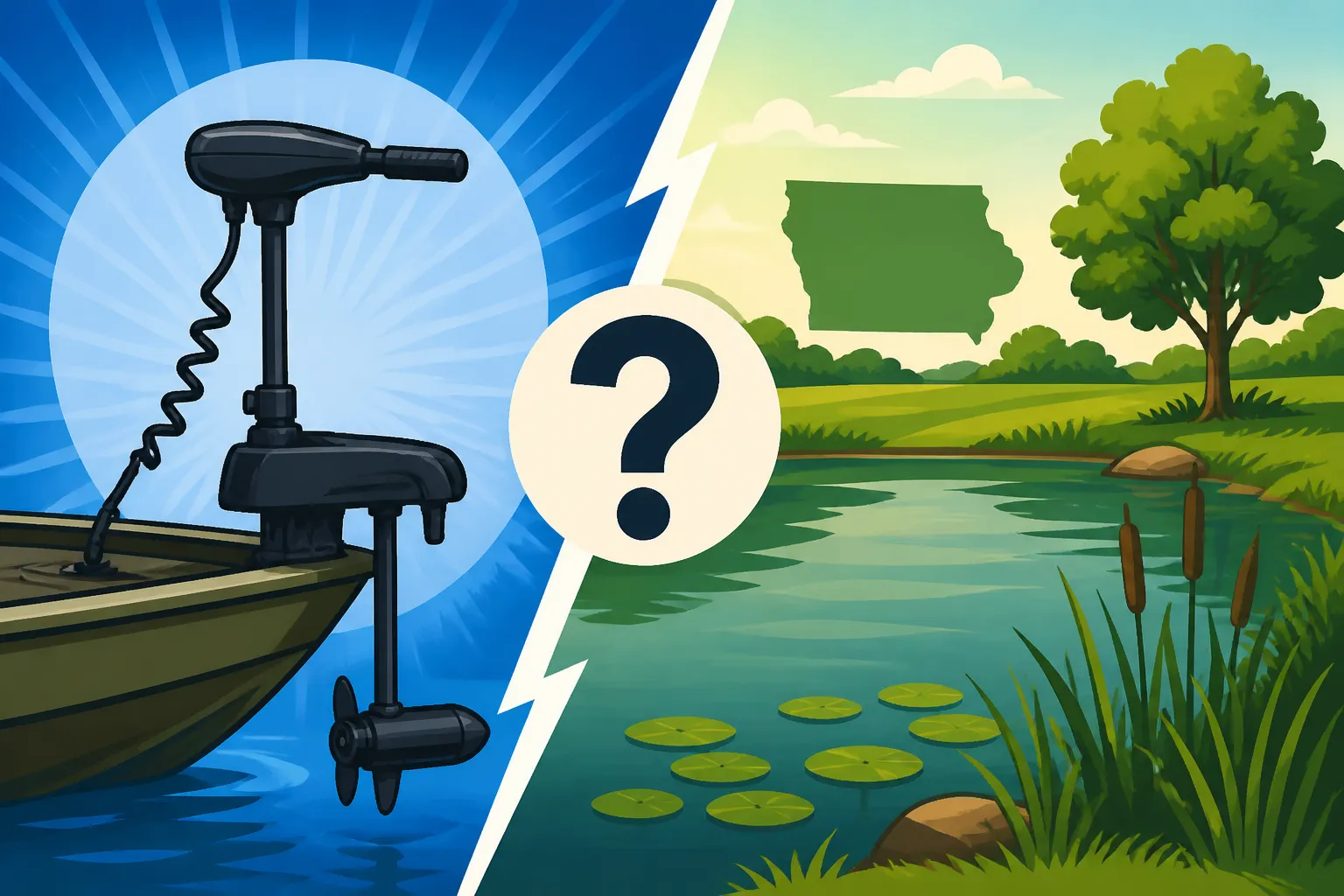
Do You Need a Trolling Motor for a Small Pond?
Oh, the age-old question for those of us who love chasing panfish and bass in those cozy, quiet Iowa ponds! You've found yourself staring at that perfect little pond, maybe a private farm pond or a small county park lake, wondering if you really need to lug out a trolling motor. Or maybe you're just starting out, eyeing an inflatable or a small john boat, and the idea of adding a motor feels like overkill – or a whole new expense. It’s a common dilemma, trust me. Many anglers stand on the bank, or paddle a short distance, and debate if the simplicity of silence outweighs the convenience and control a trolling motor offers. This guide is going to walk you through everything you need to consider, from the type of pond to your fishing style, so you can make the best choice for your next Iowa fishing adventure.
Understanding Small Pond Dynamics in Iowa
Iowa is dotted with an incredible number of small ponds, lakes, and reservoirs, each with its own character. Some are public, tucked away in state parks or county conservation areas, while others are private treasures on farmland, accessible only by invitation. But what makes a "small pond" truly small, and why does that matter when we talk about propulsion?
What Defines a "Small Pond" for Anglers?
When we talk about a "small pond" in Iowa, we're generally not talking about massive bodies of water like Rathbun Lake or the Iowa Great Lakes. Instead, we're envisioning something that could range from a couple of acres to perhaps 50 or 100 acres. These are often the kind of places where you can see the other side, or at least a good portion of it, from where you launch.
The defining characteristics aren't just about surface area, though. Depth plays a huge role. Many small Iowa ponds are relatively shallow, especially compared to natural lakes. This can mean more weed growth, more submerged structure close to the surface, and often, more limited deep-water fishing opportunities. Access also defines them: some are easily fished from shore, others require a small boat to reach the prime spots in the middle or along overgrown banks. The size and nature of these ponds often mean that subtle movements and quiet approaches are key to success, particularly for finicky bass or crappie hanging around shallow cover.
Challenges of Fishing Small Ponds Without a Motor
Imagine this scenario: you're in your trusty little jon boat or kayak on a beautiful, calm Iowa morning. You paddle out to a promising weed line, cast your lure, and wham! a nice bass hits. You reel it in, excited. Then, as you go to make your next cast, a gentle breeze picks up, slowly but surely pushing your craft away from that productive spot. You drop your paddle, make a few more casts, but now you're too far to reach the sweet spot. Frustration sets in, and you have to paddle back, potentially spooking the very fish you're trying to catch.
This is a classic challenge. Without a trolling motor, you're at the mercy of the elements. Wind, even a slight breeze, can be your biggest adversary on a small pond. It pushes your boat, makes precise casting difficult, and prevents you from holding a steady position over a submerged brush pile or a rocky point. If you're using oars or a paddle, every stroke creates noise and movement that can send wary fish scattering. This constant battle against drift means you spend less time fishing effectively and more time repositioning. For dedicated anglers who want to dissect a piece of structure or slowly work a bait through a specific zone, relying solely on paddle power can be incredibly limiting and, frankly, quite exhausting. For many, that's where the simplicity of bank fishing comes into play, but it doesn't give you access to everything. You might find some helpful insights in Shore Fishing Techniques for Beginners if you lean that way.
The Case For a Trolling Motor on Small Ponds
Alright, let's talk about why a trolling motor, despite feeling like an "extra" for a small pond, can be an absolute game-changer. It's not just about moving from point A to point B; it's about the quality and effectiveness of your fishing experience.
Enhanced Control and Positioning
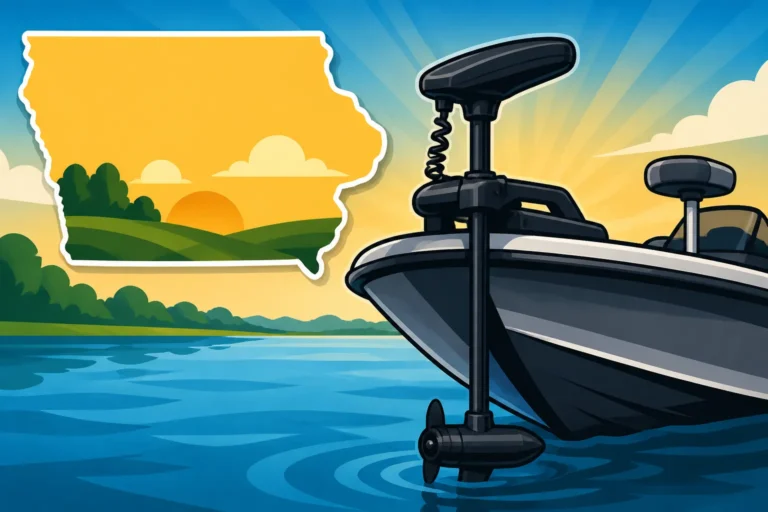
This is where a trolling motor truly shines. Think about it: you want to keep your bait in a very specific strike zone along a drop-off, or slowly retrieve a crankbait parallel to a sunken tree. With a trolling motor, you can maintain a precise speed and direction, even against a light breeze. You can inch your boat forward, hold it steady, or even use it to subtly pivot your craft for a better casting angle.
Imagine approaching a small cove filled with lily pads. Instead of paddling in, creating splashes and commotion, a trolling motor allows you to glide silently, easing your way into the prime casting positions. You can work the edges of the pads, drop your jig into pockets, and retrieve your lure with consistent speed, all while keeping your hands free to focus on fishing. This level of control is virtually impossible with oars or a paddle, which demand constant attention and often disrupt your rhythm. It’s like having an invisible hand gently guiding your boat, allowing you to focus entirely on the fish. For those who want to cover water efficiently and effectively, especially when hunting for those elusive trophy bass, a trolling motor provides unparalleled command over your vessel.
Stealth and Quiet Operation
Pond fish, especially those in smaller, clearer waters, can be incredibly wary. The sound of oars clunking against the gunwales, the splash of a paddle, or even the subtle scraping of a paddle on the bottom can send them darting for cover. This is where the quiet nature of an electric trolling motor becomes a massive advantage.
Unlike a gas-powered outboard, which is usually overkill and often restricted on small Iowa ponds anyway, a trolling motor operates with minimal noise. It allows you to approach fishing spots with extreme stealth, getting closer to cover and allowing you to present your bait without alerting the fish to your presence. This quiet approach is particularly crucial when you're targeting shallow-water species or fishing in areas with heavy vegetation where fish often hold tight to cover. You can glide along weed lines, creep up to fallen logs, or explore shallow flats with confidence, knowing that your boat isn't broadcasting its arrival. This silent advantage means more natural presentations and, ultimately, more bites. If you're looking for gear specifically for small craft, you might want to check out Best Boats for Iowa Farm Ponds for some ideas on compatible vessels.
Reaching Untouched Spots
One of the most frustrating aspects of pond fishing without a motor is seeing those juicy, fish-holding spots just out of reach. Maybe it's a tight pocket in a dense mat of weeds, a stretch of submerged timber along the far bank, or a quiet corner where the wind always pushes you away before you can get a good cast. These are the places where fish feel safest, and often, where the biggest ones lurk.
A trolling motor, even a small one, gives you the power to navigate into these previously inaccessible areas. It allows you to push through light vegetation, maneuver around submerged obstacles, and hold your position in tight quarters. No more wistfully staring at that perfect laydown across the pond; you can now slowly motor over and present your bait right where the fish are hiding. This expanded access opens up a whole new world of fishing opportunities on a small pond, transforming formerly frustrating areas into productive hotspots. Imagine being able to effortlessly navigate to the back of a shallow bay, or slowly troll a jig along a deep drop-off that was just too far to effectively work with a paddle. It makes a significant difference.
When You Might Not Need a Trolling Motor
While a trolling motor offers fantastic advantages, it's certainly not a one-size-fits-all solution. There are plenty of situations and fishing styles where you might find it more of a hindrance than a help.
Truly Tiny Ponds and Farm Ponds
Some ponds are just plain tiny. We're talking about a quarter-acre to maybe a couple of acres – often private farm ponds that are essentially overgrown puddles stocked with bluegill and bass. In these miniature aquatic environments, the entire pond might be fishable from a single spot on the bank, or easily traversed with a few strokes of a paddle in a small canoe or jon boat.
For these genuinely diminutive waters, a trolling motor can be overkill. The setup time for a battery, motor, and mounts might take longer than it would to simply paddle across the entire pond. The cost and maintenance involved might not justify the limited benefit. If you're just looking to get out for a quick hour of panfishing with the kids on a small backyard pond, the simplicity of a paddle or just walking the bank often makes more sense. Plus, these types of ponds sometimes have very specific rules, or even no-wake restrictions, that make complex boating equipment unnecessary. Sometimes, less truly is more, especially if you're exploring Best Boats for Iowa Farm Ponds where simplicity might be key.
Budget and Simplicity Considerations
Let's be real: adding a trolling motor means extra cost. Beyond the motor itself, you'll need a marine battery, a battery charger, and potentially mounting hardware. This can add up, especially if you're trying to keep your fishing hobby as budget-friendly as possible. Not to mention, it's more gear to transport, set up, and store.
For some anglers, the appeal of fishing lies in its simplicity. Just grab a rod, a small tackle box, and go. Adding a battery that needs charging, a motor that needs to be mounted and unmounted, and more heavy gear can detract from that straightforward experience. If your primary goal is casual fishing, where you're not trying to precisely work a structure or cover vast amounts of water, then the investment in time, money, and effort for a trolling motor might not align with your fishing philosophy. Sometimes, the peace of mind that comes from having less gear to worry about is worth more than the added convenience of a motor. Plus, finding space for all that extra equipment in a small garage or vehicle can be a challenge. You can always find great deals on basic gear at places like Bass Pro Shops or even on Amazon if you decide to go the motor route, but it’s definitely an added expense.
Alternative Propulsion Methods
Before you commit to a trolling motor, consider the perfectly viable alternatives for small ponds. Oars and paddles, while requiring more physical effort and sometimes being less precise, are fantastic options for smaller boats and calmer conditions. They are silent, lightweight, require no charging, and are virtually maintenance-free.
Kayaks and canoes are particularly well-suited for small pond fishing, and they are inherently designed for paddle power. Many kayak anglers love the hands-free nature of pedal-driven kayaks, which offer some of the same advantages of a trolling motor (propulsion while fishing) without the need for a battery. For those looking to enjoy the tranquility of a small pond without the hum of a motor, these human-powered options provide an excellent way to get out on the water. Ultimately, your choice depends on how much water you need to cover, how stealthy you need to be, and how much effort you're willing to put in. Don't forget, even small craft still need safety gear; read up on Best Life Jacket Type for Kayak Fishing to make sure you're prepared.
| Feature | Trolling Motor Advantage | Paddle/Oar Advantage |
|---|---|---|
| Control/Position | Precise, hands-free boat positioning for accurate casting | Less precise, requires constant attention, disrupts casting |
| Stealth | Nearly silent operation, minimal fish disturbance | Silent if used carefully, but strokes can create noise |
| Effort | Minimal physical effort, ideal for long sessions | Requires physical effort, can be tiring |
| Reach | Access to distant or difficult-to-reach spots, holds position | Limited reach, struggles against wind/current, hard to hold |
| Cost | Higher initial investment (motor, battery, charger) | Very low cost, often included with boat |
| Setup/Storage | More components to manage, requires charging | Simple, minimal setup, easy storage |
| Speed | Consistent slow trolling speeds, decent travel speed | Variable, dependent on angler's effort |
Choosing the Right Trolling Motor for Your Small Pond Adventures
So, you've weighed the pros and cons, and you've decided a trolling motor is indeed going to elevate your small pond fishing game. Awesome! Now, how do you pick the right one without getting bogged down in technical jargon?
Thrust, Shaft Length, and Battery Considerations
When looking for a trolling motor for a small pond, you'll want to think about three key things:
-
Thrust: This is the "power" of the motor, measured in pounds. For a small jon boat, canoe, or kayak on a pond, you generally don't need a huge amount of thrust. Motors in the 30-55 pound thrust range are often more than sufficient. You're not trying to win a race; you're looking for precise control and slow, steady movement. Too much thrust is unnecessary and will just drain your battery faster.
-
Shaft Length: This is crucial for avoiding hitting the propeller on the bottom in shallow ponds, or having it pop out of the water in chop. Measure the distance from where the motor will mount to the waterline. You want the propeller to be submerged by at least 12 inches to operate efficiently. For small boats and typical Iowa pond depths, a shaft length of around 30 to 42 inches is usually adequate. If you get one that's too short, it'll constantly "air out," and if it's too long, it might drag in super shallow spots.
-
Battery: Trolling motors are electric, so they need a battery. You'll want a deep cycle marine battery, specifically designed for a slow, steady discharge over a long period. The battery's amp-hour (Ah) rating will give you an idea of how long it will last. For small ponds, a single 12-volt battery is typically all you need. Consider carrying a smaller, lighter battery than you might for a big lake, especially if portability is a concern. Remember, you'll also need a charger, so factor that into your initial setup. Best Trolling Motor Size for a Boat on Iowa Lakes might offer more context on larger options, but for ponds, lean smaller.
Bow Mount vs. Transom Mount
For small boats used on ponds, you'll typically be looking at one of two mounting styles:
-
Transom Mount: These motors clamp directly onto the back of your boat (the transom). They are usually simpler, more affordable, and incredibly easy to install and remove. For many small jon boats, canoes, or even some kayaks, a transom mount is the perfect, no-fuss solution. You steer them by hand, using a tiller handle, which gives you direct control. This is often the go-to for casual pond fishing.
-
Bow Mount: These motors are mounted on the front (bow) of the boat. They offer superior control, as they "pull" the boat through the water rather than "pushing" it from the back. Many bow-mount motors come with foot pedals or remote controls, allowing for truly hands-free operation while you fish. However, they are generally more expensive, require more complex installation, and are typically reserved for larger jon boats or bass boats. For the truly small pond angler in a basic craft, a transom mount is usually the practical and economical choice.
Essential Accessories
Once you've got your motor, you'll need a few other bits and bobs to make it work:
- Battery Box: A good battery box will protect your battery from the elements and provide a convenient way to connect your motor's wires. Some even have built-in charge indicators or USB ports. You can find simple, durable options at Bass Pro Shops or even a quick search on Amazon.
- Battery Charger: You absolutely need a marine-grade battery charger. Don't use a car battery charger, as deep cycle batteries require a different charging profile.
- Quick-Release Mount: If you plan on removing your motor frequently for transport or storage, a quick-release mount makes the process much faster and easier.
- Spare Propeller: It's always a good idea to have a spare prop. Shallow ponds are notorious for hidden stumps and rocks, and a damaged propeller can quickly end your fishing day.
Don't forget the safety essentials too. Even on a small pond, wearing a life jacket is a smart move, and having basic Required Safety Equipment for Iowa Boats is always a good practice.
Ultimately, whether you need a trolling motor for your small Iowa pond fishing boils down to your personal fishing style, the size and nature of the pond, and your budget. If you crave precision, stealth, and access to every nook and cranny, a trolling motor will be a valuable addition to your gear. If you prefer simplicity, rely on shore access, or fish truly tiny waters, you might find that your arms and a good paddle are all the "motor" you need. Whatever you choose, the key is to get out there and enjoy the incredible fishing opportunities that Iowa's ponds have to offer!
Disclaimer
This article is for general informational purposes only and does not constitute professional advice. Laws, prices and regulations vary by location and change over time. Consult a qualified professional for guidance on your specific situation.