Is Walleye Season Different on the Mississippi River?
It's completely understandable to feel a bit lost when trying to figure out fishing regulations, especially when you're looking at a huge, iconic waterway like the Mississippi River. Many anglers, even seasoned ones, find themselves scratching their heads wondering if the rules for walleye on the Mississippi are the same as those for our beautiful inland Iowa lakes. The short answer is often "no," and this guide is here to untangle those specific differences so you can fish with confidence and stay on the right side of the law.
The Unique World of Mississippi River Border Water Regulations
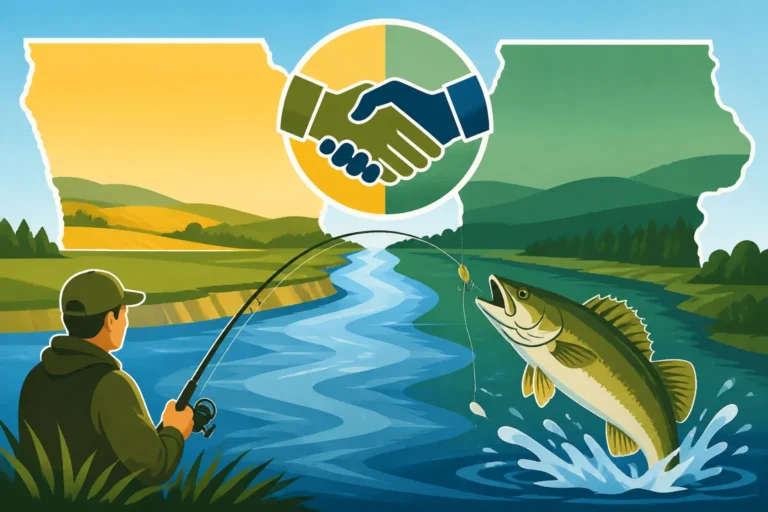
Fishing the Mississippi River in Iowa isn't quite like fishing Big Creek Lake or Lake Rathbun. The reason? The Mississippi is a border water, shared with neighboring states like Wisconsin and Illinois. This means a special set of rules often applies, designed to create a consistent and reciprocal experience for anglers from all adjacent states. It’s a bit of a dance between state agencies, all aimed at protecting the fishery while making it easy for folks to enjoy.
Imagine you're standing on the Iowa shore near Dubuque, casting into the mighty Mississippi. You might have an Iowa fishing license, but someone across the river in Illinois might have an Illinois license. For certain species, like walleye, these states often have reciprocal agreements. This means that if you possess a valid fishing license from Iowa, you can fish the shared waters of the Mississippi River bordering Illinois or Wisconsin. The catch, and it's a big one, is that you are usually bound by the regulations of the state whose license you hold. So, an Iowa license holder must follow Iowa's Mississippi River regulations, even if they drift into what might be considered "Illinois water" on the river. This distinction is crucial and can often lead to confusion if you're not paying close attention to which set of rules you're operating under.
When it comes to the specifics of Mississippi River fishing, you're looking at a different ballgame. The sheer size and ecological diversity of the river mean that fish populations, including walleye, behave differently than in a smaller, contained lake. This often necessitates different management strategies from the Iowa Department of Natural Resources (DNR) compared to inland waters. Navigating these rules successfully ensures you're contributing to the conservation efforts that keep this incredible fishery healthy for future generations.
Iowa's General Walleye Regulations Inland Waters
Before we dive deeper into the Mississippi River specifics, let's briefly touch on what you might typically expect for walleye regulations on Iowa's inland lakes and reservoirs. This comparison will highlight why the Mississippi River rules are distinct. Generally, for many of Iowa's public lakes and larger reservoirs like Clear Lake or Saylorville Reservoir, you’ll find a specific walleye season.
For instance, many popular walleye lakes in Iowa have a closed season for walleye and sauger, usually in the spring. This closure is critical because it protects these fish during their spawning period, ensuring they can reproduce successfully without added pressure from anglers. The exact dates can shift slightly year to year, but often, the season might close for a few weeks in March and April, reopening in early May. During this closed period, it is illegal to harvest walleye, even if you accidentally catch one – it must be immediately released. This is a common conservation practice and one that anglers generally understand helps maintain healthy fish stocks.
In addition to seasonal closures, inland waters also come with strict daily bag limits and minimum length limits. A common scenario might be a daily bag limit of 5 walleye, with a minimum length of 15 inches. Some lakes might even have slot limits, where fish within a certain size range (e.g., 20-25 inches) must be released, aiming to protect larger, spawning-potential fish. These nuanced rules are put in place based on local fish population assessments, habitat conditions, and angler pressure. Before heading out to any specific inland lake, it's always wise to check the latest Iowa Fishing Regulations Explained to ensure you're up-to-date, as these can vary significantly from one water body to another. You can often find great deals on fishing guides or rule books on Amazon that can help you decipher these details.
Key Differences for Mississippi River Walleye Season
Now, let's get to the heart of the matter: how walleye season on the Mississippi River typically differs from Iowa's inland waters. This is where many anglers get caught up, and understanding these distinctions is key to a smooth and successful trip.
Year-Round Fishing Season
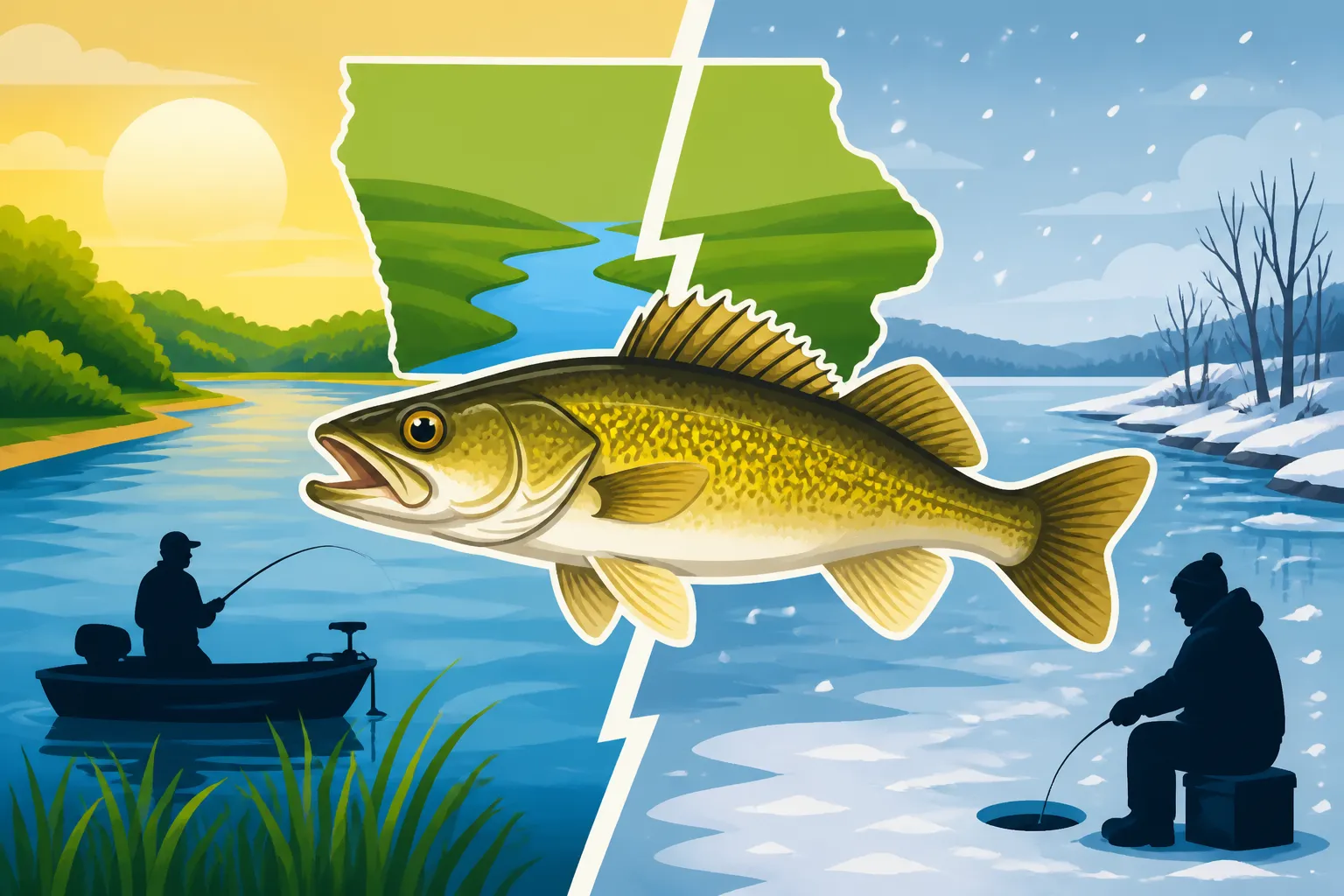
One of the most significant differences for walleye and sauger on the Mississippi River bordering Iowa (from Lock and Dam 10 near Guttenberg down to Keokuk, and even up through Pool 9 Fishing and Pool 10 Fishing) is that there is generally no closed season. That's right, you can fish for walleye year-round on these shared waters. This is a huge perk for anglers who love to target these delicious fish, as it offers far more flexibility than inland lakes with their specific spring closures. This year-round access is a direct result of those reciprocal agreements with Wisconsin and Illinois, recognizing the vastness of the river system and the different migratory and spawning patterns of river walleye populations.
While the season is open year-round, that doesn't mean conditions are always ideal. Walleye fishing on the Mississippi can be incredibly productive during different times of the year, from the spring spawning runs to ice fishing during the colder months. You'll find anglers targeting them below the dams in winter, or in backwater areas as ice starts to form. If you're looking to hit prime walleye runs, understanding When Iowa Walleye Season Opens and closes for inland lakes can give you a comparative sense of how much more flexible the river is.
Bag and Length Limits on Border Waters
While the season is open, daily bag limits and length limits still apply, and they are often different from inland regulations. The Iowa DNR, in conjunction with its bordering states, sets these limits to manage the shared fishery effectively. For walleye and sauger combined, a common regulation on the Mississippi River border waters is a daily bag limit of 6 fish, with a minimum length of 15 inches for walleye and no minimum length for sauger. However, these numbers can change, and specific pools or areas might have slight adjustments, so always double-check.
It’s easy to get these numbers mixed up with inland lake regulations, where a 5-fish bag limit and a 15-inch minimum for both walleye and sauger might be more common. The rationale behind the river's higher bag limit for walleye/sauger combined and the different sauger length rule is typically related to the sheer abundance of these species in the extensive Mississippi River system and how they are managed across multiple states. This also means understanding Iowa Fishing Daily Bag Limits Guide is crucial, as inland limits can be much stricter.
Let's put this into a quick comparison table to make it crystal clear:
| Regulation | Typical Iowa Inland Walleye Rules | Mississippi River Border Water Walleye Rules |
|---|---|---|
| Season | Often closed during spring spawn (e.g., March/April) | Open Year-Round |
| Daily Bag Limit | 5 walleye/sauger combined | 6 walleye/sauger combined |
| Walleye Minimum Length | 15 inches | 15 inches |
| Sauger Minimum Length | Often 15 inches (may vary by lake) | No minimum length |
| Reciprocal Agreements | N/A (single state jurisdiction) | Yes (with WI, IL for shared waters) |
(Note: These are common regulations and can be subject to change. Always consult the current Iowa DNR regulations before fishing.)
Reciprocal Fishing Rules and License Requirements
The concept of Reciprocal Fishing Rules on the Mississippi River Border is perhaps the most important detail to grasp. As mentioned earlier, if you have a valid Iowa fishing license, you can fish the shared waters of the Mississippi River that border Wisconsin or Illinois. This means you don't need a separate license from Wisconsin or Illinois to fish the main channel or adjacent backwaters on the Iowa side.
However, and this is where it gets tricky, you must follow the fishing regulations (bag limits, length limits, etc.) of the state whose license you possess. So, if you're an Iowa license holder, you follow Iowa's Mississippi River walleye regulations, even if you are casting toward the Illinois bank. If you happen to possess a Wisconsin license (and qualify as a Wisconsin resident), you would follow Wisconsin's Mississippi River regulations. It’s always best practice to carry proof of your residency along with your license.
This system simplifies things immensely, as you don't need to purchase multiple state licenses just to fish one body of water. But it does place the onus on the angler to know their home state's specific Mississippi River rules. For instance, if you're targeting walleye on Mississippi River Pool 12 Fishing, whether you're licensed in Iowa or Illinois determines which set of rules you're bound by. It’s a good idea to keep a digital copy of your state’s regulations on your phone, or even a laminated card in your tackle box. Many useful tools like waterproof regulation guides can be found on Amazon.
Practical Tips for Fishing Walleye on the Mississippi River
Fishing for walleye on the Mississippi River offers incredible opportunities, but its vastness and unique characteristics mean that specific techniques and preparations can greatly improve your success and ensure you stay compliant with the rules.
Understanding River Structure and Current
Unlike many lakes, the Mississippi River is a dynamic system with constantly changing currents, depths, and structures. Walleye are ambush predators that love to hold in current breaks, behind wing dams, submerged trees, rock piles, and channel edges. Knowing how to read the river and identify these key areas is paramount. Fish tend to congregate where they can expend minimal energy while still having access to passing baitfish.
For example, below the navigation dams (like those near Guttenberg, Bellevue, or Dubuque), walleye will often stack up in eddies and slack water created by the dam's outflow. Wing dams, those rock structures extending from the bank into the river, are also classic walleye haunts. Fish will sit on the downstream side, out of the main current, waiting for food to drift by. Understanding this, you might focus your efforts on Fishing Below Lock and Dam 12 at Bellevue. A good fish finder can be your best friend here, helping you locate these subtle current breaks and underwater structures. There are many compact, portable fish finders available on Amazon that are excellent for both boat and even shore anglers.
Effective Walleye Techniques for the River
Given the diverse environment of the Mississippi River, a variety of techniques can be effective for walleye. Jigging is a staple, especially with current. Lead head jigs tipped with plastics, live minnows, or nightcrawlers are highly effective, particularly around structure and current breaks. You'll want to use heavier jigs than you might on a calm lake to ensure your bait gets down to the fish in the moving water.
Trolling with crankbaits is another popular and productive method, especially when covering large areas or trying to locate schools of fish. Different crankbait colors and sizes work best depending on water clarity and depth. During the spring and fall, a slow troll upstream or downstream along channel edges can be deadly. When the current is stronger, many anglers employ a "three-way rig" or a "bottom bouncer" to present live bait (like minnows or leeches) or spinner rigs close to the riverbed without getting snagged constantly.
For a deeper dive into techniques, our guide on How to Catch Walleye in Iowa offers more generalized advice, but remember to adapt it to the river's unique conditions. Don't be afraid to experiment with different presentations and baits, keeping an eye on local conditions.
Essential Gear for River Walleye Fishing
Your gear setup for the Mississippi River might need to be a bit more robust than what you use for panfish in a farm pond. Medium-heavy to heavy action rods, paired with reliable baitcasting or spinning reels, are often preferred to handle larger fish and the strong current. Spooling up with braided line, which offers superior sensitivity and strength, is a popular choice among river anglers. You can find a wide range of suitable rods, reels, and lines on Amazon, often with reviews from other river anglers.
Beyond your rod and reel, a good selection of lead-head jigs (1/4 oz to 3/4 oz, or even heavier), various crankbaits (diving and shallow-running), and a plentiful supply of sinkers are crucial. Don't forget a sturdy landing net, as a big river walleye can be a handful, especially when you're battling current. Additionally, safety equipment for your boat is non-negotiable. Our guide on Best Boats for the Mississippi River highlights specific considerations for watercraft on this vast river, including necessary safety gear.
What to Do If You Catch Other Species
While targeting walleye, you're bound to encounter other fantastic fish species in the Mississippi River, especially if you're fishing in diverse habitats like the backwaters. Crappie, bass (both largemouth and smallmouth), catfish, and various panfish are all common catches. It's important to be aware of the regulations for these other species too, as their bag and length limits will also fall under Iowa's Mississippi River regulations. For example, if you're using Best Lures for Panfish and happen to hook a walleye, you need to ensure it meets the walleye regulations. The beauty of the Mississippi is its incredible biodiversity, offering a multi-species angling adventure every time you cast a line.
Disclaimer
Please remember that fishing regulations, including those for walleye season and limits on the Mississippi River, can change. While this guide aims to provide accurate and up-to-date information, it is always your responsibility to consult the latest official Iowa Department of Natural Resources (DNR) fishing regulations before you head out on the water. These resources are typically available on the DNR's website or in print at local license vendors.