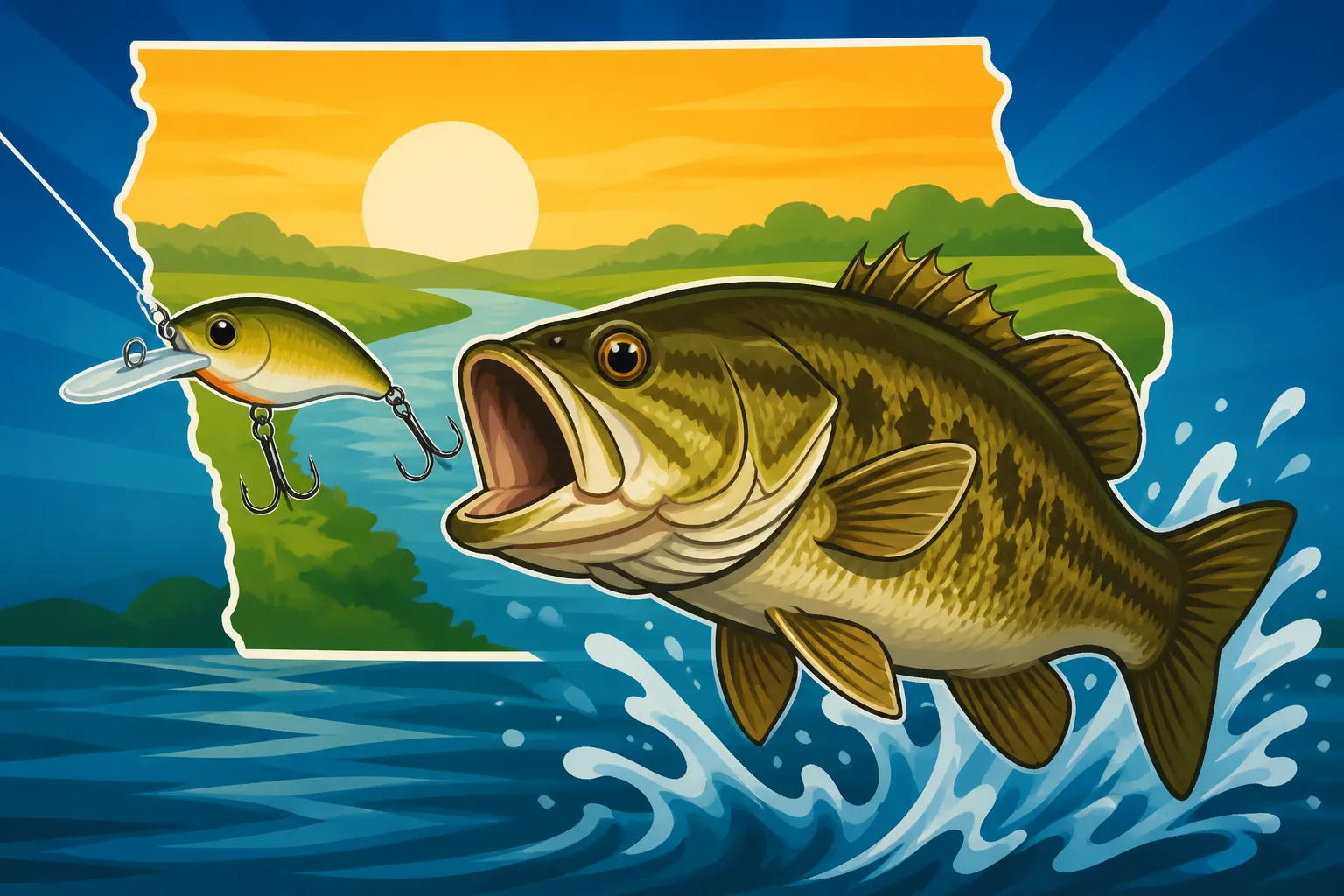
Crankbait Fishing for Iowa Smallmouth Bass
Catching smallmouth bass in Iowa can sometimes feel like you're chasing ghosts, especially with their reputation for being incredibly wily and residing in some tricky spots like swift rivers or rocky lake structures. It's frustrating when you know they're there, but your usual tactics just aren't getting those aggressive strikes. This comprehensive guide is here to demystify crankbait fishing for Iowa smallmouth, helping you understand their haunts, pick the right lures, and master the techniques to consistently land these feisty fish.
Understanding Iowa Smallmouth Bass Habitat and Behavior
Smallmouth bass are incredible fighters, known for their powerful runs and aerial acrobatics. But to catch them consistently with crankbaits, you first need to understand where they live and what makes them tick in the varied waters of Iowa. They aren't just everywhere; they have preferences, and knowing these can be the key to unlocking consistent success.
Preferred Structures and Cover
Iowa smallmouth bass are creatures of structure. They love anything that breaks up the current, offers ambush points, or provides shade and protection. In rivers, you'll often find them congregating around current breaks created by wing dams, rock piles, bridge pilings, fallen trees, and gravel bars. These spots offer a respite from strong currents while still providing an excellent vantage point to ambush prey. The cleaner, rockier rivers like the Cedar River or Upper Iowa River are classic smallmouth territory. On larger river systems like the Mississippi River, focus on the eddies downstream of wing dams or current seams where slower water meets faster flow.
In Iowa's lakes and reservoirs, smallmouth will gravitate towards hard bottom areas. Think rocky points, submerged humps, gravel flats, and riprap shorelines. Places like West Okoboji Lake and Spirit Lake, with their clear water and abundant rock, are prime smallmouth destinations. They often relate to the deepest available cover, especially during bright sunny days or in the warmer months. These fish are masters of camouflage, blending seamlessly with their surroundings, which is why presenting a crankbait accurately to these specific structures is so vital. Understanding their preferred structures is the first step in successful Crankbait Fishing for Iowa Smallmouth Bass.
Seasonal Movements and Feeding Patterns
Smallmouth bass aren't static; their locations and feeding behaviors change significantly with the seasons, driven largely by water temperature and spawning cycles. In spring, as water temperatures rise into the 50s Fahrenheit, smallmouth begin to move from deeper wintering holes to shallower, rockier areas for spawning. During this pre-spawn period, they are actively feeding, trying to pack on energy. This is often an excellent time for aggressive crankbait presentations, as they'll strike to feed and to protect their impending nests.
During summer, as water temperatures peak, smallmouth can become more nocturnal or move to deeper, cooler waters, often relating to offshore humps, ledges, or deep weed edges if the lake has them. Early mornings and late evenings are often the best times to find them actively chasing crankbaits in shallower water. As fall approaches and water temperatures cool down into the 60s and 50s, smallmouth go on a major feeding binge, trying to gorge themselves before winter sets in. This can be one of the most productive times for crankbait fishing, as the fish are aggressive and often grouped up. They'll actively chase baitfish, and crankbaits that mimic these forage species are incredibly effective.
Crankbait Selection: Matching the Hatch and Conditions
Choosing the right crankbait isn't just about grabbing the prettiest one off the shelf. It's about understanding the specific conditions you're facing and what kind of forage the smallmouth are likely eating. Iowa waters present diverse scenarios, and having a diverse crankbait arsenal is key to adapting.
Diving Depths and Lip Styles
Crankbaits come in a dazzling array of shapes, sizes, and, most importantly for smallmouth, diving depths. Matching the crankbait's diving depth to the depth the fish are holding at, or the depth of the structure you're targeting, is absolutely crucial.
- Shallow Divers and Squarebills: These baits typically run from 0 to 5 feet deep. Squarebill crankbaits, with their distinct blunt, square lips, are fantastic for fishing around heavy cover like stumps, rocks, and laydowns in shallower water. Their design allows them to deflect off obstacles rather than getting hung up, triggering aggressive reaction strikes. These are perfect for fishing the shallow rapids and rocky edges of rivers or casting parallel to riprap shorelines on lakes. Brands like Strike King and KVD offer excellent squarebill options.
- Medium Divers: These are your workhorses, typically diving from 6 to 12 feet. They have a more rounded or pointed lip and are versatile for a variety of situations. Use them when smallmouth are holding slightly deeper on rocky points, submerged humps, or the break lines of river channels. They're excellent for covering water and locating active fish in that mid-range depth.
- Deep Divers: When smallmouth go deep, especially in summer or on larger reservoirs like Rathbun Lake or Coralville Reservoir, deep-diving crankbaits are your best friend. These often have long, slender lips and can reach depths of 15 feet or more, depending on line size and retrieve speed. They are designed to "dig" down quickly, allowing you to present a bait effectively to fish holding on deep ledges or offshore structure. While sometimes overlooked for smallmouth, they can be phenomenal when the fish are hunkered down.
Color Patterns and Finishes
The right color can make all the difference, especially in Iowa's diverse water clarities. It's not just about what looks good to you, but what looks natural and enticing to the fish.
- Natural Baitfish Patterns: When the water is clear, like in many of Iowa's trout streams or the clearer Great Lakes, natural baitfish patterns are often the most effective. Colors like shad, perch, bluegill, or crawfish imitations work wonders. Think realistic silvers, greens, browns, and oranges. The goal is to mimic what the smallmouth are already feeding on. Having a good selection of these realistic patterns on hand, easily found on platforms like Amazon, will serve you well.
- Bright and Aggressive Colors: In stained or muddy water, or on overcast days, you might need something with more flash and vibration to get noticed. Chartreuse, fire tiger, or bright orange colors can be irresistible. These colors provide a strong contrast and are easier for fish to see in reduced visibility. Sometimes, a bright color can trigger a reaction strike even from less active fish.
- Matte vs. Glossy Finishes: The finish of your crankbait can also play a role. Matte finishes tend to be less reflective and more subtle, often preferred in very clear, sunny conditions where fish might be easily spooked. Glossy or metallic finishes, on the other hand, offer more flash and shimmer, making them excellent choices for darker days, stained water, or when you want to attract attention from a distance. Experimentation is key; sometimes, a subtle change can make a huge difference.
Crankbait Techniques for Rivers and Lakes
Successfully fishing crankbaits for smallmouth in Iowa isn't just about casting and reeling; it's about understanding how to present the bait effectively in different environments and how to trigger those aggressive strikes. The current in rivers and the vastness of lakes each demand specific approaches.
River Fishing Strategies
River smallmouth are often found in areas with current, so your retrieve needs to account for that. The key is to make your crankbait look like an easy meal being swept along or struggling against the flow.
- Casting Upstream and Cross-Current: One of the most effective techniques is to cast your crankbait upstream and slightly across the current. This allows the bait to work its way downstream naturally, resembling a stunned or disoriented baitfish. As the bait swings through the strike zone, reeling at a moderate pace, the current will help impart a natural action to the crankbait. Pay close attention as the bait swings into slower water or near structure, as this is often where strikes occur. This tactic is particularly lethal near riffles, rapids, and the edges of current seams.
- Targeting Current Seams and Eddies: Smallmouth absolutely love current seams – those invisible lines where faster water meets slower water. These are prime ambush points. Cast your crankbait to run along these seams, or into the faster water to allow it to drift into the seam. Similarly, eddies behind rocks, logs, or bridge pilings are fantastic spots. Cast your crankbait into the main current and let it sweep into the eddy, making sure it bumps any submerged structure along the way. The sudden change in current direction often triggers a strike. Remember, a good understanding of Smallmouth Bass Habitat on the Mississippi River can significantly improve your river fishing success.
- Deflection is Key: A huge part of crankbait fishing, especially with squarebills in rivers, is deflection. Don't be afraid to let your crankbait hit rocks, logs, or other submerged obstacles. When a crankbait deflects off structure, it creates an erratic, sudden movement that mimics a fleeing baitfish or crawfish. This unpredictable action often triggers a vicious reaction strike from a nearby smallmouth. Experiment with different retrieve speeds and angles to maximize these deflections.
Lake and Reservoir Tactics
Lakes and reservoirs offer different challenges and opportunities. Smallmouth here often relate more to depth and specific structural elements.
- Targeting Rocky Points and Humps: In lakes like West Okoboji or Clear Lake, rocky points and submerged humps are magnets for smallmouth. Use medium to deep-diving crankbaits to systematically work these areas. Position your boat so you can cast across the point or hump, allowing your crankbait to "climb" over the structure and then drop off the other side. The moment it comes over the edge of a drop-off, or bounces off a rock, is often when a strike occurs. A good fish finder can be invaluable for identifying these subtle depth changes and hidden structures.
- Working Riprap and Shorelines: Many Iowa lakes and reservoirs have riprap (rocky) shorelines, especially near dams, bridges, and causeways. These areas provide excellent habitat and forage for smallmouth. Cast squarebills or shallow-diving crankbaits parallel to the shoreline, keeping your bait just above or bumping the rocks. The constant deflection off the riprap will generate strikes. This is especially effective in spring and fall when fish are shallower.
- Deep Water Cranking: During the hottest parts of summer, or in larger, deeper reservoirs, smallmouth may move to deeper ledges, humps, or channels. This is where your deep-diving crankbaits shine. Long casts are often necessary to reach these offshore areas. Using electronics to identify schools of baitfish or individual fish holding tight to structure can help you pinpoint your casts. A steady retrieve with occasional pauses or changes in speed can be effective. Consider exploring Fishing Coralville Reservoir in Iowa for excellent deep-water smallmouth opportunities.
| Crankbait Type | Diving Depth | Ideal Conditions/Habitat | Retrieve Style | Best for Iowa |
|---|---|---|---|---|
| Squarebill | 0-5 feet | Shallow rivers, rocky banks, riprap, laydowns | Medium to fast, deflecting off cover | Cedar River, Mississippi River, Clear Lake riprap |
| Shallow Diver | 0-7 feet | Flats, weed lines, shallow points, clearer rivers | Steady, varied speed, occasional pause | Upper Iowa River, Spirit Lake shallow flats |
| Medium Diver | 6-12 feet | Mid-depth points, humps, creek channels, river bends | Steady, slow to moderate, contact with bottom/structure | West Okoboji, Saylorville Reservoir, deeper river pools |
| Deep Diver | 12-20+ feet | Deep ledges, offshore humps, main lake points, summer fish | Long casts, slow to moderate, contact with bottom | Rathbun Lake, Coralville Reservoir, deep Great Lakes |
| Lipless Crank | Variable/Sink | Grass flats, open water, windy conditions, schooling fish | Yo-yo retrieve, steady retrieve, rip-and-fall | Clear Lake, West Okoboji (over grass) |
Gear Up: Rods, Reels, and Line for Crankbait Fishing
Just like a golfer needs the right club for the right shot, an angler needs the right tackle to get the most out of their crankbaits. The nuances of rods, reels, and line can significantly impact your casting distance, accuracy, and, most importantly, your ability to feel bites and land fish. Skimping on the right setup can lead to missed opportunities and frustration, which we definitely want to avoid when chasing Iowa smallmouth.
Rod Selection: Action and Length
Choosing the right rod for crankbait fishing is paramount. You're not looking for a broomstick; you need something that can handle the specific dynamics of casting and retrieving these lures.
- Medium-Heavy to Medium Power: For most smallmouth crankbait applications, a medium-heavy to medium power rod is ideal. This power allows you to cast a variety of crankbait sizes effectively while still having enough backbone to fight a feisty smallmouth in current or around structure.
- Moderate to Moderate-Fast Action: This is where crankbait rods differ from many other bass fishing rods. Instead of a fast or extra-fast tip, a moderate or moderate-fast action is preferred. This means the rod bends more deeply into the blank, rather than just at the tip. Why? It creates a parabolic bend that helps in a few key ways:
- Casting Distance: The more "flex" the rod has, the more it loads up on the backcast, launching your crankbait further, which can be crucial for covering water.
- Shock Absorption: The softer action acts like a shock absorber, preventing fish from tearing off treble hooks, especially during those violent head shakes smallmouth are famous for. It also helps to absorb the impact when a fish strikes aggressively, giving them a moment to fully engulf the bait.
- Sensitivity (Counter-intuitively): While not as "crisp" as a fast action, the moderate action can still transmit subtle changes in lure vibration and contact with structure, especially when paired with the right line. You might find excellent options on Amazon from brands like St. Croix or Fenwick that offer rods specifically designed for crankbait applications.
- Length: A rod length between 6'6" and 7'6" is generally suitable. Shorter rods (6'6"-7'0") offer more accuracy for tight casting around river structure or docks. Longer rods (7'0"-7'6") excel at casting distance and provide better line control, especially when fishing larger open water areas or when you need to really lean into a fish. For example, a 7'0" medium-heavy, moderate action rod would be an excellent all-around choice for Crankbait Fishing for Iowa Smallmouth Bass.
Reel Choices: Gear Ratio Matters
Your reel choice, specifically its gear ratio, plays a significant role in how you present your crankbait.
- Baitcasting Reels: These are the preferred choice for crankbait fishing due to their superior casting control, power, and line capacity. Look for a reel with a smooth drag system and durable construction.
- Lower Gear Ratios (5.1:1 to 6.4:1): This is the sweet spot for most crankbait applications. A lower gear ratio means you're retrieving less line per handle turn, which encourages a slower, more controlled retrieve. This is especially important for deep-diving crankbaits where a slower, steady retrieve allows the bait to reach its maximum depth and stay there longer. It also reduces fatigue when cranking large baits all day. It's much easier to speed up a slow gear ratio by reeling faster than it is to slow down a high gear ratio. Brands like Shimano and Daiwa offer a range of reliable baitcasting reels well-suited for this.
- Higher Gear Ratios (7.1:1+): While generally less common for crankbaits, a higher gear ratio can be useful for certain scenarios, such as quickly retrieving your lure after a missed strike, or when fishing shallow water with squarebills where you want a fast, erratic retrieve to trigger reaction bites. However, for most crankbait applications, a slower retrieve is more effective.
Line Type: Monofilament vs. Fluorocarbon
The type of fishing line you choose can dramatically affect a crankbait's performance.
- Monofilament (Mono): For many crankbait anglers, mono is the line of choice. Its stretch acts as another shock absorber, similar to the moderate action rod, which helps keep fish hooked. The inherent buoyancy of mono also allows your crankbait to run slightly shallower, which can be an advantage when you want to keep your lure just above structure. It's also more forgiving for beginners. Common strengths for smallmouth crankbaiting are 10-14 lb test.
- Fluorocarbon (Fluoro): Fluorocarbon has less stretch than mono and is virtually invisible underwater, making it a good choice in clear water conditions. Its density also causes it to sink, which can allow your crankbait to dive slightly deeper than with mono, a useful characteristic when you're trying to reach those extra few feet. However, its lower stretch means you need to be more careful with hook sets and fighting fish to avoid tearing hooks out. Fluorocarbon is also generally more expensive. Common strengths range from 10-15 lb test.
- Line Size and Diving Depth: Remember that line diameter affects diving depth. Thinner lines allow a crankbait to dive deeper because they create less drag in the water. For instance, an 8lb test line will let a crankbait dive deeper than a 15lb test line of the same type. This is a subtle but important factor to consider when trying to hit a specific depth. When selecting line, you'll find plenty of options from trusted brands like Seaguar or Berkley on online retailers like Amazon.
Seasonal Strategies for Smallmouth Crankbait Fishing
Smallmouth bass, like most fish, are highly influenced by water temperature and their biological clocks. What works in spring won't necessarily work in fall. Tailoring your crankbait approach to the season will significantly increase your success rate on Iowa's smallmouth waters.
Spring: Pre-Spawn Aggression and Shallow Feeds
Spring in Iowa is a time of awakening, and for smallmouth bass, it means moving towards shallower waters and getting ready to spawn. This pre-spawn period is often characterized by aggressive feeding.
- Early Spring (Water 40s-50s°F): As ice melts and water temperatures slowly climb into the 40s and low 50s, smallmouth will begin to shake off their winter lethargy. They'll often be found in transitional areas between their deeper wintering holes and their shallower spawning grounds. Focus on the northern banks of lakes and rivers, or shallow, dark-bottomed areas that warm up faster. Squarebills and shallow-diving crankbaits are excellent here, especially those with tight wobbles and subtle rattles. Look for these fish to be hugging rocky points, channel swings, and current breaks. A slow, steady retrieve, occasionally bumping off cover, can be deadly.
- Mid-Spring (Water 50s-low 60s°F – Pre-Spawn Peak): This is often the prime time for crankbait fishing. Smallmouth are actively feeding to build energy for the spawn. They'll be found on shallow to medium depth flats, rocky points, and riprap shorelines. Medium-diving crankbaits that mimic shad or crawfish are highly effective. Focus on colors that match local forage. The fish are aggressive, so don't be afraid to experiment with faster retrieves and more erratic actions. This is also when smallmouth will often move into the larger river systems like the Des Moines River to feed heavily. For more in-depth information on this productive period, check out our guide on Spring Fishing in Iowa.
- Late Spring (Water 60s°F – Spawning Period): Once water temperatures consistently hit the mid-60s, smallmouth begin to spawn. While they can still be caught on crankbaits, especially reaction baits, they might be more focused on nest guarding. Cast your crankbaits near known spawning areas (rocky or gravelly flats) but be mindful not to repeatedly target bedding fish, as this can disrupt their reproductive cycle. A quick-moving squarebill can still draw a reaction strike from a territorial male.
Summer: Deeper Retreats and Low-Light Bites
Iowa summers bring heat, and with it, changes in smallmouth behavior. They often retreat to deeper, cooler waters during the day, becoming more active during low-light conditions.
- Deep Structure: As surface temperatures rise, smallmouth will often move to deeper offshore structures in lakes and reservoirs. Think submerged humps, deep ledges, channel drops, and the cooler thermocline if present. This is the domain of deep-diving crankbaits. Fan-cast these areas thoroughly, making sure your crankbait is making contact with the bottom or structure. A slow to moderate retrieve is usually best, allowing the bait to "grind" against the bottom.
- Current-Related Fish in Rivers: In rivers, smallmouth will still relate to current, but they might seek out deeper pockets or areas with more shade and oxygen, like the downstream side of larger log jams or deeper pools. Medium to deep-diving crankbaits are still effective, but focus on fishing slower, deeper runs. Night fishing can also be productive in summer for big smallmouth on crankbaits in rivers.
- Low-Light Aggression: Early mornings, late evenings, and overcast days are prime times for summer smallmouth, especially in shallower water. During these periods, they'll often venture out from their deeper haunts to feed on baitfish. Shallow and medium-diving crankbaits can be very effective when cast around shallow points, weed edges, and shorelines during these cooler, darker periods. Consider exploring Best Time of Day to Catch Bass in Summer for more insights into these feeding windows.
Fall: The Feeding Frenzy
Fall is arguably one of the best times to target Iowa smallmouth with crankbaits. As water temperatures cool, these fish go on a massive feeding spree to prepare for winter.
- Transitioning from Deep to Shallow: As fall progresses, smallmouth will begin to move from their deep summer haunts back towards shallower feeding areas, often following baitfish migrations. They'll use rocky points, humps, and even shallower flats as staging areas. Medium to deep-diving crankbaits are highly effective during this transition period.
- Aggressive Foraging: Smallmouth are incredibly aggressive in the fall, often schooling up and chasing baitfish relentlessly. Match your crankbait size and color to the prevailing baitfish (often shad or perch). Faster retrieves and erratic actions can draw explosive strikes. Don't be afraid to cast into open water if you see schooling baitfish or surface activity.
- Concentrating on Hard Cover: Fall smallmouth will heavily relate to hard cover in both rivers and lakes. Wing dams, rock piles, riprap, and bridge abutments are all prime targets. Squarebills and medium-diving crankbaits that can be bounced off these structures are deadly. The fish are often grouped up, so if you catch one, there are likely more in the vicinity. For those keen on maximizing their fall outings, our guide on Fall Fishing in Iowa provides even more valuable strategies.
Common Mistakes and Troubleshooting for Crankbait Fishing
Even seasoned anglers can hit snags when crankbait fishing for smallmouth. It’s easy to get frustrated when you know the fish are there, but they just aren't biting your meticulously chosen lure. Understanding common pitfalls and how to troubleshoot them can turn a slow day into a successful one.
Not Matching Depth or Forage
This is arguably the most common mistake and the easiest to rectify. You can have the perfect retrieve, the perfect rod, and the perfect spot, but if your crankbait isn't reaching the fish or doesn't resemble what they're eating, you're just casting for exercise.
- Depth Mismatch: If your crankbait is consistently running above the fish or getting hung up too often, you've likely got a depth mismatch. If you're not making contact with the bottom or structure where you expect fish to be, switch to a deeper diving crankbait. Conversely, if you're constantly digging into the bottom and getting snagged, you might need a shallower diver or a different line size (thicker line runs shallower, thinner line runs deeper). Consider using a topographical map or your fish finder to confirm the depth of the structure you're targeting and then select a crankbait rated for that depth. Brands like Rapala and Berkley clearly label the diving depths of their crankbaits.
- Forage Mismatch: Smallmouth can be surprisingly picky eaters. If your water is clear and full of shad, but you're throwing a bright fire tiger crankbait, you might be missing out. Observe the local forage. Are there schools of minnows? Are you seeing crawfish scuttling on the rocks? Choose crankbait colors and sizes that mimic these natural food sources. In stained water, a more vibrant color might be necessary to get noticed, but still try to offer a realistic profile. Sometimes, a subtle change from a chrome to a matte shad pattern can turn the bite on.
Incorrect Retrieve or Presentation
It's not enough to simply cast and reel. The way you work your crankbait through the water is critical to triggering strikes from smallmouth bass. They are often reaction feeders, and your retrieve needs to exploit that instinct.
- Monotonous Retrieve: A steady, unchanging retrieve can sometimes be boring to smallmouth. They often want something erratic, something that suggests a struggling or fleeing baitfish. Experiment with varying your retrieve speed. Try cranking quickly for a few turns, then slowing down, or adding short pauses. A "stop-and-go" or "rip-and-pause" retrieve can be incredibly effective, especially with lipless crankbaits or shallow divers. The change in action often draws a strike as the lure "flutters" or "pauses."
- Not Deflecting Off Cover: As mentioned earlier, deflection is a powerful trigger. If you're avoiding cover because you're afraid of getting snagged, you're missing out on some of the most productive areas. When fishing squarebills in particular, actively try to make them bounce off rocks, logs, or other structures. This sudden, unpredictable darting motion often infuriates smallmouth into striking. Learn to feel your crankbait as it moves through the water, understanding when it's about to hit something, and prepare for that crucial deflection. Sometimes, simply changing your casting angle slightly can allow for better cover contact.
- Fishing Too Fast or Too Slow: The optimal retrieve speed changes with water temperature, fish activity, and bait type. In colder water (spring/fall), a slower retrieve is often better, as fish are more sluggish. In warmer water (summer), a faster retrieve might be necessary to draw reaction strikes from active fish. If you're not getting bites, try speeding up or slowing down significantly before changing lures. Pay attention to how the lure feels; a crankbait's wobble and vibration are designed for a certain speed range.
Subpar Equipment and Maintenance
Your gear is an extension of yourself on the water, and if it's not up to par, it can hinder your crankbait success. This isn't just about having expensive gear, but having functional gear.
- Dull or Bent Hooks: Treble hooks take a beating, especially when constantly bouncing off rocks and logs. Dull hooks lead to missed fish, and bent hooks lead to lost fish. Regularly check your hooks for sharpness and straightness. Invest in a good hook sharpener and use it frequently. Replace bent or rusty hooks immediately. You can find replacement treble hooks from companies like Gamakatsu or Mustad at most sporting goods stores or online on Amazon. Sharp hooks are non-negotiable for crankbait fishing.
- Worn Line: Fishing line, especially fluorocarbon, can become abraded and weak over time, particularly when fishing around rough structure. Periodically check your line for nicks and fraying, especially the first few feet near the lure. Retie often, especially after catching a fish or getting hung up. A sudden snap on a hook set can be heartbreaking when you've finally connected with a trophy smallmouth.
- Reel Issues: A sticky drag, a gritty retrieve, or a bent spool can all impact your ability to cast accurately, retrieve smoothly, and fight fish effectively. Ensure your reel is properly maintained, cleaned, and lubricated. A smooth-performing reel reduces fatigue and allows you to focus on the presentation. If you're having issues, a quick check or tune-up can make a world of difference.
Disclaimer
The information provided in this guide is for general informational purposes only. Fishing regulations, license requirements, and local conditions can change frequently. Always consult the latest Iowa Department of Natural Resources (DNR) fishing regulations booklet or website before heading out. Exercise caution and common sense when on the water. Fishing can be dangerous, so prioritize safety at all times.