Reciprocal Fishing Rules on the Mississippi River Border
It's incredibly frustrating when you're just trying to enjoy a peaceful day on the water, but the rules feel like a tangled mess, especially when you're fishing a border water like the mighty Mississippi River. One minute you're thinking your Iowa fishing license has you covered, the next you're wondering if you've accidentally drifted into a different state's legal waters and now need a whole new set of permits. This guide is here to untangle that confusion, specifically diving deep into the reciprocal fishing rules on the Mississippi River border for Iowa anglers.
The Basics of Reciprocity on the Mississippi River
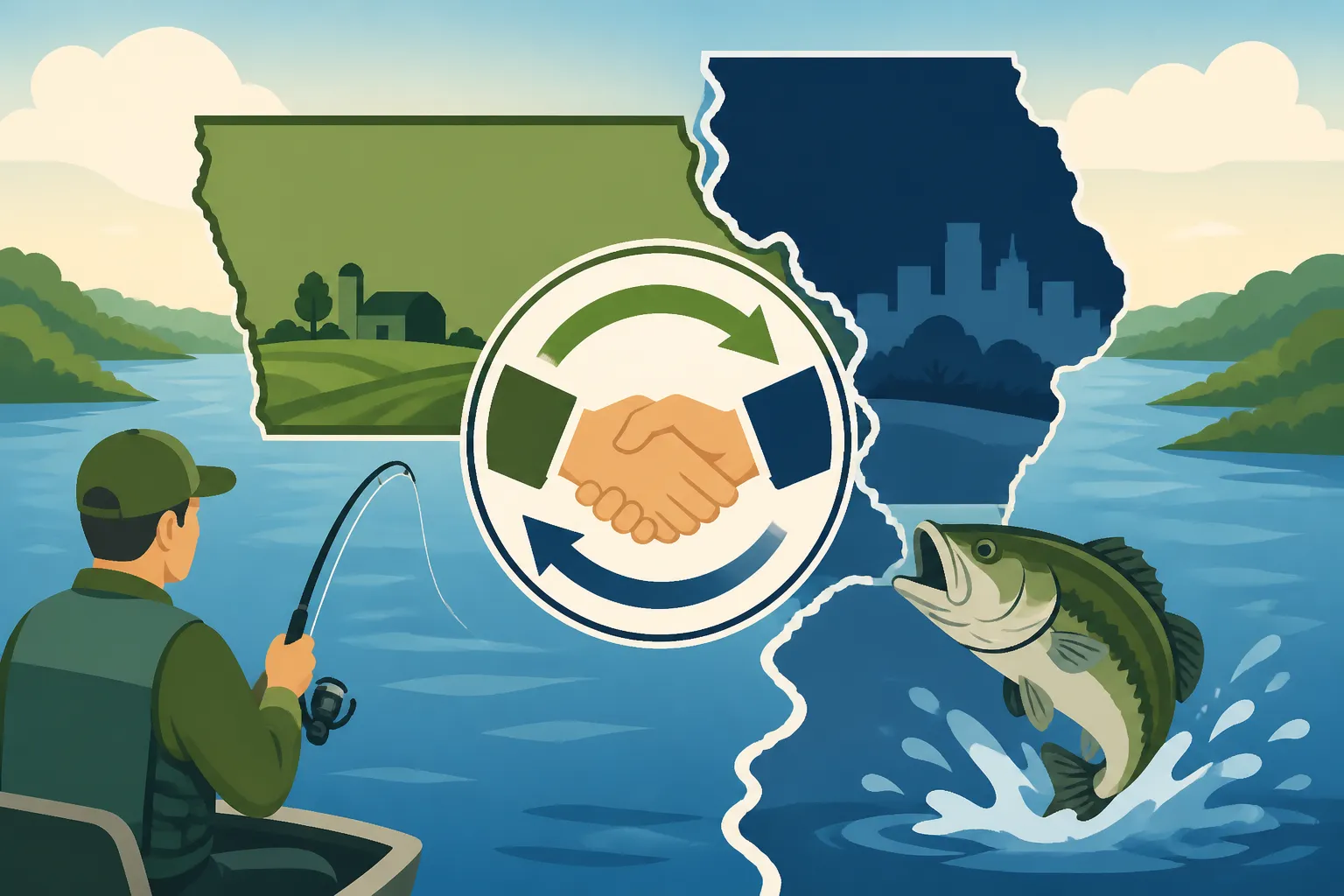
Fishing the Mississippi River is an iconic experience, but its nature as a border waterway adds a layer of complexity many anglers find daunting. The good news is that Iowa, along with its neighboring states of Wisconsin, Illinois, and Missouri, has established reciprocal agreements to make things a little easier for us. These agreements are designed to reduce the hassle, ensuring you don't need multiple state fishing licenses just to cast a line in the same river.
What "Reciprocal Agreement" Actually Means for Anglers
In simple terms, a reciprocal agreement means that your valid Iowa fishing license is recognized and honored by the bordering states when you're fishing on certain shared waters. For the Mississippi River, this generally means that if you have a valid fishing license from Iowa, you can fish the shared portions of the Mississippi River that border Wisconsin, Illinois, and Missouri, without needing to purchase an additional license from those states. The catch, and it’s an important one, is that this applies specifically to the licensing requirement. It doesn't necessarily mean that all the fishing regulations are suddenly harmonized. We'll get into that nuanced but critical point a bit later, but for now, breathe a sigh of relief knowing that your Iowa Resident Annual Fishing License or even an Iowa One-Day Fishing License can get you started on the Mississippi.
Think of it like this: You have a driver's license from Iowa. When you drive into Illinois, you don't need an Illinois driver's license. Your Iowa license is recognized. However, you still have to follow Illinois traffic laws while you're in Illinois. The fishing reciprocity works similarly for your license, but the "traffic laws" (i.e., fishing regulations) might still depend on certain factors. This agreement simplifies your initial hurdle, letting you focus more on the fish and less on the paperwork. For those visiting, even an Iowa Nonresident Annual Fishing License or an Iowa Three-Day Nonresident Fishing License would grant the same privileges on these border waters.
The Iowa and Wisconsin/Illinois/Missouri Border
Iowa shares substantial stretches of the Mississippi River with three states: Wisconsin to the north, Illinois to the east, and Missouri to the south. Each of these states has a reciprocal agreement with Iowa regarding fishing licenses on the Mississippi River. This means you can launch your boat from Dubuque, Iowa, and fish the main channel and backwaters bordering Wisconsin or Illinois without needing a Wisconsin or Illinois license, provided your Iowa license is current. Similarly, if you put in at Fort Madison on the Iowa side, your Iowa license allows you to fish the waters bordering Illinois or Missouri in that area.
This mutual recognition is a huge benefit for anglers who frequent these areas. Imagine the headache if you had to constantly check GPS coordinates to make sure you weren't technically in Wisconsin waters without their license! The agreements allow for more fluid movement and a much more relaxed fishing experience on what is one of the nation's premier fishing destinations. It's all about making access to this incredible resource as seamless as possible for licensed anglers. Remember, you can always check the full details in the official Iowa Fishing Regulations Explained booklet, often available online or at bait shops.
Navigating the Waters: Where Your Iowa License Is Valid
Understanding the geographical limits of these reciprocal agreements is crucial. While the general rule is "the Mississippi River," the specific interpretation of what constitutes "the Mississippi River" for these purposes can sometimes trip up even experienced anglers. Knowing where your Iowa license holds sway, and where it doesn't, is key to avoiding an unwelcome conversation with a conservation officer.
The Main Channel and Backwaters
For all practical purposes, when you're on the shared portions of the Mississippi River, your Iowa fishing license covers the main channel, side channels, backwaters, sloughs, bayous, and even the impoundments created by the lock and dam systems. This means if you're chasing walleye in the eddies of Pool 9 Fishing near Harpers Ferry, or exploring the vast backwaters of Pool 10 Fishing near Guttenberg for crappie, your Iowa license is generally sufficient. The intent of the agreement is to encompass all the interconnected waters that are clearly part of the river system itself.
This broad coverage allows for incredible flexibility. You might start your day fishing a wing dam on the Iowa side, then drift across the channel to fish a slough that technically borders Illinois, all under the umbrella of your single Iowa license. This is particularly beneficial on expansive pools where the main channel might be miles from the true banks, or where a dense network of islands and backwater lakes makes identifying the "state line" nearly impossible without precise navigation tools. Just be sure to always carry your physical license or a digital copy on your phone to present to an officer if requested.
Tributaries and Inland Waters
Here's where things get a little trickier, and it's a common point of confusion. The reciprocal agreements only apply to the Mississippi River itself. They generally do not extend into the tributaries or inland lakes and streams that feed into the Mississippi River. If you're fishing a river like the Wapsipinicon or the Maquoketa River, even if it's just a mile upstream from its confluence with the Mississippi, you are officially in Iowa's inland waters. In these cases, you absolutely need an Iowa fishing license. Your Illinois, Wisconsin, or Missouri license, even if it's valid for the Mississippi, won't cover you there.
The same principle applies in reverse: if you cross the Mississippi into Illinois and decide to fish an Illinois state lake, you'd need an Illinois license. Many anglers mistakenly believe that if they're on a boat launched from the Mississippi and simply motor up a tributary for a short distance, they're still covered. This is not the case. Always assume that once you leave the direct flow and interconnected backwaters of the Mississippi River and enter an entirely separate river, stream, or lake system, you are subject to the licensing requirements of the state where those waters are located. It's a subtle but crucial distinction that can save you a fine.
Islands and Dry Land
What about islands in the Mississippi or fishing from the shoreline? This is another area that can be confusing. For the purposes of fishing from a boat, as long as you're in the water that is part of the reciprocal agreement, your Iowa license should be fine. However, if you step ashore on an island or a bank that is not physically connected to Iowa, you might be on land technically belonging to the adjacent state. While this might seem minor, fishing from such a location could technically subject you to that state's land access rules and potentially even their fishing regulations if you are truly "on their soil."
Most anglers fishing the Mississippi from a boat will rarely encounter an issue here. The intent of the reciprocal agreement is to allow fishing from the water. However, if you're planning to camp on an island or fish extensively from a specific shoreline, it's always wise to confirm which state has jurisdiction over that piece of land. Generally, if you're fishing from the water, you're covered. If you're physically on the land of an adjacent state, you should be aware of their rules. This becomes less about fishing licensing and more about general land access and property rights, but it's good to keep in mind, especially for longer trips or bank fishing expeditions.
Essential Considerations Beyond the License
Okay, so your Iowa fishing license covers you on the Mississippi. Great! But the conversation doesn't end there. There's a vital difference between having a valid license and adhering to all applicable regulations. This is perhaps the single biggest point of misunderstanding for anglers on border waters, and it's where most legal issues arise.
Understanding Different State Regulations for Fish
This is the big one, folks. Even with a reciprocal license, the fishing regulations regarding species, bag limits, size limits, and season dates often depend on which state's rules you are fishing under, or sometimes, the state you originated from, or even where you land your catch. The specific agreements vary slightly by state, but a common understanding is that if you launch your boat from Iowa, you generally must follow Iowa's fishing regulations. If you launch from Wisconsin, you follow Wisconsin's rules.
However, it gets even more complicated. Some agreements state that you must adhere to the regulations of the state whose waters you are currently fishing in, or the most restrictive of the two states, or even the regulations of the state in which you possess the fish. For example, if you catch a walleye in what is technically Illinois water while having an Iowa license, you might be subject to Illinois's walleye size and bag limits, even if you launched from Iowa. The key takeaway is: you must know the specific regulations for the species you are targeting and err on the side of caution. Always check the current Iowa Fishing Daily Bag Limits Guide and also consider the regulations of the bordering state. Many experienced river anglers will carry both states' regulation booklets (or have them downloaded on their phone) just to be safe. You can often find these detailed regulations on the state's DNR websites, and sometimes even specific fishing maps or digital guides available on platforms like Amazon can help delineate these tricky boundaries and rules.
Here's a quick hypothetical comparison to illustrate the potential differences:
| Species | Regulation Type | Iowa Mississippi River | Illinois Mississippi River |
|---|---|---|---|
| Walleye | Daily Bag Limit | 6 | 6 |
| Minimum Length | 15 inches | 15 inches | |
| Channel Catfish | Daily Bag Limit | 15 | 10 |
| Possession Limit | 30 | 10 (on shared water) | |
| Largemouth Bass | Daily Bag Limit | 5 | 6 |
| Minimum Length | 14 inches | 12 inches |
Note: This table provides hypothetical examples for illustrative purposes only. Always consult current official state regulations before fishing.
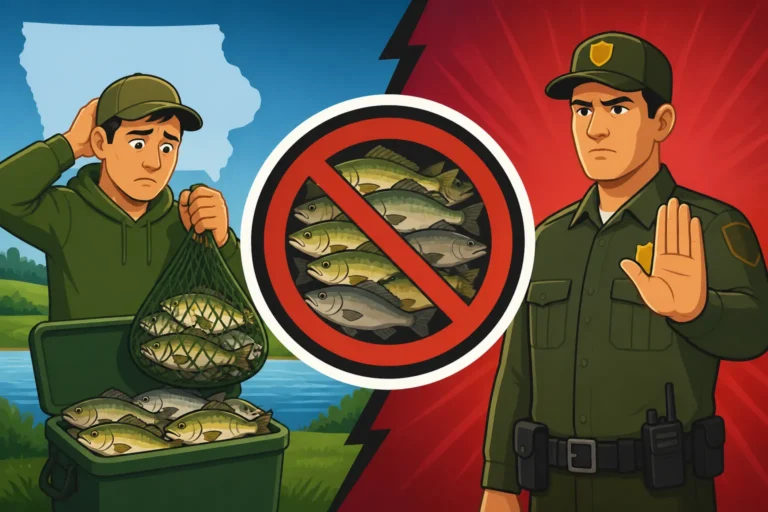
As you can see, while walleye limits might be similar, catfish and bass can have different daily bag limits. Imagine you're fishing for channel catfish and you've launched from Iowa. You catch 12 catfish, which is perfectly legal under Iowa's 15-fish daily limit. But if you were considered to be operating under Illinois regulations (perhaps you caught them while technically in Illinois waters, or their possession limit applies to anyone fishing that section), you might be over the 10-fish limit. This is why vigilance is absolutely essential. Always check the specifics for the current year, as Iowa Fishing Season Dates and Limits can change.
Boat Registration and Safety Requirements
While your fishing license might be reciprocal, your boat registration generally is not. Your boat must be registered in its state of primary use or residence, which for most Iowa anglers means an Iowa boat registration. You'll need to ensure your registration is current and visible as per Iowa Boat Registration Requirements.
However, similar to fishing regulations, boat safety equipment requirements can sometimes be influenced by the state you are operating in. While federal regulations set a baseline for safety equipment on all navigable waters (which the Mississippi River certainly is), individual states can have additional requirements. For instance, some states might have specific rules about fire extinguishers or sound-producing devices that go beyond the federal minimums. Generally, if your boat meets Iowa's safety requirements, you'll be compliant. However, it's always prudent to quickly review the boating regulations of the bordering state if you plan to spend significant time deep in their side of the river. Items like extra life jackets or a throw cushion are good to have regardless and can be easily found on Amazon. Teenagers should also be aware of any Boater Education Requirements for Young Anglers.
Buying Your License and Staying Informed
Getting your Iowa fishing license is a straightforward process. You can purchase one online through the Iowa Department of Natural Resources (DNR) website, through their Go Outdoors Iowa app, or in person at authorized license vendors across the state, including many bait shops and sporting goods stores. To learn more, check out Where to Buy a Fishing License in Iowa.
But buying the license is just the first step. Staying informed is paramount when fishing border waters. The Iowa DNR website is an excellent resource, offering downloadable regulation booklets and often posting updates. Many anglers also rely on local bait shop owners and fishing guides for the latest information on specific river stretches. It's a community effort to stay on the right side of the law and ensure responsible angling for everyone. Don't be shy about asking questions when you're buying bait or talking to fellow anglers at the boat ramp. They've likely navigated these same tricky waters before. For a comprehensive overview, you might want to read our full Iowa Fishing License Guide.
Knowing the rules helps us all enjoy the incredible fishing opportunities the Mississippi River offers. It ensures that the tradition of angling can continue for generations to come, without unnecessary fines or legal headaches.
Disclaimer
The information provided in this guide is for general informational purposes only and does not constitute legal advice. Fishing regulations and licensing requirements can change. Always consult the most current official Iowa Department of Natural Resources (DNR) regulations and those of any bordering states before fishing on the Mississippi River or any other body of water. Failure to comply with regulations can result in fines or other penalties.